
• KGS/USD = 0.01143 0%
  • KZT/USD = 0.00205 0%
  • TJS/USD = 0.10724 0.09%
  • UZS/USD = 0.00008 0%
  • TMT/USD = 0.28571 0%
  • KGS/USD = 0.01143 0%
  • KZT/USD = 0.00205 0%
  • TJS/USD = 0.10724 0.09%
  • UZS/USD = 0.00008 0%
  • TMT/USD = 0.28571 0%
  • KGS/USD = 0.01143 0%
  • KZT/USD = 0.00205 0%
  • TJS/USD = 0.10724 0.09%
  • UZS/USD = 0.00008 0%
  • TMT/USD = 0.28571 0%
  • KGS/USD = 0.01143 0%
  • KZT/USD = 0.00205 0%
  • TJS/USD = 0.10724 0.09%
  • UZS/USD = 0.00008 0%
  • TMT/USD = 0.28571 0%
  • KGS/USD = 0.01143 0%
  • KZT/USD = 0.00205 0%
  • TJS/USD = 0.10724 0.09%
  • UZS/USD = 0.00008 0%
  • TMT/USD = 0.28571 0%
  • KGS/USD = 0.01143 0%
  • KZT/USD = 0.00205 0%
  • TJS/USD = 0.10724 0.09%
  • UZS/USD = 0.00008 0%
  • TMT/USD = 0.28571 0%
  • KGS/USD = 0.01143 0%
  • KZT/USD = 0.00205 0%
  • TJS/USD = 0.10724 0.09%
  • UZS/USD = 0.00008 0%
  • TMT/USD = 0.28571 0%
  • KGS/USD = 0.01143 0%
  • KZT/USD = 0.00205 0%
  • TJS/USD = 0.10724 0.09%
  • UZS/USD = 0.00008 0%
  • TMT/USD = 0.28571 0%

Our People > Vagit Ismailov

Vagit Ismailov's Avatar

Vagit Ismailov

Journalist

Vagit Ismailov is a Kazakhstani journalist. He has worked in leading regional and national publications.

Articles

Tajikistan to Gain Access to Concessional ADB Loans Starting in 2027

Tajikistan will gain access to concessional loans from the Asian Development Bank (ADB) beginning in 2027, in addition to the grants it already receives, according to Lea Gutierrez, Director General of ADB’s Central and West Asia Department. Currently, Tajikistan receives support exclusively through grant mechanisms provided by the Asian Development Fund. That status is set to change next year. “Starting in 2027, Tajikistan will be classified as an IDA gap country, which means access to concessional lending,” Gutierrez said. The designation applies to countries transitioning from reliance solely on grants to eligibility for low-interest financing. The move is expected to provide Tajikistan with additional financial tools for implementing state programs and infrastructure projects. ADB officials stressed that the bank will continue seeking additional grant resources for Tajikistan, particularly through climate-related and regional financing programs. At the same time, the bank warned of mounting economic risks facing the country. ADB forecasts that inflation in Tajikistan will remain elevated, driven in part by rising utility tariffs. External pressures are also contributing to inflationary risks, including higher global commodity prices, rising logistics costs, and the effects of instability in the Middle East. According to the bank, these factors could affect both food prices and agricultural production. More broadly, ADB estimates that the economies of Central and West Asia grew by 4.6% in 2025, although inflationary pressures across the region remain significant. Among the key risks identified by analysts are rising energy costs, disruptions to trade and logistics, and persistent global uncertainty. Against this backdrop, countries in the region are being advised to maintain cautious macroeconomic policies, continue structural reforms, and support the most vulnerable segments of the population.

1 month ago

Kazakhstan to Improve Investor Protections and Accelerate Digital Reforms

Kazakhstan Prime Minister Olzhas Bektenov has instructed government agencies to accelerate the removal of administrative barriers for investors and expand the digitalization of investment procedures amid intensifying global competition for capital. Speaking at a meeting on investor rights protection attended by government officials, prosecutors, business representatives, and the Atameken National Chamber of Entrepreneurs, Bektenov said improving the investment climate remains a government priority. “Just last week, a presidential decree was signed on improving migration policy, aimed at creating a better environment for attracting investors, entrepreneurs, and highly qualified specialists,” Bektenov said. According to the government, Kazakhstan’s Investment Headquarters reviewed 44 projects worth approximately $25.5 billion during the first quarter of 2026. Prosecutor General Berik Asylov said the number of criminal cases against businesses has fallen fourfold over the past three years. “We are overseeing more than 3,000 investment projects. We maintain direct communication and continuous monitoring with investors and the business community,” he said. According to the Foreign Ministry, investors submitted 273 appeals during the first quarter of the year, with around half resolved positively. The main concerns related to tax administration, customs procedures, and land issues. Baurzhan Yeraly, chairman of the Committee for the Protection of Investors’ Rights under the General Prosecutor’s Office, said the rights of around 600 investors had already been protected this year, with complaints handled directly rather than transferred between agencies. Officials cited several successful cases, including the connection of a major energy project in the Atyrau region to engineering infrastructure and the inclusion of a paper products manufacturer in the national registry of domestic producers. Bektenov criticized what he described as a formalistic approach by some state bodies in dealing with businesses. “Every request from an investor is a signal behind which stand decisions on capital allocation, the launch of new production facilities, and the creation of jobs,” he said. The prime minister warned that officials and managers in the quasi-state sector responsible for bureaucratic delays would face “the strictest measures.” He also pointed to systemic problems, including weak coordination between agencies, delays in public service delivery, and insufficient oversight at the regional level. Particular attention was given to the role of local administrations, which were instructed to supervise key investment projects directly and accelerate the allocation of land, infrastructure, and permits. The government also plans to speed up development of the National Digital Investment Platform. More than 3,000 projects worth around $200 billion have already been integrated into the system, though more than 400 projects have yet to be uploaded. “In the context of global competition for investment, we must ensure a stable and favorable investment climate,” Bektenov said. Asset Irgaliyev, chairman of the Agency for Strategic Planning and Reforms, said the agency is developing a “regulatory intelligence” platform using artificial intelligence to identify excessive requirements and administrative barriers. Authorities also plan to expand the overseas network of Kazakh Invest. According to company head Sultangali Kinzhakulov, representative offices in the United States, Germany, China, Russia, Turkey, Malaysia, and Qatar will operate as “one-stop...

1 month ago

Turkmenistan Introduces New Fines for Parents Over Children’s Misconduct

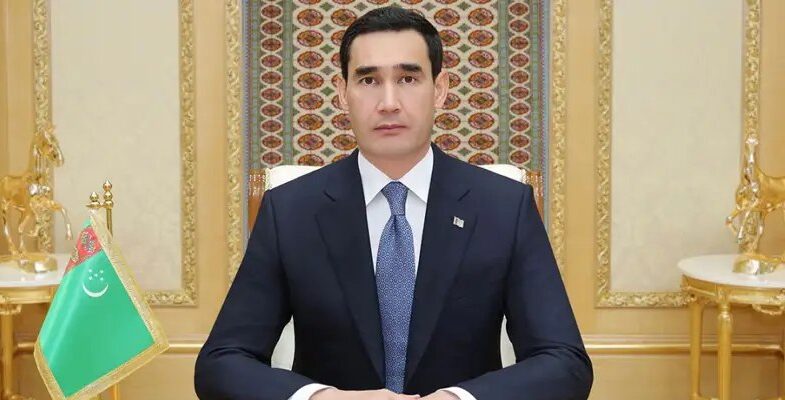
Turkmenistan has introduced new rules that tighten parental responsibility for children’s misconduct, while reports suggest that additional unofficial requirements are already emerging at the local level. The amendments to the administrative code, signed by President Serdar Berdimuhamedov, came into force on May 1. The updated legislation increases penalties for what is defined as “improper upbringing” and expands the range of situations in which parents of children under 16 can be held liable. In several cases, warnings have been eliminated entirely. Under the new rules, offenses such as drug use without a prescription or minor hooliganism now result in immediate fines of around $29. Penalties for traffic violations have risen from $11.6 to $14.5. The manufacture or possession of pyrotechnics can lead to fines ranging from $58 to $145, while smoking carries penalties of $29 to $58. Other sanctions have also been increased, including those related to alcohol and tobacco sales and various administrative violations. However, the implementation of the law appears to vary across regions. According to local sources, some authorities are interpreting the rules more broadly and introducing additional measures. In schools in the Lebap region, for example, there are reports of proposed fines for families if students arrive late to class ($29), possess smartphones or headphones ($290), or skip lessons. These measures have not been officially confirmed, and teachers in other regions say they have not received similar instructions. Some observers suggest the reports may be exaggerated or intended as a deterrent to improve discipline. Nevertheless, educators warn of potential corruption risks. Recorded violations could become grounds for informal payments, with smaller sums demanded instead of official fines, bypassing the state budget.

1 month ago

Michael Daniel Appointed Head of Kazakhstan’s Aviation Administration

Kazakhstan has appointed U.S. aviation veteran Michael Daniel as chief executive officer of the Aviation Administration of Kazakhstan, a step that officials say is linked to plans for direct flights to the United States. Daniel took up the post on May 4. He has more than 40 years of experience in civil aviation and holds a degree in aeronautics from Embry-Riddle Aeronautical University. He began his career at the U.S. Federal Aviation Administration (FAA), where he served as a flight operations inspector, aircraft certification specialist, and head of flight safety. He later worked on international programs and policy and held posts in Frankfurt, New York, and Washington. From 2006 to 2009, Daniel led the FAA’s international office in Singapore and Beijing, overseeing foreign repair stations and international safety assessments. During his career, he also took part in international initiatives, including work within Asia-Pacific Economic Cooperation (APEC), and cooperated with the International Civil Aviation Organization on safety oversight and evaluation. Kazakhstan’s Civil Aviation Committee said one of Daniel’s main priorities will be the launch of direct flights to the U.S. Aviation expert Abul Kekilbayev said the appointment appeared to be tied to that objective. “The aircraft have already been bought, you need to pass an audit for compliance,” he said. Before direct flights can begin, airlines from Kazakhstan will need to complete several stages of approval with U.S. regulators. Those steps include obtaining authorization from the U.S. Department of Transportation and then applying to the FAA, which will assess whether Kazakhstan meets international aviation safety standards.

1 month ago

Czech Prime Minister Says Foreign Ministry Urged Pressure on Kazakhstan Over Russia Ties

On May 2, Czech Prime Minister Andrej Babiš has claimed that officials at the country’s Foreign Ministry advised him to push Kazakhstan to scale back its ties with Russia and China. Speaking to Czech broadcaster TV Nova, Babiš criticized the recommendation, warning it could harm the Czech Republic’s economic interests. Babiš, a billionaire businessman and populist politician, returned to power in December 2025 after his ANO movement won 35% of the vote in the October 2025 parliamentary election and formed a governing coalition. The prime minister said he received a briefing note prepared by the diplomatic service. “They handed me a memo saying I should call on Kazakhstan to limit its relations with Russia and China,” he said. Babiš was vague about the provenance of the memo, describing it as having been drafted by “some officials,” but he suggested that former Foreign Minister Jan Lipavský, a figure associated with the previous pro-Western coalition government (2021–2025), may have been involved in its preparation. Babiš criticized the foreign policy of the previous administration, arguing that it had damaged the Czech Republic’s economic interests. Relations with several major countries, including China, had deteriorated, negatively affecting business activity, he said. The remarks followed Babiš’s visit to Kazakhstan on April 28-29, during which the two sides discussed expanding economic cooperation, including supplies of Kazakh oil and uranium. The Czech Republic views Kazakhstan as an important strategic partner, he added. According to the Kazakh government, bilateral trade between the Czech Republic and Kazakhstan reached approximately $705 million in 2025, a 13% increase on the previous year.

1 month ago

Kazakhstan Looks Abroad in Push to Recover Illegal Assets

Kazakhstan has taken a first step toward joining the Warsaw Convention, a Council of Europe treaty that would make it easier for prosecutors to follow suspected criminal assets across borders. The move remains tentative, however. The draft ratification law appeared on the Open NPA portal on April 23 with public discussion scheduled until May 20, but was removed to an archive two days later after the developer withdrew it for a “press release correction.” For now, the measure remains procedural. Its purpose is more concrete: to give prosecutors a stronger route into foreign jurisdictions where disputed wealth may sit behind companies, property, bank accounts, trusts, or nominees. The Warsaw Convention - formally called the Council of Europe Convention on Laundering, Search, Seizure and Confiscation of the Proceeds from Crime and on the Financing of Terrorism - was opened for signature in Warsaw on May 16, 2005, and entered into force on May 1, 2008. Its purpose is practical. States that join it must maintain tools to identify criminal proceeds, freeze them, confiscate them, and cooperate with foreign authorities. For Kazakhstan, that framework would fit a campaign that has grown steadily since the unrest of January 2022. President Kassym-Jomart Tokayev has made the return of illegally acquired assets part of his wider domestic agenda, linking it to social justice, public finances, and the channeling of seized assets into public projects. A Campaign Moving Abroad Kazakhstan built the domestic legal base in 2023, when Tokayev signed the law on the return of illegally acquired assets to the state. This created procedures for identifying assets, negotiating voluntary returns, filing court claims, and managing property transferred to the state. It also applies to property located abroad when it was allegedly acquired with income illegally received in Kazakhstan. The system gained a sharper foreign component in January 2026, when a new Asset Recovery Service began work under the General Prosecutor’s Office. Its mandate includes representation in foreign courts, requests to freeze property, checks on asset origin, and direct cooperation with overseas authorities. Those tasks are exactly where domestic law alone often runs out of road. Assets rarely sit in one obvious place. They can be routed through companies, trusts, bank accounts, nominees, family members, or real estate in several countries. A Kazakh court order may be the start of a case, but it is far from the end of it. Foreign authorities usually need treaty channels, legal-assistance requests, and evidence that meets their own standards before they freeze or return property. Ratifying the Warsaw Convention would not solve those problems by itself, but it would give Kazakhstan another legal route for cooperation when cases cross borders. That could be important in corruption, money laundering, tax, organized crime, and terrorism-financing cases where property has moved through several jurisdictions. What the Convention Would Change The convention would add practical tools rather than automatic powers. It covers the tracing, freezing, seizure, and confiscation of criminal proceeds, and also applies to property used for financing terrorism, even when the...

1 month ago

Turkmenistan Ranks 173rd in Global Press Freedom Index

Turkmenistan ranked 173rd out of 180 countries in the 2026 World Press Freedom Index, a slight improvement from 174th place in 2025. According to the report compiled by Reporters Without Borders (commonly known by its French acronym, RSF), the highest-ranked country in Central Asia was Kyrgyzstan in 146th place, followed by Uzbekistan (147th), Kazakhstan (149th), and Tajikistan (155th). Russia ranked 172nd, just one position above Turkmenistan. The authors note that Eastern Europe and Central Asia remain the second-worst-performing regions globally in the 2026 index. “The region is increasingly resembling a vast laboratory of inverted values, where legality is artificial and primarily serves the interests of those in power rather than protecting the right to information,” the report states. In Kazakhstan, RSF says tightening legal frameworks are combined with indirect pressure, increasing online harassment, and a climate of impunity. Kyrgyzstan, meanwhile, is following a similar trend, with declining legal protections for journalists. Among the lowest-ranked countries are Belarus, Azerbaijan, Russia, and Turkmenistan, all of which scored particularly poorly in the legal category, with ratings ranging from 22 to 32 out of 100. More broadly, the report highlights a global decline in press freedom. “For the first time in the history of the index, conditions in more than half of all countries are classified as ‘difficult’ or ‘very serious.’ Over 25 years of observation, the global average has never been this low,” the authors note. According to RSF, the introduction of laws restricting press freedom, often justified by national security concerns, has contributed to a steady deterioration in media conditions since 2001, affecting not only authoritarian states but also democracies. “The legal indicator saw the sharpest decline this year, reflecting the growing number of legal proceedings against journalists and media outlets,” the report concludes.

1 month ago

U.S.-Kazakhstan Tungsten Venture Advances as Critical Minerals Cooperation Deepens

A U.S.-linked critical minerals venture in Kazakhstan is moving forward with plans to develop one of the world’s largest undeveloped tungsten resources, strengthening cooperation between Washington and Astana at a time of growing demand for secure mineral supply chains and greater Western interest in Central Asia’s strategic minerals base. Skyline Builders Group Holding Ltd. and Cove Kaz Capital Group LLC have announced a merger agreement that would create Kaz Resources Inc., a Nasdaq-listed company focused on tungsten, rare earths, and other critical minerals. The combined company is expected to trade under the ticker symbol “KAZR,” subject to shareholder and regulatory approvals and other closing conditions. The transaction builds on cooperation between Cove Kaz Capital and Kazakhstan’s national mining company, Tau-Ken Samruk. Cove Kaz has acquired a majority interest in Severniy Katpar LLP, which holds licenses for the Northern Katpar and Upper Kairakty tungsten projects in Kazakhstan’s Karaganda mining district, while Tau-Ken Samruk retains a minority stake, giving Kazakhstan’s state mining sector continued participation in the project. The Financial Times has reported that Donald Trump Jr. and Eric Trump held indirect stakes in Skyline Builders, the Nasdaq-listed company that has agreed to combine with Cove Kaz Capital. The reported investments were made through a Dominari-affiliated vehicle before the business combination. The report has drawn scrutiny because of the project’s connection to U.S. critical minerals policy and potential U.S. government-backed financing. The report cites no evidence that the Trump sons influenced the project award or the financing process. A spokesperson for Donald Trump Jr. said he is a passive investor, has no operational role, and does not engage with the federal government on behalf of companies in which he invests or advises. Eric Trump did not respond to requests for comment reported by the Financial Times. The Export-Import Bank of the United States and the U.S. International Development Finance Corporation have issued letters of interest indicating potential financing support for the project. Such letters are preliminary expressions of interest, not final loan approvals, binding commitments, or government contracts, and any financing would remain subject to due diligence, agency approvals, and other conditions. The projects are strategically significant because tungsten is widely used in defense, aerospace, industrial manufacturing, and advanced technologies. The United States has identified tungsten as a critical mineral and has sought to diversify supply chains amid heavy global dependence on China. Kazakhstan’s tungsten deposits hold significant potential, but many remain at an early stage of development, requiring substantial investment and time before production can scale. Even so, the country has begun to emerge as a meaningful producer, with public and industry estimates pointing to Kazakhstan becoming a top-three producer in 2025 after the launch of the Boguty deposit, behind China and Vietnam. The Association of Mining and Metallurgical Enterprises has cited production of around 2,400 tons of tungsten in 2025. The country’s rising role in the global market coincides with a sharp increase in tungsten prices. Following export restrictions imposed by China in February 2025, prices rose sharply through 2025...

1 month ago

School Digitalization in Turkmenistan Increases Workload for Teachers

The rollout of electronic gradebooks in Turkmenistan, intended to streamline teachers’ work, has had the opposite effect, with educators reporting increased workloads, technical issues, and tighter oversight. As part of a broader push toward digitalization, authorities have required school staff to use the eMekdep system to record grades, manage lesson plans, and generate analytics. According to its developers, the platform enables work “anytime, anywhere” and is designed to reduce paperwork. Teachers, however, say the reality is far less efficient. Electronic journals can only be filled out with a stable internet connection, which remains unreliable even in the capital. “If two people log into our school’s network at the same time, it crashes,” a teacher in Ashgabat said. As a result, many educators are forced to rely on mobile data or home internet at their own expense, an added burden given their relatively low salaries, which range from $175 to $275 per month. Teachers also report contributing financially to school needs, including repairs and equipment, and, in some regions, even covering costs related to hiring cotton pickers. The main challenge, however, is not financial but administrative. Paper gradebooks have not been phased out, leaving teachers to maintain three parallel records: an official paper journal, a working notebook, and the electronic system. This duplication significantly increases the risk of errors. To save data, many teachers first record grades by hand and later transfer them into the system at home, a process that often leads to delays and inaccuracies. Given that the majority of teachers are women, many must also balance these demands with family responsibilities. At the same time, oversight has intensified. Moderators at both school and district levels monitor how teachers fill out gradebooks. Discrepancies between paper and electronic records require written explanations. Deadlines for entering data have also been tightened from up to 10 days previously to just two days, with the possibility of further reduction to 12 hours. Schools may be reprimanded if teachers fail to meet these deadlines. Technical problems remain a major issue. Users report software bugs that can cause pages to take up to 30 seconds to load. “In that time, it’s faster to mark grades for an entire class with a pen,” one teacher noted. Earlier reports have highlighted broader restrictions on access to certain services and efforts to control alternative communication channels, including the confiscation of Starlink satellite internet equipment. In such conditions, digital solutions remain heavily dependent on infrastructure that often struggles to handle the load.

1 month ago

Meat Prices in Tajikistan Among Highest in Central Asia

Beef prices in Tajikistan remain among the highest in Central Asia, with average retail prices ranging from $10 to $11 per kilogram, higher than in neighboring Kyrgyzstan, Kazakhstan, and Turkmenistan. By comparison, beef costs around $7.6 per kilogram in Kyrgyzstan, approximately $7-7.5 in Turkmenistan, and about $8.66 in Kazakhstan. Uzbekistan is at a similar level to Tajikistan, with prices averaging $10.85 per kilogram. Globally, meat prices continue to rise. According to the Food and Agriculture Organization (FAO), prices increased by about 1% in March compared with February and were up 8% year-on-year. Analysts say the increase is largely driven by rising pork prices, particularly in Europe, along with reduced meat production in Brazil. At the same time, lamb and poultry prices have edged down slightly. Experts warn that declining production in the United States and Brazil, combined with strong demand in Europe, could push beef prices even higher. The highest beef prices globally are recorded in Switzerland, where they reach $45.72 per kilogram. Other high-cost markets include Norway ($32.67), Luxembourg ($27.09), South Korea ($25.23), and Singapore ($25.02). The lowest prices are found in Nigeria ($4.56), Pakistan ($4.70), Kenya ($5.17), India ($5.33), and Nepal ($5.40). Among former Soviet countries, price differences are also significant, with the highest costs in the Baltic states. In Estonia, beef is priced at $20.48 per kilogram; in Latvia, $13.71; and in Lithuania, $12.43. Mid-range prices are seen in Armenia ($11.59), Russia ($10.80), Azerbaijan ($10.64), and Georgia ($9.91). Lower prices are found in Belarus ($9.25), Moldova ($8.59), and Ukraine ($7.22). Despite high prices, domestic meat production in Tajikistan is increasing. According to official data, output of livestock and poultry (in live weight) reached 54,700 tons in January-March 2026, up 11.5% year-on-year. However, prices remain elevated due to supply shortages. The country meets only about 58% of domestic demand, while imports account for just 4-6% of the market. Imported meat, particularly from Belarus and Kazakhstan, is cheaper and helps contain prices, but due to consumer preferences it is mainly used in the food service sector and does not replace locally produced meat. Experts say the high cost of meat in Tajikistan is driven by structural factors, including underdeveloped livestock farming, feed shortages, and limited systemic support for farmers. Imports, they note, provide only temporary relief and do not address the underlying causes of high prices.

1 month ago