• KZT/USD = 0.00221
  • TJS/USD = 0.10840
  • UZS/USD = 0.00009
  • TMT/USD = 0.29760
  • KZT/USD = 0.00221
  • TJS/USD = 0.10840
  • UZS/USD = 0.00009
  • TMT/USD = 0.29760
  • KZT/USD = 0.00221
  • TJS/USD = 0.10840
  • UZS/USD = 0.00009
  • TMT/USD = 0.29760
  • KZT/USD = 0.00221
  • TJS/USD = 0.10840
  • UZS/USD = 0.00009
  • TMT/USD = 0.29760
  • KZT/USD = 0.00221
  • TJS/USD = 0.10840
  • UZS/USD = 0.00009
  • TMT/USD = 0.29760
  • KZT/USD = 0.00221
  • TJS/USD = 0.10840
  • UZS/USD = 0.00009
  • TMT/USD = 0.29760
  • KZT/USD = 0.00221
  • TJS/USD = 0.10840
  • UZS/USD = 0.00009
  • TMT/USD = 0.29760
  • KZT/USD = 0.00221
  • TJS/USD = 0.10840
  • UZS/USD = 0.00009
  • TMT/USD = 0.29760
07 October 2026

Our People > Zamirbek Minbaev

Zamirbek Minbaev's Avatar

Contributor

Zamirbek Minbaev is an independent analyst based in Kyrgyzstan, working on systemic risk, sanctions-era statecraft, Central Asian geopolitical positioning, and political-economic architecture.

Articles

Opinion: Central Asia’s Old Water Bargain Was Built for Cotton

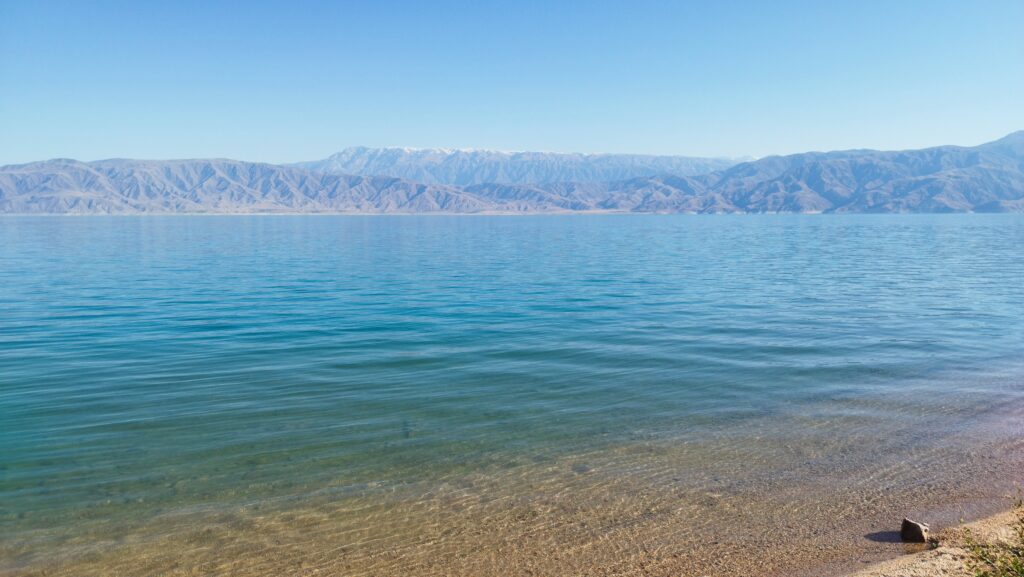
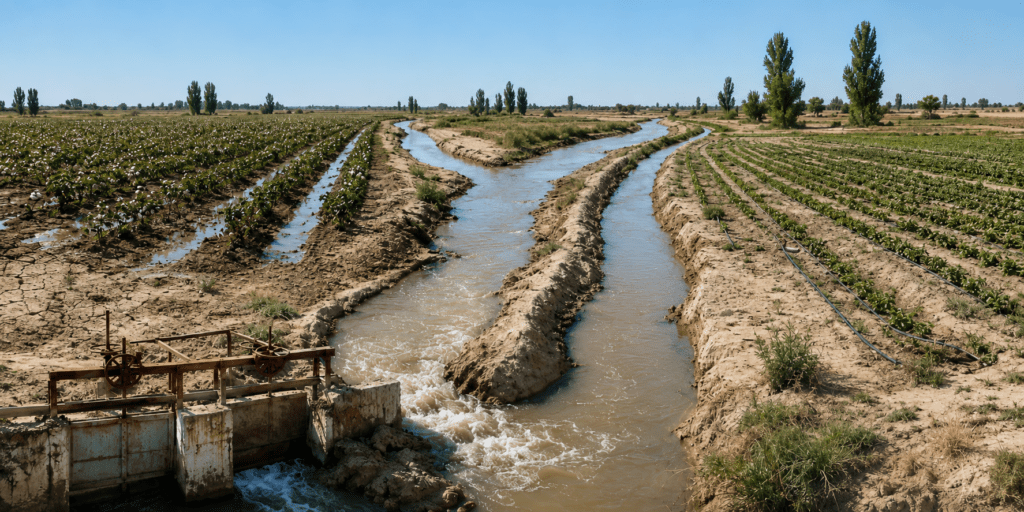
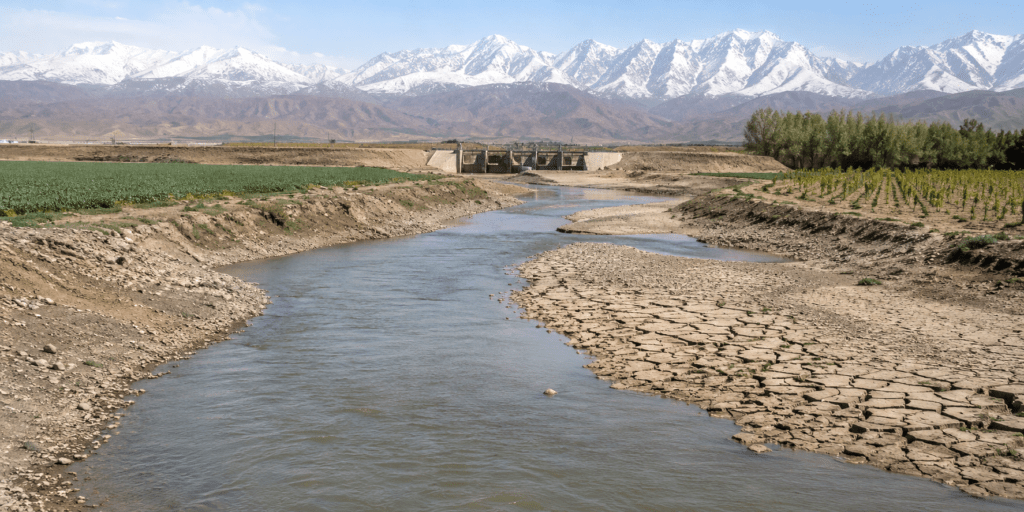
Central Asia inherited a water bargain built for another economy. In the Soviet system, upstream republics stored water and released it for summer irrigation. Downstream republics used that flow for cotton and other crops. The cost of the exchange stayed inside one plan. Water releases, electricity, fuel, and crop quotas were part of the same political economy. After 1991, the dependence survived, but the plan that balanced it did not. The 1998 Syr Darya agreement already tied reservoir operation to irrigation releases and set compensation for the winter power Kyrgyzstan gave up. The 2000 Chu-Talas agreement went on to share the cost of operating and maintaining shared water infrastructure between Kazakhstan and Kyrgyzstan. Those agreements were important, and they show why today’s dispute is not new. Central Asia has long known that water regulation carries a cost. What it has not built is a wider settlement that prices storage and seasonal regulation under today’s climate, energy, and market conditions. That question is now open again. In January 2026, Kyrgyzstan’s new Water Code came into force. It recognizes water as a commodity and introduces fees for domestic and external users. Kazakhstan and Uzbekistan have rejected payment for transboundary river water, saying existing agreements do not provide for it. Downstream governments fear an open-ended bill and a precedent that could turn every dry season into a financial dispute. The old model rested on cotton and central planning. Several conditions have changed. The climate is less stable, energy demand keeps rising, and national economies now want more from water than a cotton plan once did. Uzbekistan’s own reform language has turned against the old cotton model. At the UN General Assembly in 2023, President Shavkat Mirziyoyev said “millions of people were forced to pick cotton” in Uzbekistan over a century. In August 2026, he called the old system one that left Uzbeks “slaves to cotton.” That history shapes the water argument. Uzbekistan is not abolishing cotton. It still grows the crop and continues to reform the sector. But as Tashkent moves away from the old cotton-centered model, the regional water logic built around that model also needs revising. The same pressure runs through the Amu Darya, where agricultural adaptation has become an economic and political issue rather than a purely hydrological one. Less predictable river flows make seasonal storage more valuable. Water is also becoming scarcer in parts of the region. Kyrgyzstan sits at the center of that question. It is the only country in Central Asia whose water resources are almost entirely formed within its own territory, and Kyrgyz officials argue that it carries the upkeep for infrastructure that serves its neighbors. They say the country spent about $80 million on the water sector last year and around $259 million over five years. That spending covers the water sector as a whole, including infrastructure whose benefits reach beyond Kyrgyzstan’s borders. Kazakhstan and Uzbekistan reject paying for river water, saying existing agreements do not require it. But storing that water and releasing it...

15 hours ago

Opinion: China-Kyrgyzstan-Uzbekistan Railway Opens New Options Beyond Europe

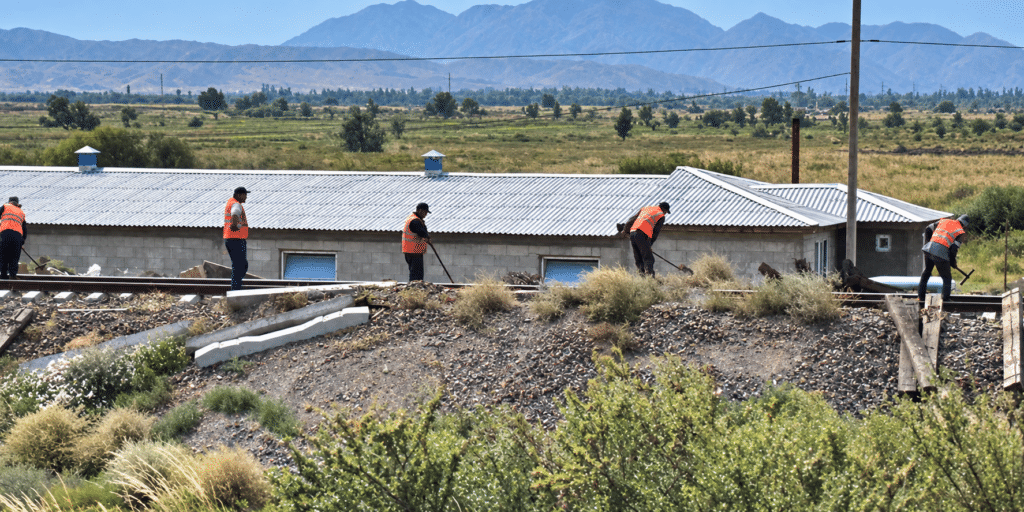
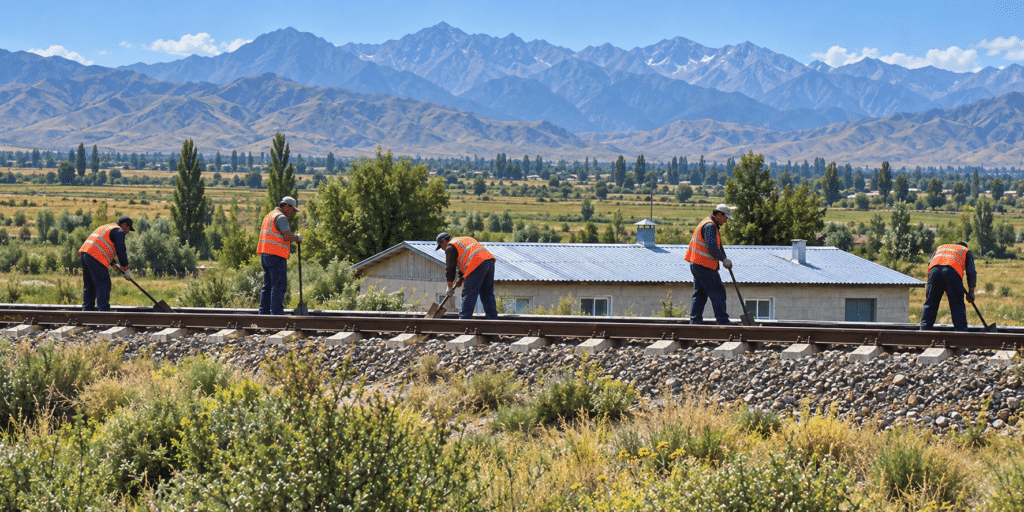
The China-Kyrgyzstan-Uzbekistan railway is often presented as a new route to Europe, but its first benefits are likely to be felt closer to home. It could give Central Asian shippers more choice and governments more room to negotiate transport costs, even where sanctions restrict access to European markets. Excavation of the 209.6-meter Kosh-Dobo North No. 2 tunnel was completed on August 5. Work is also underway on other tunnels along Kyrgyzstan’s mountainous section of the railway. CKU is advancing as falling Caspian water levels make the Middle Corridor more expensive to maintain. That could increase demand for alternative routes, although each comes with its own costs and restrictions. Kyrgyz officials have high expectations. Deputy Prime Minister Edil Baisalov told TCA that “this railroad will virtually transform Kyrgyzstan.” Fulfilling that ambition will require the country to earn more than transit fees. Much depends on Makmal, where a transshipment station and possible logistics center are planned. The Torugart-Makmal section will use the Chinese standard gauge of 1,435 mm, while the Makmal-Jalal-Abad section will use the 1,520 mm gauge common across the post-Soviet rail system. Changing gauge adds time and expense as cargo moves between trains. The planned station will handle transfers between the two systems, as well as cargo sorting and train assembly, operations which could support local logistics businesses, provided there is enough traffic. Warehousing and customs services would give Kyrgyzstan a chance to earn more from that traffic. Whether Makmal develops into a wider logistics hub will depend on the services available and their cost to shippers. The mountainous terrain makes the line expensive and slow to build. It also limits the options for competing routes through the Tien Shan. That may strengthen Kyrgyzstan’s negotiating position, but only if the railway offers a reliable service at competitive rates. The trans-Caspian Middle Corridor avoids Russia and Iran, making it more attractive to European companies concerned about sanctions. Yet, as TCA has reported, falling Caspian water levels are raising the cost of the route through Aktau and Kuryk. Low sea levels around Aktau and Kuryk reduce loading efficiency and increase transport costs. Kazakhstan has dredged Kuryk and launched deeper work at Aktau, aiming for a 7.7-meter depth in the operational part of the port. The Caspian route remains workable, but maintaining it requires continuing investment. If those costs rise, shippers will have more reason to compare alternatives. There are also delays to address. In a recent TCA interview, the TITR secretary general stressed the need to speed up the route and ease Caspian bottlenecks as freight volumes grow. A southern route could avoid Caspian transshipment. From Uzbekistan, cargo can move through Turkmenistan and Iran to Turkey. Uzbek, Iranian, and Turkish officials have already discussed linking this corridor with the CKU railway. Some freight already travels south on existing lines. In September, a 55-container block train was dispatched from Kazakhstan’s Altynkol station after crossing from China. Its announced route ran through Uzbekistan and Turkmenistan to Iran via the Sarakhs border station. It carried...

1 week ago

Central Asia Electricity Demand Surges in Summer Power Reckoning

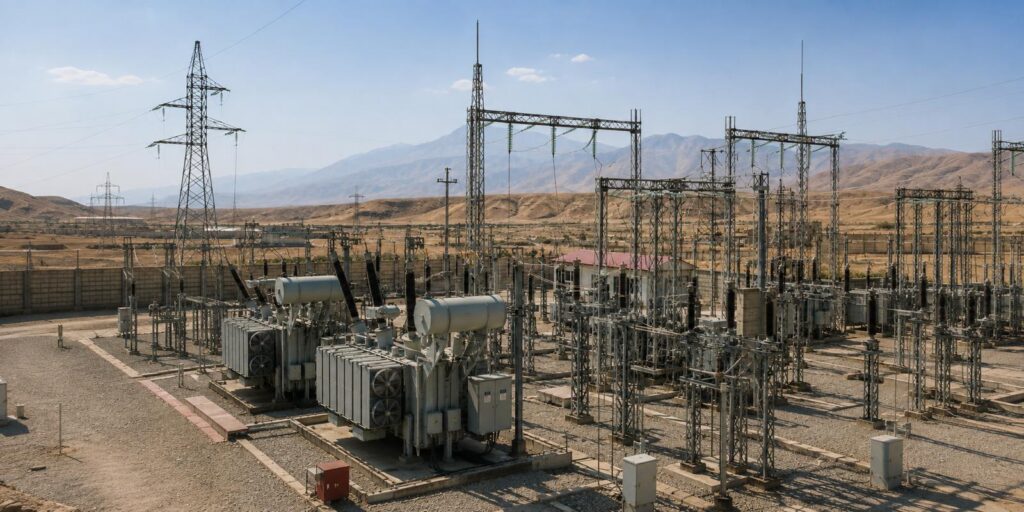
At 5:22 p.m. on July 20, after days of extreme heat, Uzbekistan's electricity system hit its highest load on record. Air conditioners were running on overdrive across the country as demand reached 14.2 gigawatts. Over the full day, consumers used 301.9 million kWh, almost 11% more than the previous year's summer peak. The pressure was visible elsewhere. In Kyrgyzstan, electricity consumption jumped 18% year-on-year on July 19. Parts of Bishkek and the Chui Region lost power for periods of up to two hours as operators tried to stop overloaded equipment from failing. In Almaty, where temperatures reached 40°C, 35 repair crews were deployed as record demand triggered faults across parts of the city's electricity network. Central Asia has spent years preparing for power shortages during freezing winters. July demonstrated that 40°C-plus summer days can now pose a different version of the same problem. The Demand Problem Governments across Central Asia have largely approached energy shortages from the supply side: more generation, new plants, stronger transmission, and greater investment. The summer peak exposed another weakness, however: demand is rising faster than many networks can comfortably absorb it. The pressure comes from new apartment blocks, shopping centers, construction sites, cooling systems, and the rapid spread of air conditioning. In Tashkent, Almaty, Bishkek, and other expanding cities, hotter summers also intensify the urban heat-island effect as concrete and glass retain heat and increase cooling demand. Much of the region's electricity infrastructure was built for a different pattern of consumption. That makes demand-side management increasingly important alongside new generation. Building another plant increases the amount of electricity available, but does little by itself to control when households and businesses consume it. Efficiency standards, more responsive tariffs, modern metering, and investment in distribution networks will become more important as peak demand rises. Four Systems, Shared Pressure Kazakhstan, Uzbekistan, Kyrgyzstan, and Tajikistan are not facing identical problems, but July highlighted a common vulnerability: electricity systems are being asked to meet demand patterns for which they were not originally designed. Kazakhstan is pursuing major long-term additions to generation. In May 2026, it signed a $16.5 billion agreement with Russia's Rosatom for its first nuclear power plant near Lake Balkhash. Construction is expected to begin in 2027, with the first reactor scheduled for commissioning in early 2034. For a coal-heavy system facing rising demand, the baseload argument is clear. But new capacity will take years to arrive. Tariff reform and modernization of existing infrastructure remain politically sensitive, especially if households are asked to pay more before improvements in reliability become visible. Uzbekistan is racing to add capacity, especially solar, in response to a rapidly growing population and dwindling gas reserves. Solar can reduce daytime strain and free gas for other uses, but it does not resolve the evening peak. Cooling demand can remain high after sunset, when solar output falls. Without sufficient storage, flexible backup generation, and stronger transmission and distribution networks, rapid additions of renewable capacity can coexist with local shortages and outages. Uzbekistan's July records underline the...

2 months ago

Kazakhstan’s Mineral Future Still Carries an Oil Risk Premium

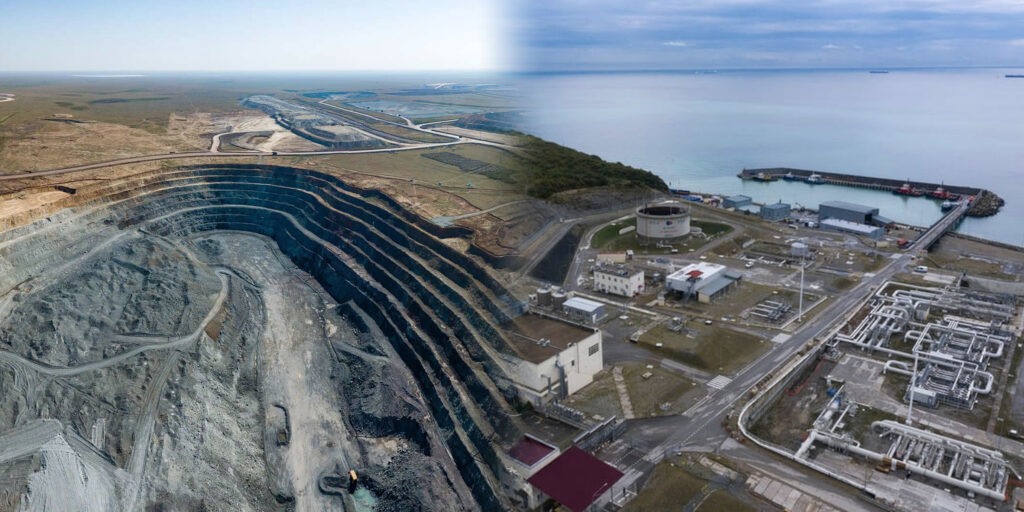
In June, President Kassym-Jomart Tokayev went to Brussels with a future-facing offer: Kazakhstan could become Europe’s non-Chinese option in critical minerals. Astana presented the country as a base for processing, long-term offtake, and industrial cooperation, rather than another source of ore. A month later, Kazakhstan’s older vulnerability reappeared. Drone attacks near the Caspian Pipeline Consortium terminal at Novorossiysk disrupted loadings and forced production cuts in Kazakhstan. By July 27, loading had resumed, with tankers receiving crude supplied by Tengizchevroil. The interruption was brief, but it exposed a structural problem. Kazakhstan’s future mineral offer still rests on an economy whose main export artery runs through Russia and the Black Sea. That is the central tension in Kazakhstan’s new resource diplomacy. Astana wants Europe to help build a future supply chain. Its present still depends on an oil corridor it does not fully control. Kazakhstan is asking Europe to make future demand bankable. A mineral deposit does not become part of a European supply chain when officials announce it in a joint statement. It needs geological confirmation, financing, processing technology, reliable power, water, logistics, and customers prepared to sign contracts years before the first shipment. This is why offtake sits at the heart of Tokayev’s proposal. Long-term purchase commitments can turn European concern over Chinese dominance into financeable projects. If Europe wants another source tomorrow, it must help fund extraction, processing, and internationally accepted standards today. Kazakhstan says it is ready to supply 21 of the 34 materials on the EU’s critical raw materials list. It also wants more of the value chain to remain at home. European capital and technology would support local processing, laboratories, skills, and higher-value production instead of simply moving raw materials abroad. Europe has good reason to listen. China dominates the processing of many minerals used in batteries, advanced manufacturing, digital infrastructure, and defence. European industry wants alternatives, but diversification cannot be improvised after a supply shock. Mines and processing plants take years to finance, permit, construct, and qualify. For Kazakhstan, the minerals offer is also an attempt to upgrade an older relationship. Western companies already know the country through Tengiz, Kashagan, and decades of oil investment. Astana now wants to move from extraction towards processing and a stronger position in industrial supply chains. But the old oil story still prices the new minerals story. The CPC episode showed why. The pipeline carries crude from Tengiz, Kashagan, and Karachaganak through Russian territory to Novorossiysk. It handles more than 80% of Kazakhstan’s oil exports and ties much of the country’s hard-currency income to a route outside Astana’s full control. A short halt was enough to cut output sharply at fields more than 1,500 kilometres away. Tokayev’s call in Omsk to freeze the war in Ukraine should be read partly in that context. It reflected more than the diplomatic caution expected from a neighbour of Russia. The war is now touching Kazakhstan’s export system through tanker security, insurance risk, production schedules, and investor confidence. Astana wants European finance for...

2 months ago

Opinion: Uzbekistan Census – When the Village Reappears in the City

Uzbekistan's first census in 37 years did more than revise the country's population upward. It changed the map of where pressure is accumulating. The preliminary results put the population at 39,047,321 – 810,617 above the official estimate. That alone resets a planning baseline. Schools, clinics, housing, labor forecasts, and regional budgets all depend on knowing how many people a state is governing. The deeper story lies in the distribution. The largest correction was in Tashkent Region. Its population had been estimated at roughly 3.2 million. The census put it at nearly 3.8 million, moving it from seventh to third among Uzbekistan's regions. Five regions, Namangan, Jizzakh, Kashkadarya, Surkhandarya, and Bukhara, came in below estimate. This suggests that demographic pressure is more concentrated in and around Tashkent than the planning baseline assumed. The central question is now absorption: whether the state can integrate people whom a narrowing rural economy, growing water stress, tighter access to Russia's labor market, and rising expectations are all pushing toward its cities. The Arithmetic of Absorption More than 600,000 young people enter Uzbekistan's job market each year. The administration has said that by 2030, the annual figure will reach one million. Official unemployment fell to 4.9% in the third quarter of 2025, but 760,000 people were nevertheless registered as job seekers. Moreover the International Labour Organization estimates that informal employment accounts for about 40% of the workforce. Those figures complicate the headline rate. Much of the intake is still not finding stable, formal, better-paid work. This is the arithmetic driving everything else. The gap between the number entering the labor market and the number the formal economy can absorb has not disappeared, rather it has relocated. Some of this pressure has moved abroad, while the rest remains in villages as underemployment or has shifted to regional towns. But the census shows that much of it is shifting toward Tashkent and the region around it, where jobs, construction sites, universities, and expectations are concentrated. This does not mean every young person is leaving the countryside, or that rural life is collapsing. Uzbekistan's village economy remains large and socially central. Yet it can no longer absorb pressure as it once did, while older outlets are narrowing. How Water Multiplies the Pressure Water stress is one force among several. People leave when rural livelihoods become less secure, farm income less reliable, and the city starts to look like the only route into cash, education, and mobility. The rural economy was already changing before the latest water shocks. Agriculture, forestry, and fisheries accounted for 17.3% of GDP in 2025, down from 18.5% a year earlier. That is not necessarily a sign of failure. It is part of economic transformation. The problem begins when the transition outpaces the state's capacity to absorb people who lose their foothold in the old economy. Water rarely drives rural migration by itself. It erodes the remaining foothold of those still holding on. In vulnerable agricultural regions, especially along the Amu Darya, shortages sharpen an already...

3 months ago

Opinion: Russia’s Migration Crackdown Tests Central Asia’s Labor Alternatives

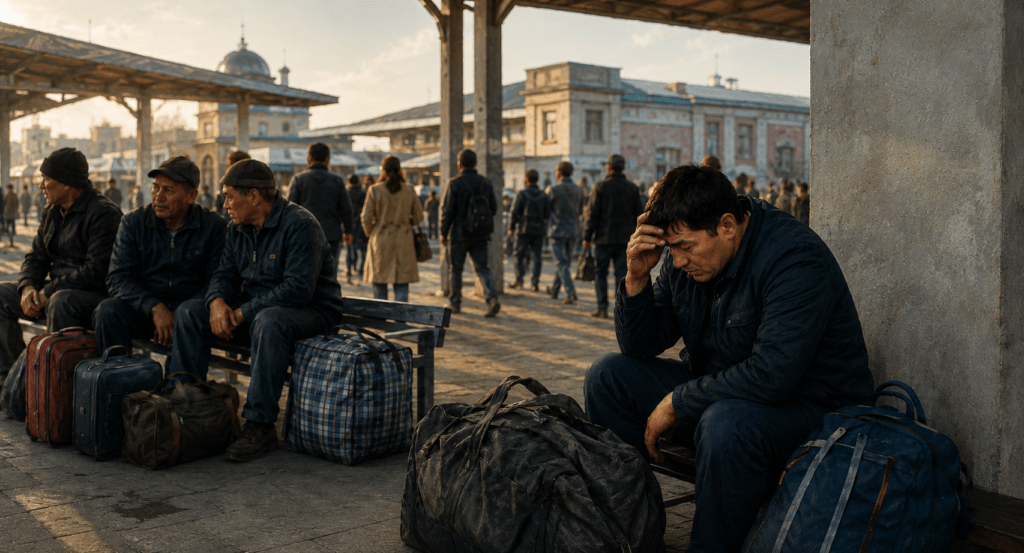
Russia is no longer the unquestioned labor destination it once was for Central Asian workers. That shift is real, but it is easy to overstate. The Times of Central Asia recently reported that labor migration from the region is becoming more diverse. Workers are looking not only to Russia, but also to South Korea, the Gulf states, the United Kingdom, Poland, Belarus, and other destinations. The old Russia-centered model is weakening, even if it has not collapsed. The question is scale. It now intersects with two other filters: legal status and banking access. Alternative labor markets can absorb some Central Asian workers, but they cannot yet replace the Russian labor outlet. Russia did not function as an ordinary destination. For years, it acted as the region's largest external labor valve: geographically close, linguistically familiar, legally accessible for some, and large enough to absorb millions of workers across construction, services, logistics, agriculture, and municipal labor. South Korea, the UK, Poland, and the Gulf can offer higher wages and more formal recruitment channels. They can also reduce overdependence on Moscow. But they are more selective, more bureaucratic, and much smaller in immediate absorption capacity. That leaves a more important question: can new destinations expand fast enough to offset a narrowing Russian market? For now, the answer is probably no. Diversification Is Real, but Not Replacement The difference between diversification and replacement is crucial. A worker from Kyrgyzstan leaving for seasonal work in the UK, or a worker from Uzbekistan entering an organized recruitment program in South Korea, represents a genuine shift. These routes can be safer, better paid, and less exposed to the social hostility now facing many Central Asian migrants in Russia. But they cannot absorb workers on the same scale. Russia's labor market absorbed Central Asian workers in very large numbers because it had a combination few other destinations can match: proximity, low entry costs, dense migrant networks, Russian-language familiarity, and long-standing informal labor channels. Even as those channels become more restrictive, they remain embedded in household economies across the region. This is why diversification should be read as a partial adaptation, not a full exit. For governments in Tashkent, Bishkek, and Dushanbe, the search for new labor markets is necessary. It reduces exposure to Russian policy shocks. It gives workers more choices. It also helps governments negotiate better legal recruitment schemes. Yet the structural problem remains. If Russia closes the door faster than alternatives can open, pressure does not disappear. It returns home through unemployment, lower remittances, and frustrated expectations. The EAEU Line Russia's migration crackdown does not affect Central Asia evenly. The most important dividing line is not geography. It is legal status. Kyrgyzstan and Kazakhstan are members of the Eurasian Economic Union (EAEU), which allows the free movement of labor among member states. In practical terms, citizens of Kyrgyzstan and Kazakhstan have a different legal status in Russia than citizens of Uzbekistan and Tajikistan. They do not face the same work-permit and labor-patent system. That does not...

3 months ago

Opinion: The Amu Darya Stress Test – Uzbekistan, Turkmenistan, and the Politics of Agricultural Adaptation

Central Asia’s water crisis is usually discussed as a problem of rivers, reservoirs, and diplomacy. But in 2026, the Amu Darya is also becoming something else: a test of state adaptation. The river basin entered the irrigation season under acute pressure. According to data cited by Kabar, the flow of the Amu Darya stood at only 66.8% of its normal level as of February 11, compared with 101.8% a year earlier. The Times of Central Asia previously reported that the river’s flow could fall to around 65% of its historical norm, raising risks for food security and agriculture across downstream states. Meanwhile, Afghanistan’s Qosh-Tepa Canal is advancing. The canal, one of the Taliban government’s most ambitious infrastructure projects, is designed to divert water from the Amu Darya to irrigate large areas of northern Afghanistan. Carnegie Politika has estimated that, once fully operational by 2028, it could take up to 10 cubic kilometers of water annually from the river. For Uzbekistan and Turkmenistan, the implications are direct. Both rely heavily on Amu Darya water. Both inherited agricultural systems shaped by Soviet-era irrigation, cotton production, and centralized planning, and both are now facing a combination of climate stress, upstream extraction, and aging water infrastructure. Yet their responses are increasingly different. The emerging contrast is not simply between two agricultural policies; it is between two institutional logics: adaptation and control. Uzbekistan’s Adjustment Strategy Uzbekistan is one of the most exposed countries in the region. Its population is large, its agriculture remains water-intensive, and some of its most vulnerable regions, including Khorezm and Karakalpakstan, sit near the lower reaches of the Amu Darya. For decades, the old model relied on large-scale irrigation, cotton, rice, and the assumption that water would continue to move through the regional system much as it had before. That assumption is now weakening. Tashkent’s response remains costly and far from complete. Uzbekistan still faces serious water losses, degraded land, salinization, and uneven implementation of reform. But the direction of travel is visible: the state is trying to reduce exposure by changing crops, infrastructure, and diplomatic behavior. Rice is one example. Traditional flooded rice cultivation is extremely water-intensive, and water shortages have already pushed some Uzbek rice farmers away from traditional Amu Darya regions toward areas with more stable access to water. Uzbekistan has also begun experimenting with less water-intensive methods. In Karakalpakstan, UNDP has supported the introduction of upland rice, which can reduce water consumption by up to 40% compared with traditional rice cultivation. Separately, Uzbekistan has announced plans to expand resource-efficient rice cultivation, including drip irrigation and drought-resilient rice varieties. The state is no longer treating the old water-intensive model as untouchable. In 2026, Uzbekistan allocated significant public financing for water-saving technologies. Government-linked reporting has described plans to expand drip irrigation, sprinkler systems, and laser land leveling across hundreds of thousands of hectares, with a broader target of expanding water-saving technologies to 3.5 million hectares by 2028. Laser leveling may sound technical, but its use reflects a shift from simply demanding more...

3 months ago

Opinion: Beyond Multivectorism – What Kyrgyzstan’s UN Security Council Win Really Shows

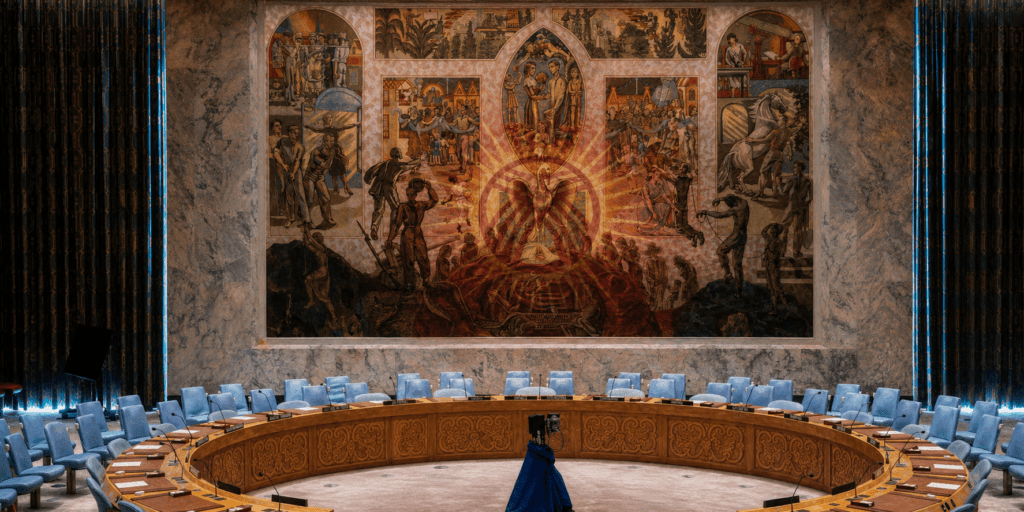
Kyrgyzstan's election to the United Nations Security Council for the 2027-2028 term is more than a diplomatic milestone. It is a case study in how a small state can create political weight without possessing a large economy, military power, or a dominant regional position. On June 3, Kyrgyzstan won its first-ever seat on the Security Council after a competitive four-round contest with the Philippines for the Asia-Pacific Group vacancy. Bishkek led from the first round, with 105 votes against Manila's 85, and increased its support through each subsequent ballot. It finished with 142 votes to 49. The result is significant because this was not an uncontested regional rotation. Kyrgyzstan had to assemble a qualified two-thirds majority across the wider UN General Assembly. That required more than support from its immediate neighbors. Bishkek had to build support across regions, institutions, and political blocs. The deeper lesson is that small-state agency should not be measured only by material resources. It should also be measured by the ability to assemble coalitions. A Campaign Larger Than Kyrgyzstan Kyrgyzstan's campaign was not presented simply as a request for national recognition. President Sadyr Japarov framed the bid as a question of representation. When Kyrgyzstan intensified its campaign in 2024, he drew attention to the number of UN member states that had never served on the Council and argued for broader representation, particularly for African countries. Bishkek also positioned itself as a voice for small, developing, landlocked, and mountainous states facing security, climate, and connectivity challenges. That framing gave the vote wider political weight. Kyrgyzstan could not outspend larger states; it could not offer a large domestic market or a major security umbrella. But it could translate its limitations into a broader political language: underrepresentation, sovereign equality, regional balance, and the need for smaller states to have a voice in global decision-making. The campaign also received visible regional backing. In December 2025, all five Central Asian presidents endorsed Kyrgyzstan's candidacy, presenting the bid as a regional effort rather than a purely national one. That was the first layer of the coalition. The second was broader. In May 2026, the African Group at the United Nations received a dedicated briefing on Bishkek’s candidacy from Edil Baisalov, Kyrgyzstan’s newly appointed ambassador to the United States and a special envoy of the president. This followed Kyrgyzstan's public support for wider African representation in the Security Council. Because the UN ballot was secret, it would be impossible to claim that African votes delivered Kyrgyzstan's victory. Nor would it be accurate to reduce the campaign to a simple exchange of support. But the African track was an observable part of a wider coalition strategy. Bishkek aligned its own candidacy with an issue that mattered to a much larger group of states: the imbalance of representation inside the Security Council. From Multivectorism to Coalition Brokerage Central Asian foreign policy is often described through the language of multivectorism. The term usually refers to balancing among Russia, China, the West, Turkiye, and other external powers...

4 months ago

Opinion: Water Without a Guarantor – Central Asia’s Next Security Test

The Fourth High-Level International Conference on the International Decade for Action, “Water for Sustainable Development,“ taking place in Dushanbe on May 25-28, comes at a difficult moment. Central Asia's water problem is no longer only about environmental management; it is moving into the field of regional security. The conference agenda is familiar and necessary: climate, investment, innovation, transboundary cooperation, and the implementation of the Water Action Decade. The harder question is what happens outside the conference hall. Does Central Asia still have a credible way to stop water stress from becoming an interstate crisis? For decades, the region operated in a post-Soviet setting in which Moscow shaped many security calculations, even though it was never a formal water arbiter. That setting has weakened. Russia has not disappeared from Central Asia, and it still retains military, economic, and institutional leverage. But since 2022, its role as the assumed external stabilizer has become less convincing. The result is not a simple vacuum. It is a more awkward reality: a region with many outside actors, but no trusted water-security guarantor. The Old Backdrop Is Weakening Central Asia's water system was built around a Soviet-era division of functions. Upstream republics, Tajikistan and Kyrgyzstan, controlled the mountains, reservoirs, and hydropower potential. Downstream republics, Uzbekistan, Kazakhstan, and Turkmenistan, depended on seasonal water flows for agriculture, food security, and social stability. The Soviet system managed those tensions through central planning. After independence, cooperation became more fragile. Water, energy, borders, electricity, and agriculture were separated into national strategies. The rivers, however, remained transboundary. For many years, Russia remained the largest external power around which regional security calculations were organized. That did not make Moscow an effective water manager, but it helped shape the political environment. Today, that environment has changed. The CSTO did not prevent the Kyrgyz-Tajik border escalations of recent years. Kyrgyzstan and Tajikistan eventually reached a border agreement through direct negotiation rather than outside enforcement. That difference is not academic. Water disputes are rarely settled by conferences alone. They need trusted channels for mediation, compensation, and restraint when pressure builds. Central Asia has plenty of statements about cooperation. It has fewer tools for managing coercion when water becomes scarce. Three Pressure Points The region's water-security stress is already visible in three places. The first is Afghanistan's Qosh-Tepa Canal. The canal draws water from the Amu Darya, a river system critical for Uzbekistan and Turkmenistan. Because Afghanistan was not part of the old Soviet water-allocation arrangements, the Taliban government is creating a new upstream reality outside the inherited regional framework. Estimates of the canal's downstream impact vary widely. Some analyses suggest it could divert between 15 and 30% of the Amu Darya's flow, depending on the completion timeline, irrigation efficiency, and water-management practices. The Times of Central Asia previously reported that reduced Amu Darya flows could indirectly affect Kazakhstan if Uzbekistan compensates by drawing more heavily on the Syr Darya. Carnegie has described the Qosh-Tepa as a serious test for regional water cooperation. The second pressure point...

4 months ago

Opinion: Turkey’s Third Vector: How the Turkic States Are Expanding Central Asia’s Room for Maneuver

President Recep Tayyip Erdoğan’s May 13-14 state visit to Kazakhstan and the May 15 informal summit of the Organization of Turkic States in Turkistan should not be read as isolated diplomatic events. Together, they point to a larger shift in Central Asia’s geopolitical architecture. During Erdoğan’s visit to Astana, Kazakhstan and Turkey signed the Declaration on Eternal Friendship and Expanded Strategic Partnership, along with agreements covering trade, transport, energy, education, investment, defense cooperation, oil and gas, and financial-sector collaboration. The two sides also reaffirmed their goal of raising bilateral trade to $15 billion. Erdoğan was awarded the newly established Khoja Ahmed Yassawi Order, a symbolic gesture tied to the summit being hosted in Turkistan, the city most closely associated with Yassawi’s legacy. A day later, Turkistan hosted the informal summit of the Organization of Turkic States under the theme “Artificial Intelligence and Digital Development.” The timing matters. Central Asia is no longer operating inside a simple Russia-China framework. Russia remains deeply embedded in the region through security history, infrastructure, language, labor migration, and energy networks. China remains the region’s main infrastructure and trade heavyweight. The West is increasingly focused on sanctions, critical minerals, connectivity, and the Middle Corridor. But Turkey is becoming something different: not a replacement for Russia or China, but a useful third vector. Its influence is built on identity, logistics, defense technology, education, digital cooperation, and institutional networking through the Turkic States framework, rather than overwhelming capital or military dominance. Turkey as a Corridor Power Turkey cannot match China’s investment scale in Central Asia. It also cannot match Russia’s historical security depth. Ankara does not need to replace either power to matter. Its comparative advantage is different. Turkey connects Central Asia westward, to the South Caucasus, the Black Sea, the Mediterranean, and Europe. It also offers a language of partnership that is culturally familiar and politically less threatening than great-power patronage. Tokayev captured this dimension during the joint statements in Astana, describing Turkey as a “golden bridge” connecting Europe and Asia. The framing is telling: not a partner of equal weight, but a connector, exactly the function of a corridor power. A corridor power does not dominate a region directly. It expands the routes, partnerships, platforms, and strategic options available to states that do not want to be trapped between larger powers. That is why the Erdoğan-Tokayev meeting and the Turkistan summit matter. The issue goes beyond bilateral trade. It is the gradual construction of a Turkic corridor linking identity, transport, defense, digital governance, and markets. The OTS as Identity Infrastructure The Organization of Turkic States is often dismissed as symbolic: summits, speeches, flags, cultural rhetoric, and references to shared history. That reading is incomplete. Identity is not just emotion. In international politics, identity can become infrastructure. Shared language, educational networks, media links, cultural affinity, and repeated institutional contact reduce the cost of trust-building. They make it easier to sign agreements, build transport projects, expand student exchanges, coordinate business forums, and create political habits of consultation. The...

5 months ago