The China-Kyrgyzstan-Uzbekistan railway is often presented as a new route to Europe, but its first benefits are likely to be felt closer to home. It could give Central Asian shippers more choice and governments more room to negotiate transport costs, even where sanctions restrict access to European markets.
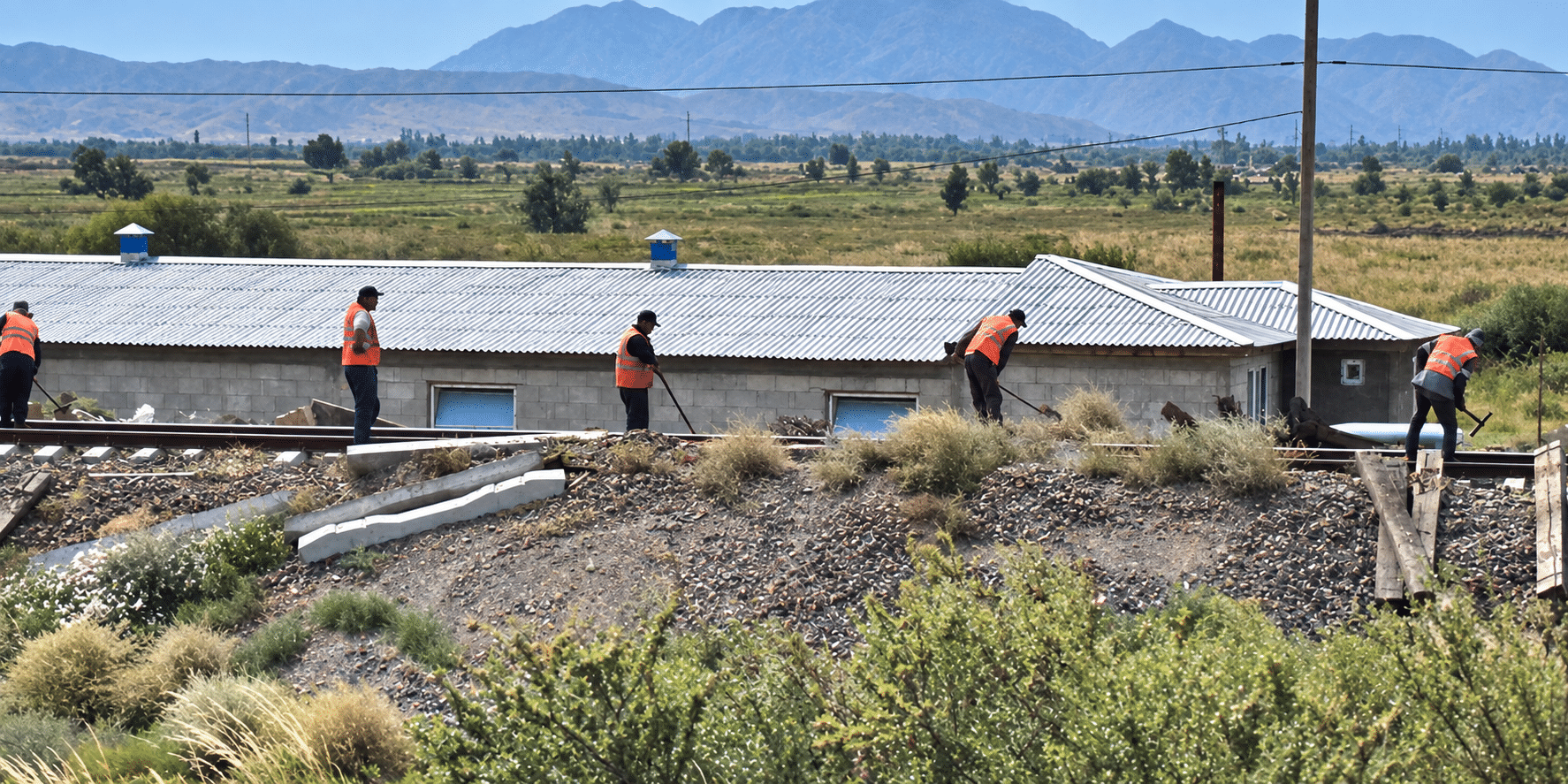
Excavation of the 209.6-meter Kosh-Dobo North No. 2 tunnel was completed on August 5. Work is also underway on other tunnels along Kyrgyzstan’s mountainous section of the railway.
CKU is advancing as falling Caspian water levels make the Middle Corridor more expensive to maintain. That could increase demand for alternative routes, although each comes with its own costs and restrictions.
Kyrgyz officials have high expectations. Deputy Prime Minister Edil Baisalov told TCA that “this railroad will virtually transform Kyrgyzstan.” Fulfilling that ambition will require the country to earn more than transit fees.
Much depends on Makmal, where a transshipment station and possible logistics center are planned. The Torugart-Makmal section will use the Chinese standard gauge of 1,435 mm, while the Makmal-Jalal-Abad section will use the 1,520 mm gauge common across the post-Soviet rail system.
Changing gauge adds time and expense as cargo moves between trains. The planned station will handle transfers between the two systems, as well as cargo sorting and train assembly, operations which could support local logistics businesses, provided there is enough traffic.
Warehousing and customs services would give Kyrgyzstan a chance to earn more from that traffic. Whether Makmal develops into a wider logistics hub will depend on the services available and their cost to shippers.
The mountainous terrain makes the line expensive and slow to build. It also limits the options for competing routes through the Tien Shan. That may strengthen Kyrgyzstan’s negotiating position, but only if the railway offers a reliable service at competitive rates.
The trans-Caspian Middle Corridor avoids Russia and Iran, making it more attractive to European companies concerned about sanctions. Yet, as TCA has reported, falling Caspian water levels are raising the cost of the route through Aktau and Kuryk.
Low sea levels around Aktau and Kuryk reduce loading efficiency and increase transport costs. Kazakhstan has dredged Kuryk and launched deeper work at Aktau, aiming for a 7.7-meter depth in the operational part of the port.
The Caspian route remains workable, but maintaining it requires continuing investment. If those costs rise, shippers will have more reason to compare alternatives.
There are also delays to address. In a recent TCA interview, the TITR secretary general stressed the need to speed up the route and ease Caspian bottlenecks as freight volumes grow.
A southern route could avoid Caspian transshipment. From Uzbekistan, cargo can move through Turkmenistan and Iran to Turkey. Uzbek, Iranian, and Turkish officials have already discussed linking this corridor with the CKU railway.
Some freight already travels south on existing lines. In September, a 55-container block train was dispatched from Kazakhstan’s Altynkol station after crossing from China. Its announced route ran through Uzbekistan and Turkmenistan to Iran via the Sarakhs border station. It carried automotive components and consumer goods, alongside consolidated freight. The service does not use CKU, which remains under construction, but shows that there is already commercial interest in the southern route.
Sanctions constrain that trade. The United States maintains a broad Iran sanctions program. In July, the U.S. Treasury sanctioned more than 50 people, companies, and vessels linked to Iranian shipping networks, including containerized shipping firms and vessels tied to the Shamkhani network.
Those restrictions can put the Iran route out of reach for European companies and businesses using U.S.-linked finance. Chinese, Turkish, and regional operators also face potential sanctions exposure, regardless of their reliance on Western finance. Whether a shipment can proceed depends on the cargo, the parties involved, and the applicable restrictions. Existing traffic does not establish that the route is available to other shippers.
The northern route through Kazakhstan remains the largest and most established, with substantial China-Europe traffic, but its onward passage through Russia carries sanctions-related risks. The Caspian route avoids Russia but adds port and maritime costs. Transit through Iran may be shorter for some shipments, but sanctions limit who can use it.
CKU would give Kyrgyzstan and Uzbekistan another connection to this network. For Kyrgyzstan, the immediate opportunity is to develop services around Makmal. Uzbekistan would gain a new eastern rail link to complement its routes west and south.
For European shippers, the trans-Caspian and Iranian routes will remain distinct choices with different sanctions exposure. CKU’s wider value is in giving Central Asian businesses more ways to reach markets.
The views expressed in this article are those of the author and do not necessarily reflect the official policy or position of the publication, its affiliates, or any other organizations mentioned.