• KGS/USD = 0.01144 0%
  • KZT/USD = 0.00196 -0%
  • TJS/USD = 0.10899 -0%
  • UZS/USD = 0.00008 -0%
  • TMT/USD = 0.28490 0%
  • KGS/USD = 0.01144 0%
  • KZT/USD = 0.00196 -0%
  • TJS/USD = 0.10899 -0%
  • UZS/USD = 0.00008 -0%
  • TMT/USD = 0.28490 0%
  • KGS/USD = 0.01144 0%
  • KZT/USD = 0.00196 -0%
  • TJS/USD = 0.10899 -0%
  • UZS/USD = 0.00008 -0%
  • TMT/USD = 0.28490 0%
  • KGS/USD = 0.01144 0%
  • KZT/USD = 0.00196 -0%
  • TJS/USD = 0.10899 -0%
  • UZS/USD = 0.00008 -0%
  • TMT/USD = 0.28490 0%
  • KGS/USD = 0.01144 0%
  • KZT/USD = 0.00196 -0%
  • TJS/USD = 0.10899 -0%
  • UZS/USD = 0.00008 -0%
  • TMT/USD = 0.28490 0%
  • KGS/USD = 0.01144 0%
  • KZT/USD = 0.00196 -0%
  • TJS/USD = 0.10899 -0%
  • UZS/USD = 0.00008 -0%
  • TMT/USD = 0.28490 0%
  • KGS/USD = 0.01144 0%
  • KZT/USD = 0.00196 -0%
  • TJS/USD = 0.10899 -0%
  • UZS/USD = 0.00008 -0%
  • TMT/USD = 0.28490 0%
  • KGS/USD = 0.01144 0%
  • KZT/USD = 0.00196 -0%
  • TJS/USD = 0.10899 -0%
  • UZS/USD = 0.00008 -0%
  • TMT/USD = 0.28490 0%
08 December 2025

Kazakh Musicians Turn to Old Instruments to Make New Music

The dombra, the kyu, the kobyz, the zhetigen…. The list of traditional instruments in Kazakh music goes on.

These aren’t dust-coated relics. The instruments are increasingly at the forefront of a lot of popular music in Kazakhstan today. They even get makeovers. The dombra is a long-necked, stringed instrument symbolizing Turkic culture. Now there is the electric dombra.

Merey Otan, also known as Mercury Cachalot, knows about all of this. She is a musician and graduate student at Nazarbayev University in Astana and co-author of a book about the transformation of traditional instruments in Kazakhstan.

In written responses to questions from The Times of Central Asia, Otan talked about contemporary Kazakh music and the role of the old instruments. After some replies, TCA includes brief explanations of her musical references.
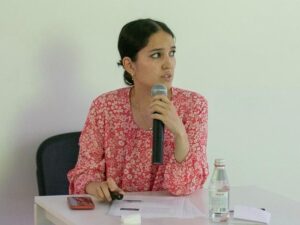
Researcher Merey Otan speaks last year at a launch for a book she co-authored about traditional instruments and contemporary music in Kazakhstan. Otan is a postgraduate student in the Eurasian Studies program at Nazarbayev University in Astana. Photo: Merey Otan


Merey, tell us how you first encountered Kazakh music and what attracted you to Kazakh instruments?


I have always been surrounded by Kazakh music. As long as I can remember we used to sing Kazakh folk songs at family gatherings, and various celebrations. My sister used to play dombra, a Kazakh traditional plucked two-stringed instrument, and when I started going to school I also started learning to play it. Unfortunately, I stopped taking lessons after a couple of years but I still remember how to play some compositions, kuys, and play it once in a while.


TCA: Kuys is a traditional instrumental piece of Kazakh, Nogai, Tatar and Kyrgyz musical cultures. It is performed on various folk instruments.


Which Kazakh instruments are considered the most popular among contemporary musicians, and why do they attract attention?


Dombra is probably the most popular traditional instrument among local musicians, including contemporary ones. It also has a sacred meaning for the people in terms of national identity. This is evident in the quote of a famous Kazakh poet Kadyr Myrza Ali “A true Kazakh is not a Kazakh but a dombra.” This shows that Kazakh people associate their identity with the instrument and incorporating its sound in contemporary songs allows them to situate their music in the local context. Apart from that, musicians also use instuments like qobyz, shanqobyz, zhetigen. Authenticity was always important for musicians and including traditional instruments is one of the popular strategies to demonstrate authenticity for Kazakhstan’s musicians. Among the most popular examples are songs by Yerbolat Kudaibergen, Irina Kairatovna, Aldaspan, The Buhars.
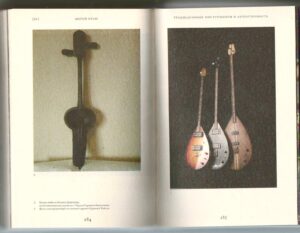
A dombra and a kobyz, traditional instruments used in Kazakhstan, are shown in a book that was co-authored by researcher Merey Otan. Photo: TCA


TCA: The kobyz is an ancient bowed instrument preserved among the peoples of Siberia, Central Asia, the Volga region, Transcaucasia and other regions. 

The shankobyz is an ancient Kazakh reed musical instrument, formerly used by shaman-worshipers to imitate the sounds of nature, such as wind, rain, and murmuring water. 

The zhetigen is an ancient multi-stringed plucked instrument, often seven-stringed, resembling a psaltery or laid harp, characteristic of Kazakh culture. 

Yerbolat Kudaibergenov is a Kazakh singer and author of hit songs such as “Zhigitter” and “Boijetken,” known for compositions filled with love for his homeland and a warlike spirit. 

Irina Kairatovna is a creative group from Kazakhstan that produces musical and humorous content. They are the authors of hits such as “Kok Tu,” “China” and “Ne Angime.”


What is the peculiarity of the sound of Kazakh instruments, and what technical and creative approaches do modern musicians use to give them a modern touch?


Kazakh traditional instruments differentiate the sound of local musicians from the vast amount of music in the world. Technological advancements provide opportunities for various creative and unique ways of enriching the sound. For example, musicians include riffs on traditional instrument into songs in hip-hop, R’n’B, rock genres. This makes the sound global and local at the same time. Other musicians went further by creating electric versions of traditional instruments like electric dombyra, electric zhetigen, electric qobyz. These instruments also started gaining popularity among contemporary musicians.


 How does the use of Kazakh instruments in contemporary music contribute to the preservation of cultural heritage and broaden its audience?


Definitely, the mentioned musicians play a part in preserving the cultural legacy and widening the audience of the music. First of all, mixing contemporary genres with traditional sounds creates positive associations with the Kazakh instruments for the listener. These instruments are not only thought of as memories of the past but something contemporary, authentic, cool, modern. It surely makes it popular among the youth who get to know these instruments and maybe want to learn to play the riffs from popular songs. It should be mentioned that local musicians are becoming popular in other countries as well. Therefore, we can assume that traditional instruments are becoming known in other regions too. A good example of this is Dimash Kudaibergen who became popular in China due to his incredible voice and now people from all around the world listen to him. However, he also helped popularize dombyra worldwide when he played the instrument on the most prestigious stage like Madison Square Garden in New York.


TCA: Dimash Kudaibergen is a Kazakh singer and multi-instrumentalist who has an international following and includes the use of traditional Kazakh instruments in his performances.
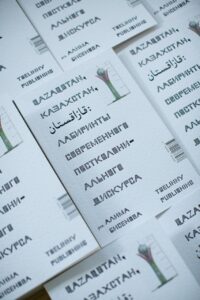
Copies of the book co-authored by Otan lie in a table at a book launch last year. The book is titled “Kazakhstan: Labyrinths of contemporary postcolonial discourse” and is published by the publishing house Tselinniy. Photo: TCA


What challenges do musicians face when integrating Kazakh instruments into contemporary compositions, and how do they overcome them?


The sacred importance of traditional instruments, especially dombra, of course caused some backlash from the conservative part of the population when contemporary musicians included it in their songs or created electric versions of them. This is a common situation not only in Kazakhstan. Back in the day, famous jazz musicians had similar concerns about the creation of electric bass guitar. For instance, ethnic rock band Aldaspan was accused of spoiling dombra by traditional musicians. Nevertheless, these “purist” attitudes did not stop musicians from continuing their work and creating further instruments like electric zhetigen. Moreover, musicians’ audience is increasing and the younger generation is more open to these kinds of creative choices and more liberal in their views. Therefore, I think these musicians no longer face significant struggles.


Can you share examples of successful projects where Kazakh instruments are successfully combined with modern genres of music?


As I mentioned previously, such performers as Yerbolat Kudaibergen with songs “Men qazaqpyn,” “Bizdin Zhigitter” is one of the prominent examples. Pretty much every song of the band Aldaspan and Sharapat and the incredible sound of electric dombyra and electric zhetigen can be considered successful. More popular examples are Irina Kairatovna and their song “Kok tu” where also the outro has riff played on both acoustic dombyra and electric dombyra. The Buhars released a mini album with songs specifically to demonstrate the beauty of traditional Kazakh instruments. Apart from that, OYU is a great platform to find good new music where I found out about the collaboration of DJ Puza and Mira de Leon with the song “Jiber” which also beautifully mixes qobyz sound with electric music.


TCA: OYU is a musical project from Kazakhstan, specializing in live performances of local and foreign artists of various musical genres.


What is your view on the balance between traditional elements of Kazakh music and modern audience requirements?


In my opinion, digital technologies and the vast amount of music from all over the world pushes the audience to find new, unique, interesting sounds and drives musicians to find ways to differentiate them from others. Today, it might be hard to surprise and intrigue a listener, who is constantly exposed to popular music from all over the world. This creates an incredible challenge but at the same time a great foundation for musicians to continue experimenting with the sound, creating new music, making groundbreaking work. And one of the possible strategies is to include traditional Kazakh instruments. This might be a good opportunity not only to gain an audience from the local population but also from other parts of the world.


What advice would you offer to young musicians who want to introduce Kazakh instruments into their creative work?


The most important advice I would give is to not be afraid to make something new. You can’t escape the criticism, especially in the era of social media but this should not stop people from their creative process. Be open to everything, challenge yourself, and challenge the listener.

Kazakhstanis Keeping Less Foreign Currency, Buying More Gold

The National Bank of Kazakhstan counts the country’s gold and foreign exchange reserves in February 2024 at $36.1 billion, financial news outlet LS reports. In 2014 this indicator was at $26.05 billion, meaning that over the past 10 years the volume of gross international reserves has increased by $10 billion (+38.6%).

Over the past decade the mix of the gold and foreign exchange reserves has changed markedly. The foreign currency assets in Kazakhstan decreased by $4 billion, but gold reserves are up a surprising 3.2 times. In February 2014 the volume of the reserve in bullion was $6.3 billion, and in February of this year this figure reached $20.01 billion. At the same time, the reserves of precious metals in the country in this month increased to 300.4 tons.

The volume of assets in freely convertible currency decreased to $16.1 billion from $19.8 billion (-18.7%) over 10 years. The National Fund is itself down by 16.1% since 2014 — to $60.1 billion from $71.6 billion. At the end of last month, the chairman of the National Bank of Kazakhstan Timur Suleimenov said that the investment income of the National Fund was $870 million. “The amount of income to the fund since the beginning of the year amounted to $2 billion, including $408.8 million in national currency. The volume of transfers from the National Fund to the republican budget amounted to one tenge, or $0.0022,” said Suleimenov.

In Kazakhstan following the events of January 2022, work began on the repatriation and return of assets that were illegally withdrawn. Over the past two years more than $2.2 billion in cash and real estate were returned to the state. In September last year the total banking sector assets of Kazakhstan reached a record $106.6 billion.

Kazakhstan Refuses to Ban Kyrgyz-Licensed Products Despite Threat

The Ministry of Trade and Integration of Kazakhstan had drawn up a document which would have introduced a ban on the import of products licensed in Kyrgyzstan from July 2024. The ministry explained that Bishkek issues licenses for goods without proper testing, instead using “gray schemes” from the shadow or informal economy.

Kazakhstani authorities estimated that by the end of 2023 the country had 413 laboratories that could issue quality certificates for products, while Kyrgyzstan had only 43. At the same time, Kyrgyz certification laboratories have issued an exponentially higher number of permits than laboratories in Kazakhstan over the past few years. Moreover, Kyrgyzstan issued half of all permits to Kazakhstani business owners. According to Kazakhstani authorities, they have repeatedly received complaints about the unfair work of Kyrgyz licensing and product-conformity verification bodies.

After talks with the Kyrgyz Ministry of Economy and Commerce, Kazakh deputy prime minister Serik Zhumangarin said the decision to completely ban Kyrgyz certification laboratories is premature. “First of all, the problem is not only in Kyrgyzstan, there is a problem in every Eurasian Economic Union country. It’s just that in some countries, of course, it’s all off the scale. The point here is that I consider the Trade Ministry’s decision to be premature. The draft decree is not a government decision. It was not properly approved, so we stopped it,” Zhumangarin told Kazakhstani media. According to the him, this is an issue that needs to be negotiated, and the process is already underway.

In turn, the Kyrgyz Ministry of Economy said it had consulted with its Kazakh counterparts to strengthen control over laboratories in the area of product-conformity assessment. As a result, it was decided to develop a joint plan to combat gray — meaning falsely obtained — certificates without imposing restrictions and bans on the circulation of products.

As a result of negotiations, the parties agreed to unite information systems in this area, as well as to exclude from a single register of unscrupulous laboratories those who previously issued certificates for products without quality-verification assessments. From now on, Bishkek and Astana will also exchange information on identified violations and fully digitize the process of issuing permits — from application to issuance of certificates for products. The Kazakhstani side is satisfied with this.

Earlier this month, the Times of Central Asia reported that hundreds of trucks have become backed up on the Kyrgyz-Kazakh border and are unable to cross into Kazakhstan. Last week, hundreds of trucks were queued up on the Kyrgyz side, waiting in line. This situation has happened many times in the past, and merchants and transporters have suffered financial losses. Each time it occurs, one side blames the other. The Kyrgyz side believes that Kazakhs create artificial administrative obstacles at the border to weaken competition from Kyrgyz imported goods — and Kazakh authorities accuse Kyrgyz truckers of unwillingness to comply with Astana’s requirements, using fraudulent documents for transported cargo.

Coincidence or not, after the parties agreed that they would not ban Kyrgyz laboratory certificates in Kazakhstan, the queue of trucks at the border began to shrink. About 240 trucks are now waiting in line to enter Kazakhstan, according to Kyrgyz border guards. A week ago, there were about 500 trucks in line, and the number of vehicles continued to increase. The situation appears to be improving, and 653 trucks have crossed the border over the past day.

German Company to Make Cosmetics From Kazakh Mare’s Milk

The German skincare company Zollmann Stutenmilch GmbH is looking to expand its range of products — including some containing horse’s milk from Kazakhstan’s S-Agro-Borovskoe. In September 2023 the Kazakhs opened a farm for producing powdered mare’s milk under the ‘Local Food’ brand in the Kostanay region, employing 150 people.

“The German company has been breeding horses since the 1970s, and in 1990 started producing freeze-dried mare’s milk. Its farm in the town of Mühlben is the largest and oldest enterprise in Germany specializing in the production of kymyz [mare’s milk]. We signed an agreement for further cooperation in Germany,” said the director of S-Agro-Borovskoe, Meiram Akhmetzhanov.

Local Food’s kymyz is produced on a farm equipped with an automated milking system that collects fresh milk in cooling tanks without contacting air, which prevents pathogenic bacteria from entering the product. The milk is then pasteurized, cooled and frozen in a freeze dryer to produce a 100% organic, dry product with a shelf life of up to two years — a major improvement, considering that fresh mare’s milk can only be stored for two hours.

Hans Zollmann, founder of Zollmann Stutenmilch GmbH, emphasized that the Kazakh company has become an exclusive partner and explained that the new agreement will include the production of organic cosmetics based on mare’s milk. “The signed agreement is a new stage of our cooperation with Kazakhstan, especially with Kostanay. We plan to produce [all the same products that] we produce in Germany here in Kazakhstan. I have devoted my whole life to the production of mare’s milk and I believe that Kazakhstan has great opportunities in this area, as this drink is their national treasure,” Zollmann added.

The launch of Local Food cosmetics is scheduled for the third quarter of 2024, and will create an additional 30 jobs. In the future, S-Agro-Borovskoe is also considering the production of sports nutrition products, baby food and pharmaceutical supplements.

Kazakhstan Admits There Are Three Russian Military Test Sites On Its Territory

Kazakhstan’s Ministry of Defense has revealed that Russia is currently leasing three test sites in Kazakhstan. This disclosure comes after a complaint was lodged by residents of the West Kazakhstan region (WKO), who notified local authorities that a Russian landfill named Kapustin Yar, containing unprocessed waste, is operating in the region and making people ill.

The ministry confirmed that there is indeed a training ground in the WKO — the Number 4 State Central Intermilitary Training Ground — with the ground’s facilities and battlefields located partly on Russian territory. Russia conducts an average of 4-5 test launches each year. The location is not used by Kazakhstan’s armed forces.

In total there are three Russian military test sites in Kazakhstan: the 929 State Flight Test Center is located in the West Kazakhstan and Atyrau regions, and the Sary-Shagan test site occupies parts of the Karaganda, Ulytau, Zhambyl, Kyzylorda and Aktobe regions.

“The coordinates of the [military] polygons’ borders are regulated by agreements between Kazakhstan and Russia, which are available in the open information system of normative and legal acts,” the Kazakh defense ministry said.

The lease agreement between Kazakhstan and Russia states that Russia may conduct tests within the boundaries allocated to the test site, to ensure the safety of operations and missile launches, search, evacuation and disposal of the remains of space objects and targets, timely cleaning of battlefields and eliminating the aftereffects of accidents, as well as to compensate for any damage caused to Kazakh land. It’s also stipulated that representatives of Kazakhstan’s state sanitary and environmental supervision may have unimpeded access to the test sites. In addition, the Russian side must improve the environment on the territory of the test site by developing and implementing long-term and annual programs to protect the environment, as well as reclaim the land where targets sat and missiles struck. The Kazakh ministry notes that Russia is unconditionally fulfilling its obligations, and there is no confirmation of cancer cases amid the test launches.

“So far, there has been no information confirming the infliction of moral and physical damage on local residents as a result of the test sites’ activities. The Russian side is obliged to comply with environmental regulations, operating rules and norms of water and land use of Kazakhstan. Environmental damage caused by the activities of the test site shall be eliminated by the Russian Federation. In this case, the amount of damage and forms of its compensation are determined by a specially created interstate commission,” summarized the ministry.

According to the agreement, the lease term for all three Russian ranges runs until July 27, 2030, and the cost is $2.33 for each hectare of land. The total amount of the lease of the battlefields is $20 million, and the settlement of payments is conducted between the two countries’ national banks.

Baikonur Launch to ISS Scheduled for Saturday 23rd March

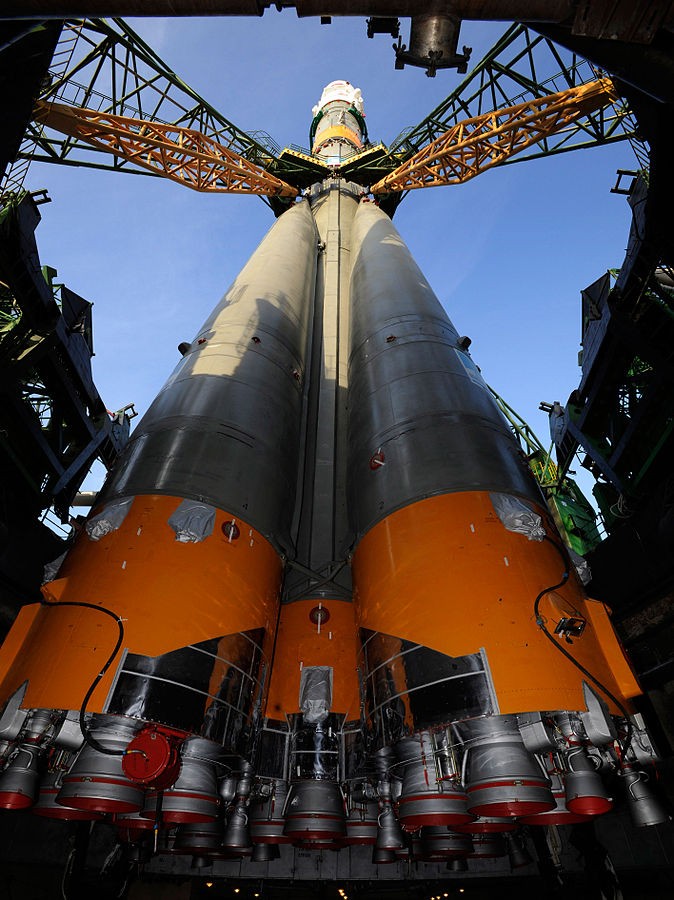
ALMATY, Kazakhstan – A spacecraft carrying three crewmembers from Russia, Belarus and the United States is scheduled to launch Saturday to the International Space Station. The mission was aborted Thursday with seconds to lift-off from the Baikonur Cosmodrome in Kazakhstan.

The scrapped launch was caused by a “voltage drop in the chemical current source,” said Yuri Borisov, head of Roscosmos, the Russian space agency. Tass, the Russian state news agency, quoted Borisov as saying the crew is safe and well.

The Soyuz spacecraft was expected to take about three hours after a launch on Thursday to reach the station, where seven people already aboard are awaiting the new arrivals. If a Saturday afternoon launch goes ahead, the travel time will be longer and docking is expected to occur on Monday.

Those heading to the space station are mission commander Oleg Novitsky of Roscosmos (his fourth trip to space), Belarusian Marina Vasilevskaya (her first trip) and NASA’s Tracy Caldwell Dyson (her third).

Novitsky, a lieutenant colonel in the Russian Air Force, and Vasilevskaya, a former flight attendant, will return to Earth after 12 days on the station, accompanied by NASA’s Loral O’Hara, who has spent six months in space. Dyson, a chemist with experience as an electrician and private pilot, is scheduled to return to Earth in September.

Coordination between the U.S. and Russian space agencies has continued despite international tension over the war in Ukraine.

“Russia and the United States are still cooperating in space. At least for now,” tweeted Eric Berger, senior space editor at Ars Technica, a technology publication.

Russia operates the Baikonur Cosmodrome in southern Kazakhstan. The Soviet Union opened the facility in the 1950s.