• KGS/USD = 0.01144 0%
  • KZT/USD = 0.00207 0%
  • TJS/USD = 0.10456 0.19%
  • UZS/USD = 0.00008 0%
  • TMT/USD = 0.28490 -0.28%
  • KGS/USD = 0.01144 0%
  • KZT/USD = 0.00207 0%
  • TJS/USD = 0.10456 0.19%
  • UZS/USD = 0.00008 0%
  • TMT/USD = 0.28490 -0.28%
  • KGS/USD = 0.01144 0%
  • KZT/USD = 0.00207 0%
  • TJS/USD = 0.10456 0.19%
  • UZS/USD = 0.00008 0%
  • TMT/USD = 0.28490 -0.28%
  • KGS/USD = 0.01144 0%
  • KZT/USD = 0.00207 0%
  • TJS/USD = 0.10456 0.19%
  • UZS/USD = 0.00008 0%
  • TMT/USD = 0.28490 -0.28%
  • KGS/USD = 0.01144 0%
  • KZT/USD = 0.00207 0%
  • TJS/USD = 0.10456 0.19%
  • UZS/USD = 0.00008 0%
  • TMT/USD = 0.28490 -0.28%
  • KGS/USD = 0.01144 0%
  • KZT/USD = 0.00207 0%
  • TJS/USD = 0.10456 0.19%
  • UZS/USD = 0.00008 0%
  • TMT/USD = 0.28490 -0.28%
  • KGS/USD = 0.01144 0%
  • KZT/USD = 0.00207 0%
  • TJS/USD = 0.10456 0.19%
  • UZS/USD = 0.00008 0%
  • TMT/USD = 0.28490 -0.28%
  • KGS/USD = 0.01144 0%
  • KZT/USD = 0.00207 0%
  • TJS/USD = 0.10456 0.19%
  • UZS/USD = 0.00008 0%
  • TMT/USD = 0.28490 -0.28%

Viewing results 1 - 6 of 139

Azerbaijan and Armenia to Hold Talks in Kazakhstan

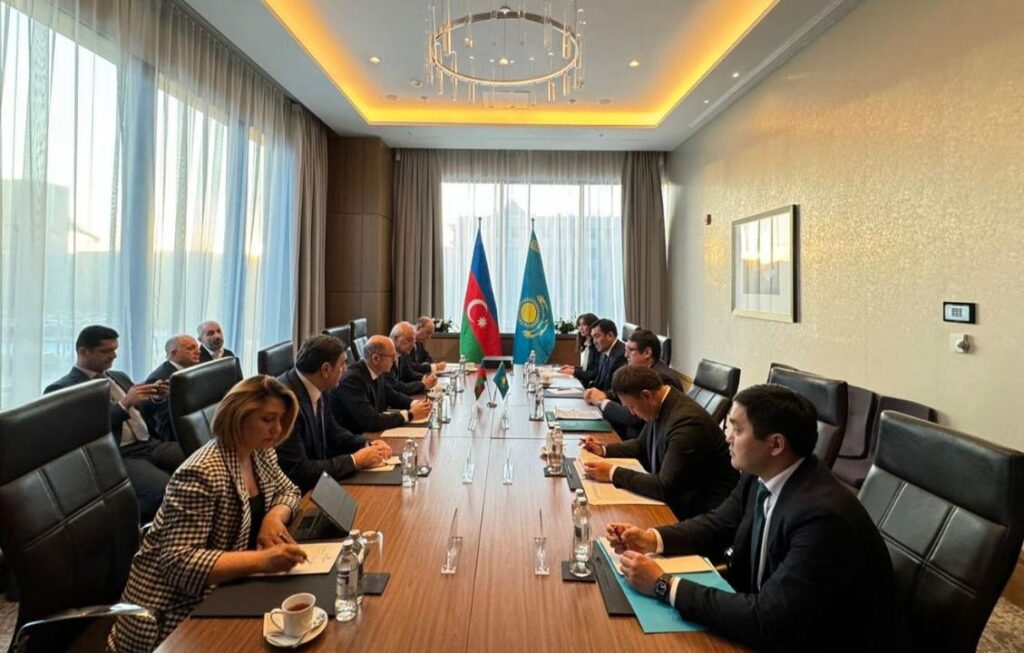
Officials in Baku have agreed to a meeting of the foreign ministers of Azerbaijan and Armenia in Kazakhstan. Azeri president Ilham Aliyev stated as much at a meeting with participants of the international forum "COP29 and a Green Vision for Azerbaijan" held at ADA University, Turan.az reports. Aliyev said that if Yerevan gives reciprocal consent, their next talks will be held in Astana. He reminded the audience of the previously concluded Madrid Principles, which were first proposed in 2007. "We have a common understanding of how the peace agreement should look like. We just need to work out the details. However, of course, both sides need time. Now there is a unique chance. When the USSR collapsed there were wars in our region, unlike the Baltic States, which started their independent life peacefully. Now we have this chance. I think COP29 is a great opportunity for this," Aliyev said. On April 15 Kazakhstan's president Kassym-Jomart Tokayev paid an official visit to Armenia. Tokayev called on Yerevan and Baku to settle the conflict through negotiations, and he suggested Kazakhstan as the location for hosting the dialog. Tokayev himself spent years as a diplomat, and Kazakhstan seems to be positioning itself as an international mediator, aiming to be recognized as a significant diplomatic player on the world stage. Member of the Kazakhstan Institute for Social Development, Yernar Kushaliyev commented: "Kazakhstan pursues a multi-vector foreign policy, which allows it to effectively interact with various global powers and regional actors. Kazakhstan has a unique potential to play the role of the main mediator in the Eurasian region, especially in the settlement of disputes between states. The country maintains a neutral position, not participating in military conflicts, which creates favorable prerequisites for mediation and diplomacy. This position strengthens confidence in Kazakhstan as a reliable mediator and organizer of peace negotiations". Kushaliyev stresses that, in the context of the current negotiations, the military situation is not developing in Armenia's favor. "Azerbaijan, in its turn, has successfully implemented a number of strategic and tactical tasks in Nagorno-Karabakh, strengthening its positions. As a result of these circumstances, it seems likely that both sides will be able to come to constructive agreements and demarcate their borders during the negotiations to be held in Astana," he said.
Azerbaijan and Kyrgyzstan Expand Economic and Transport Cooperation

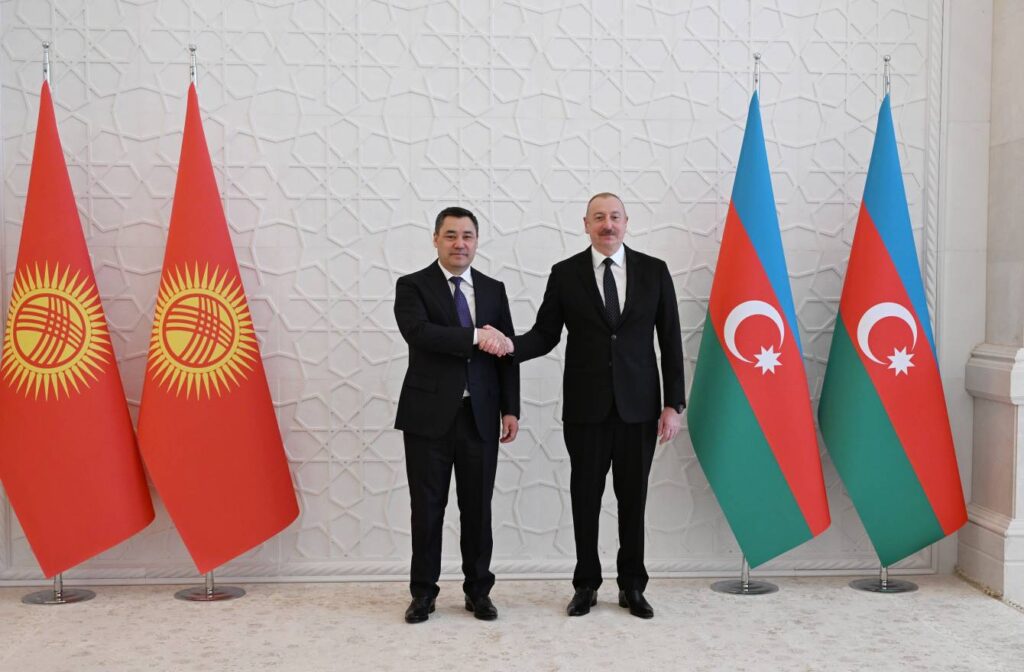
During a state visit to Azerbaijan on 24 April, Kyrgyzstan President Sadyr Japarov joined President Ilham Aliyev in bilateral talks at the 2nd gathering of the Interstate Council of Azerbaijan and Kyrgyzstan. As a result of the meeting in Baku and in support of a joint declaration to deepen relations, the leaders signed a strategic partnership agreement between Azerbaijan and the Kyrgyz Republic. In a statement to journalists, President Aliyev referred to centuries-old ties of cooperation, friendship and interaction enjoyed by Azerbaijan and Central Asia, and announced, “Today, the regions of Central Asia, the Caspian Sea and Azerbaijan are of great importance in terms of energy resources, transportation routes and trade. We are seeing great potential here and are strengthening interaction with our traditional partners from brotherly countries. Among them, cooperation with Kyrgyzstan is of particular importance.” During the meeting, the two governments signed an addendum to the agreement on the authorized capital of the Azerbaijani-Kyrgyz Development Fund, to quadruple it from $25 million to $100 million. To date, the Fund has received over 40 applications for investment projects in Kyrgyzstan and according to Aliyev, the construction of a five-star hotel financed by Azerbaijan already begun at Kyrgyzstan’s Lake Issyk-Kul, is due for completion by the end of next year. The president commended the significant increase and potential for growth in trade between Azerbaijan and Kyrgyzstan and reported Azerbaijan’s interest in investing in renewable energy projects in Kyrgyzstan. With reference to transport, he recommended that consultations proceed on coordination of transport routes in terms of digitalization and tariff policy, to make the route via the Caspian Sea and Central Asia to Europe both faster and more commercially viable. President Japarov, in turn, referenced Kyrgyzstan’s construction of a secondary school in the Aghdam district of Azerbaijan, saying, “The construction of this school is Kyrgyzstan's contribution to the restoration of peace in the regions affected by the [Azeri-Armenian] conflict.”

Trans-Caspian Corridor High on Agenda of Kazakh President’s Visit to Azerbaijan

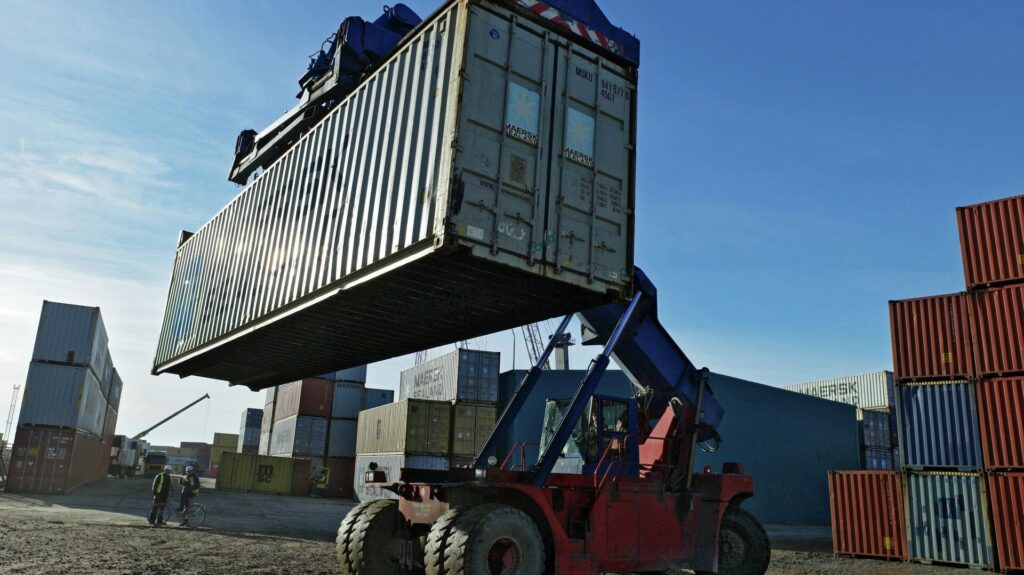
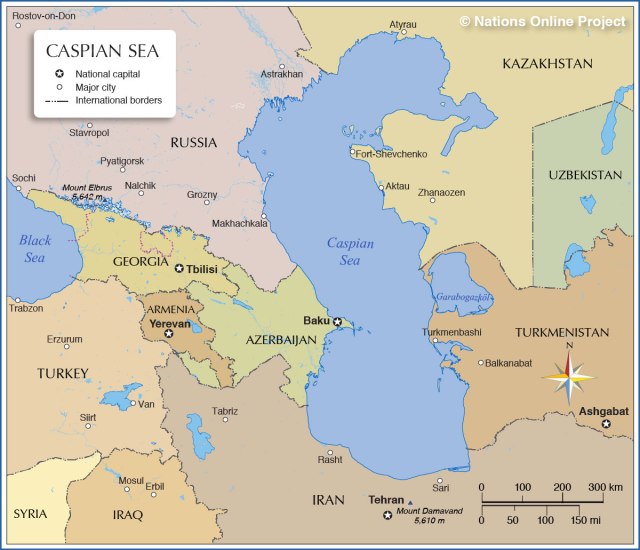
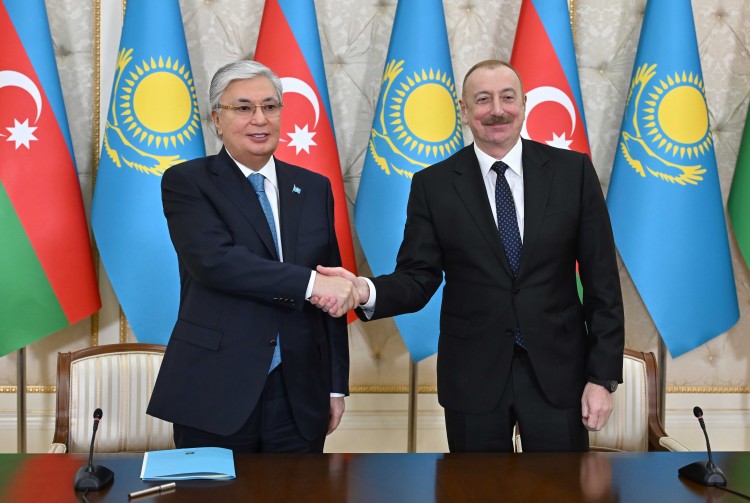
On March 11th, Kazakhstan’s president Kassym-Jomart Tokayev and Azerbaijan’s president Ilham Aliyev attended the first meeting of the Interstate Council of Kazakhstan and Azerbaijan in Baku where freight and oil shipment across the Caspian Sea was high on the agenda. The leaders also participated, by teleconference, in a ceremony marking the arrival of the first container train in Azerbaijan’s Absheron station following its departure on February 28th from the Kazakh transport and logistics centre in China’s Xi'an, via the new section of the Trans-Caspian International Transport Route (TITR). At the ceremony, Tokayev emphasized that against current global geopolitical turbulence, the creation of a new transport and logistics framework for Eurasia has a key role to play in nurturing close and fruitful cooperation between Kazakhstan and Azerbaijan. Following talks with the Azerbaijani president, Tokayev spoke of the intensifying degree to which other countries struggle to access transport and logistics opportunities. “This is a strategic area. As testified by today’s ceremony, the close interaction between Kazakhstan and Azerbaijan, as natural partners, is therefore both gratifying and highly significant.” Outlining other issues raised at the meeting, the Kazakh president told the press, “We discussed joint efforts in the fields of digitalization, the creation of artificial intelligence, and the construction of fibre-optic communications along the bed of the Caspian Sea. Each is a unique project.” Azerbaijani President Ilham Aliyev reiterated that the Trans-Caspian transport corridor will determine the level of regional cooperation. “It is impossible to become a transit country without good relations with neighbours. Both Kazakhstan and Azerbaijan have demonstrated their commitment to regional cooperation and strengthening their relations with their neighbours. We are separated the Caspian Sea but this is no longer an obstacle. On the contrary, with the Trans-Caspian transport route set to reach its full potential, the Caspian Sea is a bridge not only between our countries, but also between many others too.” In his report to the Kazakh-Azerbaijani Business Council on cargo transported via the TITR between Kazakhstan and Azerbaijan, Satzhan Ablaliev, Kazakhstan’s Deputy Minister of Transport, stated: “The volume increased by 65% in 2023, and in the current year, is planned to increase by a further 43%, of up to 4.2 million tons. In January alone, the volume of transportation increased 2.5-fold compared to January last year. The transit of Chinese containers has increased almost 3-fold.” During Tokayev’s visit, Kazakhstan’s national oil and gas company KazMunayGas and Azerbaijan’s state oil company SOCAR signed an agreement to increase the transit of Kazakh oil across the Caspian Sea through Azerbaijan along the Aktau-Baku-Tbilisi-Ceyhan route to 2.2 million tons per year. This represents significant progress on an agreement drawn up in 2022 to transport up to 1.5 million tons of oil along the same route. The two companies also signed a Memorandum of Strategic Cooperation on the purchase and sale of Kazakh oil for further processing at SOCAR’s refineries and subsequent trading in the regional and global markets.

Kazakhstan Seeks to Increase Oil Transit Through Azerbaijan

With the production of crude oil set to rise in Kazakhstan, the country plans to increase shipments across the Caspian Sea and through Azerbaijan. On March 6th, Kazakhstan’s Minister of Energy Almasadam Satkaliev met his Azerbaijan counterpart, Parviz Shahbazov, to discuss cooperation between their countries regarding the transit of Kazakh oil and the implementation of large-scale renewable energy projects. Back in 2022, Kazakhstan’s President Kassym-Jomart Tokayev ordered an increase in the volume of oil transported across the Caspian Sea. In response, Kazakhstan’s national oil and gas company KazMunayGas and the state oil company of Azerbaijan, SOCAR, entered into an agreement to transport up to 1.5 million tons of oil per year from Kazakhstan’s Aktau port through the Baku-Tbilisi-Ceyhan oil pipeline. In 2023 Kazakhstan’s shipment of crude oil from the Caspian port of Aktau grew to almost 1.4 million tons and this year, is expected to rise to 1.5 million tons. Major expansion projects are currently underway at Kazakhstan’s Tengiz, Karachaganak, and Kashagan oil fields to increase the future output of crude oil. Today, most of the country’s oil is exported via the pipeline managed by the Caspian Pipeline Consortium (CPC) which runs to the Russian Black Sea port of Novorossiysk. The throughput capacity of the Kazakh section of the Caspian Pipeline Consortium (CPC) pipeline has increased from 54 million to 72.5 million tons per year. The Kazakh and Azeri energy ministers also discussed a forthcoming project to connect the Caucasus region and Central Asia’s energy systems through the installation of a deep-sea cable in the Caspian Sea.

Trade Between Tajikistan and Azerbaijan Increases by 26%

Trade turnover between Tajikistan and Azerbaijan increased by more than 26% in the first ten months of this year, amounted to more than $ 5 million, the customs authorities of Azerbaijan reported, adding that $4.6 million of this is accounted for by exports to Tajikistan. It was recently reported that Tajikistan and Azerbaijan have signed a number of cooperation agreements, particularly in investments aimed at improving the industrial sector. Among the key areas are projects for the launch of an oil refinery in the Dangara SEZ, the construction of a hydroelectric power plant in Tajikistan, and an increase in TALCO's production capacity. In addition, Baku is promoting an initiative to provide Dushanbe with discounts on rail transport.

The perspective of trans-Caspian gas flow to Europe

BISHKEK (TCA) — With the signing of the Convention on the legal status of the Caspian Sea, Turkmenistan now has an opportunity to diversify its natural gas exports to Europe through the proposed Trans-Caspian Gas Pipeline project. We are republishing this article on the issue, written by Ilgar Gurbanov*: Continue reading