• KGS/USD = 0.01144 0%
  • KZT/USD = 0.00208 0%
  • TJS/USD = 0.10414 -0.29%
  • UZS/USD = 0.00008 0%
  • TMT/USD = 0.28571 0%
  • KGS/USD = 0.01144 0%
  • KZT/USD = 0.00208 0%
  • TJS/USD = 0.10414 -0.29%
  • UZS/USD = 0.00008 0%
  • TMT/USD = 0.28571 0%
  • KGS/USD = 0.01144 0%
  • KZT/USD = 0.00208 0%
  • TJS/USD = 0.10414 -0.29%
  • UZS/USD = 0.00008 0%
  • TMT/USD = 0.28571 0%
  • KGS/USD = 0.01144 0%
  • KZT/USD = 0.00208 0%
  • TJS/USD = 0.10414 -0.29%
  • UZS/USD = 0.00008 0%
  • TMT/USD = 0.28571 0%
  • KGS/USD = 0.01144 0%
  • KZT/USD = 0.00208 0%
  • TJS/USD = 0.10414 -0.29%
  • UZS/USD = 0.00008 0%
  • TMT/USD = 0.28571 0%
  • KGS/USD = 0.01144 0%
  • KZT/USD = 0.00208 0%
  • TJS/USD = 0.10414 -0.29%
  • UZS/USD = 0.00008 0%
  • TMT/USD = 0.28571 0%
  • KGS/USD = 0.01144 0%
  • KZT/USD = 0.00208 0%
  • TJS/USD = 0.10414 -0.29%
  • UZS/USD = 0.00008 0%
  • TMT/USD = 0.28571 0%
  • KGS/USD = 0.01144 0%
  • KZT/USD = 0.00208 0%
  • TJS/USD = 0.10414 -0.29%
  • UZS/USD = 0.00008 0%
  • TMT/USD = 0.28571 0%

Viewing results 1 - 6 of 139

Caspian pact paves way for Turkmen gas exports to Europe – eventually

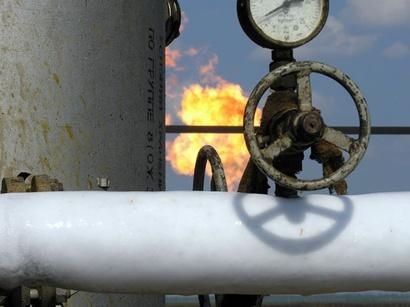
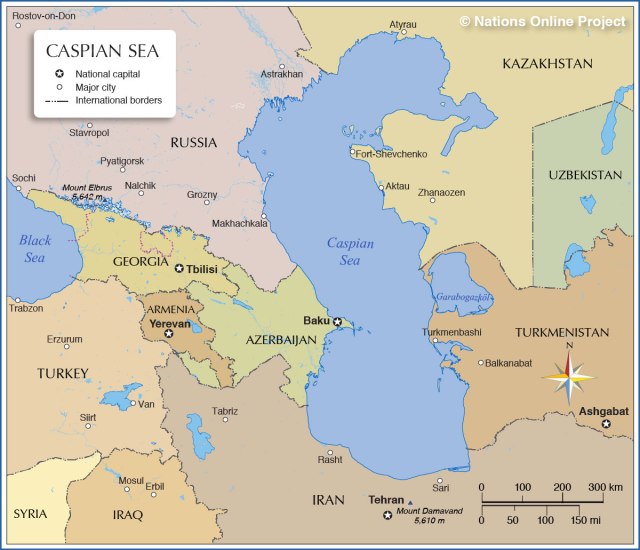
BISHKEK (TCA) — With China being the only buyer of Turkmen natural gas after the suspension of gas supplies to Iran early this year, Turkmenistan is striving to find new sales markets for its gas, and a planned trans-Caspian pipeline to Azerbaijan seems to be a promising option for Ashgabat. We are republishing this article by David O'Byrne on the issue, originally published by EurasiaNet.org: After close to 30 years of haggling over the legal status of the Caspian Sea, the five littoral states appear to have finally settled their differences and agreed on delineating their maritime borders. If finalized, the deal could pave the way for the export of Turkmenistan’s vast natural gas reserves to Europe. Details of the agreement have not been released and some elements may only be finalized when the final text is signed next year by the heads of the five states: Russia, Kazakhstan, Turkmenistan, Iran and Azerbaijan. “We have found solutions to all the remaining open, key issues related to the preparation of the draft Convention on the legal status of the Caspian Sea,” Russian Foreign Minister Sergey Lavrov said after a meeting with his Caspian counterparts in Moscow on December 5. “The text of the document is, in fact, ready.” A compromise by Turkmenistan over how its maritime border with Azerbaijan is determined appears to be the breakthrough that made finalization of the pact possible. Under the compromise, Ashgabat reportedly would drop its claim to part of Azerbaijan's Azeri-Chirag-Guneshli oil field, and would also likely lead to talks over other disputed assets like Kapaz/Sardar, an oil and gas field located midway between Azerbaijan and Turkmenistan and claimed by both. “In the coming months the two countries will also start discussing joint oil and gas projects and perhaps some form of production sharing agreement regarding the Kapaz/Sardar field,” said Efgan Nifti, director of the Washington-based Caspian Policy Center. The agreement also appears to remove the ability of Russia or Iran to block the development of a pipeline to transit Turkmen gas across the Caspian to Azerbaijan and possibly on to Europe. Azerbaijani Deputy Foreign Minister Khalaf Khalafov said the deal that has been reached stipulates that pipeline projects only need to be approved by the countries whose waters the pipeline would traverse. “At least on the legal level, no one can now object if Azerbaijan and Turkmenistan decide to build a pipeline,” Nifti said. It's not clear what might have led Russia, which has for years strenuously opposed the construction of a pipeline across the Caspian, to make this concession. Russian officials have not publicly addressed the issue. Alexander Knyazev, a pro-Kremlin analyst, told the newspaper Nezavisimaya Gazeta that Russia could resort to old-fashioned saber-rattling techniques to disrupt the construction of any pipeline that Moscow opposed. “The issue [of a pipeline] isn't eliminated, but if the project is realized, conflict could take place, most likely, in less civilized forms,” Knyazev said. “And in that case, the Russian Caspian Flotilla, which de facto dominates the...
Convention on legal status of Caspian Sea to be signed in first half of 2018

BISHKEK (TCA) — The five Caspian Sea littoral states — Azerbaijan, Iran, Kazakhstan, Russia, and Turkmenistan — have agreed on the draft Convention on the Legal Status of the Caspian Sea, which will be signed at the Fifth Caspian Summit to be held in Kazakhstan in the first half of next year, Russian Foreign Minister Sergey Lavrov said in a statement following the Meeting of the Caspian Littoral States' Foreign Ministers in Moscow on December 5. “We have agreed to continue to vigorously promote the implementation of new promising joint projects, especially in the transport sector with its various aspects – from infrastructure development and commercial navigation to improving navigation safety – and the deepening of economic cooperation between the Caspian Five,” Lavrov said. He also said that the foreign ministers “have positively evaluated the interaction between our defence ministries in the Caspian Sea,” adding that this year, almost all coastal states exchanged friendly visits by their Navy ships. Meanwhile, Azerbaijani Foreign Minister Elmar Mammadyarov said that there is "a need for maximum efforts to reach a consensus" on all remaining issues before the summit, RFE/RL reported. The foreign ministers did not say what the remaining sticking points were. The Caspian Sea is the largest inland body of water in the world, with huge hydrocarbon resources. Its legal regime has been under discussion since 1991, when Azerbaijan, Kazakhstan, and Turkmenistan gained independence following the collapse of the Soviet Union. If the Caspian is legally declared a sea, all five littoral countries would map out their territorial waters and exploit the resources as they see fit. If it is designated as a lake, all the resources of the Caspian, and profits from those resources, would be split equally among the five countries.

Trans-Caspian International Transport Route to increase cargo transportation

ASTANA (TCA) — On November 15, Azerbaijan’s capital Baku hosted the General Meeting of members of Trans-Caspian International Transport Route (TITR) International Association, which discussed increasing the volume of cargo transportation along this route and increasing its efficiency, the press office of Kazakhstan’s national railways company Kazakhstan Temir Zholy (KTZ) said. Continue reading

Agreement on Afghanistan-Europe transport corridor signed

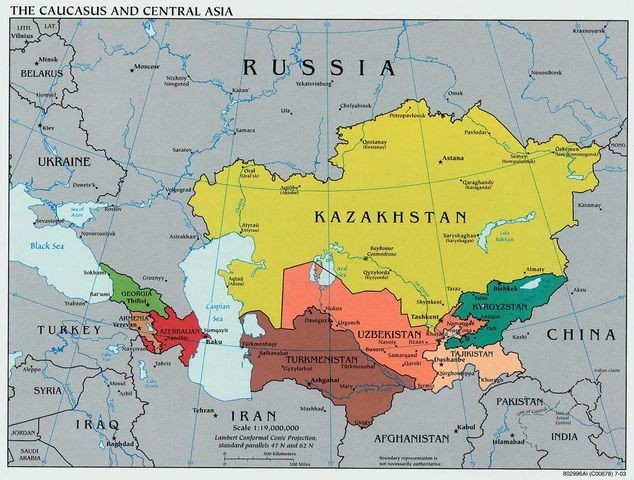
ASHGABAT (TCA) — Afghanistan, Azerbaijan, Georgia, Turkey, and Turkmenistan on November 15 signed an agreement on a major international trade and transport corridor that will connect Afghanistan directly to Europe. The document was signed at the 7th Regional Economic Cooperation Conference on Afghanistan (RECCA VII) in Ashgabat, Turkmenistan. The Lapis Lazuli Corridor will begin in Afghanistan’s northern Aqina port in Faryab province and Torghandi in western Herat province and will run through to Turkmenbashi in Turkmenistan. From there it will cross the Caspian Sea and will link the Azerbaijani capital Baku to Tbilisi and Georgia’s Black Sea ports of Batumi and Poti. It will then connect with Kars in eastern Turkey before linking to Istanbul and Europe, Afghanistan’s TOLOnews reported. The agreement was finalized after three years of talks. Signing the agreement for Afghanistan was acting foreign minister Salahuddin Rabbani, who said that the signing of the Lapis Lazuli Corridor Agreement marked a milestone in Afghanistan’s efforts to achieve greater connectivity through improvement and building of infrastructure for increased trade across Eurasia. The Afghan delegation at the RECCA summit said the signing of the agreement is a new page in trade and transit in the region and for Afghanistan. “It is a trade and transit agreement between five nations. According to this agreement, Afghanistan can have access to Turkmenistan, Azerbaijan, Georgia and Turkey,” said Adela Raaz, deputy chairperson of economy at the Afghan ministry of foreign affairs. Afghanistan Chamber of Commerce and Industries (ACCI) said the Lapis Lazuli Corridor is the nearest and cheapest way to transport Afghanistan and Asian goods to Europe. According to the ACCI, by using the corridor, Afghanistan’s goods will travel through Turkmenistan, across the Caspian Sea to Azerbaijan, then Georgia, across the Black Sea and through Turkey to the Mediterranean and Europe. The ACCI said that 80 percent of goods to Europe will be transported by railway and also across the Caspian and Black Sea by ship.

Baku-Tbilisi-Kars railway launched to link Europe, Turkey, Georgia, Azerbaijan and Central Asia

BAKU (TCA) — Azerbaijan, Georgia, and Turkey have launched a rail link connecting the three countries, establishing a freight and passenger link between Europe and China that bypasses Russia and Armenia and will also serve Kazakhstan and other Central Asian countries, RFE/RL's Azerbaijani Service reports. Continue reading

EBRD to fund Trans-Anatolian gas pipeline to supply Caspian gas to Europe

BISHKEK (TCA) — The European Bank for Reconstruction and Development (EBRD) on October 18 said its Board of Directors has approved a US $500 million regional project that will help finance the delivery of crucial energy supplies from the Caspian Sea to Europe along the Southern Gas Corridor (SGC). Potentially, Turkmenistan may join the project by transporting its natural gas across the Caspian Sea to Azerbaijan. The EBRD said its financing will fund the completion of the Trans-Anatolian Natural Gas Pipeline (TANAP) that passes through Turkey. TANAP is a key part of the SGC which will strengthen Europe’s energy security, promote interconnectivity and open gas markets. It will also help provide a better energy supply mix for consumers in the Balkans and south-eastern Europe as well as achieve significant CO2 reductions through the substitution of obsolete coal-fired power plants. The Bank’s engagement in the project will ensure adherence to the highest environmental standards and allow continuing extensive dialogue with all stakeholders of SGC. The Southern Gas Corridor includes gas infrastructure investments into a 3,500-kilometre pipeline running through six countries with a total cost of US $40 billion. The key components are the Shah Deniz offshore gas field in Azerbaijan, the Southern Caucasus Pipeline in Azerbaijan and Georgia, TANAP in Turkey and the Trans Adriatic Pipeline (TAP) through Greece, Albania and Italy. The initial annual throughput capacity will be up to 16 billion cubic metres, which is equivalent to the annual energy consumption of more than 10 million households in the region.