• KGS/USD = 0.01144 0%
  • KZT/USD = 0.00212 0%
  • TJS/USD = 0.10543 -0.09%
  • UZS/USD = 0.00008 0%
  • TMT/USD = 0.28530 0%
  • KGS/USD = 0.01144 0%
  • KZT/USD = 0.00212 0%
  • TJS/USD = 0.10543 -0.09%
  • UZS/USD = 0.00008 0%
  • TMT/USD = 0.28530 0%
  • KGS/USD = 0.01144 0%
  • KZT/USD = 0.00212 0%
  • TJS/USD = 0.10543 -0.09%
  • UZS/USD = 0.00008 0%
  • TMT/USD = 0.28530 0%
  • KGS/USD = 0.01144 0%
  • KZT/USD = 0.00212 0%
  • TJS/USD = 0.10543 -0.09%
  • UZS/USD = 0.00008 0%
  • TMT/USD = 0.28530 0%
  • KGS/USD = 0.01144 0%
  • KZT/USD = 0.00212 0%
  • TJS/USD = 0.10543 -0.09%
  • UZS/USD = 0.00008 0%
  • TMT/USD = 0.28530 0%
  • KGS/USD = 0.01144 0%
  • KZT/USD = 0.00212 0%
  • TJS/USD = 0.10543 -0.09%
  • UZS/USD = 0.00008 0%
  • TMT/USD = 0.28530 0%
  • KGS/USD = 0.01144 0%
  • KZT/USD = 0.00212 0%
  • TJS/USD = 0.10543 -0.09%
  • UZS/USD = 0.00008 0%
  • TMT/USD = 0.28530 0%
  • KGS/USD = 0.01144 0%
  • KZT/USD = 0.00212 0%
  • TJS/USD = 0.10543 -0.09%
  • UZS/USD = 0.00008 0%
  • TMT/USD = 0.28530 0%

Viewing results 1 - 6 of 95

Turkmenistan: Caspian region sustainable development addressed at seminar

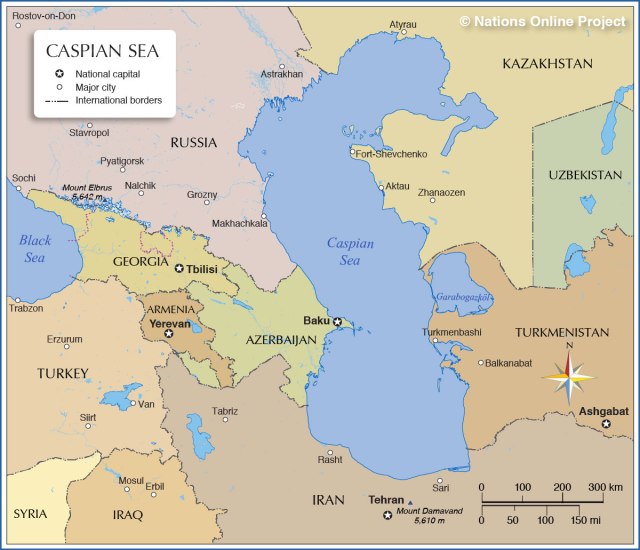
ASHGABAT (TCA) — The Ministry of Foreign Affairs of Turkmenistan and the State Enterprise for the Caspian Sea under the President of Turkmenistan jointly with the International Ocean Institute (IOI) are holding an international seminar "The Caspian Sea — Sustainable Development and Management", in the Avaza national tourism zone at the Turkmen coast of the Caspian Sea. Government experts from Azerbaijan, Iran, Kazakhstan, Russia, and Turkmenistan, as well as international experts — IOI scientific consultants in the field of maritime economy, politics, management, ecology, law of the sea and other disciplines, are taking part in the event, which will last until March 16, the State News Agency of Turkmenistan reported. Continue reading

Kazakhstan allows US nonmilitary transit to Afghanistan

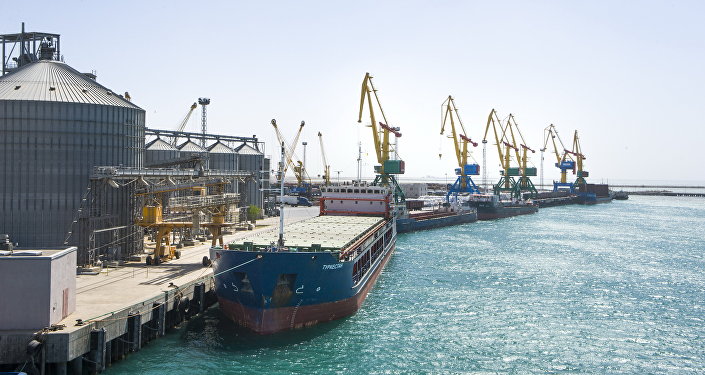
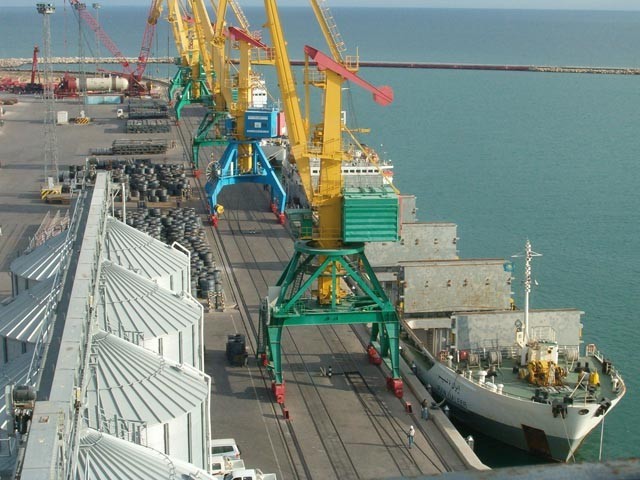
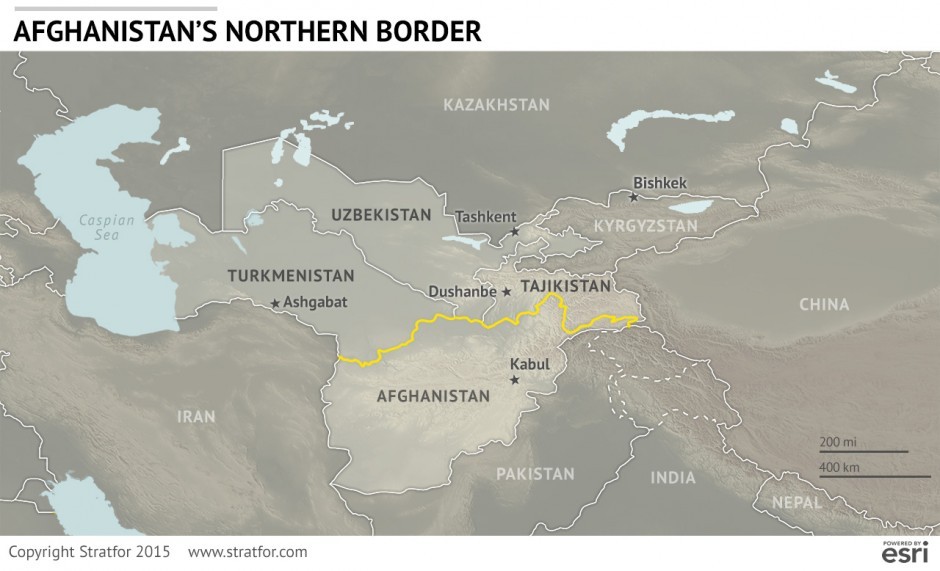
KABUL (TCA) — The parliament of Kazakhstan has approved an agreement that allows the United States to use two of the Central Asian country’s Caspian Sea ports as transit points for shipping nonmilitary material to Afghanistan, the Afghan news agency TOLOnews reported. Continue reading

Kazakhstan developing logistics and transport infrastructure in Caspian Sea

ASTANA (TCA) — First Deputy Prime Minister of Kazakhstan, Askar Mamin, during his working trip to Mangistau region last week, held a meeting on the development of the SEZ “Seaport Aktau” and implementation of the Logistics Infrastructure Development Plan in the Caspian Sea, his secretariat said. Continue reading

Is there an agreement on Caspian Sea delimitation?

BISHKEK (TCA) — Defining the legal status of the Caspian Sea by its littoral countries — Azerbaijan, Iran, Kazakhstan, Russia, and Turkmenistan — has been a pending issue since the breakup of the Soviet Union. The way the Sea will be defined is important for geostrategic and military plans of Russia and Iran, and for energy projects pursued by Azerbaijan, Turkmenistan and Kazakhstan. We are republishing this article by Stephen Blank on the issue, originally published by the Central Asia-Caucasus Institute (CACI) Analyst: Continue reading

Italy’s Eni expands the scope of activities in Kazakhstan hydrocarbon sector

ASTANA (TCA) — The Ministry of Energy of the Republic of Kazakhstan, Italy’s Eni and Kazakhstan’s national oil and gas company KazMunaiGas (KMG) on December 21 signed an agreement to transfer to Eni 50 percent of the subsoil use rights of the Isatay block, located in the Caspian Sea, for exploration and production of hydrocarbons. The agreement expands the scope of Eni's activities in Kazakhstan and consolidates the strategic alliance with its key partner KazMunaiGas, the Italian company said on December 22. The block is estimated to have significant potential for hydrocarbon resources, which are geologically not complex and technologically developable in short time. The signing of this transaction marks the beginning of the operations of the new Joint Company, in which Eni will leverage its proprietary technologies, its leadership in exploration and its extensive experience in challenging technical and environmental areas such as the Caspian Basin, Eni said. In Kazakhstan, Eni is joint operator of the Karachaganak field with a 29.25% stake, and is an equity partner in various projects in the Northern Caspian Sea, including the giant Kashagan field with a 16.81% stake. Eni is a multinational Oil & Gas company, considered one of the global supermajors, it has operations in 73 countries, with a market capitalisation of US $55 billion, as of June 30, 2017. Eni constantly ranks among the top 100 on Fortune Global 500 list for largest companies by revenue.

Caspian pact paves way for Turkmen gas exports to Europe – eventually

BISHKEK (TCA) — With China being the only buyer of Turkmen natural gas after the suspension of gas supplies to Iran early this year, Turkmenistan is striving to find new sales markets for its gas, and a planned trans-Caspian pipeline to Azerbaijan seems to be a promising option for Ashgabat. We are republishing this article by David O'Byrne on the issue, originally published by EurasiaNet.org: After close to 30 years of haggling over the legal status of the Caspian Sea, the five littoral states appear to have finally settled their differences and agreed on delineating their maritime borders. If finalized, the deal could pave the way for the export of Turkmenistan’s vast natural gas reserves to Europe. Details of the agreement have not been released and some elements may only be finalized when the final text is signed next year by the heads of the five states: Russia, Kazakhstan, Turkmenistan, Iran and Azerbaijan. “We have found solutions to all the remaining open, key issues related to the preparation of the draft Convention on the legal status of the Caspian Sea,” Russian Foreign Minister Sergey Lavrov said after a meeting with his Caspian counterparts in Moscow on December 5. “The text of the document is, in fact, ready.” A compromise by Turkmenistan over how its maritime border with Azerbaijan is determined appears to be the breakthrough that made finalization of the pact possible. Under the compromise, Ashgabat reportedly would drop its claim to part of Azerbaijan's Azeri-Chirag-Guneshli oil field, and would also likely lead to talks over other disputed assets like Kapaz/Sardar, an oil and gas field located midway between Azerbaijan and Turkmenistan and claimed by both. “In the coming months the two countries will also start discussing joint oil and gas projects and perhaps some form of production sharing agreement regarding the Kapaz/Sardar field,” said Efgan Nifti, director of the Washington-based Caspian Policy Center. The agreement also appears to remove the ability of Russia or Iran to block the development of a pipeline to transit Turkmen gas across the Caspian to Azerbaijan and possibly on to Europe. Azerbaijani Deputy Foreign Minister Khalaf Khalafov said the deal that has been reached stipulates that pipeline projects only need to be approved by the countries whose waters the pipeline would traverse. “At least on the legal level, no one can now object if Azerbaijan and Turkmenistan decide to build a pipeline,” Nifti said. It's not clear what might have led Russia, which has for years strenuously opposed the construction of a pipeline across the Caspian, to make this concession. Russian officials have not publicly addressed the issue. Alexander Knyazev, a pro-Kremlin analyst, told the newspaper Nezavisimaya Gazeta that Russia could resort to old-fashioned saber-rattling techniques to disrupt the construction of any pipeline that Moscow opposed. “The issue [of a pipeline] isn't eliminated, but if the project is realized, conflict could take place, most likely, in less civilized forms,” Knyazev said. “And in that case, the Russian Caspian Flotilla, which de facto dominates the...