• KGS/USD = 0.01144 0%
  • KZT/USD = 0.00202 0%
  • TJS/USD = 0.10598 -0.19%
  • UZS/USD = 0.00008 0%
  • TMT/USD = 0.28571 0.28%
  • KGS/USD = 0.01144 0%
  • KZT/USD = 0.00202 0%
  • TJS/USD = 0.10598 -0.19%
  • UZS/USD = 0.00008 0%
  • TMT/USD = 0.28571 0.28%
  • KGS/USD = 0.01144 0%
  • KZT/USD = 0.00202 0%
  • TJS/USD = 0.10598 -0.19%
  • UZS/USD = 0.00008 0%
  • TMT/USD = 0.28571 0.28%
  • KGS/USD = 0.01144 0%
  • KZT/USD = 0.00202 0%
  • TJS/USD = 0.10598 -0.19%
  • UZS/USD = 0.00008 0%
  • TMT/USD = 0.28571 0.28%
  • KGS/USD = 0.01144 0%
  • KZT/USD = 0.00202 0%
  • TJS/USD = 0.10598 -0.19%
  • UZS/USD = 0.00008 0%
  • TMT/USD = 0.28571 0.28%
  • KGS/USD = 0.01144 0%
  • KZT/USD = 0.00202 0%
  • TJS/USD = 0.10598 -0.19%
  • UZS/USD = 0.00008 0%
  • TMT/USD = 0.28571 0.28%
  • KGS/USD = 0.01144 0%
  • KZT/USD = 0.00202 0%
  • TJS/USD = 0.10598 -0.19%
  • UZS/USD = 0.00008 0%
  • TMT/USD = 0.28571 0.28%
  • KGS/USD = 0.01144 0%
  • KZT/USD = 0.00202 0%
  • TJS/USD = 0.10598 -0.19%
  • UZS/USD = 0.00008 0%
  • TMT/USD = 0.28571 0.28%
13 February 2026

Viewing results 1 - 6 of 16

Central Asia Needs $12 Billion to Secure Drinking Water

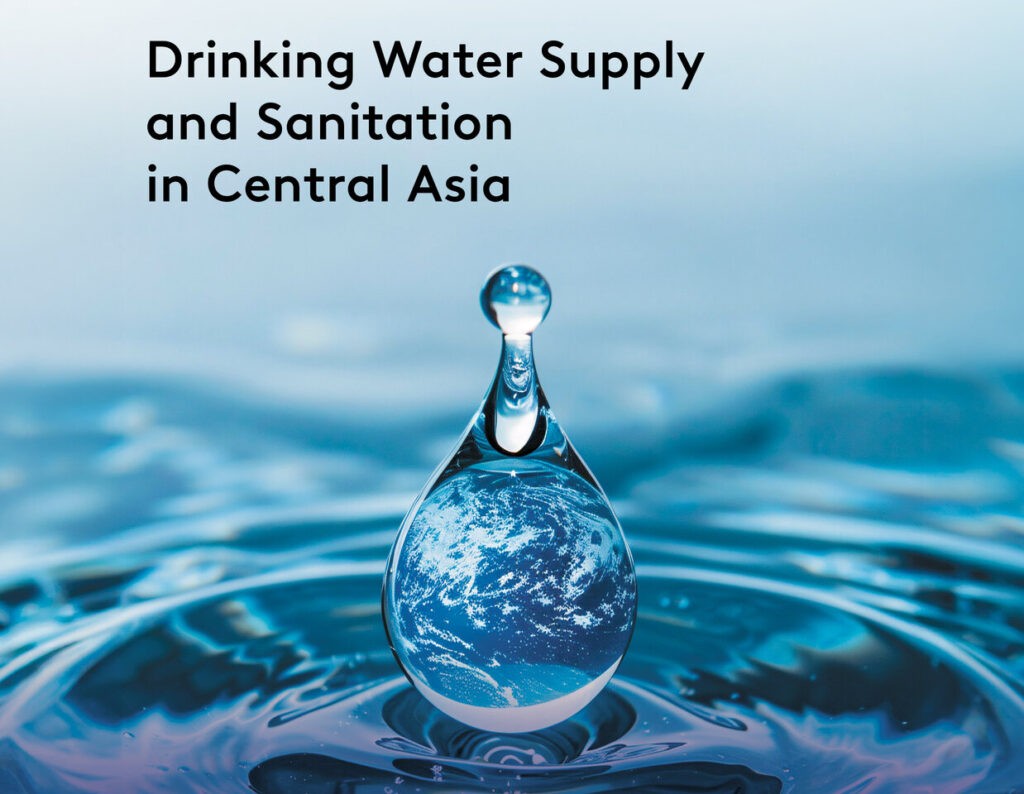
According to the new research paper “Drinking Water Supply and Sanitation in Central Asia” released by the Eurasian Development Bank (EDB), almost 10 million people, or 14% of the population, have poor access to safe drinking water in Central Asia. Water withdrawals for drinking and domestic use increased twofold to reach 8.6 km3 between 1994 and 2020. Investment in its supply infrastructure, however, failed to match growth in consumption. It is estimated that as much as 80% of the region’s water and sanitation equipment is no longer fit for purpose. In addition, physical and commercial water losses in distribution networks can be as high as 55%. The EDB research paper highlights a clear lack of  financial support for plans adopted by Central Asia to develop the sector, and forecasts a deficit of over $12 billion, or around $2 billion per year, between 2025-30. The largest shortfall is expected in Uzbekistan, estimated at $826 million per year, or almost $5 billion between 2025–30. A large shortfall is also projected for Kazakhstan at $700 million per year, or $4.2 billion from 2025–30. In Tajikistan, the shortfall will also be significant, given the size of the country’s economy, reaching $209 million per year, or more than $1.2 billion from 2025–30. To address the issue, the EDB paper outlines three solutions that could help Central Asian countries raise the required investment capital. First, the funding gap can be reduced by attracting finance from international financial institutions (IFIs), multilateral development banks, and development agencies. The water and sanitation sector in Central Asia currently accounts for only 6% of total IFI-approved sovereign funding provided to the region CA, with 147 projects valued at $4 billion (out of a total of $67.5 billion) completed from 2008–2023. Concerted efforts are required to improve the appeal of investment in the sector to attract more active involvement by IFIs. With the emergence of a new, favourable institutional environment and the arrival of private players, the potential of the corporate investment becomes significant. Secondly, to attract the much-needed finance from private investors and major players, the CA water and sanitation sector must not only  modify the ownership and governance structure, but also create conditions conducive to the effective development of market relations. Regarding the above, Evgeny Vinokurov, EDB Chief Economist, stated, “The strengthening of public-private partnership institutions can be of great help. With PPPs active in the water sector, state and private structures will be able to cooperate in a more productive fashion. Expansion of the water sector services market will boost competitiveness and improve the operating efficiency of individual companies. The presence of strong PPP institutions is likely to encourage private operators to join water sector projects. The advent of private players will help the CA countries to attract investments and gain access to innovations, technologies, and experience required to modernise the sector.” Thirdly, improving the tariff system is becoming increasingly compelling. Water tariffs in the region are extremely low and could therefore be raised to improve the financial sustainability...
New International Terminal Opens at Almaty Airport

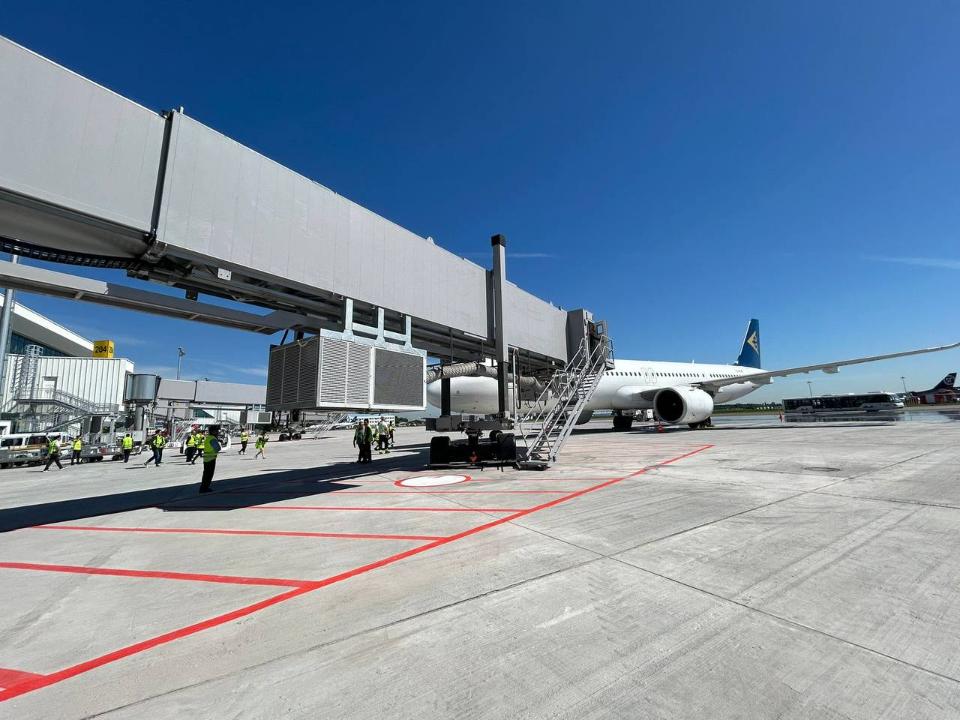
On June 1, a new international terminal was opened at Almaty Airport in readiness to launch its first flights by the middle of the month. According to Kazakhstan’s Ministry of Transport, the new terminal will increase the airport's capacity to 14 million passengers per year and before long, launch 15 new international routes to 10 countries. On 31 May, prior to the opening, President of Kazakhstan Kassym-Jomart Tokayev, accompanied by Nikolai Podguzov, Chairman of the Eurasian Development Bank’s (EDB) Management Board visited the new terminal for a tour of its check-in, border and customs control areas and baggage services. The EDB was part of a syndicate of lenders which included the European Bank for Reconstruction and Development (EBRD), the International Finance Corporation (IFC) and the German Investment Corporation (DEG). Their total investment in the project amounted to US $450 million. In praise of the project, Tokayev remarked, “Almaty International Airport is the nation’s largest air hub. Inbound tourism to the southern capital grows every year, with over 2 million people having visited the city in 2023. Two years ago, I participated in the time capsule laying ceremony on this site, and tomorrow the new terminal at Almaty International Airport will serve its first flights.” With reference to security, Alp Er Tunga Ersoy, President of Almaty International Airport drew attention to the fact that the terminal was designed to meet seismic and fire safety requirements and withstand a magnitude 10 earthquake. The new international terminal was originally scheduled to open in late summer 2024. However, due to a rapid increase in passenger traffic, construction was expedited. All international flights will be transferred to the new terminal by mid-June and the old terminal, repurposed for domestic flights. The President of Kazakhstan expressed his gratitude to TAV GROUP for constructing the terminal to international standards and thanked the syndicate of lenders for its vital support. In response, EDB chairman Podguzov commented, “The construction of a new international terminal and the modernization of Almaty Airport is a significant initiative for the development of Kazakhstan’s transport sector, as it is the country’s largest air hub and part of an extensive international network of routes. We highly appreciate the trust and support of the Government of Kazakhstan and our partners – the EBRD, Germany’s DEG, and the IFC.”    

Green Light for Uzgen Bypass, South Kyrgyzstan

The Eurasian Development Bank (EDB) and a consortium comprising Tez Zhol, Zhagalmai, and DemirBank, have signed agreements to build and maintain a bypass road around the historic town of Uzgen in the Osh region of south Kyrgyzstan. According to EDB’s press office, the project which includes new information technologies for toll road management, aims to improve connectivity in the Osh region, enhance road safety and improve Uzgen’s environment. The Bishkek–Osh highway, one of the country’s main transport arteries and used by approximately 23,000 vehicles per day, causes serious issues for the densely populated town of Uzgen. The route through its center impacts the town’s socioeconomic situation by increasing levels of noise and pollution whilst congestion poses risks for pedestrians, exacerbating safety concerns. The projected timeline for such a large-scale project is 49 years, from 2024 to 2073, and comprising 14.1-km of new roads, three bridges and a toll management system, the estimated cost of its construction is US $29.9 million. Commenting on the initiative, Nikolai Podguzov, Chairman of the EDB Management Board, stated:  “The Uzgen Bypass is the first toll road initiative in the Kyrgyz Republic. This project will increase the daily capacity of the Bishkek–Osh road from 8,000 to 12,000 vehicles, create approximately 300 jobs and boost demand for local industrial enterprises such as reinforced concrete and concrete plants. Additionally, it will improve the environmental situation and reduce the load on Uzgen’s roads by diverting traffic to bypass the residential sector.”

EDB Boosts Investment in Kazakh Projects

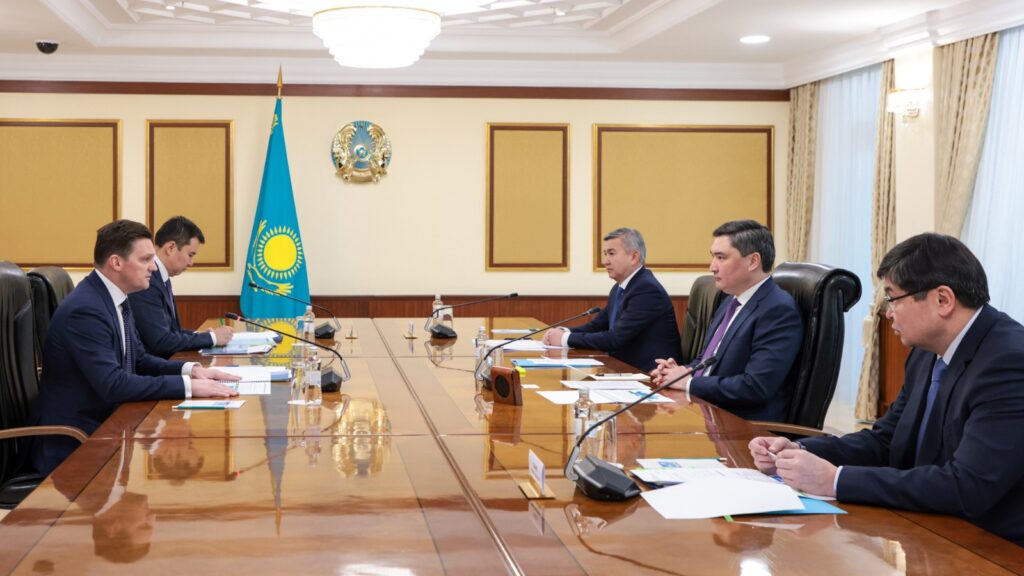
In 2024, the Eurasian Development Bank (EDB) will invest no less than $1 billion in Kazakhstan, with priority sectors listed as transportation, industry, energy and environmental improvements, agribusiness, and the construction and modernization of social infrastructure. The announcement was made during a meeting on March 18th between Kazakhstan’s Prime Minister Olzhas Bektenov and Nikolai Podguzov, Chairman of the EDB Management Board. EDB is an international financial institution whose members include Armenia, Belarus, Kazakhstan, Kyrgyzstan, Russia, and Tajikistan. Podguzov reported that last year, the EDB financed several investment projects in various sectors of Kazakhstan’s economy, including the construction of a polypropylene plant, the procurement of diesel locomotives, and the development of wind farms in the Kostanay region. Kazakhstan’s share of the EDB’s annual investment surged from 48.5% in 2022 to 59% in 2023. The prime minister stressed the significance of investment in large-scale infrastructure initiatives recently listed by Kazakhstan’s president as the development of roads, housing construction, utility upgrades, and gasification of cities and villages. “The bank should prioritize major infrastructure projects,” stated Bektenov. “We are ready to enhance cooperation with the bank on mutually beneficial terms.”