• KGS/USD = 0.01144 0%
  • KZT/USD = 0.00205 0%
  • TJS/USD = 0.10782 0%
  • UZS/USD = 0.00008 0%
  • TMT/USD = 0.28490 0%
  • KGS/USD = 0.01144 0%
  • KZT/USD = 0.00205 0%
  • TJS/USD = 0.10782 0%
  • UZS/USD = 0.00008 0%
  • TMT/USD = 0.28490 0%
  • KGS/USD = 0.01144 0%
  • KZT/USD = 0.00205 0%
  • TJS/USD = 0.10782 0%
  • UZS/USD = 0.00008 0%
  • TMT/USD = 0.28490 0%
  • KGS/USD = 0.01144 0%
  • KZT/USD = 0.00205 0%
  • TJS/USD = 0.10782 0%
  • UZS/USD = 0.00008 0%
  • TMT/USD = 0.28490 0%
  • KGS/USD = 0.01144 0%
  • KZT/USD = 0.00205 0%
  • TJS/USD = 0.10782 0%
  • UZS/USD = 0.00008 0%
  • TMT/USD = 0.28490 0%
  • KGS/USD = 0.01144 0%
  • KZT/USD = 0.00205 0%
  • TJS/USD = 0.10782 0%
  • UZS/USD = 0.00008 0%
  • TMT/USD = 0.28490 0%
  • KGS/USD = 0.01144 0%
  • KZT/USD = 0.00205 0%
  • TJS/USD = 0.10782 0%
  • UZS/USD = 0.00008 0%
  • TMT/USD = 0.28490 0%
  • KGS/USD = 0.01144 0%
  • KZT/USD = 0.00205 0%
  • TJS/USD = 0.10782 0%
  • UZS/USD = 0.00008 0%
  • TMT/USD = 0.28490 0%

Viewing results 1 - 6 of 19

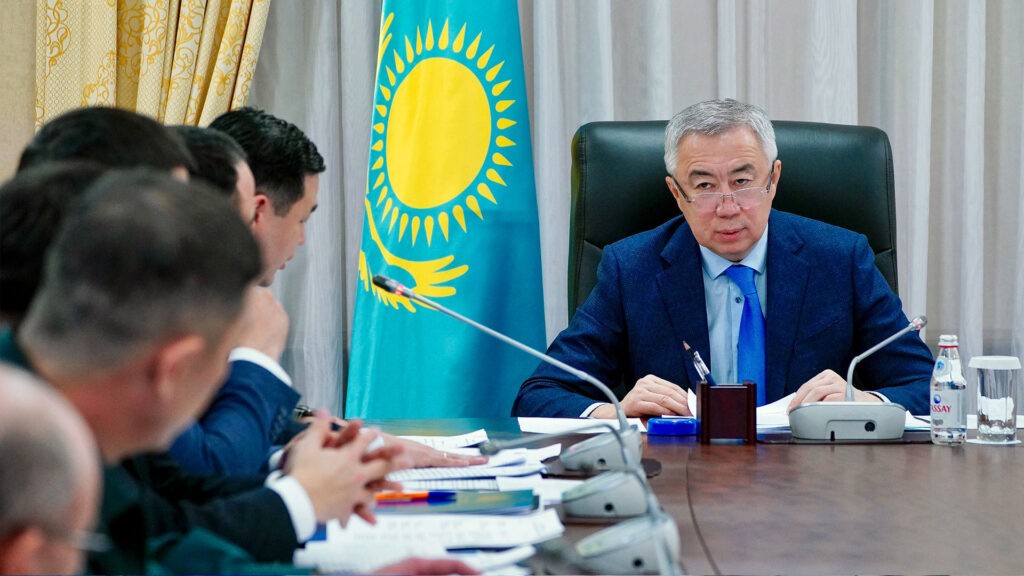
Kazakh Deputy PM Zhumangarin: Our Industries Come Before Sanctions

Kazakhstan has clarified its position on sanctions against Russia imposed as a result of Russia's invasion of Ukraine. Primarily, Kazakhstan will not support measures that could negatively impact its economy. Speaking to Russian state media outlet Tass, Deputy Prime Minister Serik Zhumangarin underscored that Kazakhstan will not act as a conduit for circumventing sanctions, as doing so could severely affect its domestic industries. However, he emphasized the nation's commitment to safeguarding its economic interests, particularly in sectors where products might fall under sanction restrictions. “We have explicitly stated that we will not impose restrictions on these goods, as behind them are large labor collectives and enterprises, often located in single-industry towns,” Zhumangarin explained. During Russian President Vladimir Putin's visit to Kazakhstan on November 27-28, he met with Kazakh President Kassym-Jomart Tokayev. The leaders issued a joint statement condemning unilateral sanctions, citing their detrimental effects on global trade, economic cooperation, and sustainable development. They reaffirmed their commitment to principles of open and non-discriminatory international trade. By maintaining a neutral stance on sanctions, Kazakhstan seeks to minimize economic risks while prioritizing the interests of its workforce and industries. As The Times of Central Asia previously reported, Kazakhstan’s Ambassador to Russia, Dauren Abayev, noted that Kazakh companies aim to avoid secondary sanctions but will continue fostering close cooperation with Russia. In an August interview with Bloomberg, Zhumangarin reiterated that Kazakhstan would not blindly adhere to sanctions against Russia but would consider international restrictions. He highlighted that while Kazakhstan aims to protect its companies from trade bans, it cannot completely disregard sanctions due to the risk of economic isolation. Furthermore, Kazakhstan's Minister of National Economy, Nurlan Baibazarov, addressed concerns in early November regarding including Kazakh companies on UK sanctions lists. He emphasized that these cases mostly involved transient firms, asserting that Kazakhstan continues to comply with international regulations.

Authorities Rail Against Use of Kazakhstan in Circumventing International Sanctions Against Russia

Kazakhstan's Deputy Foreign Minister Roman Vassilenko emphasized in an interview with the Polish publication PAP that the country seeks to prevent its territory from being used to circumvent international sanctions imposed against Russia. According to Vassilenko, although Kazakhstan has not officially imposed sanctions nor joined the anti-Russian measures, the republic's authorities consider it essential to prevent risks associated with possible secondary sanctions against its companies. This is especially important in regard to its close economic ties with Western countries. At the same time and in acknowledgement of its position concerning both its Western partners and Russia, Kazakhstan has emphasized the need for  balance and an avoidance of circumvention of restrictive measures. Vassilenko also noted that Kazakhstan is actively cooperating with the European Union on the sanctions regime, and as part of  these consultations, reported that he had been in dialog with David O'Sullivan, the EU special envoy for sanctions. Vassilenko denied speculation about growing tensions between Kazakhstan and Russia, and pointing out that the countries maintain close ties, explained: “There are different issues because we are neighbors and have diverse relations. We are working with Russia to solve these issues before they become problems. This is our approach not only to the Russian Federation but to any other country." After the start of the Russian military operation in Ukraine, Kazakhstan took a neutral stance and did not support Western sanctions against Moscow. Nevertheless, the Kazakh authorities have repeatedly stated that they will not allow the country's territory to be used to circumvent these restrictions. President Kasym-Jomart Tokayev, in his speeches, adheres to the principle of compliance with the international sanctions regime and aims to conduct a constructive dialog with the EU and the U.S. to  avoid possible secondary sanctions that could affect Kazakh companies.  

Banks Suspend Transfers between Kyrgyzstan and Russia

More than a dozen banks in Kyrgyzstan have suspended money transfers to Russia to avoid falling under secondary sanctions, which could lead to blocked operations and loss of access to international financial markets. The list of banks involved includes large and regional institutions. By suspending transfers, the banks aimed to reduce risks associated with international payment systems such as SWIFT, which can be used to pressure financial institutions linked to Russia. The situation became more complicated after several Western countries began to monitor financial transactions related to Russia and apply sanctions to banks that continue such transactions. Nevertheless, some banks in Kyrgyzstan have found ways to maintain financial flows between the two countries by using transfers that are less dependent on international systems. For example, Optima Bank and Aiyl Bank employ alternative systems that are not subject to Western sanctions. Inter-country remittances play an essential role in the Kyrgyz economy, contributing to economic stability and supporting the well-being of many families. The imposition of restrictions could significantly impact the country, especially since numerous households in Kyrgyzstan depend on remittances from Russia for a significant portion of their income. In June, several banks in Kyrgyzstan suspended work with Russian money transfer systems amid the expansion of U.S. sanctions. At the time, Mbank explained that the temporary restriction was caused by “volatility of the exchange rate and possible sharp fluctuations in the currency market.” In addition to MBank, restrictions were imposed by Doscredobank, KICB, Keremet Bank, Kompanion Bank, RSK Bank, KCB Bank, and Bai-Tushum Bank, but later lifted by some to resume accepting transfers from Russia.

Kazakhstan and EU Negotiating on Simplification of Visa Procedures

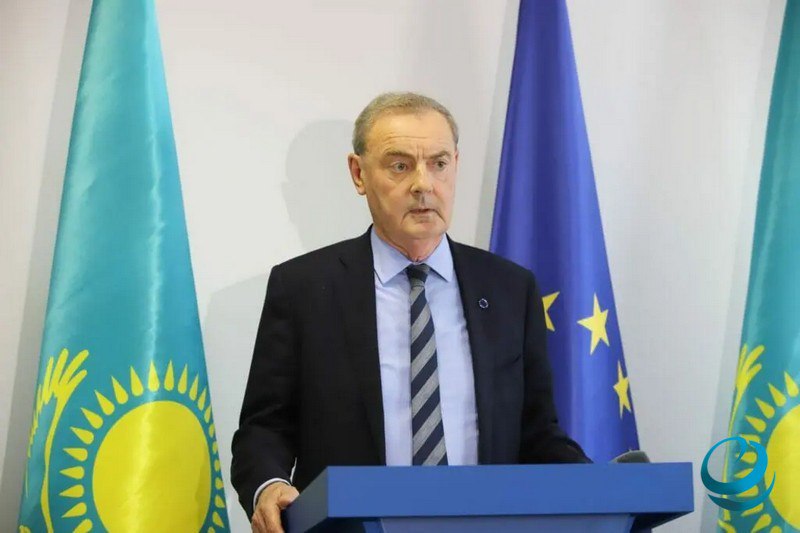
Negotiations on simplifying visa procedures have been launched between Kazakhstan and the European Union, as announced by the EU International Special Envoy for Sanctions, David O'Sullivan, Kazinform reported. At a press conference following his visit, O'Sullivan noted the active development of relations between the EU and Kazakhstan. "We are important partners," he stated. "The EU is Kazakhstan's largest trading partner and the largest source of foreign direct investment. We have also established an essential strategic partnership. Within this partnership, we are also developing and committing, which is going very well now, to economic cooperation between the EU and Kazakhstan." O'Sullivan also spoke about the ongoing work in visa liberalization. "It is gratifying to note that we were able to launch negotiations on the simplification of visa procedures, which in turn will contribute to further strengthening of our cooperation," he stated. Many media outlets link the EU special envoy's visit to Kazakhstan's compliance with anti-Russian sanctions. However, Kazakh political scientist, Eduard Poletayev believes the meetings are just a continuation of the dialog between the EU and Kazakhstan. "It is important to understand that the visit of the special envoy is within the framework of his duties as a high-ranking official, is not a 'check,' but is carried out within the framework of Kazakhstan's agreements with the EU and was planned with the consent of Astana. Kazakhstan imposes no sanctions on Russia, and trade between the two countries continues. But the sanctions requirements of the West are observed, which has been repeatedly emphasized by the country's leadership," Poletaev wrote on his Telegram channel.

Gazprom Eyes Central Asia Amid European Sanctions

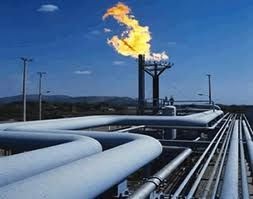
Facing a shortfall in European gas exports due to Western sanctions, Gazprom anticipates it will sell 34 billion cubic meters of unexported gas to Central Asia, according to recent reports. "In light of the ongoing changes in the global energy market, Gazprom remains committed to ensuring a reliable gas supply to Russian consumers and bolstering export capabilities. A key focus for the company in this regard has been fostering collaboration with Kazakhstan, Uzbekistan, and Kyrgyzstan," Gazprom stated in a press release. The company confirmed a drop in gas exports to Europe of 34 billion cubic meters in the first eleven months of 2023, marking levels not seen since 1996. An earlier announcement by the Ministry of Energy of Uzbekistan unveiled a 15-year gas purchase agreement with Gazprom, extending the deal to include Kazakhstan, which involves a new pipeline construction. In October, reports indicated the commencement of Russian gas deliveries to Uzbekistan through Kazakhstan. However, the specifics of this arrangement have not been disclosed to date. Alexey Miller, Gazprom's chief, outlined plans to expand the Central Asia gas pipeline system in November, highlighting memoranda signed with Uzbekistan, Kazakhstan, and Kyrgyzstan, and expressing optimism that the project will rejuvenate this pipeline network. During the Soviet era, gas from the region was transported to Russia via the Central Asia–Center gas pipeline. After the USSR's dissolution, the pipeline ceased operations and deteriorated, requiring substantial refurbishment to enable gas supplies from Russia to Central Asia. Miller noted the completion of the initial repair stage of the Central Asia-Center gas pipeline, facilitating gas delivery to Uzbekistan via Kazakhstan. Earlier this year, Tashkent inked a two-year gas supply contract with Gazprom amounting to approximately 2.8 billion cubic meters annually. Despite these developments, details regarding the pricing of the purchased gas remain undisclosed. Which according to Uzbekistan's Energy Minister, Zhurabek Mirzamakhmudov, is “in alignment with national interests and market dynamics.”

Company in Uzbekistan Sanctioned by UK

British authorities have recently imposed fresh sanctions targeting individuals and entities suspected of aiding the "Russian military apparatus," which notably includes Uzbekistan-based company Mvizion. This expanded sanctions list encompasses 46 entities linked to weapons production or the import of defense goods for Russia, comprising thirty foreign enterprises, among them those from Uzbekistan. A statement from UK authorities outlined, "Today's measures will prevent Putin from outfitting his military through intermediary supply chains in Belarus, China, Serbia, Turkey, the UAE, and Uzbekistan," citing Mvizion's role as an intermediary in supplying spare parts to Russia. Mvizion had previously been sanctioned by the United States in November, linked by the US Department of Commerce to drone production for the Russian armed forces. The Unified State Register of Enterprises and Organizations shows Mvizion's registration on June 14, 2022, with its primary activity listed as the "wholesale of electronic and telecommunication equipment and related spare parts." Igor Nikolaevich Ievlev is identified as the sole founder and director. David O'Sullivan, the EU Special Envoy for Sanctions, addressed Uzbekistan's efforts to counter the re-export of European goods under sanctions to Russia, emphasizing the significance of economic diversification for the country. "We do not intend to disrupt Uzbekistan's traditional trade relations," he emphasized.