• KGS/USD = 0.01144 0%
  • KZT/USD = 0.00216 0%
  • TJS/USD = 0.10659 0%
  • UZS/USD = 0.00008 0%
  • TMT/USD = 0.28530 0%
  • KGS/USD = 0.01144 0%
  • KZT/USD = 0.00216 0%
  • TJS/USD = 0.10659 0%
  • UZS/USD = 0.00008 0%
  • TMT/USD = 0.28530 0%
  • KGS/USD = 0.01144 0%
  • KZT/USD = 0.00216 0%
  • TJS/USD = 0.10659 0%
  • UZS/USD = 0.00008 0%
  • TMT/USD = 0.28530 0%
  • KGS/USD = 0.01144 0%
  • KZT/USD = 0.00216 0%
  • TJS/USD = 0.10659 0%
  • UZS/USD = 0.00008 0%
  • TMT/USD = 0.28530 0%
  • KGS/USD = 0.01144 0%
  • KZT/USD = 0.00216 0%
  • TJS/USD = 0.10659 0%
  • UZS/USD = 0.00008 0%
  • TMT/USD = 0.28530 0%
  • KGS/USD = 0.01144 0%
  • KZT/USD = 0.00216 0%
  • TJS/USD = 0.10659 0%
  • UZS/USD = 0.00008 0%
  • TMT/USD = 0.28530 0%
  • KGS/USD = 0.01144 0%
  • KZT/USD = 0.00216 0%
  • TJS/USD = 0.10659 0%
  • UZS/USD = 0.00008 0%
  • TMT/USD = 0.28530 0%
  • KGS/USD = 0.01144 0%
  • KZT/USD = 0.00216 0%
  • TJS/USD = 0.10659 0%
  • UZS/USD = 0.00008 0%
  • TMT/USD = 0.28530 0%

Viewing results 1 - 6 of 33

EU-Central Asia Summit Opens New Opportunities for Kazakhstan

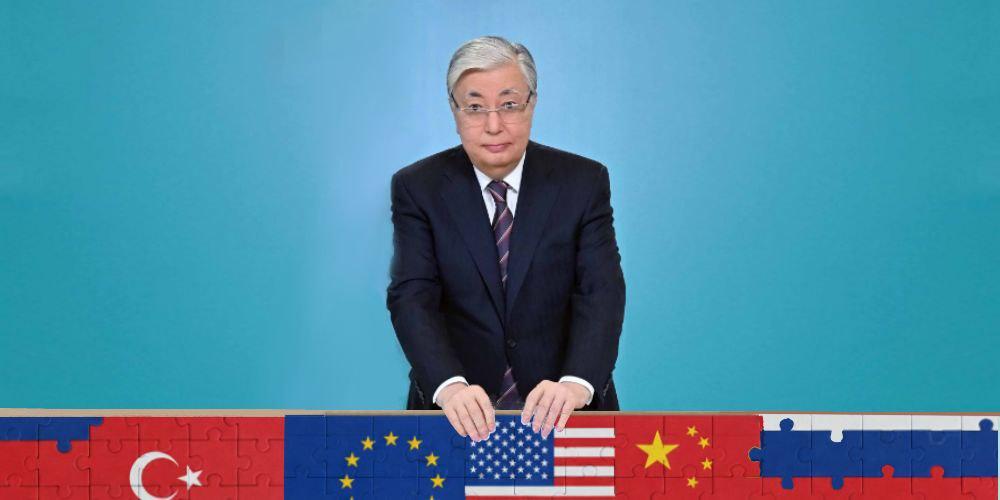
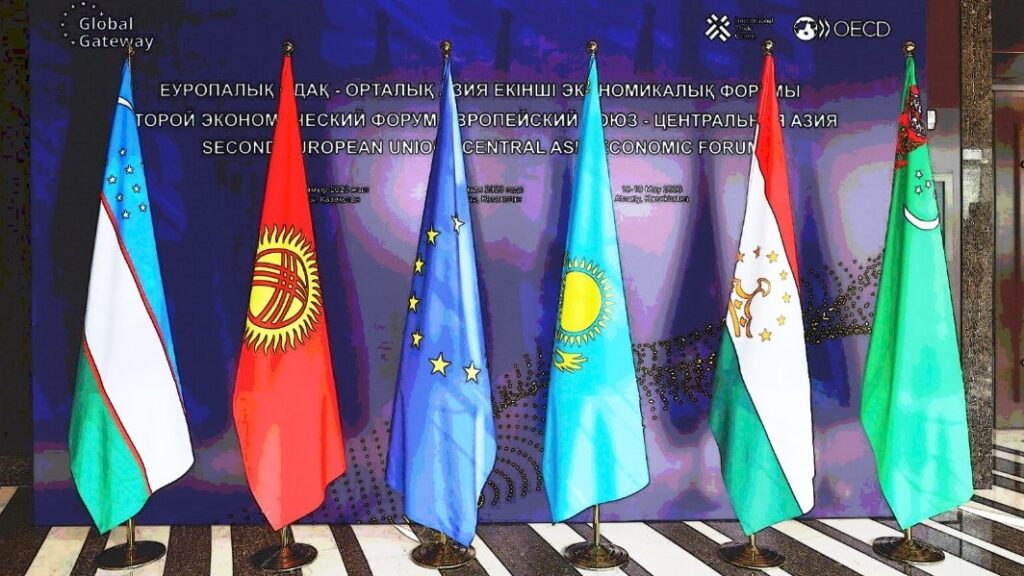
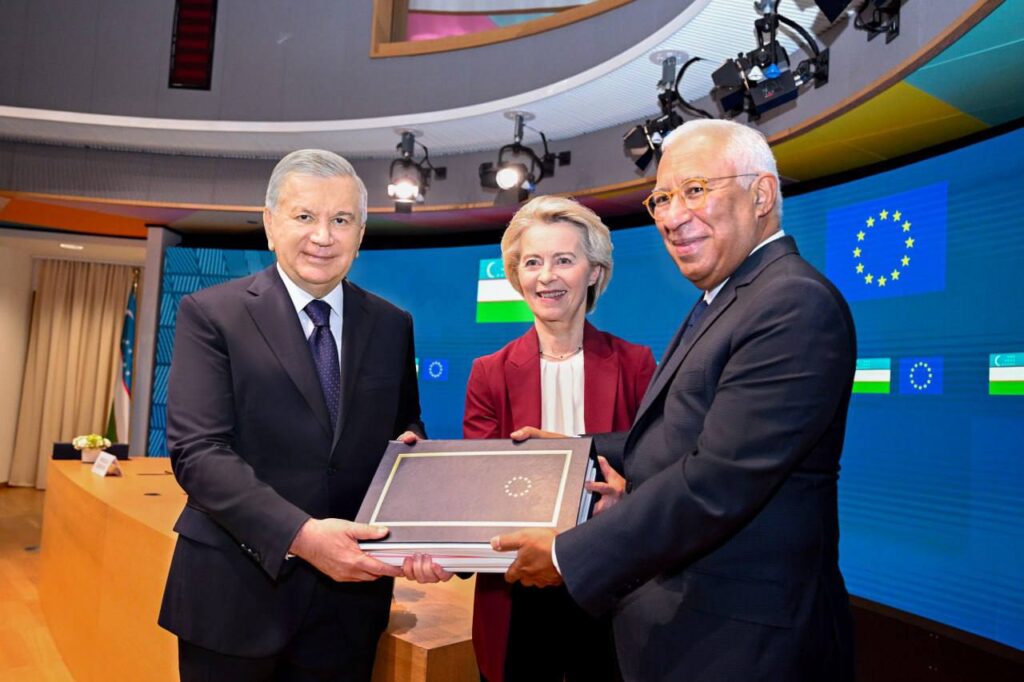
The first-ever summit between the European Union and the five Central Asian countries opened on April 3 in Samarkand, Uzbekistan. The meeting marks a milestone in regional diplomacy, as both sides seek to deepen cooperation amid growing geopolitical shifts. Kazakhstan, in particular, is entering the summit with growing international clout, thanks to its stable economic performance and balanced foreign policy approach. European Council President António Costa and European Commission President Ursula von der Leyen are representing the EU at the summit, which is being chaired by Uzbek President Shavkat Mirziyoyev. According to official sources, the summit aims to demonstrate mutual geopolitical interest and expand collaboration between Europe and Central Asia across key areas. The agenda includes strengthening multilateral ties, addressing shared security threats, enhancing economic and investment cooperation, and advancing collaboration under the EU’s Global Gateway initiative. Focus areas also include energy, climate neutrality, connectivity, and green transition, along with mobility and cultural exchange. The EU is already the region’s second-largest trading partner, accounting for 22.6% of Central Asia’s total foreign trade in 2023. It is also the largest source of foreign investment, responsible for over 40% of the region’s total inflows. Kazakhstan's President Kassym-Jomart Tokayev is attending the summit, following a bilateral meeting with President Mirziyoyev in Almaty on March 29. Also expected to participate are Kyrgyz President Sadyr Japarov, Tajik President Emomali Rahmon, and Turkmen President Serdar Berdimuhamedov. At the summit, the EU is set to unveil a substantial investment package for Central Asia, with priority sectors including transportation infrastructure, critical raw materials, energy transmission, and digitalization. European Commission President von der Leyen emphasized that Central Asia’s significant natural resources and industrial potential align with Europe’s sustainability goals. “Europe aims to create a complete value chain, not merely purchase raw materials. This is vital for generating local employment and upholding high environmental and social standards,” she said. Additional EU funding will be directed toward green energy projects and improvements to Uzbekistan’s water infrastructure. According to Tair Nigmanov, an international relations expert, the EU’s increased engagement stems from heightened geopolitical rivalry. “We are situated between major powers like Russia and China. The EU, as another global player, wants Central Asia to remain neutral and not gravitate toward any single power center,” Nigmanov told Inform.kz. “To that end, it is offering investment, trade opportunities, and political assurances.” For Kazakhstan, the summit presents a strategic platform to attract investment, reinforce its non-aligned stance, and leverage its growing geopolitical relevance in an increasingly multipolar world.

EU’s Kaja Kallas: Russia Must Not Use Central Asia to Bypass Sanctions

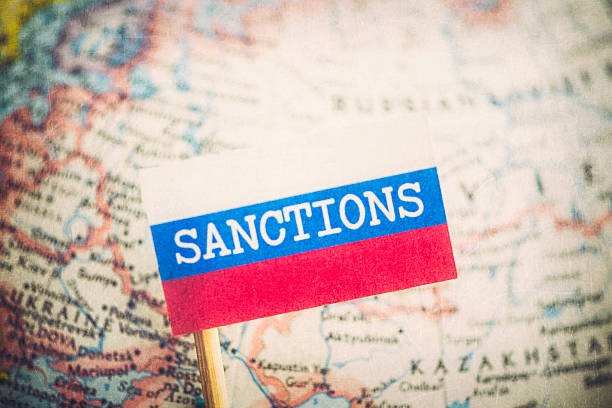
European Union sanctions against Russia are affecting Central Asian economies, but the EU remains determined to prevent the region from being used to circumvent those measures. This was emphasized by EU High Representative for Foreign Affairs Kaja Kallas during the 20th EU-Central Asia Ministerial Meeting held in Turkmenistan's capital, Ashgabat. “The EU has introduced 16 sanctions packages to weaken Russia’s military machine, and we are working on the 17th,” Kallas stated. “I understand these sanctions impact your economy, but we all want this war to end. Russian companies must not use Central Asia to bypass these restrictions.” The ministerial meeting on March 27 brought together the foreign ministers of Kazakhstan, Kyrgyzstan, Tajikistan, Turkmenistan, and Uzbekistan. Discussions centered on preparations for the upcoming EU-Central Asia Summit, scheduled for April 2025 in Samarkand. Strengthening U.S.-Uzbekistan Ties In a parallel development, U.S.-Uzbekistan relations are showing signs of deeper engagement. On March 26, Ambassador Furkat Sidikov hosted a Congressional Breakfast with U.S. Representative Trent Kelly, focused on trade and investment opportunities. Congressman Kelly praised Uzbekistan’s ongoing reforms and expressed support for lifting the Jackson-Vanik Amendment, a Cold War-era restriction on trade. A Shift in U.S. Strategy Toward Kazakhstan Meanwhile, experts are calling for a more nuanced U.S. approach to Kazakhstan. Dr. Robert M. Cutler, Times of Central Asia correspondent, noted that Kazakhstan’s close ties with Russia and China stem from geopolitical necessity rather than ideological alignment. He urged Washington to maintain consistent engagement with Kazakhstan and prioritize economic and strategic cooperation over political pressure.

EU Pledges Steady Support for Tajikistan Ahead of Historic Central Asia Summit

The European Union will maintain its current level of assistance to Tajikistan despite the recent suspension of U.S. funding through USAID, EU Ambassador to Tajikistan Raimundas Karoblis has confirmed. He emphasized that European and American aid programs operate independently and that EU support will remain unaffected. “Aid from the EU will continue and will not be reduced,” Karoblis stated. He added that the EU's assistance framework for Tajikistan is already set through 2027 and cannot be revised before then. Discussions about increased support may take place after that period.   EU and Central Asia: Toward a Historic Summit On March 27, Ashgabat will host the 20th meeting of foreign ministers from the European Union and Central Asia. The key objective of this gathering is to prepare for the first-ever EU-Central Asia Summit, scheduled for April 3-4 in Samarkand. The summit will bring together the President of the European Council, the head of the European Commission, and the leaders of all five Central Asian states. According to the EU Delegation in Tajikistan, the summit will mark a new milestone in EU-Central Asia relations, reflecting the EU’s deepening political engagement with the region. Financial Assistance and Strategic Priorities Between 2021 and 2027, the EU has committed more than €550 million in aid to Central Asia, with €142 million allocated to Tajikistan. The focus areas include building an inclusive green economy, investing in human capital, and ensuring sustainable management of natural resources. Under its Global Gateway initiative, the EU is working to develop smart and sustainable connectivity across transport, digital infrastructure, energy, and education. A key initiative is the Trans-Caspian Transport Corridor, to which the EU has allocated more than €88 million. Other efforts target enhanced digital and energy integration in the region. In the strategic domain of critical raw materials, the EU has earmarked €16 million to support local value chains and promote sustainable investments. Additionally, through the European Fund for Sustainable Development Plus (EFSD+), €30 million in guarantees have been allocated for renewable energy and raw material extraction projects. Security, Education, and Youth Engagement The EU plays an active role in regional security initiatives. Its BOMCA program supports border management and the fight against transnational crime, while the CADAP program focuses on drug use prevention. In Tajikistan specifically, the EU, in partnership with the OSCE, is implementing a project to strengthen the capacity of border guards along the Tajik-Afghan frontier. The EU also contributes to counter-terrorism efforts and collaborates with the government on related initiatives. Education and youth empowerment are additional EU priorities. From 2013 to 2027, €95 million has been directed toward reforming Tajikistan’s education sector. The Erasmus+ program received €73 million for 2021-2027, enabling students from Central Asia to study at European universities. Youth employment is also being addressed through the €10 million DARYA program, and the recently launched €4.5 million Regional Civil Society Fund (as of September 2024) is aimed at strengthening civic engagement. Karoblis reaffirmed the EU’s long-term commitment to Tajikistan, noting that assistance will remain consistent,...

EU and EBRD to Fund Irrigation Improvements in Kyrgyzstan

On March 17, European Commissioner for International Partnerships Jozef Síkela arrived in Kyrgyzstan, where he met with President Sadyr Japarov to discuss bilateral cooperation and sustainable development initiatives. During the meeting, Japarov emphasized the importance of strengthening trade, economic, and investment ties between Kyrgyzstan and the European Union (EU). “We highly appreciate the ongoing support of the European Union in carrying out democratic reforms and developing a stable and sustainable state in Kyrgyzstan,” Japarov stated. He also proposed expanding cooperation in areas such as green initiatives, early warning systems for natural disasters, low-carbon development, and the transition to renewable energy sources. Japarov highlighted Kyrgyzstan’s role in global environmental advocacy, recalling that the United Nations (UN) had declared 2023-2027 as the "Five Years of Action for the Development of Mountain Regions" at Kyrgyzstan’s initiative. He invited the EU to become a donor for the country’s roadmap for sustainable development in mountain regions, citing shared environmental challenges such as glacier preservation, ecosystem protection, and sustainable growth. EU and EBRD Commit to Infrastructure Development Commissioner Síkela reaffirmed the EU’s commitment to regional integration and connectivity between Central Asia and Europe, highlighting Kyrgyzstan’s renewable energy potential. “Kyrgyzstan has huge potential in the field of renewable energy, and the EU is ready to support projects that bring sustainable and long-term benefits to the region and realize this potential,” Síkela stated. Following their discussions, Japarov and Síkela oversaw the signing of a financial agreement between the Kyrgyz government, the EU, and the European Bank for Reconstruction and Development (EBRD). The agreement launches a major irrigation improvement program in Kyrgyzstan, aimed at enhancing water management and sustainability. Financial Commitments and Infrastructure Projects A financial package of up to €37.96 million will support critical irrigation infrastructure upgrades in Kyrgyzstan’s Jalalabad and Naryn regions. This funding includes: €26.93 million in an EBRD sovereign loan €1.03 million in an EBRD grant €10 million in an EU grant The investment will finance improvements to water intakes, pumping stations, main canals, and distribution networks, with the goal of reducing water losses, cutting electricity consumption, and lowering CO₂ emissions​. Additionally, the EBRD and EU will fund the reconstruction and automation of a section of the Western Great Chui Canal in northern Kyrgyzstan​. A separate financial package of €23.8 million has been allocated under the EBRD’s Regional Integrated Water Resources Management Framework for Kyrgyzstan and Tajikistan, approved by the EBRD’s Board of Directors in 2024. This package consists of: €15.23 million in an EBRD sovereign loan €5 million in an EBRD grant €3.6 million in an EU grant These investments are expected to modernize Kyrgyzstan’s irrigation systems, enhance water resource management, and improve agricultural sustainability. The EU and EBRD’s latest financial commitments to Kyrgyzstan’s irrigation and water management infrastructure highlight growing cooperation between Europe and Central Asia. These projects aim to increase agricultural productivity, enhance climate resilience, and promote sustainable development in the region.

EU Monitors Uzbekistan’s Compliance with Trade Preferences Scheme

A European Union (EU) Generalised Scheme of Preferences Plus (GSP+) monitoring mission has arrived in Uzbekistan to assess the country’s compliance with trade-related commitments. The delegation will hold discussions in Tashkent and Bukhara with the Uzbek government, social partners, civil society, and UN representatives on key issues such as human rights, labor rights, environmental protection, climate change, and good governance, the EU Delegation to Uzbekistan announced​. Uzbekistan’s GSP+ Status and Trade Relations with the EU The GSP+ is a special EU trade incentive program that supports countries with vulnerable economies due to limited export diversification and insufficient integration into the global trading system. To qualify, countries must ratify and effectively implement 27 international conventions covering areas such as human rights, labor rights, environmental protection, climate change, anti-corruption, and drug control. Uzbekistan has been a GSP+ beneficiary since April 2021, joining a select group of just eight countries worldwide. As part of the program, the EU conducts regular dialogues and monitoring missions to ensure compliance with the required international UN and International Labour Organization (ILO) conventions. The current monitoring mission will remain in the country until March 20​. Progress and Key Trade Figures Since the last monitoring mission in 2022, Uzbekistan has made notable progress in its trade relations with the EU. Currently, approximately 60% of EU imports from Uzbekistan benefit from GSP+ preferential market access, with chemical products, fertilizers, cotton, and plastics being the main export beneficiaries. Uzbekistan also ranks among the top GSP+ countries in terms of preference utilization, having used nearly 84% of all available trade preferences in 2023. For the 2024-2025 reporting period, the EU has identified nine priority areas for monitoring to ensure Uzbekistan continues to comply with GSP+ requirements​.  

Tajikistan to Modernize Energy, Cotton, and Education Sectors with EU Grants

On March 14, European Commissioner for International Partnerships Jozef Síkela arrived in Tajikistan. He met with President Emomali Rahmon to reaffirm the European Union’s commitment to the country through the EU’s Global Gateway initiative​. During their meeting, Síkela and Rahmon discussed the state and future of EU-Tajikistan relations, as well as pressing regional issues. Their talks focused on expanding economic and trade ties, attracting investments in industry and agriculture, and securing funding for hydropower projects. Rahmon emphasized Tajikistan’s commitment to green technologies and its goal of generating 100% of its electricity from renewable sources under the Strategy for the Development of the Green Economy until 2037​. EU’s New Funding for Tajikistan During his visit, Síkela announced several new EU funding initiatives aimed at strengthening Tajikistan’s sustainable development. According to the EU Delegation to Tajikistan, two key agreements were signed with Team Europe partners to drive sustainability efforts in the country: A €20 million investment grant with the European Bank for Reconstruction and Development (EBRD) to modernize Tajikistan’s electricity grid, reduce energy losses, and prepare for future renewable energy investments. This aligns with the EU’s broader goal of enhancing energy security and supporting the green transition in Central Asia. A €20 million grant with Deutsche Gesellschaft für Internationale Zusammenarbeit (GIZ), the German Agency for International Cooperation, to promote sustainability in Tajikistan’s cotton sector. The initiative will support certified sustainable cotton production, improve processing for high-quality exports, and create new opportunities for the domestic private sector. Additionally, the EU announced a €10 million disbursement as part of a larger €30 million budget support program. This funding will help implement the National Strategy for Education Development 2030 and the Programme for Professional Training of Citizens 2021-2025, improving the quality and relevance of both general secondary education and vocational training​. As part of his visit, Síkela toured the Rogun Hydropower Plant, a crucial project for Tajikistan’s energy infrastructure. “With its Global Gateway strategy, the EU is investing in Tajikistan’s future by supporting critical infrastructure upgrades, expanding renewable energy capacity, and modernizing key industries such as cotton production,” Síkela stated. “These investments will reduce energy losses, create jobs, and open new export markets”​.