• KGS/USD = 0.01143 0%
  • KZT/USD = 0.00216 0%
  • TJS/USD = 0.10684 -0.28%
  • UZS/USD = 0.00008 0%
  • TMT/USD = 0.28571 0%
  • KGS/USD = 0.01143 0%
  • KZT/USD = 0.00216 0%
  • TJS/USD = 0.10684 -0.28%
  • UZS/USD = 0.00008 0%
  • TMT/USD = 0.28571 0%
  • KGS/USD = 0.01143 0%
  • KZT/USD = 0.00216 0%
  • TJS/USD = 0.10684 -0.28%
  • UZS/USD = 0.00008 0%
  • TMT/USD = 0.28571 0%
  • KGS/USD = 0.01143 0%
  • KZT/USD = 0.00216 0%
  • TJS/USD = 0.10684 -0.28%
  • UZS/USD = 0.00008 0%
  • TMT/USD = 0.28571 0%
  • KGS/USD = 0.01143 0%
  • KZT/USD = 0.00216 0%
  • TJS/USD = 0.10684 -0.28%
  • UZS/USD = 0.00008 0%
  • TMT/USD = 0.28571 0%
  • KGS/USD = 0.01143 0%
  • KZT/USD = 0.00216 0%
  • TJS/USD = 0.10684 -0.28%
  • UZS/USD = 0.00008 0%
  • TMT/USD = 0.28571 0%
  • KGS/USD = 0.01143 0%
  • KZT/USD = 0.00216 0%
  • TJS/USD = 0.10684 -0.28%
  • UZS/USD = 0.00008 0%
  • TMT/USD = 0.28571 0%
  • KGS/USD = 0.01143 0%
  • KZT/USD = 0.00216 0%
  • TJS/USD = 0.10684 -0.28%
  • UZS/USD = 0.00008 0%
  • TMT/USD = 0.28571 0%

Viewing results 1 - 6 of 109

Coordination Instead of Declarations: Astana Hosts Meeting of Regional Contact Group on Afghanistan

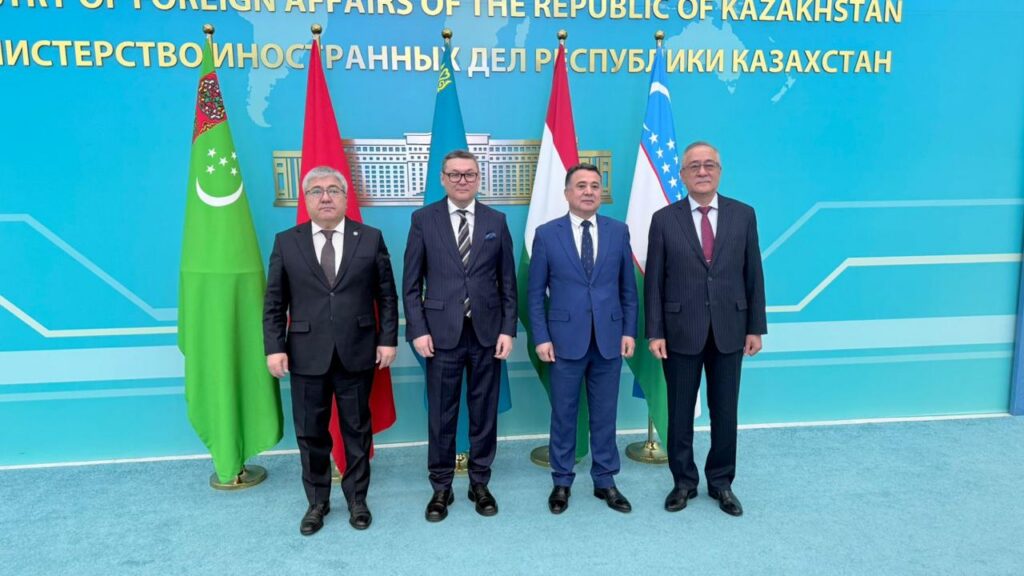
On Monday, Astana hosted an extraordinary meeting of the Regional Contact Group of Special Representatives of Central Asian Countries on Afghanistan, with delegations from Kazakhstan, Kyrgyzstan, Tajikistan, and Uzbekistan in attendance. The agenda focused on trade and economic cooperation with Afghanistan, including joint projects, investment protection, transit tariff policy, and the development of transport corridors through Afghan territory. The establishment of the group represents the practical implementation of agreements reached at the Sixth Consultative Meeting of the Heads of State of Central Asia, held in Astana in August 2024, and reflected in the Roadmap for Regional Cooperation for 2025-2027. The first meeting of the Contact Group took place on August 26 last year in Tashkent. As noted by Erkin Tukumov, Special Representative of the President of Kazakhstan for Afghanistan, Astana is interested in a constructive exchange of views and in identifying practical solutions to pressing issues of cooperation with Afghanistan. In recent years, Kazakhstan has consistently kept Afghanistan among its foreign policy priorities, avoiding rhetorical declarations in favor of a measured and systematic approach. President Kassym-Jomart Tokayev has paid particular attention to Afghanistan since the change of power in Kabul in 2021. In the first weeks after the Taliban assumed control, Astana began articulating its position on international platforms. One of the key statements was Tokayev’s address at the Shanghai Cooperation Organisation summit in Dushanbe on September 17, 2021. He advanced a thesis that has since been reiterated in various formats: Afghanistan should be viewed not only as a source of risk but also as a potential driver of regional development, provided that stability and economic recovery are achieved. This position was further elaborated days later at the United Nations General Assembly. At that time, Kazakhstan was among the first to emphasize the need for inclusiveness in Afghanistan’s future political system, not as an abstract requirement, but as a practical condition for stability. Another significant step was the creation last year of the post of Special Representative of the President for Afghanistan, to which Tukumov was appointed. This role goes beyond that of an interdepartmental coordinator: as a direct representative of the head of state, it elevates the Afghan portfolio to the level of strategic priority. The establishment of such a position signals a transition from a situational response to a more systematic policy. The Astana meeting confirmed the intention of regional countries to deepen cooperation through a regular platform capable of coordinating actions and presenting them externally in a consolidated manner. Some external observers suggest that Central Asian countries are only now beginning to develop a common position on Afghanistan. However, that position has largely taken shape in recent years. The current task is not to formulate it, but to coordinate it more precisely. The meeting in Astana demonstrated that, for Central Asian countries, the primary concern is not the nature of the regime in Kabul, but Afghanistan’s capacity to function as a predictable economic partner and responsible participant in international relations. For the region, it is essential that...

Kyrgyzstan Ready to Act as a ‘Gateway’ for Tajik Goods to EAEU and EU Markets

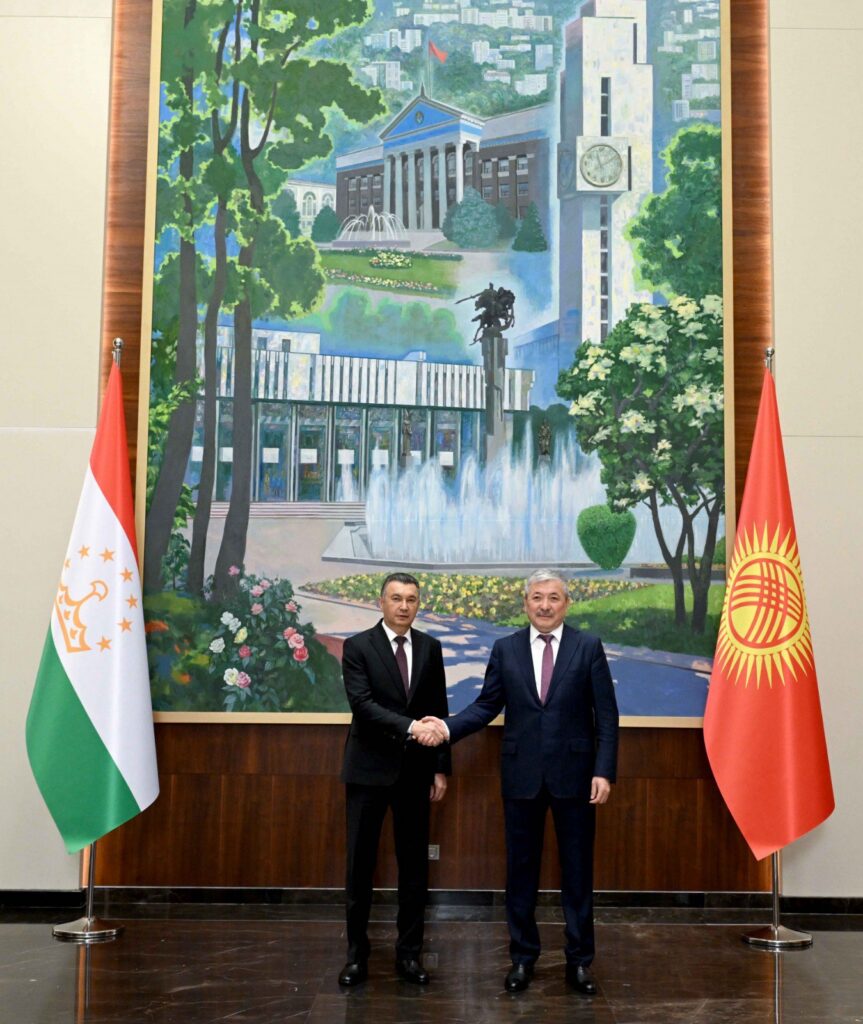
On February 13 in Bishkek, Chairman of the Cabinet of Ministers of Kyrgyzstan Adylbek Kasymaliev and Prime Minister of Tajikistan Kokhir Rasulzoda held the first meeting of the Kyrgyz-Tajik Intergovernmental Council. Opening the session, Kasymaliev said that 2025 marked a historic milestone in bilateral relations, citing the completion of the delimitation process of the Kyrgyz-Tajik border. He described the agreement as “a decisive factor in strengthening security and stability not only in our countries but also in the entire region.” Addressing trade and economic cooperation, Kasymaliev stated that Kyrgyzstan is ready to expand supplies of meat and dairy products, clothing and textiles, coal, glass, and sugar to Tajikistan. According to official figures, bilateral trade turnover reached $36 million in 2025, representing a nearly 24-fold increase compared to 2024. Both sides have set a target of increasing annual trade to $500 million. In the field of transport and logistics, Kasymaliev emphasized the need to improve border infrastructure and enhance the efficiency of checkpoints. Proposed measures include modernizing existing border crossings, expanding capacity, developing logistics and cargo terminals, and introducing digital solutions in customs and border administration. “Kyrgyzstan is ready to act as a trade gateway for Tajik goods to the markets of the Eurasian Economic Union (EAEU), as well as the European Union through the Generalised Scheme of Preferences Plus (GSP+),” Kasymaliev said. He also highlighted the strategic China-Kyrgyzstan-Uzbekistan railway project, which he said would significantly increase Kyrgyzstan’s transit potential and strengthen its role as a logistics hub in Eurasia. According to the Kyrgyz prime minister, the new transport corridor will create additional opportunities for Tajikistan. Kasymaliev further noted positive dynamics in tourism cooperation. In 2025, 86,000 tourists from Tajikistan visited Kyrgyzstan, a 12-fold increase compared to 2024. Kyrgyzstan reaffirmed its interest in developing joint tourism initiatives, including the possible introduction of a unified visa for third-country nationals traveling across Central Asia. Rasulzoda stated that Tajikistan places particular importance on good-neighborly relations and mutually beneficial cooperation with Kyrgyzstan, confirming readiness to further strengthen the partnership. As part of his visit to Bishkek, Rasulzoda toured a recently opened waste-to-energy plant constructed by a Chinese company. He described the facility as a promising example of modern waste recycling and expressed Tajikistan’s interest in implementing similar projects.

Uzbekistan, Pakistan Set $2 Billion Trade Target Following High-Level Talks in Islamabad

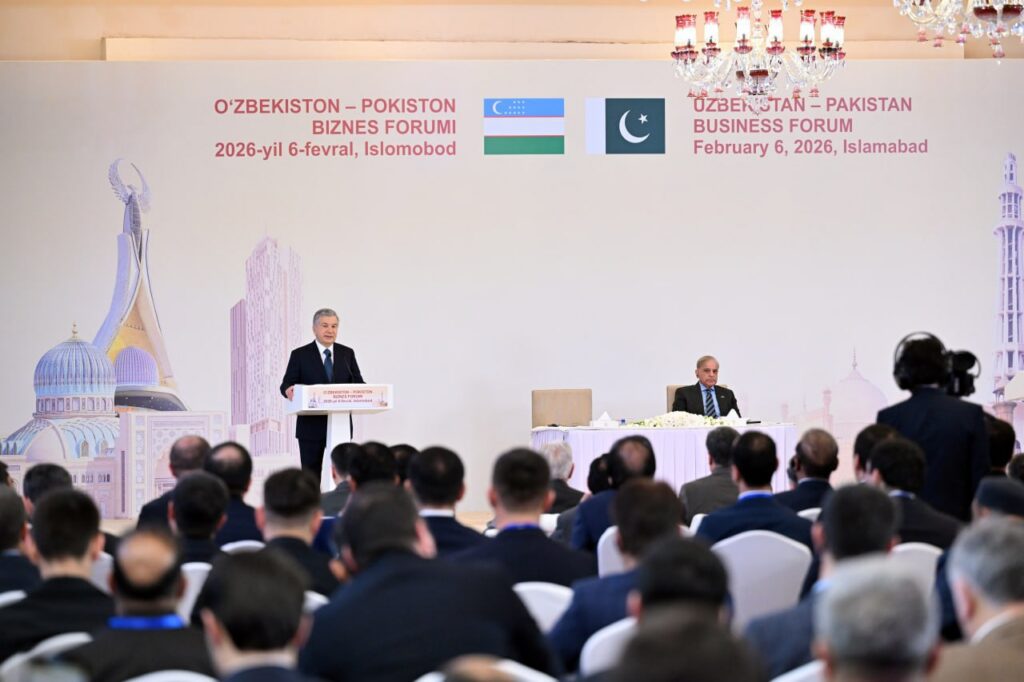
Uzbek President Shavkat Mirziyoyev arrived in Islamabad on a state visit on February 5, marking a new chapter in Uzbekistan-Pakistan relations. According to official sources, the Uzbek leader’s aircraft was escorted by Pakistan Air Force fighter jets upon entering the country’s airspace. At Nur Khan Airbase, Mirziyoyev was received by President Asif Ali Zardari, Prime Minister Shehbaz Sharif, and senior Pakistani officials. Shortly after his arrival, Mirziyoyev visited the headquarters of Global Industrial & Defence Solutions, where he met with Pakistan’s Chief of Army Staff, Field Marshal Asim Munir. The two sides discussed strengthening the strategic partnership, with an emphasis on military and military-technical cooperation. Areas of focus included deepening collaboration between defense industry enterprises, expanding training for military personnel, sharing operational experience, and organizing joint exercises. Both countries agreed to draft a roadmap for future defense cooperation. Later that day, Mirziyoyev held one-on-one talks with Prime Minister Sharif and chaired the inaugural meeting of the High-Level Strategic Cooperation Council. At the meeting’s outset, the Uzbek president extended greetings in advance of the holy month of Ramadan and Pakistan Day. Discussions centered on implementing existing agreements and expanding cooperation across political, economic, and humanitarian spheres. Trade and economic cooperation featured prominently. Bilateral trade reached nearly $500 million by the end of last year, and approximately 230 Pakistani-capital companies are currently operating in Uzbekistan. Air connectivity and banking ties between the two countries are also expanding. Ongoing joint ventures span textiles, pharmaceuticals, chemicals, agriculture, and other sectors. An exhibition of Uzbek industrial products is being held in Islamabad as part of the visit. The two leaders agreed to set a goal of raising bilateral trade turnover to $2 billion in the near future. Key measures include expanding the list of goods under the Preferential Trade Agreement, easing phytosanitary requirements for Uzbek agricultural exports, and increasing the use of Uzbekistan’s trade houses in Lahore and Karachi. A joint project portfolio valued at nearly $3.5 billion has already been developed. Transport and logistics were another central topic. Both sides emphasized the strategic importance of advancing the Trans-Afghan railway and supporting the Pakistan-China-Kyrgyzstan-Uzbekistan transport corridor. They also agreed to establish an Uzbek-Pakistani Forum of Regions, with the inaugural meeting scheduled to take place this year in Uzbekistan’s Khorezm region. Cultural cooperation was also addressed. Plans include hosting Uzbekistan Culture Weeks and Uzbek Cinema Days in Pakistan and exploring the creation of a joint cultural center in Lahore dedicated to the Baburid heritage. The visit concluded with the signing of a Joint Declaration and a series of agreements spanning diplomacy, trade, defense, transport, agriculture, digital technologies, culture, security, and regional cooperation. Mirziyoyev also extended an invitation to Prime Minister Sharif for a return visit to Uzbekistan.

What the U.S. Really Wants in Central Asia: Behind the B5+1 Forums

The B5+1 business forum continued in Kyrgyzstan’s capital on February 5, as government officials, regional business leaders, and a sizable U.S. delegation met to discuss trade, investment, and regulatory barriers shaping economic ties between Central Asia and the United States. As Washington signals a more pragmatic, commercially driven approach to the region, questions persist over why U.S. investment has lagged behind political engagement and which markets are truly seen as priorities. The Times of Central Asia spoke with Dmitry Orlov, director of the Strategy: East–West analytical center, about the structural obstacles deterring American capital, the shift in U.S. policy thinking, and how Central Asian states are positioned within Washington’s evolving economic calculus. TCA: What serious U.S. capital investments in Central Asia can we talk about today? ORLOV: It is important to understand the main point. Talk of large investments, the arrival of American business, and long-term economic cooperation only makes sense in one case: if the U.S. repeals the Jackson-Vanik amendment, which was adopted back in the 1970s and extended to all former Soviet republics after the collapse of the USSR. Today, it remains a formal and, in many ways, psychological obstacle to a fully-fledged business partnership. At the same time, it is necessary to establish contacts at a business level right now. This is because if the amendment is repealed - and such statements are regularly heard in Washington - it is difficult to predict which countries in the region will receive investment flows and in what volumes. Recent international forums, including Davos, have shown that Kazakhstan and Uzbekistan are of the greatest interest to the U.S. in Central Asia. Their economies are developing more dynamically, and they can offer large-scale projects and a clear export base. The other countries in the region, Kyrgyzstan, Tajikistan, and Turkmenistan, are still perceived by investors as lower priorities. TCA: Previously, the U.S. actively promoted a political agenda in the region, including human rights and freedom of speech. Now these are rarely mentioned. Why do you think this is the case? ORLOV: The approach has become more pragmatic. The history of U.S. foreign policy shows that strategic and economic interests have always taken precedence. If a territory is attractive in terms of resources or transit routes, a format for cooperation will be found. In Europe, relatively speaking, the rule of law prevails. In Asia, the situation is different, and the Americans understand this perfectly well. Issues of ideology and human rights can move to the background if economic expediency comes first. This is especially true in Central Asia, where many issues are resolved through personal agreements and informal connections. Washington understands this. TCA: What exactly can Central Asia offer the U.S.? ORLOV: In terms of individual countries, Kazakhstan and Uzbekistan are again in the lead. They offer oil, gas, and, no less importantly, control over transit routes. There is currently a lot of discussion about rare earths and critical minerals, but their development is always long and expensive. As a result, interest in...

Bishkek to Host Second B5+1 Forum of Central Asia and the U.S.

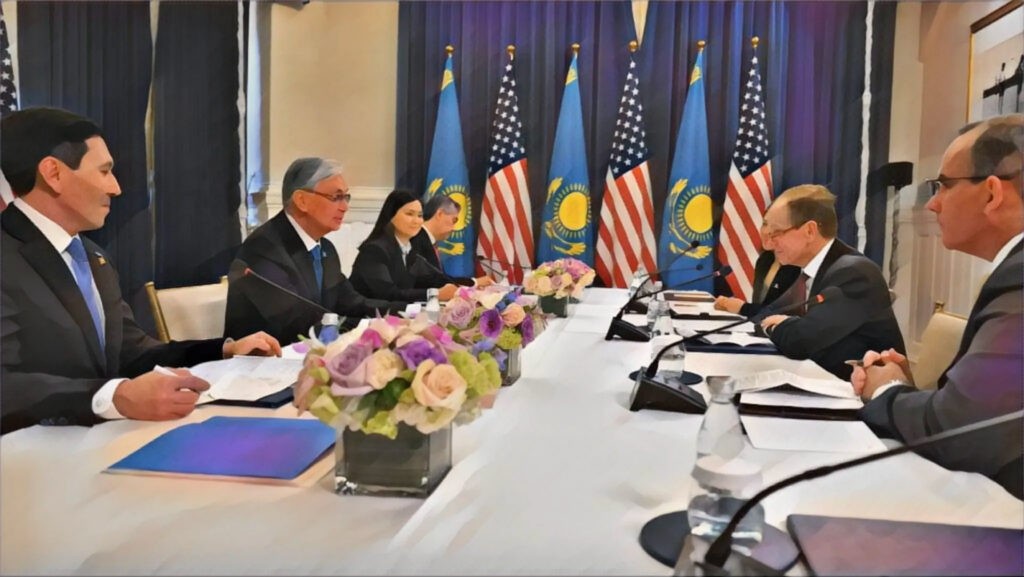
Kyrgyzstan is preparing to host the second B5+1 Forum of Central Asia and the United States, scheduled for February 4-5, 2026, in Bishkek. On December 12, Kyrgyzstan’s Ministry of Foreign Affairs and Ministry of Economy and Commerce held a joint briefing for ambassadors from Central Asian countries and the United States to outline preparations for the event. The B5+1 platform serves as the business counterpart to the C5+1 diplomatic initiative, which unites the five countries of Central Asia – Kazakhstan, Kyrgyzstan, Tajikistan, Turkmenistan, and Uzbekistan – with the United States. Launched by the Center for International Private Enterprise (CIPE) under its Improving the Business Environment in Central Asia (IBECA) program, B5+1 is supported by the U.S. Department of State and aims to foster high-level engagement between business leaders and policymakers. The upcoming forum in Bishkek builds on the outcomes of the C5+1 Summit held in Washington on November 6 this year. Its objective is to deepen U.S.-Central Asia economic cooperation and highlight the private sector’s pivotal role in advancing economic reform across the region. The event is co-hosted by CIPE and the Kyrgyz government. According to organizers, the forum’s agenda will focus on key sectors including agriculture, e-commerce, information technology, transport and logistics, tourism, banking, and critical minerals. These thematic areas reflect emerging regional priorities and shared interests in enhancing sustainable growth and economic resilience. The B5+1 Forum aims to create a platform for sustained dialogue between governments and private sector actors, encouraging the development of long-term partnerships and policy coordination. The inaugural B5+1 Forum was held in Almaty in March 2024, and brought together over 250 stakeholders from all five Central Asian countries and the United States. The first event centered on regional cooperation and connectivity, with a strong emphasis on empowering the private sector to support the objectives of the C5+1 Economic and Energy Corridors.

Uzbekistan Gains ASEAN Approval to Join Cooperation Treaty

Uzbekistan’s efforts to strengthen its ties with Southeast Asia advanced significantly this week after all member states of the Association of Southeast Asian Nations (ASEAN) approved Tashkent’s application to join the Treaty of Amity and Cooperation in Southeast Asia (TAC). The decision was made during a meeting of ASEAN foreign ministers chaired by Malaysia in Kuala Lumpur, according to the Dunyo news agency. Signed in Bali in 1976, the TAC outlines core principles for regional cooperation, including peaceful dispute resolution, non-interference, renunciation of force, and respect for sovereignty. ASEAN now comprises 11 countries with a combined population nearing 700 million, forming one of the world’s most dynamic economic regions. Uzbekistan’s accession to the TAC is expected to enhance its political and economic presence in Southeast Asia, facilitate state-to-state cooperation, boost trade and investment, and increase confidence among international companies operating in or considering expansion into Central Asia. Political analyst Jahongir Akramov described the approval as a significant diplomatic achievement for Uzbekistan. Speaking to The Times of Central Asia, he said the move aligns closely with Uzbekistan’s foreign policy principles: “Uzbekistan’s joining this treaty can be seen as a very significant diplomatic success. One of the key reasons is that the core principles of the TAC fully match the principles set out in Article 17 of Uzbekistan’s Constitution, non-use of force, resolving conflicts peacefully, negotiating disputes, and respecting the sovereignty of states.” Akramov noted that since 2016, Uzbekistan’s foreign policy has evolved along three strategic vectors, all of which are reinforced by the TAC: “First, Uzbekistan adopted a multi-vector foreign policy. Second, the country has taken major steps to develop economic diplomacy. Third, we have been deepening regional integration. All three of these trends are fully consistent with joining the TAC.” He emphasized that the timing is especially relevant amid growing geopolitical strains: “Geopolitical tensions have intensified, particularly among the United States, China, and Russia. In this situation, participating in platforms such as ASEAN can help reduce pressure and maintain diplomatic balance.” Akramov also positioned Uzbekistan’s move as part of a broader Global South cooperation trend. “Central Asian and ASEAN countries are both part of the Global South. Building closer relations ensures our interests are better represented in shaping new international norms.” Economically, Akramov pointed to ASEAN’s size and diversity as highly advantageous. “ASEAN includes Indonesia, the world’s most populous Muslim-majority country, Singapore, a global innovation hub, Malaysia, an advanced and diversified economy, and Thailand, a leading tourism destination. Closer ties with these states could expand tourism, improve Uzbekistan’s international image, and boost the competitiveness of Uzbek products.” He added that ASEAN’s extensive experience with regional integration offers a model for Central Asia. “As one of the first Central Asian countries to join the TAC, Uzbekistan could take a leading role in fostering ASEAN-Central Asia cooperation. A regional office or cooperation structure based in Tashkent or Samarkand would be a major diplomatic achievement.” However, Akramov cautioned that the partnership would require careful navigation. “Southeast Asia has its own geopolitical tensions, such...