• KGS/USD = 0.01144 0%
  • KZT/USD = 0.00201 0%
  • TJS/USD = 0.10567 -0.09%
  • UZS/USD = 0.00008 0%
  • TMT/USD = 0.28571 0%
  • KGS/USD = 0.01144 0%
  • KZT/USD = 0.00201 0%
  • TJS/USD = 0.10567 -0.09%
  • UZS/USD = 0.00008 0%
  • TMT/USD = 0.28571 0%
  • KGS/USD = 0.01144 0%
  • KZT/USD = 0.00201 0%
  • TJS/USD = 0.10567 -0.09%
  • UZS/USD = 0.00008 0%
  • TMT/USD = 0.28571 0%
  • KGS/USD = 0.01144 0%
  • KZT/USD = 0.00201 0%
  • TJS/USD = 0.10567 -0.09%
  • UZS/USD = 0.00008 0%
  • TMT/USD = 0.28571 0%
  • KGS/USD = 0.01144 0%
  • KZT/USD = 0.00201 0%
  • TJS/USD = 0.10567 -0.09%
  • UZS/USD = 0.00008 0%
  • TMT/USD = 0.28571 0%
  • KGS/USD = 0.01144 0%
  • KZT/USD = 0.00201 0%
  • TJS/USD = 0.10567 -0.09%
  • UZS/USD = 0.00008 0%
  • TMT/USD = 0.28571 0%
  • KGS/USD = 0.01144 0%
  • KZT/USD = 0.00201 0%
  • TJS/USD = 0.10567 -0.09%
  • UZS/USD = 0.00008 0%
  • TMT/USD = 0.28571 0%
  • KGS/USD = 0.01144 0%
  • KZT/USD = 0.00201 0%
  • TJS/USD = 0.10567 -0.09%
  • UZS/USD = 0.00008 0%
  • TMT/USD = 0.28571 0%
23 February 2026

Viewing results 1 - 6 of 124

Washington Steps Up Focus on Central Asia Amid Strategic Competition with China

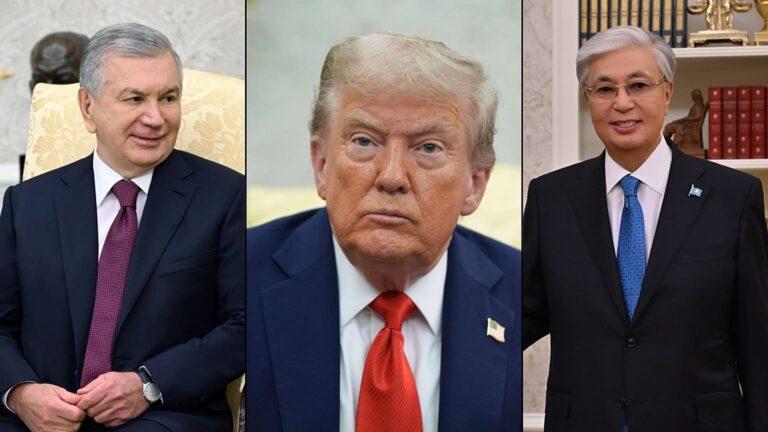
The United States has intensified its interest in Central Asia following China’s decision to restrict exports of rare earth elements. Amid the broader U.S.–China trade rivalry, Washington is seeking to diversify its sources of strategic raw materials and strengthen economic ties with countries in the region. Analysts note that Central Asia is increasingly viewed as a key part of Washington’s strategy to reduce dependence on Chinese supply chains. However, they point to several obstacles, including high logistics costs, underdeveloped export infrastructure, and what they describe as a high-risk investment environment that limits the commercial viability of many projects. Kazakhstan and Uzbekistan: Pillars of U.S. Engagement Among the countries of the region, Kazakhstan and Uzbekistan offer the greatest potential for rare earth element extraction and present favorable conditions for U.S. cooperation. Kazakhstan is strengthening its partnerships with Western investors in the mining sector, while Uzbekistan has implemented market reforms and opened its economy to foreign capital in recent years. Kazakh President Kassym-Jomart Tokayev, currently visiting the U.S., has reiterated his government’s interest in attracting American investment and technology, including through the C5+1 regional format. After his visit to Washington, he is scheduled to travel to Moscow for a meeting with Russian President Vladimir Putin on November 12, reflecting Kazakhstan’s longstanding policy of balancing relations among major powers. Kyrgyzstan Banks on the Digital Economy Lacking major oil and gas reserves, Kyrgyzstan is pursuing a different path by developing partnerships with the U.S. in financial technology and digital assets. During talks with U.S. President Donald Trump in Washington, Kyrgyz President Sadyr Japarov said the country’s most valuable asset is its educated youth, who are increasingly active in the IT sector. Japarov outlined several initiatives, including the introduction of digital financial instruments such as the national stablecoin KGST. He also noted the importance of the U.S. Genius Act, which regulates stablecoin circulation, calling it one of the most progressive in the world. In response, the U.S. expressed its readiness to expand cooperation in digital transformation and fintech development. Tajikistan Prioritizes Energy and Security Tajik President Emomali Rahmon participated in the C5+1 summit in Washington and held separate talks with President Trump. The discussions focused on energy, investment, and regional security. Rahmon said that peace and stability are essential for sustainable development and reaffirmed Tajikistan’s readiness to expand cooperation with the U.S. in green energy and regional electricity transmission projects. At present, more than 70 U.S.-affiliated companies operate in Tajikistan. American investment in mineral extraction and processing is viewed as a promising area for future collaboration. The two sides also discussed joint efforts to combat transnational threats, including terrorism, extremism, and drug trafficking. Turkmenistan Maintains Its Neutral Stance In contrast to the active diplomatic engagements of its neighbors, Turkmenistan continues to adhere to its traditional policy of neutrality. Ashgabat has so far refrained from joining initiatives that could be perceived as aligning with geopolitical blocs. Nonetheless, the U.S. remains interested in Turkmenistan’s energy potential, particularly regarding prospects for diversifying gas exports to Europe through the...

Which Central Asian States Qualify as Middle Powers in 2025?

As global power shifts toward multipolarity, Central Asia’s states are emerging as active regional players. This article assesses which of the five republics—Kazakhstan, Uzbekistan, Turkmenistan, Kyrgyzstan, and Tajikistan—qualify as middle powers in 2025, based on economic strength, diplomatic reach, strategic capacity, and governance. Kazakhstan stands as the region’s only consolidated middle power, balancing fiscal stability, institutional reform, and multi-vector diplomacy. Uzbekistan is a rising aspirant, propelled by reforms but still reliant on external financing and centralized authority. The remaining states remain constrained by dependence and limited institutional depth. Together, they reflect a region increasingly capable of shaping, rather than merely absorbing, global and regional change. A comparative analysis of five Central Asian republics shows how far each has advanced toward this status. [vc_row][vc_column][vc_raw_html css=""]JTNDc3R5bGUlM0UlMEQlMEElMkYlMkElMjBCYXNlJTIwdGFibGUlMjBzdHlsaW5nJTIwJTJBJTJGJTBEJTBBLm1wLXdyYXBwZXIlMjAlN0IlMjBtYXgtd2lkdGglM0ElMjAxMDAwcHglM0IlMjBtYXJnaW4lM0ElMjAwJTIwYXV0byUzQiUyMHBhZGRpbmclM0ElMjAxNnB4JTNCJTIwY29sb3IlM0ElMjAlMjMwMDAlM0IlMjAlN0QlMEQlMEEubXAtdGFibGUlMjAlN0IlMjB3aWR0aCUzQSUyMDEwMCUyNSUzQiUyMGJvcmRlci1jb2xsYXBzZSUzQSUyMGNvbGxhcHNlJTNCJTIwJTdEJTBEJTBBLm1wLXRhYmxlJTIwdGglMkMlMjAubXAtdGFibGUlMjB0ZCUyMCU3QiUyMGJvcmRlciUzQSUyMDFweCUyMHNvbGlkJTIwJTIzMDAwJTNCJTIwcGFkZGluZyUzQSUyMDhweCUzQiUyMHRleHQtYWxpZ24lM0ElMjBsZWZ0JTNCJTIwY29sb3IlM0ElMjAlMjMwMDAlM0IlMjAlN0QlMEQlMEEubXAtdGFibGUlMjB0aGVhZCUyMHRoJTIwJTdCJTIwYmFja2dyb3VuZCUzQSUyMCUyMzAwMCUyMGNvbG9yJTNBJTIwJTIzZmZmJTNCJTIwZm9udC13ZWlnaHQlM0ElMjBib2xkJTNCJTIwcG9zaXRpb24lM0ElMjBzdGlja3klM0IlMjB0b3AlM0ElMjAwJTNCJTIwJTdEJTBEJTBBJTBEJTBBJTJGJTJBJTIwUmVzcG9uc2l2ZSUyMHN0YWNrJTIwb24lMjBzbWFsbCUyMHNjcmVlbnMlMjAlMkElMkYlMEQlMEElNDBtZWRpYSUyMCUyOG1heC13aWR0aCUzQSUyMDY0MHB4JTI5JTIwJTdCJTBEJTBBJTIwJTIwLm1wLXRhYmxlJTIwdGhlYWQlMjAlN0IlMjBkaXNwbGF5JTNBJTIwbm9uZSUzQiUyMCU3RCUwRCUwQSUyMCUyMC5tcC10YWJsZSUyQyUyMC5tcC10YWJsZSUyMHRib2R5JTJDJTIwLm1wLXRhYmxlJTIwdHIlMkMlMjAubXAtdGFibGUlMjB0ZCUyMCU3QiUyMGRpc3BsYXklM0ElMjBibG9jayUzQiUyMHdpZHRoJTNBJTIwMTAwJTI1JTNCJTIwJTdEJTBEJTBBJTIwJTIwLm1wLXRhYmxlJTIwdHIlMjAlN0IlMjBtYXJnaW4lM0ElMjAwJTIwMCUyMDEycHglMjAwJTNCJTIwYm9yZGVyJTNBJTIwMXB4JTIwc29saWQlMjAlMjMwMDAlM0IlMjAlN0QlMEQlMEElMjAlMjAubXAtdGFibGUlMjB0ZCUyMCU3QiUyMGJvcmRlciUzQSUyMG5vbmUlM0IlMjBib3JkZXItYm90dG9tJTNBJTIwMXB4JTIwc29saWQlMjAlMjMwMDAlM0IlMjBwb3NpdGlvbiUzQSUyMHJlbGF0aXZlJTNCJTIwcGFkZGluZy1sZWZ0JTNBJTIwNTAlMjUlM0IlMjBtaW4taGVpZ2h0JTNBJTIwNDJweCUzQiUyMCU3RCUwRCUwQSUyMCUyMC5tcC10YWJsZSUyMHRkJTNBJTNBYmVmb3JlJTIwJTdCJTBEJTBBJTIwJTIwJTIwJTIwY29udGVudCUzQSUyMGF0dHIlMjhkYXRhLWxhYmVsJTI5JTNCJTBEJTBBJTIwJTIwJTIwJTIwcG9zaXRpb24lM0ElMjBhYnNvbHV0ZSUzQiUwRCUwQSUyMCUyMCUyMCUyMGxlZnQlM0ElMjA4cHglM0IlMEQlMEElMjAlMjAlMjAlMjB0b3AlM0ElMjA4cHglM0IlMEQlMEElMjAlMjAlMjAlMjB3aWR0aCUzQSUyMGNhbGMlMjg1MCUyNSUyMC0lMjAxNnB4JTI5JTNCJTBEJTBBJTIwJTIwJTIwJTIwZm9udC13ZWlnaHQlM0ElMjBib2xkJTNCJTBEJTBBJTIwJTIwJTIwJTIwd2hpdGUtc3BhY2UlM0ElMjBub3JtYWwlM0IlMEQlMEElMjAlMjAlN0QlMEQlMEElMjAlMjAubXAtdGFibGUlMjB0ZCUzQWxhc3QtY2hpbGQlMjAlN0IlMjBib3JkZXItYm90dG9tJTNBJTIwMCUzQiUyMCU3RCUwRCUwQSU3RCUwRCUwQSUyRiUyQSUyMERlc2t0b3AlMjBkZWZhdWx0JTIwJTJBJTJGJTBEJTBBLm1wLXRhYmxlJTIwdGglMkMlMjAubXAtdGFibGUlMjB0ZCUyMCU3QiUyMGZvbnQtc2l6ZSUzQSUyMDEycHglM0IlMjAlN0QlMEQlMEElMEQlMEElMkYlMkElMjBCZWxvdyUyMDEwMjRweCUyMCUyQSUyRiUwRCUwQSU0MG1lZGlhJTIwJTI4bWF4LXdpZHRoJTNBJTIwMTAyNHB4JTI5JTIwJTdCJTBEJTBBJTIwJTIwLm1wLXRhYmxlJTIwdGglMkMlMjAubXAtdGFibGUlMjB0ZCUyMCU3QiUyMGZvbnQtc2l6ZSUzQSUyMDExcHglM0IlMjAlN0QlMEQlMEElN0QlMEQlMEElMEQlMEElM0MlMkZzdHlsZSUzRQ==[/vc_raw_html][vc_column_text css="" woodmart_inline="no" text_larger="no"] As global power shifts toward multipolarity, Central Asia’s states are emerging as active regional players. This article assesses which of the five republics—Kazakhstan, Uzbekistan, Turkmenistan, Kyrgyzstan, and Tajikistan—qualify as middle powers in 2025, based on economic strength, diplomatic reach, strategic capacity, and governance. Kazakhstan stands as the region’s only consolidated middle power, balancing fiscal stability, institutional reform, and multi-vector diplomacy. Uzbekistan is a rising aspirant, propelled by reforms but still reliant on external financing and centralized authority. The remaining states remain constrained by dependence and limited institutional depth. Together, they reflect a region increasingly capable of shaping, rather than merely absorbing, global and regional change. A comparative analysis of five Central Asian republics shows how far each has advanced toward this status. Economic Power Economic autonomy is a defining attribute of middle-power capability, enabling states to project influence, sustain policy independence, and finance external engagement. In Central Asia, dependence on Official Development Assistance (ODA) and remittances often reflects constrained fiscal capacity and limited domestic capital formation, while diversified, resilient economies underpin strategic autonomy. Key indicators—GDP per capita, credit ratings, debt sustainability, and export diversification—illuminate the region’s economic hierarchy. Kazakhstan stands as Central Asia’s only consolidated economic middle power. Resource-backed growth, a prudent fiscal regime, and a sovereign wealth fund (the National Fund of Kazakhstan) have anchored macroeconomic stability. With a “BBB” credit rating or equivalent from major agencies, Kazakhstan demonstrates sound debt management and policy credibility. Ongoing diversification efforts under the new economic policies—from renewables to financial modernization—aim to reduce hydrocarbon dependence and deepen integration into global supply chains. Its role as a trans-Caspian logistics hub enhances both strategic and commercial influence. Uzbekistan, by contrast, is an emerging frontier market propelled by post-2017 reforms in currency liberalization, taxation, and state-enterprise restructuring. Rapid GDP growth and expanding private-sector activity mark its trajectory toward fiscal autonomy, though continued ODA inflows averaging around $1.1 billion to 1.3 billion annually, primarily from the Asian Development Bank (ADB), the World Bank, and bilateral partners such as Japan, the United States, and the European Union, highlight its residual dependence on external concessional financing. To achieve genuine middle power status, Uzbekistan must roughly double its real economic output over the next decade, a scale of growth aligned with the shift...

Cyprus as a Mirror of Turkish Geopolitics: How Ankara Uses Northern Cyprus to Project Influence in Central Asia

Northern Cyprus has become a microcosm of Turkish foreign policy, a space where Ankara combines military presence, the ideology of “Turkic brotherhood,” and economic leverage. For Turkey, this territory is not merely a long-standing geopolitical dispute but a laboratory for a new diplomatic model centered on the vision of a “great Turkic world.” As noted by Stratfor, despite the decisive victory of Republican Turkish Party leader Tufan Erhürman in the October 19, 2025, presidential elections in the self-declared Turkish Republic of Northern Cyprus (TRNC), a candidate who supports renewed negotiations with the Republic of Cyprus and advocates for a federal model, Ankara has shown no intention of revising its entrenched two-state doctrine. Analysts suggest Turkey may apply economic pressure and diplomatic isolation, including suspension of subsidies and credit lines, should Erhürman attempt to implement a federal solution. Concurrently, Turkey is lobbying for the TRNC’s recognition within the Organization of Turkic States (OTS), aiming to set a symbolic precedent: if Turkic-speaking nations will not support each other, who will? For Central Asia, this initiative reflects Ankara’s commitment to unifying the Turkic world under its political leadership, extending far beyond cultural solidarity. Political Implications for Central Asia Turkey’s push to incorporate the TRNC into the OTS shifts the organization from a cultural bloc to a geopolitical instrument. Should Northern Cyprus gain observer status, Ankara will likely expect symbolic support from its Turkic partners. This poses a significant dilemma for Central Asian states. Aligning with Turkey could be perceived by Western actors as a breach of international law, while maintaining neutrality might be viewed as a rejection of Turkic unity. Kazakhstan, Uzbekistan, and Turkmenistan have so far emphasized adherence to international law and sovereignty. At the April 2025 EU-Central Asia summit in Samarkand, these states jointly reaffirmed UN Security Council resolutions from the early 1980s, which declared the TRNC’s independence and all related separatist actions legally invalid. Kyrgyzstan may face a more delicate challenge due to its deep humanitarian and educational ties with Turkey. Northern Cyprus thus serves as a litmus test for Turkic integration: how closely can nations align without compromising their political autonomy? Economic and Energy Dimensions Cyprus plays a strategic role in Turkey’s energy policy, linking the Caspian region, the Caucasus, and the Eastern Mediterranean. Turkish control over Northern Cyprus bolsters its influence over maritime logistics, offshore gas development, and export corridors. This holds direct relevance for Central Asia. A stronger Turkish position in the Mediterranean enhances its leverage over energy transit routes from the Caspian to Europe, particularly in relation to the Trans-Caspian pipeline and the Middle Corridor. Over time, Ankara is expected to use energy infrastructure as a tool for political engagement, promoting an “economy of Turkic solidarity”, offering mutual benefits, but often tied to strategic conditions. Security and Military Presence The TRNC functions as a prototype for Turkey’s military protectorate model, a way to retain control while presenting itself as a guarantor of stability. This model is echoed across the Turkic region through Turkey’s expanding military partnerships...

Gor and Landau Tour Central Asia Amid Rising Stakes

On October 25, U.S. Special Representative for South and Central Asia Sergio Gor and Deputy Secretary of State Christopher Landau arrived in Tashkent on an official visit. The visit to Central Asia was not publicly scheduled in advance, with news of the trip only emerging a few days beforehand. In Uzbekistan, the high-ranking visitors were received with full state honors. A motorcycle escort and blocked roads in the capital are typically reserved for visits by heads of state. Although the American delegation’s visit to Uzbekistan ended by Monday evening, local media coverage remained scant. Apart from posts on the U.S. Embassy in Uzbekistan’s Telegram channel, almost no media outlets covered the event. On the evening of October 25, Gor and Landau held productive talks with representatives of U.S. companies about numerous opportunities to strengthen mutual prosperity. Afterwards, they traveled to Samarkand, where they toured the city often referred to as the pearl of Central Asia. On October 26, the visitors held fruitful talks with Foreign Minister Saidov, thanking him for his leadership and hospitality throughout the visit. His efforts, they noted, are elevating the strategic partnership between the U.S. and Uzbekistan to a new level. The delegation also held “productive” talks with Ministers Bobir Islamov and Laziz Kudratov on expanding trade and investment ties. By Monday evening, Gor and Landau had arrived in Almaty, Kazakhstan. As the largest city in the country, Almaty is also one of Central Asia’s key business hubs. According to sources, the agenda in Kazakhstan includes meetings with business leaders and a cultural program. As in Uzbekistan, there was no official information about the visit released on Monday. This may, however, be because Monday was a national holiday - Republic Day – an event which President Donald Trump extended his congratulations to mark, stating that ““The United States values ​​our close economic and security ties with Kazakhstan and looks forward to further strengthening our expanded strategic partnership in the coming year.” Secretary of State Marco Rubio also sent his “congratulations to the people of Kazakhstan.” By all indications, the lightning-fast visit by the senior U.S. delegation is linked to the recently announced C5+1 summit in Washington on November 6. Beyond cultural sightseeing, the talks reportedly covered cooperation in rare earth mineral processing and other sensitive areas. Recently, U.S. interest in the countries of the region has expanded significantly. While China and, traditionally, Russia are considered the main players in the region, Europe and the U.S. are increasingly seeking a firmer foothold in Central Asia’s strategic landscape. Recent global conflicts have exposed major powers’ dependence on raw materials and logistics routes. The search for new corridors and suppliers now seems both logical and urgent. Sanctions on Russia have also had a direct impact on regional economies, requiring swift responses. The C5+1 format presents an ideal framework for launching coordinated political and business cooperation. Yet, it’s essential to recognize the significant disparities among Central Asian countries. Kazakhstan is the region’s financial heavyweight. According to the IMF, Kazakhstan’s GDP per capita...

U.S. Special Envoy and Deputy Secretary of State to visit Central Asia

The U.S. Department of State has published a statement announcing that the Special Envoy for South and Central Asia, Sergio Gor, and Deputy Secretary of State Christopher Landau will travel to Kazakhstan and Uzbekistan from October 26 to October 30. According to the statement, "Special Envoy Gor and Deputy Secretary Landau will meet with Kazakh and Uzbekistani government counterparts to discuss a wide range of economic and security issues. The United States will continue to work with our Central Asian counterparts to strengthen relations and expand commercial ties. We look forward to enhancing bilateral cooperation between our countries and also recognizing ten years of U.S.-Central Asian partnership through the C5+1 diplomatic platform." No further details were provided in the announcement. Gor was born as Sergio Gorokhovsky on November 30, 1986, in Tashkent, Uzbekistan, which was part of the Soviet Union at the time. Gor's lawyer, Robert Garson, confirmed by email that his client was born in Tashkent. The previously unannounced visit is a continuation of recent talks held by the leaders of Astana and Tashkent with President Trump, and comes in the wake of new sanctions imposed on Russia last week, which directly affect countries in the region. In addition, last week, the U.S. Congressional Foreign Affairs Panel asked U.S. President Donald Trump to host a meeting in Washington, D.C. with leaders from Central Asia by the end of 2025.

Bottlenecked: Eurasia’s Freight Lifelines Falter

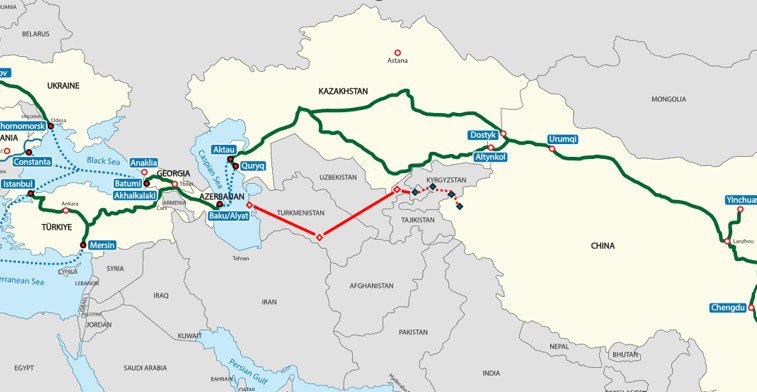
Amid heightened geopolitical tensions and stricter border regulations, key transit routes linking China and Europe via Kazakhstan and Belarus have experienced severe disruptions. The resulting bottlenecks have exposed the fragility of Eurasian logistics and cast doubt on the reliability of the overland corridors central to China’s Belt and Road Initiative. From Military Maneuvers to Transport Gridlock For over two decades, Kazakhstan has invested heavily in developing its transit potential, aiming to become the main bridge between China and Europe. But in September and October this year, logistical bottlenecks began to appear, chiefly at border crossings. The disruptions were triggered by the closure of Belarusian‑Polish checkpoints following the launch of the Zapad 2025 military exercises (12‑16 September 2025) conducted by Russia and Belarus. On September 12, the day the exercises began, Poland suspended road and rail traffic after drones reportedly entered its airspace. Belarus claimed the drones had veered off course due to electronic warfare measures involving Russia and Ukraine. Despite this explanation, Poland invoked Article 4 of the NATO charter, prompting the alliance to launch Operation Eastern Sentry to bolster its eastern flank. The closure lasted nearly two weeks, during which more than 130 freight trains from China, carrying cargo worth billions of euros, were stranded. The China Factor and Limited Alternatives China responded diplomatically: on 15 September, Foreign Minister Wang Yi held talks in Warsaw; on 22 September, Politburo member Li Xi visited Minsk. Despite these efforts, border reopening was not immediately expedited. Alternative routes proved inadequate. The Trans‑Caspian International Transport Route (Middle Corridor) — through Kazakhstan and the Caspian Sea — is growing but still modest in capacity. In 2022 its potential was assessed at around 80,000 TEU annually. Some forecasts estimate it may rise to 10 million tons per year by 2027, but it remains well short of the volumes handled by the northern rail corridor. According to Logistan, the route currently has a monthly capacity of under 10,000 TEU, far short of the 40,000 TEU demand. The World Bank estimates that upgrading Middle Corridor infrastructure will require $27-$29 billion over 15 years, primarily for rail and port development. Amid these limitations, China tested a new maritime option: in September, an ice-class container vessel departed Ningbo-Zhoushan for the UK via the Northern Sea Route. The move indicates Beijing’s growing interest in Arctic alternatives to land corridors. Kazakhstan-Russia Hubs and “Gray” Transit As disruptions continued on the western flank, issues emerged in the south. Since mid-June, Russian logistics companies have reported delays at Kazakhstan’s border crossings. Kazakhstan’s Ministry of Finance attributed the slowdowns to increased inspections aimed at intercepting counterfeit goods. Forbes reported that roughly 7,000 trucks, carrying Chinese cargo worth hundreds of millions of dollars, were stranded. Many shipments used simplified declarations, often disguised as textiles or raw materials, and sometimes included dual-use items. Despite denials from both Kazakh and Russian authorities, freight companies cited congestion stretching for kilometers. The situation worsened after Russia imposed new migration rules restricting Kazakh drivers to 90 days of stay per year. The Kazakh government...