• KZT/USD = 0.00213
  • TJS/USD = 0.10810
  • UZS/USD = 0.00008
  • TMT/USD = 0.29850
  • KZT/USD = 0.00213
  • TJS/USD = 0.10810
  • UZS/USD = 0.00008
  • TMT/USD = 0.29850
  • KZT/USD = 0.00213
  • TJS/USD = 0.10810
  • UZS/USD = 0.00008
  • TMT/USD = 0.29850
  • KZT/USD = 0.00213
  • TJS/USD = 0.10810
  • UZS/USD = 0.00008
  • TMT/USD = 0.29850
  • KZT/USD = 0.00213
  • TJS/USD = 0.10810
  • UZS/USD = 0.00008
  • TMT/USD = 0.29850
  • KZT/USD = 0.00213
  • TJS/USD = 0.10810
  • UZS/USD = 0.00008
  • TMT/USD = 0.29850
  • KZT/USD = 0.00213
  • TJS/USD = 0.10810
  • UZS/USD = 0.00008
  • TMT/USD = 0.29850
  • KZT/USD = 0.00213
  • TJS/USD = 0.10810
  • UZS/USD = 0.00008
  • TMT/USD = 0.29850

Viewing results 1 - 6 of 137

ADB president visits Tajikistan to strengthen partnership

DUSHANBE (TCA) — Asian Development Bank (ADB) President Takehiko Nakao on October 26 met with the President of Tajikistan Emomali Rahmon to discuss ways of further deepening the almost 20-year partnership with the country. During the 3-day visit, Mr. Nakao also met with First Deputy Prime Minister and ADB Governor Davlatali Said and Minister of Economic Development and Trade and Alternate ADB Governor Nematullo Khikmatullozoda. Continue reading

OSCE helps enhance security of energy infrastructure in Kyrgyzstan

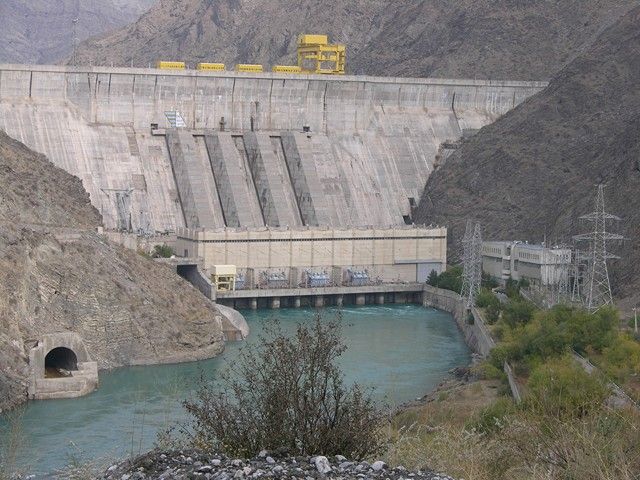
BISHKEK (TCA) — The OSCE Programme Office in Bishkek has handed over video surveillance equipment to the National Guard of the Armed Forces of Kyrgyzstan to enhance the security of the country’s strategic energy facilities — the Tash-Kumyr and Kurpsai hydroelectric power stations. The stations are part of Kyrgyzstan’s largest Naryn hydropower plant cascade. Continue reading

Uzbekistan and Kyrgyzstan undertake resolving their water disputes

BISHKEK (TCA) — In a landmark shift in bilateral relations, Kyrgyzstan and Uzbekistan have begun resolving and cooperating in border delimitation and water issues, including a plan of joint construction of a major hydropower plant in Kyrgyzstan. We are republishing this article by Umida Hashimova on the issue, originally published by The Jamestown Foundation’s Eurasia Daily Monitor: Transboundary water sharing is one of the most contentious issues dividing Central Asian countries. And as Uzbekistan continues to actively pursue better relations with its neighbors (see EDM, May 24, June 27, September 12, 18), discussions over water usage are moving to the top of the agenda. Uzbekistan has already directed a great deal of energy and attention to improving relations with Kyrgyzstan; and almost a year after the process was launched, the two countries are now reviewing their water disputes. Kambar-Ata 1 is a large hydropower station Kyrgyzstan has been planning to build for some time. The project was vehemently opposed by Uzbekistan under its previous president, Islam Karimov, for fear the dam would block large amounts of water upriver and deprive Uzbekistan’s downstream agricultural lands from securing sufficient volumes of irrigation water. But now, not only has Tashkent eased that opposition, it furthermore wants to participate in building the Kambar-Ata 1 station (AKIpress, October 6). The 1,860-megawatt (MW) hydroelectric power plant comes at a steep price of $3 billion, according to the feasibility study carried out by a Canadian company back in 2014 (Vecherniy Bishkek, July 19, 2014). Energy firms in both Kyrgyzstan and Uzbekistan have already taken steps to draw up initial plans for financing the project, which heretofore had been the major issue bogging down progress on constructing the dam (Kun.uz, October 10). Bishkek had found and later lost investors in the Kambar-Ata 1 project on two previous occasions. Indeed, Tashkent’s opposition to the project had likely contributed to the lack of interest by investors. In 2012, Russia’s RusHydro committed to become the sole builder, but pulled out in 2016, without even starting construction, because of outstanding land disputes and loss of interest in the project (Current Time, January 26, 2016). Then, in July 2017, the Czech company Liglass Trading entered into an agreement to build several small hydropower stations and pay off Kyrgyzstan’s $37 million debt to RusHydro over Kambar-Ata 1 (Vedomosti, July 10). However, in less than three months, that deal fell through as well due to the inability of Liglass Trading to meet its financial obligations within a set period of time (Gov.kg, October 10). By recently dropping its opposition to the project and turning from foe to friend on this issue, Uzbekistan has caused “tectonic changes” to the benefit of the power station’s construction, according to Kyrgyzstan’s Deputy Prime Minister Duyshenbek Zilaliev (24.kg, September 19). Invigorated investors are currently reaching out to the Kyrgyz Republic to express interest in participating in the project. Less controversial or well-known in the international arena, but more politically charged than Kambar-Ata 1 is the issue over the Kasan-Say (Orto-Tokoy)...

Closer Uzbekistan-Kazakhstan ties not enough to resolve broader regional woes

BISHKEK (TCA) — Although Uzbekistan has taken steps to improve bilateral relations with its Central Asia neighbors, some unresolved issues still remain in the region — from the use of water resources to cooperation within regional economic integration and security blocs, such as the Eurasian Economic Union and Collective Security Treaty Organization. We are republishing this article by George Voloshin on the issue, originally published by The Jamestown Foundation’s Eurasia Daily Monitor: The president of Kazakhstan, Nursultan Nazarbayev, paid an official visit to Uzbekistan in mid-September, highlighting improving relations between Central Asia’s two largest states. There, he met with his Uzbekistani counterpart, Shavkat Mirziyoyev, for the sixth time since the latter took office last December, following the death two months earlier of the incumbent (since 1990) Islam Karimov. Mirziyoyev had previously chosen Kazakhstan as a second stop on his first foreign tour as head of state, visiting the country in late March, right after Turkmenistan but before going to either Russia or China (Mir24.tv, Tengrinews.kz, September 16; Sputniknews.kz, March 23). Since the early 1990s, Kazakhstan and Uzbekistan have been locked in a bitter, yet unstated rivalry for regional leadership. Despite its population of nearly 33 million people, in contrast with Kazakhstan’s 18 million, Uzbekistan had largely failed under President Karimov to open up the economy to foreign investors. The 2005 uprising in Andijan and the crackdown that followed drove the country into years of isolation. The European Union opened its permanent mission to Tashkent only in 2011, while the US embassy has existed since 1992 (Uz.usembassy.gov, March 22, 2017; Fergananews.com, January 24, 2012; Lenta.ru, May 16, 2005). Much of Nazarbayev’s time in Uzbekistan was dedicated to the discussion of bilateral economic cooperation, given both sides’ publicly acknowledged intention to strengthen trade and investment ties. Last year’s trade turnover amounted to $2 billion, but the leaders said it could increase to at least $5 billion by 2020, if all unexploited potential could be put to good use. Kazakhstan is now home to 130 Uzbekistani companies; meanwhile, 130 Kazakhstani firms are active in the neighboring market (Abctv.kz, September 16; Podrobno.uz, June 9; Sputniknews-uz.com, February 23). Mirziyoyev’s efforts to liberalize the economy and attract foreign investors seem to have already started paying off. Kazakhstani-Uzbekistani bilateral trade grew 35 percent year-on-year during the first seven months of 2017, largely due to the opening of additional border crossings at Mirziyoyev’s direct orders. The two governments have successfully launched a new car assembly line this year and are currently jointly renovating a major highway. The national air carriers have further announced plans to open extra flights between provincial capitals (Repost.uz, Uza.uz, September 17; Kapital.kz, Kazpravda.kz, September 16). Bilateral cooperation is also set to expand dramatically in the strategically important energy field. Following the discovery of several oil deposits in the 1990s, Uzbekistan almost stopped importing crude oil. However, those oil fields ultimately dried up. And now, with its refineries (capable of processing up to 11 million metric tons a year) running at only half capacity, the...

Kyrgyzstan-Uzbekistan ties reach highest ever level

BISHKEK (TCA) — The official visit of President of Kyrgyzstan Almazbek Atambayev to Uzbekistan on October 5-6 resulted in the signing of documents vital for both countries. Continue reading

Kyrgyzstan, Russia would not go to court over hydropower project deal cancellation

BISHKEK (TCA) — Kyrgyzstan would be open to considering Russian or any other investors for construction of its Naryn cascade of hydropower plants (HPP), Kyrgyz Prime Minister Sapar Isakov told Sputnik news agency. Continue reading