• KZT/USD = 0.00212
  • TJS/USD = 0.10810
  • UZS/USD = 0.00008
  • TMT/USD = 0.29760
  • KZT/USD = 0.00212
  • TJS/USD = 0.10810
  • UZS/USD = 0.00008
  • TMT/USD = 0.29760
  • KZT/USD = 0.00212
  • TJS/USD = 0.10810
  • UZS/USD = 0.00008
  • TMT/USD = 0.29760
  • KZT/USD = 0.00212
  • TJS/USD = 0.10810
  • UZS/USD = 0.00008
  • TMT/USD = 0.29760
  • KZT/USD = 0.00212
  • TJS/USD = 0.10810
  • UZS/USD = 0.00008
  • TMT/USD = 0.29760
  • KZT/USD = 0.00212
  • TJS/USD = 0.10810
  • UZS/USD = 0.00008
  • TMT/USD = 0.29760
  • KZT/USD = 0.00212
  • TJS/USD = 0.10810
  • UZS/USD = 0.00008
  • TMT/USD = 0.29760
  • KZT/USD = 0.00212
  • TJS/USD = 0.10810
  • UZS/USD = 0.00008
  • TMT/USD = 0.29760

Viewing results 1 - 6 of 11

Chinese Company to Develop Low-Altitude Technologies and Intelligent Manufacturing in Kazakhstan

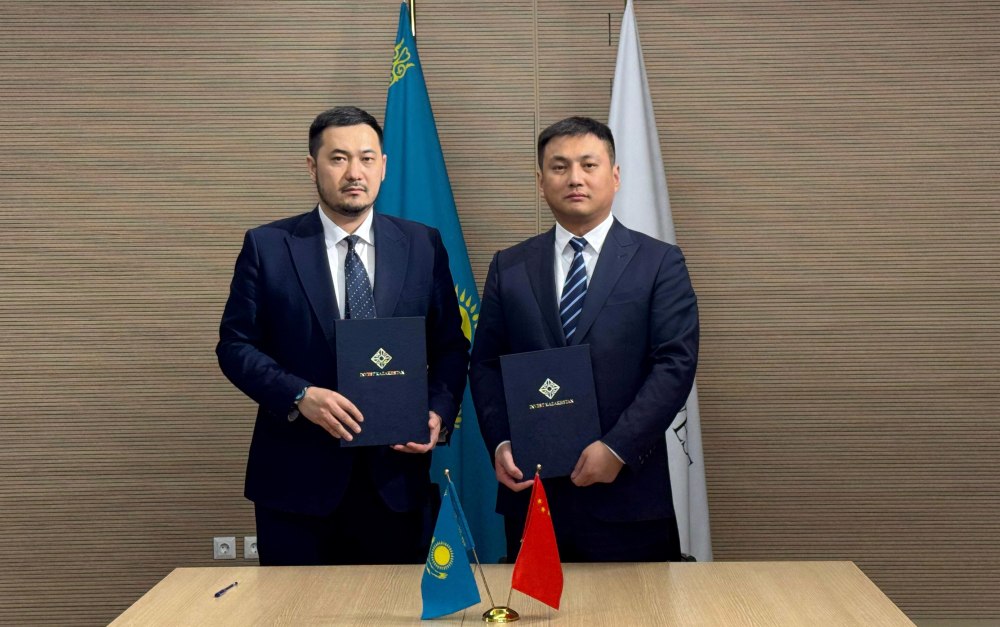
Kazakh Invest, Kazakhstan’s national investment company, has signed a memorandum of understanding (MoU) with China's Polyking New Horizons Technology Industry Co. Ltd. The agreement focuses on collaboration in the emerging field of low-altitude economy and intelligent manufacturing. As part of the partnership, the companies plan to establish an industrial park in Kazakhstan, which will integrate drone technologies, smart city solutions, and advanced manufacturing systems. The $200 million project is expected to create 1,000 new jobs, according to Kazakh Invest. Expanding High-Tech Opportunities The MoU also includes provisions for developing projects in the chemical industry and innovative technologies. These initiatives aim to strengthen Kazakhstan's position as a hub for high-tech production and innovation in Central Asia. Azamat Kozhanov, Managing Director of Kazakh Invest, highlighted the vast potential for low-altitude technologies in various sectors, including agriculture, energy, construction, and infrastructure management. “The advanced technologies and expertise of Polyking will bring new momentum to the development of this field in Kazakhstan,” Kozhanov stated. He also noted the significant economic opportunity tied to this sector, adding: “By 2050, the global low-altitude economy market is expected to reach $8.8 trillion. Therefore, we are actively creating platforms to develop new industries and providing comprehensive support.” Broader Trends in Low-Altitude Technology Kazakhstan has already taken steps to integrate drone production into its economy. The Times of Central Asia recently reported on a $12 million project by Yesil Technology Company, a subsidiary of China’s Shaanxi Kaizhuo Electronic Technology Co. Ltd., to establish an industrial drone manufacturing facility in the country. This collaboration underscores Kazakhstan’s strategic focus on becoming a leader in the low-altitude economy, a field that includes drones, unmanned aerial vehicles (UAVs), and other advanced technologies that operate at low altitudes. The partnership between Kazakh Invest and Polyking New Horizons Technology marks another milestone in Kazakhstan’s push to diversify its economy through high-tech industries. The planned industrial park, along with complementary projects like drone manufacturing, positions Kazakhstan to capitalize on the growing global market for low-altitude technologies and intelligent manufacturing. If successfully implemented, these initiatives could transform the country into a regional leader in cutting-edge technology and innovation.

Uzbekistan and Korea Forge New, High-Tech Agenda for Strategic Partnership

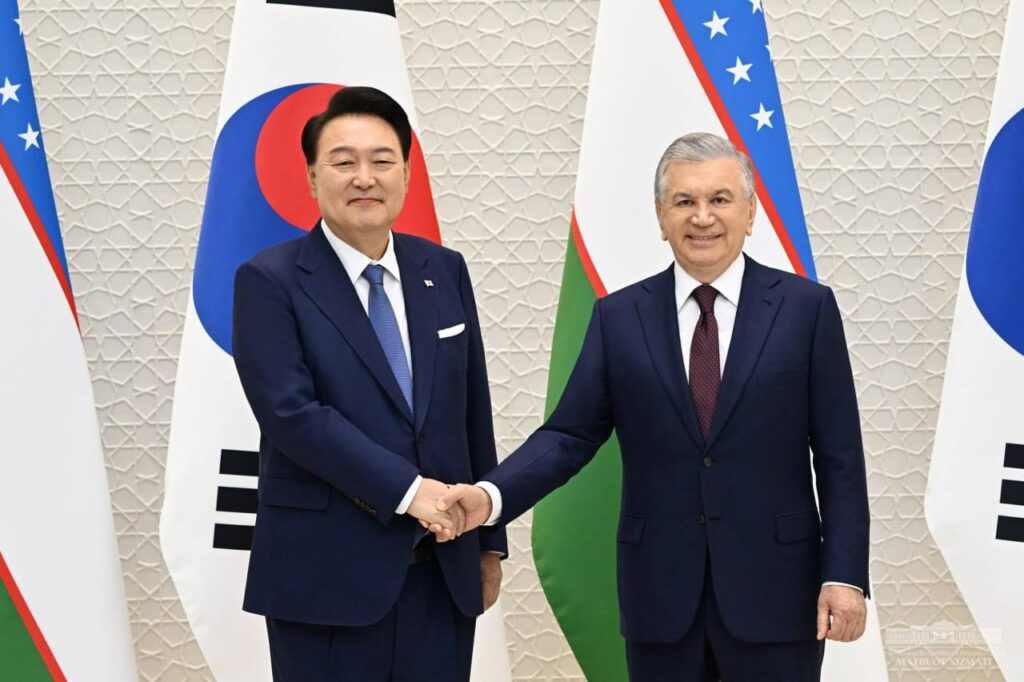
On 14 June, South Korean President Yoon Suk Yeol held talks with Uzbekistan President Shavkat Mirziyoyev. During their meeting in Tashkent, it was noted that the Republic of Korea is among Uzbekistan’s leading trade and investment partners. Last year, bilateral trade turnover reached $2.5 billion, and Korean investments in Uzbekistan now exceed $7.5 billion. Negotiations focused on the formation of a new, high-tech agenda for Uzbek-Korean strategic partnership over the next three years. As a result, the two leaders tasked their governments to prepare a Strategic Program for the creation of a regional high-tech hub in Uzbekistan, with priority given to the following “anchor” areas of the Strategy: Partnership on critical mineral resources with deep processing and creation of a complete added value chain. Strategic cooperation in the field of semiconductors, in which the Republic of Korea is recognized as a global leader, and the implementation of plans to create in Uzbekistan’s first fully-fledged research and production cluster of semiconductor products. Full-scale partnership in the chemical industry, including new projects to produce green hydrogen and ammonia, as well as finished rubber products. Deepening cooperation in mechanical engineering. This spring, an assembly line for KIA cars was launched in Uzbekistan’s Jizzakh region, to be followed next year, by a plant with the capacity to manufacture over 60 thousand vehicles per year. Transfer of technologies to develop “smart” agriculture, including via the digitalization of the agricultural sector,  the introduction of “smart” and “green” technologies. Agreements have already been reached on the creation of modern greenhouses and garden complexes in Uzbekistan’s regions based on renewable energy sources. Infrastructure modernization and a program for urban development, based on the high interest of Korean banks and companies in the modernization of transport infrastructure,  and the design and construction of residential and commercial real estate in Uzbekistan on the principles of public-private partnership. With regard to developing potential projects in  green energy and increase energy efficiency, strategic dialogue is to be resumed between energy ministers and a meeting organized in Uzbekistan in the near future.

U.S. Delivers Cutting-Edge Technology to Kyrgyzstan’s Renewable Energy Sector

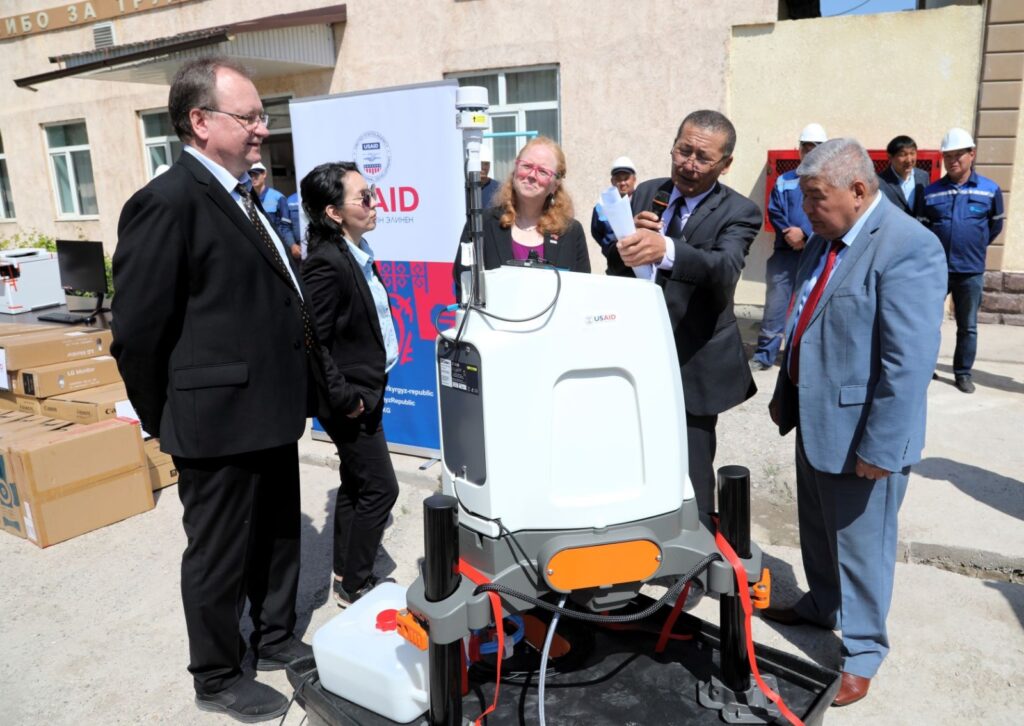
The U.S. government – via the U.S. Agency for International Development (USAID) Power Central Asia activity – has delivered a Light Detection and Ranging unit to Kyrgyzstan’s Ministry of Energy. As reported by the U.S. Embassy in Kyrgyzstan, accurate wind measurements provided by the cutting-edge technology will prove invaluable in the development of the country’s renewable energy projects and do much to attract investment. At the handover ceremony, Minister of Energy Taalaibek Ibrayev commented that the Light Detection and Ranging equipment will not only enhance the effective use of renewable energy sources, but also improve financial forecasts and accelerate the introduction of wind farms and wind energy in Kyrgyzstan. To support the initiative, the USAID Power Central Asia activity has trained local technical staff in the use of the wind measurement equipment. USAID/Kyrgyz Republic Mission Director, Kaya Adams, stated: “The Kyrgyz Republic can ensure that all future wind projects will be both strategically located and implemented with the highest precision for maximum efficiency.  This efficiency is crucial for making informed investment decisions that will sustainably shape the country’s energy future.” The USAID Power Central Asia activity is a five-year, regional energy initiative to improve the performance of Central Asia’s energy sectors by introducing more competitive means of producing clean energy, boosting energy security and resiliency through greater regional connectivity, and expanding cross-border electricity trade. Since the inception of Power Central Asia in 2020, USAID has leveraged $2.2 billion in clean energy investments and facilitated the installation of 2,241 Megawatts of clean energy capacity across the regions.    

Kazakhstan’s Nomadiq Innovation Hub Opens in Singapore

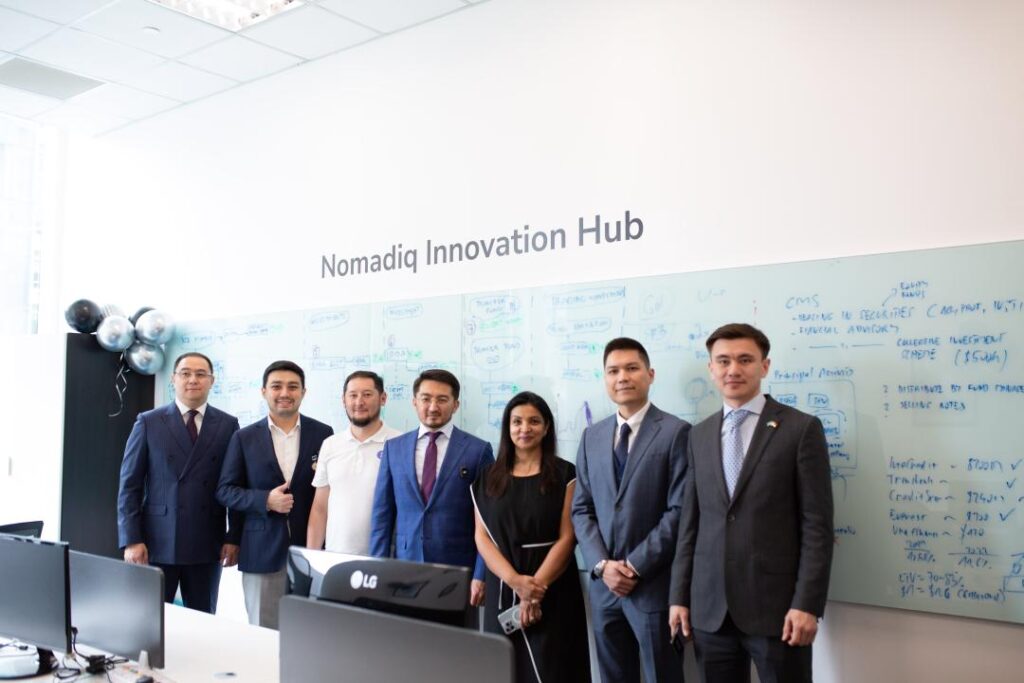
The Nomadiq Innovation Hub has now officially opened in Singapore. A private initiative, the aim of the hub is to promote Central Asia as a single region in Singapore and advance cooperation in IT entrepreneurship. At the opening ceremony, Minister of Digital Development, Innovation and Aerospace Industry of Kazakhstan, Zhaslan Madiev remarked that the new hub was designed to attract new start-up projects and unite Turkic countries’ efforts to expand digital solutions. “We have high hopes for the Nomadiq Innovation Hub in achieving goals that represent the interests of Kazakhstan and in particular, increasing the export of Kazakh IT products and attracting investment to our country,” the minister said. “Kazakhstan already has significant experience in developing and supporting start-ups and innovative projects. For example, the Astana Hub International Technology Park for IT Start-ups, launched five years ago, has now become one of the leading technology parks in Central Asia with 1,403 participants, including 388 foreign companies.” Outlining the project’s objectives, Olzhas Zhienkul, Chairman of the Board of Nomadiq Innovation Hub, announced, “Our main goals include the provision of in-depth and personalized support to selected projects, helping build sustainable business models and developing customized growth strategies. We are also focused on overcoming barriers to entry into international markets and will strive to position our region as a promising platform for venture investors.” Nomadiq is Kazakhstan’s third overseas innovation hub, joining the Silkroad Innovation Hub in the USA, and that in Riyadh, Saudi Arabia, named after the great philosopher al-Farabi.    

Kazakhstan and China to Cooperate on Innovative Technology

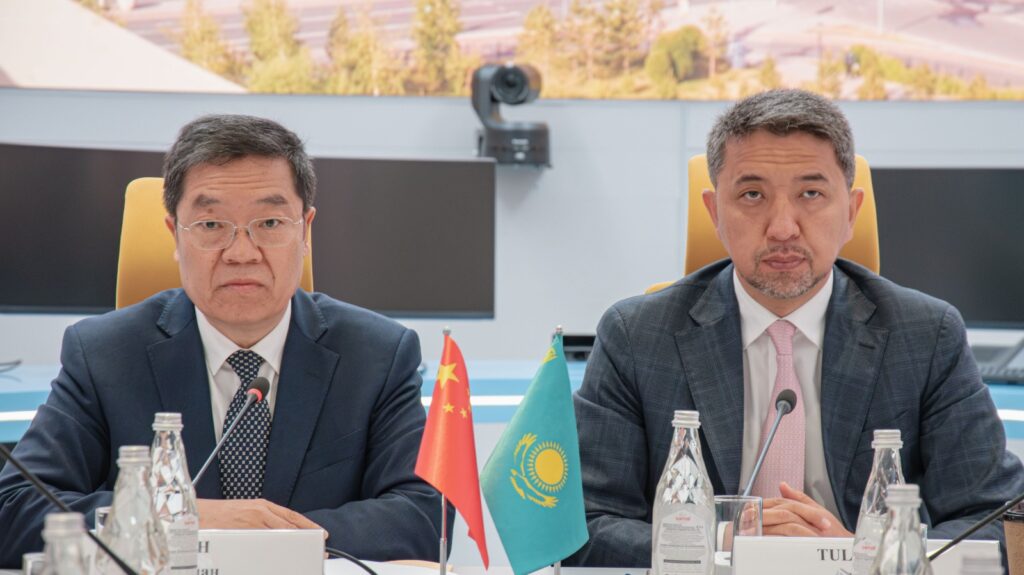
On 23 May, the Ministry of Digital Development, Innovation and Aerospace Industry of Kazakhstan hosted the first meeting of the Subcommittee on Innovative Cooperation of the Kazakh-Chinese Intergovernmental Cooperation Committee. During the meeting in Astana, Kazakhstan’s First Vice Minister of Digital Development, Innovation and Aerospace Industry Kanysh Tuleushin, and Deputy Minister of Science and Technology of China Chen Jiachang discussed their respective countries’ cooperation in developing the 5G network, aerospace industry, and e-commerce. The subcommittee agreed to expand cooperation in the implementation of joint scientific and innovative projects in space research, the use of microsatellites, monitoring agriculture and natural disasters using remote sensing, digitalization of the agricultural sector, and seismic monitoring. An agreement was also reached on training young talent in the field of innovation, including short-term internships and joint scientific projects. The co-chairs of the subcommittee pledged to exchange information on current developments in scientific and technological innovations in China and Kazakhstan.