• KGS/USD = 0.01144 0%
  • KZT/USD = 0.00208 0%
  • TJS/USD = 0.10440 0%
  • UZS/USD = 0.00008 0%
  • TMT/USD = 0.28571 0%
  • KGS/USD = 0.01144 0%
  • KZT/USD = 0.00208 0%
  • TJS/USD = 0.10440 0%
  • UZS/USD = 0.00008 0%
  • TMT/USD = 0.28571 0%
  • KGS/USD = 0.01144 0%
  • KZT/USD = 0.00208 0%
  • TJS/USD = 0.10440 0%
  • UZS/USD = 0.00008 0%
  • TMT/USD = 0.28571 0%
  • KGS/USD = 0.01144 0%
  • KZT/USD = 0.00208 0%
  • TJS/USD = 0.10440 0%
  • UZS/USD = 0.00008 0%
  • TMT/USD = 0.28571 0%
  • KGS/USD = 0.01144 0%
  • KZT/USD = 0.00208 0%
  • TJS/USD = 0.10440 0%
  • UZS/USD = 0.00008 0%
  • TMT/USD = 0.28571 0%
  • KGS/USD = 0.01144 0%
  • KZT/USD = 0.00208 0%
  • TJS/USD = 0.10440 0%
  • UZS/USD = 0.00008 0%
  • TMT/USD = 0.28571 0%
  • KGS/USD = 0.01144 0%
  • KZT/USD = 0.00208 0%
  • TJS/USD = 0.10440 0%
  • UZS/USD = 0.00008 0%
  • TMT/USD = 0.28571 0%
  • KGS/USD = 0.01144 0%
  • KZT/USD = 0.00208 0%
  • TJS/USD = 0.10440 0%
  • UZS/USD = 0.00008 0%
  • TMT/USD = 0.28571 0%

Viewing results 1 - 6 of 101

Tokayev in New York: $100B U.S. Investment Push Boosts Kazakhstan Ties

Kazakhstan and the United States are continuing to strengthen their strategic partnership, with investment playing a central role. At a roundtable with U.S. business representatives in New York, President Kassym-Jomart Tokayev stated that American investments in Kazakhstan’s economy have surpassed $100 billion. “Today, more than 630 American companies are successfully operating in our country, including Chevron, ExxonMobil, Boeing, Visa, Mastercard, Meta, Wabtec, and Citibank. We regard the U.S. as an important strategic partner and reaffirm our commitment to further developing multifaceted cooperation,” Tokayev said. The president noted that Kazakhstan’s economy grew by 6.5% in the first eight months of 2025. He added that ongoing political and economic reforms are creating favorable conditions for long-term growth and attracting further investment. Energy and Uranium: The Cornerstone of Cooperation Energy continues to underpin U.S.-Kazakhstan relations. “We recognize and highly value the large and successful investments of Chevron and ExxonMobil over the past 30 years. Despite all the turbulence in regional geopolitics, their presence in our country has never been questioned,” Tokayev said. He pointed out that Kazakhstan supplies about 40% of the global uranium market and nearly a quarter of U.S. imports. Tokayev also highlighted Kazakhstan’s “four sources” strategy - oil, gas, coal, and uranium - and expressed support for the U.S. approach to coal as a reliable energy source in the near term. $4.2 Billion Wabtec Agreement: A Landmark Deal A key outcome of Tokayev’s U.S. visit was the signing of a $4.2 billion agreement with American locomotive manufacturer Wabtec. According to the U.S. Department of Commerce, the deal will see Kazakhstan’s national railway company, Kazakhstan Temir Zholy (KTZ), acquire 300 ES44Aci Evolution Series freight locomotives over the next decade. U.S. Secretary of Commerce Howard Lutnick described the contract as the "largest in history,” noting it would create approximately 11,000 jobs in Texas and Pennsylvania. “This is not just a story of massive success, it’s an example of how American innovation strengthens global leadership,” he posted on X. Wabtec President and CEO Rafael Santana added, “This project represents KTZ’s ambition to transform Kazakhstan’s railway network into a key bridge between Europe and Asia.” Tokayev has emphasized that Kazakhstan is upgrading transport hubs and rolling out a “Smart Cargo” digital customs and logistics system to streamline east–west and Trans-Caspian transit traffic. Presidential Support: Trump and Tokayev Hold Call The Wabtec agreement was preceded by a phone call between U.S. President Donald Trump and President Tokayev. “I just concluded a wonderful call with the Highly Respected President of Kazakhstan, Kassym-Jomart Kemeluly Tokayev,” Trump wrote on Truth Social. He emphasized the significance of the locomotive deal and linked it to his broader support for revitalizing U.S. infrastructure. “We need to support our rail industry, which has been attacked for years by ‘fake environmentalists.’ Now railroads are coming back and fast!” he said. Observers noted that Trump’s personal involvement underscored the political importance of the agreement for bilateral relations. Green Energy Progress: SAF Plant with LanzaJet Another notable development was the agreement between Kazakhstan’s national oil...

Opinion: The Contact Group on Afghanistan – Central Asia Formulates a Regional Position

On August 26, special representatives on Afghanistan from Kazakhstan, Kyrgyzstan, Tajikistan, and Uzbekistan met for the first time in Tashkent. The meeting resulted in the creation of a permanent regional platform: the Contact Group on Afghanistan. This gathering was not only a continuation of commitments outlined in the joint statement from the most recent Consultative Summit of Central Asian heads of state, but also a step toward preparing for the next high-level format, scheduled for November in Tashkent. Formally, Turkmenistan was absent. Available information suggests the reasons were purely technical. Ashgabat was ready to join and expressed support for the results through its foreign ministry channels. The key outcome is that Central Asian states have, for the first time, shown their readiness to speak with one voice on an issue long shaped by competing external interests. This is not the start of forming a common position; that had already developed de facto in recent years. All Central Asian countries have supported trade and transit with Afghanistan, continued supplying electricity and food, and maintained working contacts with the Taliban, while avoiding extremes. The Tashkent meeting institutionalized this approach: parallel tracks have now shifted, cautiously, toward coordination. Informal unity has been formalized into a tool. Unlike external players, who often cloak interests in grand rhetoric, Central Asia acts openly and pragmatically. The logic is simple: whatever is done for Afghanistan is, in fact, done for oneself. That is the distinctive feature of the regional approach - no ideological cover, no attempts to reshape Afghanistan. Examples are straightforward. Electricity continues to flow even when payments are delayed - not as charity, but as an investment in security. A blackout in Afghanistan could trigger refugee flows and threats heading north. Exports of flour and fuel sustain Afghan markets but also expand outlets for Central Asian producers. Participation in trans-Afghan corridors is not a gift to Kabul but an opportunity for Central Asia to anchor itself in southern logistics routes. Ultimately, every step “for Afghanistan” is primarily for the region itself. If Kabul ignores basic rules, cooperation will simply stop. In politics, there are no eternal friends, only eternal interests. The new format does not yet imply collective pressure on the Taliban. Rather, it creates conditions for each country to conduct more substantive bilateral dialogue, but grounded in a shared position. Until now, Central Asia has mainly spoken to the Taliban about trade, transit, and infrastructure. The Contact Group now makes it possible to add another dimension: clarifying boundaries of what is acceptable on issues like extremism, border escalation, or water pressure. For now, “red lines” are unlikely, since the Taliban have not crossed them. The situation remains manageable, leaving room for constructive dialogue. Equally important, the Contact Group is not a threat or ultimatum. Coordination is meant to expand opportunities for dialogue, not limit them. In the long run, this could evolve into a sustainable C5+A format. Afghanistan would then be integrated into regional frameworks not as a problem to be managed, but as...

Uzbekistan Jordan Relations Advance with Landmark State Visit

King Abdullah II of Jordan paid a state visit to Uzbekistan on August 25-26 at the invitation of President Shavkat Mirziyoyev. The visit, his first since the establishment of diplomatic relations, marked a milestone in bilateral ties and culminated in the signing of 15 agreements spanning politics, trade, investment, education, and culture. A Historic Visit with Symbolic and Strategic Weight Mirziyoyev welcomed King Abdullah with full ceremonial honors in Samarkand, including flag displays, a guard of honor, and performances of national songs and dances. The leaders visited prominent cultural sites, including the Shah-i-Zinda complex, Amir Temur’s mausoleum, and Registan Square, where the Jordanian monarch received an overview of Uzbekistan’s rich historical heritage. King Abdullah also visited the tomb of Qutham ibn al-ʿAbbas, a revered early Islamic preacher in Samarkand. The Jordanian delegation toured the “Eternal City” cultural park, which showcases Uzbekistan’s traditional crafts, architecture, and customs. Expanding Economic and Diplomatic Cooperation The official program commenced on August 26 at the Congress Center in Samarkand. Following the ceremonial welcome, the leaders visited an exhibition of Uzbekistan’s export-oriented products. The showcase featured a range of goods from key industries such as pharmaceuticals, chemicals, mining, textiles, agriculture, IT, and jewelry. King Abdullah praised Uzbekistan’s industrial development and called for increased business-to-business collaboration. During bilateral talks, the two sides agreed to elevate their relationship to a comprehensive partnership. Discussions focused on expanding political dialogue, boosting trade and investment, and strengthening cooperation in science, education, tourism, and culture. To formalize the partnership, the two countries agreed to establish a joint intergovernmental commission and a business council by the end of the year, and to convene an Uzbek-Jordanian business forum. They also outlined plans for cooperation in smart agriculture, geology, healthcare, and the textile industry. Broad-Based Agreements and International Alignment Fifteen agreements and memoranda were signed during the visit, including: An extradition treaty A bilateral investment promotion agreement A visa waiver agreement Cooperation protocols in higher education, scientific research, agriculture, veterinary medicine, tourism, and standardization The two leaders also reiterated their commitment to close coordination within international organizations, including the United Nations and the Organization of Islamic Cooperation. Honoring Partnership and Future Prospects In recognition of his role in strengthening bilateral ties, Mirziyoyev was awarded Jordan’s highest state honor, the Order of Al Nahda (“Renaissance”), presented personally by King Abdullah II. “I accept this award with great honor, as a recognition of our joint efforts to expand multifaceted cooperation and a sign of friendship and respect for the people of Uzbekistan, who are laying the foundations for the Third Renaissance in our country,” Mirziyoyev said. The visit concluded with a joint statement and mutual invitations for future high-level exchanges, reaffirming both countries’ shared ambition to elevate Uzbekistan-Jordan relations to a new strategic level.

Tokayev Congratulates Putin After Alaska Meeting; Russian Leader Briefs Mirziyoyev

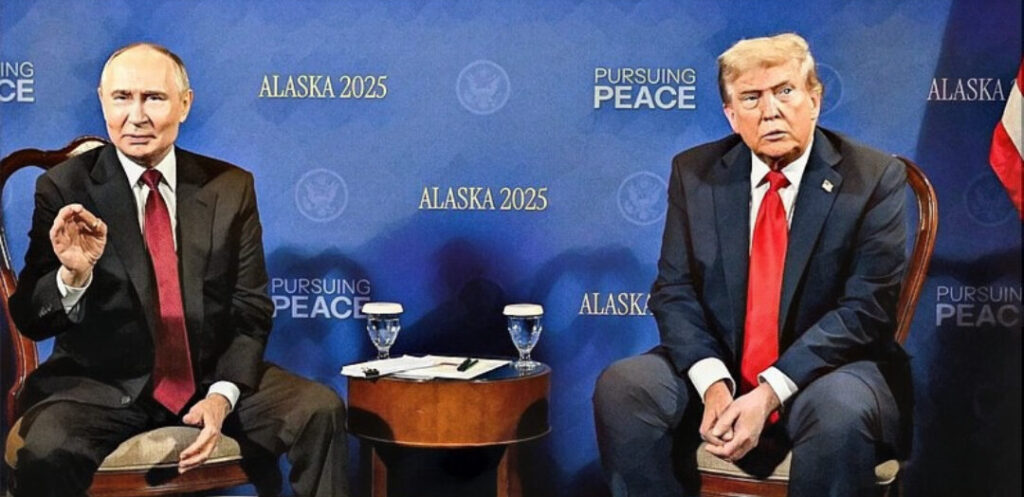
Russian President Vladimir Putin spoke to the leaders of Kazakhstan and Uzbekistan by telephone on Sunday, briefing them about his talks in Alaska with U.S. President Donald Trump about ending the war in Ukraine. Trade and joint energy projects between Russia and the Central Asian countries were also discussed. President Kassym-Jomart Tokayev of Kazakhstan congratulated Putin on “the results” of the meeting with Trump and said “the negotiations contributed to a better understanding by the American side of the Russian position on Ukraine, which will help find common ground on this complex issue,” Tokayev’s office said. “Kassym-Jomart Tokayev considers the Alaska summit a breakthrough event in terms of strengthening Russia's international positions and mutual understanding on the world stage,” the office said. Even so, uncertainty remains. Putin and Trump provided few details about their meeting on Friday, leaving Alaska without the Ukraine-backed cease-fire that Trump had previously demanded. Ukraine and its European allies are concerned that Trump could back a proposed deal under which Moscow secures more Ukrainian territory as part of a resolution. Ukrainian President Volodymyr Zelenskyy and European leaders are scheduled to meet Trump at the White House on Monday to press their case for a peace with security guarantees. In their phone call, Putin informed President Shavkat Mirziyoyev of Uzbekistan of the “main results” of his meeting with Trump, Mirziyoyev’s office said. “The leader of Uzbekistan expressed support for the agreements reached and voiced hope for a swift settlement of the situation surrounding Ukraine,” the office said. Putin and Mirziyoyev spoke about accelerating trade between their two countries, while Tokayev thanked the Russian leader for collaborating in the field of energy, a possible reference to Russia’s leading role in building Kazakhstan’s first nuclear power plant. The Kremlin released similar statements about the phone calls.

Despite War’s Challenges, Kazakhstan Says Trump-Putin Meeting Was “The Beginning”

Kazakhstan has praised Russian President Vladimir Putin and U.S. President Donald Trump for their meeting in Alaska, describing it as “the beginning of high-level negotiations on the situation in Ukraine.” President Kassym-Jomart Tokayev “regards the summit as a historic event, made possible by the political will and sincere determination of both leaders to seek common approaches to resolving contemporary global challenges, including the cessation of hostilities in Ukraine,” Tokayev´s press secretary, Ruslan Zheldibay, said on X on Saturday. Tokayev’s statement generally aligned with the positive statements made by Putin and Trump after their meeting on Friday, even though the two leaders provided few details about how they envisioned resolving the conflict when they spoke briefly to the media after their discussion. Ukraine and its European allies have been concerned that Trump could favor Putin’s terms for ending the war, leaving Ukraine vulnerable to renewed Russian pressure in the future. Ukrainian President Volodymyr Zelenskyy is expected to meet Trump at the White House on Monday. In a Truth Social post on Saturday, Trump appeared to back away from his previous demand for a Ukraine-supported ceasefire, saying it was better to “go directly to a Peace Agreement, which would end the war, and not a mere Ceasefire Agreement, which often times do not hold up.” Despite their concerns, European leaders have welcomed Trump’s negotiation efforts, noting a statement by the U.S. president that the United States “is prepared to give security guarantees” so that Ukraine can defend its sovereignty. “It will be up to Ukraine to make decisions on its territory. International borders must not be changed by force,” a joint statement by European leaders said. Kazakhstan is not directly involved in negotiations over Ukraine, but it has become an intermittent venue for international diplomacy and has offered to assist as needed since it maintains ties with both Russia and Ukraine. Tokayev has spoken in support of Ukraine’s sovereignty and territorial integrity. But in a phone call a week ago, Tokayev told Zelenskyy that “A bad peace is better than a good war,” possibly a pitch to the Ukrainian leader to consider concessions such as giving up territory in order to preserve the country’s independence. Russia occupies an estimated 20% of Ukraine and has made gains in eastern Ukraine in recent days. At least publicly, Zelenskyy has opposed the idea of giving up territory, saying the Ukrainian constitution prevents him from doing so. On Saturday, he said on X: “A real peace must be achieved, one that will be lasting, not just another pause between Russian invasions.” Kazakhstan, which has sought neutrality over the war, shares a long land border with Russia and has closer trade and diplomatic ties with Moscow than Kyiv. Since Russia’s full-scale invasion of Ukraine in February 2022, Tokayev has spoken to Zelenskyy several times in phone calls that, according to Kazakhstan’s presidency, were initiated by the Ukrainian side. Tokayev has spoken to Putin by phone on more than twice as many occasions and has also met the Russian...

After U.S. Bombs Iran, Central Asia Calls for Diplomacy and Restraint

In the early hours of June 22, the United States launched airstrikes on Iran’s nuclear facilities, triggering widespread concern across Central Asia. Despite the potential economic upside for Kazakhstan, with the possibility of rising oil prices, the region’s governments have uniformly called for restraint and a peaceful resolution. The operation, dubbed “Midnight Hammer” by the U.S. Department of Defense, reportedly targeted facilities in Fordow, Natanz, and Isfahan. While Washington claimed success, the Iranian authorities asserted they had evacuated uranium from the Fordow site in advance, calling the mission a failure. Military experts continue to debate the extent of the damage. Coordinated Responses from Central Asian Capitals The foreign ministries of Kazakhstan, Uzbekistan, Kyrgyzstan, Turkmenistan, and Tajikistan issued similarly worded statements expressing concern over the rapidly deteriorating situation. Kazakhstan’s Ministry of Foreign Affairs stated that the U.S. airstrikes marked a dangerous escalation and emphasized the need for negotiations grounded in the UN Charter. “Kazakhstan is part of the group of Caspian countries and is developing cooperation with Iran in various areas. Our country believes that all disagreements, including nuclear issues, should be resolved through negotiations,” the statement said. It also urged international efforts to prevent nuclear proliferation and establish security guarantees for nations adhering to the non-proliferation regime. Uzbekistan’s Foreign Ministry echoed this sentiment and advised citizens to avoid traveling to Israel and Iran. It also urged those currently in those countries to leave high-risk areas where possible. Kyrgyzstan called on all parties to exercise “maximum restraint” and avoid steps that could exacerbate the crisis. Turkmenistan reaffirmed its policy of "positive neutrality," stressing the importance of diplomacy and adherence to international law. Ashgabat stated that it “does not accept the use or threat of force as a means of resolving political and other disputes”. Tajikistan, meanwhile, issued the strongest statement, condemning the U.S. and Israeli strikes outright and warning that the conflict could lead to a prolonged regional war. Dushanbe called on the UN, IAEA, and other global bodies to prevent violations of international law and work towards peace and environmental safety. The Economic Subtext: Rising Oil Prices While official reactions were uniformly cautious, analysts in Kazakhstan noted the economic implications. Expert Olzhas Baidildin pointed out that shares in KazMunayGas surged by 11% following the strikes, with its market capitalization rising to 10.3 trillion KZT ($19.8 billion). Baidildin previously argued that Iran is unlikely to follow through on threats to block the Strait of Hormuz. Nevertheless, he noted that such a move would dramatically increase the strategic importance of Kazakhstan and other Central Asian energy producers to major consumers such as China and India. Financial analyst Andrei Chebotarev agreed, stating: "Iran’s threat to close the Strait of Hormuz is no longer the ace it once was. The West has diversified away from Gulf oil, while the real impact would fall on China, the region’s largest importer. Meanwhile, the U.S. could benefit from a price surge through its shale exports". It is estimated that China purchases approximately 90% of Iran's oil exports...