
• KGS/USD = 0.01143 0%
  • KZT/USD = 0.00205 0%
  • TJS/USD = 0.10433 0.1%
  • UZS/USD = 0.00008 0%
  • TMT/USD = 0.28577 0%
  • KGS/USD = 0.01143 0%
  • KZT/USD = 0.00205 0%
  • TJS/USD = 0.10433 0.1%
  • UZS/USD = 0.00008 0%
  • TMT/USD = 0.28577 0%
  • KGS/USD = 0.01143 0%
  • KZT/USD = 0.00205 0%
  • TJS/USD = 0.10433 0.1%
  • UZS/USD = 0.00008 0%
  • TMT/USD = 0.28577 0%
  • KGS/USD = 0.01143 0%
  • KZT/USD = 0.00205 0%
  • TJS/USD = 0.10433 0.1%
  • UZS/USD = 0.00008 0%
  • TMT/USD = 0.28577 0%
  • KGS/USD = 0.01143 0%
  • KZT/USD = 0.00205 0%
  • TJS/USD = 0.10433 0.1%
  • UZS/USD = 0.00008 0%
  • TMT/USD = 0.28577 0%
  • KGS/USD = 0.01143 0%
  • KZT/USD = 0.00205 0%
  • TJS/USD = 0.10433 0.1%
  • UZS/USD = 0.00008 0%
  • TMT/USD = 0.28577 0%
  • KGS/USD = 0.01143 0%
  • KZT/USD = 0.00205 0%
  • TJS/USD = 0.10433 0.1%
  • UZS/USD = 0.00008 0%
  • TMT/USD = 0.28577 0%
  • KGS/USD = 0.01143 0%
  • KZT/USD = 0.00205 0%
  • TJS/USD = 0.10433 0.1%
  • UZS/USD = 0.00008 0%
  • TMT/USD = 0.28577 0%

Viewing results 1 - 6 of 131

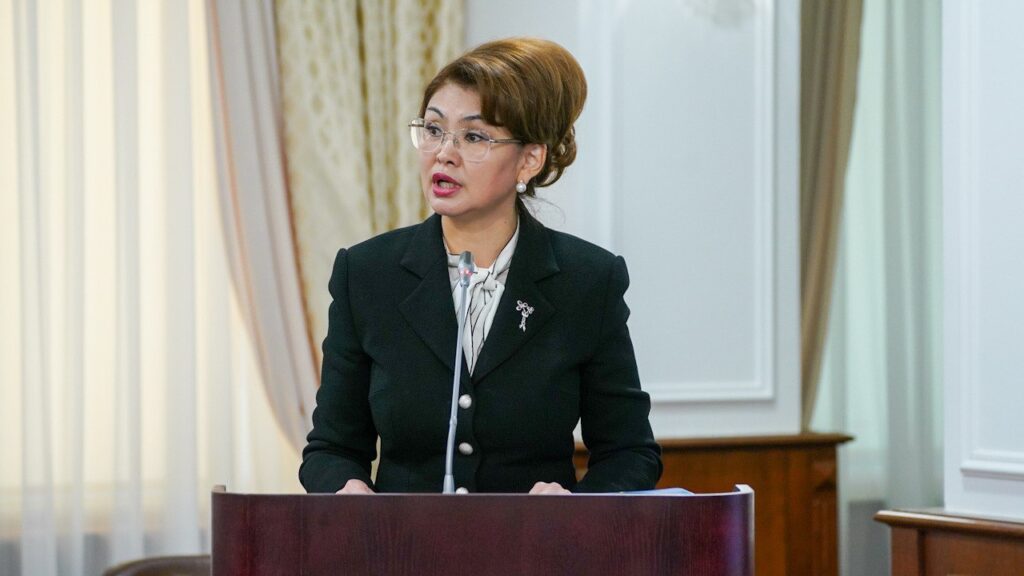
Kazakhstan Considers Restricting Photography and Filming Without Consent

Kazakhstan’s Ministry of Culture and Information is considering new regulations on photography and video recording of individuals without their prior consent. The initiative was announced by Minister Aida Balaeva, who addressed potential amendments to the Law “On Mass Media.” According to Balaeva, the proposal does not entail a ban but rather seeks to clarify the rules for filming in public spaces. Responding to media inquiries, she noted that the ministry regularly receives complaints from citizens concerned about being recorded without permission, particularly in content used for pranks or misleading narratives. While current legislation allows individuals to contest the unauthorized use of their image, the ministry is exploring whether additional legal provisions are warranted. Balaeva invited journalists to join a working group to evaluate the matter further. The minister dismissed claims that the proposed changes are intended to shield public officials. The speculation follows the recent circulation of a video on social media showing deputies appearing inattentive during President Kassym-Jomart Tokayev’s address. “We are already used to being filmed everywhere. But we are citizens of this country too, and we also have the right to privacy,” Balaeva stated. She emphasized that the objective is not to hinder journalistic work but to address rising concerns over misuse. Earlier drafts of the proposed regulation suggested requiring journalists and bloggers to obtain explicit consent before publishing an individual’s image, including online. In cases of republication, editing, or adding commentary, renewed consent would be necessary. However, exceptions are proposed for filming public events, documenting official functions, and materials deemed in the public interest. Gulmira Birzhanova, a lawyer at the Legal Media Center, warned that the measure could lead to excessive bureaucracy and potential abuse. She argued that the initiative contradicts existing legislation and Kazakhstan’s Constitution. As previously reported by The Times of Central Asia, earlier this year the ministry also proposed strengthening penalties for inciting interethnic and interreligious discord.

“Day J”: Kazakhstan’s Top Journalists Honored in Almaty

On June 27, Almaty hosted the annual “Day J” celebration, marking Kazakhstan’s professional holiday for media workers. Organized by the communications company, 2BAgency, the event brought together journalists, PR professionals, and media representatives to recognize excellence across the country’s media and communications industry. The highlight of the evening was the presentation of the “Day J” Awards, which featured five primary categories. Both nominees and jury members were selected through open voting on social media by members of the media community. 2025 “Day J” Award Winners: Best Reporter - Pyotr Trotsenko Best Business Journalist - Olga Fominskikh Best Investigative Journalist - Altynshash Smagulova Best Blogger - Rashit Ilyasov Best Host - Marzhan Elshibayeva [caption id="attachment_33561" align="aligncenter" width="2438"] Image: Mikhail Karpov[/caption] The event also featured a special Grand Prix category, awarded annually to a media figure whose work has made a lasting impact. This year’s Grand Prix went to Nadezhda Plyaskina, a journalist, director, blogger, and actress with over 30 years of experience. “The Grand Prix is our way of honoring remarkable talent and professional excellence,” said Tatiana Bendz, Director of 2BAgency. “Nadya Plyaskina is a journalist, blogger, actress, and director, a true master of transformation. She’s one of the most vibrant creative figures in Kazakhstan’s media scene, and we’re proud to award her this year’s Grand Prix.” Special Contests and Media Recognition In addition to the main awards, two special contests were held during the evening. Earlier this year, Eurasia Insurance Company and 2BAgency launched a competition for the best media coverage of CASCO auto insurance. The winners were announced at the June 27 event: Best Publication in Kazakh - Gaziza Uzak Best Publications in Russian - Irina Ledovskikh, Zhadyra Turgumbayeva, and Tatyana Batisheva [caption id="attachment_33562" align="aligncenter" width="2163"] Image: Mikhail Karpov[/caption] Media Partners The event was supported by a wide range of media outlets, including: Tribune, CheckPoint, BesMedia, Shishkin_like, Profit, BlueScreen, Finratings, The Times of Central Asia, Newtimes, Offside, Aleminform, Optimism, and Bizmedia.

Future of Radio Free Europe Uncertain as U.S. Agency Weighs Support

The agreement between Radio Free Europe/Radio Liberty (RFE/RL) and the U.S. Agency for Global Media (USAGM) may be renewed, following recent developments that could secure the broadcaster’s future. On March 26, USAGM officials indicated that the agency would continue disbursing funds allocated by Congress for fiscal year 2025. This follows a ruling by Judge Royce Lamberth of the U.S. District Court for the District of Columbia, who granted RFE/RL’s request for a temporary restraining order against the termination of its federal grant. At stake is $77 million in funding designated for RFE/RL, which operates under a grant to a nonprofit organization. The court order was issued to prevent the broadcaster’s potential shutdown, which Judge Lamberth described as unlawful under current terms. “This is an encouraging sign for the media corporation's operations,” said RFE/RL President Steven Capus. “RFE/RL's operations will be able to continue as Congress intended. We await official confirmation from USAGM that grant funding will be promptly resumed.” In parallel, ten European Union countries issued a joint statement backing a Czech-led initiative to support RFE/RL. The statement expressed readiness to cover the broadcaster’s operating costs should U.S. funding not be reinstated. Despite the apparent reprieve, USAGM abruptly cut off satellite broadcasts of Radio Liberty on April 3. The move affected Russian-language programming of the “Present Time” TV channel, which targets audiences in Russia, Ukraine, Central Asia, and Eastern Europe. The Times of Central Asia spoke with Asem Tokayeva, a veteran journalist formerly based in RFE/RL’s Central Asia bureau. In the interview, Tokayeva shed light on internal challenges within the organization and the broader implications for freedom of the press in the region.

Exposing the Cracks: Asem Tokayeva on the Decline of RFE/RL and Central Asia’s Media Future

Speaking to The Times of Central Asia, Asem Tokayeva, a seasoned journalist with years of experience at Radio Azattyq - Radio Free Europe/Radio Liberty, offers a compelling critique of RFE/RL's challenges, from internal corruption allegations to its declining relevance in Central Asia's evolving media landscape. Tokayeva started her career with Express K and other publications in Astana before joining Radio Azattyq as a freelancer in 2004 and contributing to the groundbreaking Russian-language program, Паровоз ("locomotive"). In 2008, she played a pivotal role in launching Radio Azattyq’s Russian-language website, a platform recognized for tackling sensitive issues and fostering free discussion. Her work contributed to the site's recognition by the Online News Association in 2009 for "Protecting Citizens' Rights to Information." After nearly 14 years at Azattyq, including over seven at its Prague office, Tokayeva left in late 2017 to further her academic pursuits, earning a Master's degree from Charles University in Prague, where her dissertation focused on Media Framing: Transformation of Nursultan Nazarbayev's Image in the U.S. Media. TCA: How do you feel about the funding cuts to the U.S. Agency for Global Media (USAGM), which oversees projects like RFE/RL and Voice of America? I have always advocated for the reform of Radio Free Europe/Radio Liberty, and now the new U.S. administration has simply cut its funding in one fell swoop. However, I don't see this as just Trump's whim. The work of this media outlet had long been criticized in Washington, and not only during his tenure. During Barack Obama’s and Joe Biden’s presidencies, American media published investigations into abuses, including the infiltration of pro-Kremlin agents, within international broadcasting corporations funded through USAGM. When Hillary Clinton was Secretary of State, she called the entire U.S. international broadcasting structure, which includes Radio Azattyq, "practically defunct." Even during Bill Clinton’s presidency, there were serious discussions in Washington about shutting down these radio stations, as they were considered outdated following the collapse of the USSR and the end of the Cold War. By the 1990s, it was already difficult to claim that Radio Liberty was the sole source of alternative information. During the August 1991 coup in Moscow, other radio stations provided more timely and comprehensive field reports. For instance, Echo of Moscow became one of the most listened-to stations at the time. Today's media landscape has different challenges, such as media literacy and combating fake news, rather than a shortage of news organizations. While the mission and goals of Radio Liberty have renewed significance, given the persistence of authoritarianism in many former Soviet countries, the U.S. administration no longer sees value in its international broadcasting system. They simply decided to shut down another bloated bureaucratic structure, one that had also been plagued by corruption. For example, its parent agency had been overpaying exorbitant amounts for office space in downtown Washington D.C. for 15 years. Radio Azattyq destroyed its uniqueness when it completely shut down shortwave broadcasting in 2012 at the insistence of its then-editor, Yedige Magauin. Yet, in 2011, during the protests...

Opinion: Are Kazakhstan and the U.S. Reaching Common Ground on Sovereignty and Mutual Engagement?

Kazakhstan’s President Kassym-Jomart Tokayev has made his position clear: his country must remain sovereign, and activities to exert foreign influence should be closely monitored. The message from Astana is that cultural impositions from abroad are not welcome. Tokayev’s longstanding view that Kazakhstan’s democracy should evolve on its own terms has gained new traction with the return of U.S. President Donald Trump to the White House. Washington's avoidance of values-based diplomacy in favor of a hard-nosed, transactional model reinforces Astana’s instincts and creates an opening for a new kind of engagement between the two. "The so-called democratic moral values," Tokayev said, "have been imposed on many countries for decades." Moreover, "under this guise, open interference in the internal affairs of states through international non-governmental organizations and foundations has become widespread. Its ultimate goal," he concluded, "is only theft, that is, pocketing billions of dollars in budgets." For decades, the U.S. policy in Central Asia was fixated on democratic governance, press freedoms, and minority rights, seeking to advance these objectives through NGO funding and media support. In principle, these directions align with Kazakhstan’s own institutional reforms. In practice, however, they became points of friction. Astana has pursued decentralization and anti-corruption measures on its own terms, so any tension with Washington did not concern governance itself. It was, rather, about Washington’s insistence on deeper cultural and political shifts. The unease was not hypothetical. It was spelled out in statements by U.S. officials visiting Kazakhstan. They "were glad to discuss key human rights issues including the freedoms of expression and peaceful assembly, and respect for the rights of disabled persons, members of the LGBTQI+ community, and political prisoners." Moreover, these issues were framed as non-negotiable pillars of engagement, without reference to the cultural context of Kazakhstan’s legal and political traditions. In some cases, the “political prisoners” were propped up by NGOs funded by the U.S. Government. From Washington’s perspective, these were essential democratic norms; from Astana’s, they were foreign expectations imposed from outside. In truth, Kazakhstan had seen this dynamic before. Its wariness of Western-backed NGOs was informed by patterns of events. In Astana’s view, some so-called civil society initiatives weren’t merely fostering grassroots activism. They were vehicles for political engineering. For instance, Mukhtar Ablyazov, who remains accused of embezzling $10 billion from Kazakhstan's BTA Bank, fled to Britain in the mid-2000s before escaping criminal charges to France, where he was granted asylum until being ordered to leave in 2023. Despite his history of corruption, he rebranded himself as a political opposition figure and human rights leader, cultivating a network of international NGOs and earning significant support within the European Union. As recently as February 2025, he and his NGO allies received backing from members of the Parliamentary Assembly of the Council of Europe. A similar strategy has been employed by public figures like Bergey Ryskaliyev, Akezhan Kazhegeldin, and Karim Massimov. These individuals, despite facing criminal allegations, have amassed significant wealth that appears to have been used to fund lobbyists, NGOs, media and other...

Opinion: What the Loss of RFE/RL Would Mean for Central Asia

The decision to terminate the federal grant agreement funding for Radio Free Europe/Radio Liberty (RFE/RL) is a crushing blow for hundreds of millions of people. These people know their governments are not telling them the full truth about what is happening in their countries or in the world outside. The objective information provided by RFE/RL has been important to people such as these. Perhaps as important, since the end of the Cold War, was the platform RFE/RL provides, whenever possible, for people in these countries to explain their views to the outside world. I know, because I worked at RFE/RL for 25 years covering Central Asia. RFE/RL was founded in 1950, and I didn’t show up there until 1997. I can only speak about what I saw and heard when I was an RFE/RL employee. My understanding of my tasks as an RFE/RL employee was that we were supposed to keep close track of what was happening in Central Asia, cover as many of the important topics of the region as possible, and make objective and accurate information on these topics available to the people in Central Asia. During Tajikistan’s 1992-1997 civil war, for example, RFE/RL’s Tajik service, Radio Ozodi, was the most trusted source of information for the people of Tajikistan. During the Coronavirus pandemic, the Turkmen government would not even allow the word COVID to be spoken and denied there were any cases of the virus in the country, leaving RFE/RL’s Turkmen service, Azatlyk, as one of the only sources of information for Turkmenistan’s people about the illness. I lived in Central Asia before joining RFE/RL, so I had some idea of what was important to people there. Calling for respect for fundamental rights is a big part of RFE/RL’s work. Read the constitutions of any Central Asian country and you will see enshrined there the right to freedom of speech, freedom of assembly, the right to freely receive or disseminate information, and much more. In practice, these rights are not always observed in Central Asia. In such a situations RFE/RL’s Central Asian services are a voice for those who, with good reason, are afraid to speak out publicly, or more importantly, for those who did speak out and are punished for that. At RFE/RL we looked for “impact stories,” testimony from people of the region about unfulfilled government promises, abuses, or state mismanagement that were hurting communities and individuals. Central Asian government officials are among the most faithful RFE/RL listeners, and often RFE/RL reports that raised social issues led officials to rectify the situation. Ramshackle buildings or schools were suddenly repaired, electricity or running water became accessible to city districts and rural areas, sufficient food became available to communities. The pleas of average citizens too often fell on deaf ears in government halls, but the criticism of an international organization such as RFE/RL, which was broadcasting to the entire country and Central Asian region, was too embarrassing for officials to ignore. This made RFE/RL unpopular with Central...
