• KGS/USD = 0.01144 0%
  • KZT/USD = 0.00200 0%
  • TJS/USD = 0.10494 0%
  • UZS/USD = 0.00008 0%
  • TMT/USD = 0.28490 0%
  • KGS/USD = 0.01144 0%
  • KZT/USD = 0.00200 0%
  • TJS/USD = 0.10494 0%
  • UZS/USD = 0.00008 0%
  • TMT/USD = 0.28490 0%
  • KGS/USD = 0.01144 0%
  • KZT/USD = 0.00200 0%
  • TJS/USD = 0.10494 0%
  • UZS/USD = 0.00008 0%
  • TMT/USD = 0.28490 0%
  • KGS/USD = 0.01144 0%
  • KZT/USD = 0.00200 0%
  • TJS/USD = 0.10494 0%
  • UZS/USD = 0.00008 0%
  • TMT/USD = 0.28490 0%
  • KGS/USD = 0.01144 0%
  • KZT/USD = 0.00200 0%
  • TJS/USD = 0.10494 0%
  • UZS/USD = 0.00008 0%
  • TMT/USD = 0.28490 0%
  • KGS/USD = 0.01144 0%
  • KZT/USD = 0.00200 0%
  • TJS/USD = 0.10494 0%
  • UZS/USD = 0.00008 0%
  • TMT/USD = 0.28490 0%
  • KGS/USD = 0.01144 0%
  • KZT/USD = 0.00200 0%
  • TJS/USD = 0.10494 0%
  • UZS/USD = 0.00008 0%
  • TMT/USD = 0.28490 0%
  • KGS/USD = 0.01144 0%
  • KZT/USD = 0.00200 0%
  • TJS/USD = 0.10494 0%
  • UZS/USD = 0.00008 0%
  • TMT/USD = 0.28490 0%

Viewing results 1 - 6 of 15

Uzbek Consulate Assists Citizen Misled into Russian Army Contract

Uzbekistan’s Consulate General in St. Petersburg has intervened to assist an Uzbek citizen who was allegedly misled into signing a contract to serve in the Russian Armed Forces, the Consulate announced on November 12. According to the Consulate, a citizen identified as K.M. appealed for help after their child, K.R., reportedly signed the contract while held in pre-trial detention in Kolpino, Leningrad Region. K.R. had been taken into custody on charges of intentionally inflicting minor bodily harm on another Uzbek national. K.M. told consular officials that K.R. suffers from serious mental health issues and had been deceived into agreeing to military service while in detention. The parent requested that the Consulate assist in nullifying the agreement. The Consulate stated that it had promptly contacted the relevant Russian authorities, including the Human Rights Commissioner for Leningrad Region, urging a review of the case and protection of the detainee’s legal rights. As a result of these efforts, Russian officials acknowledged K.R.’s objections to military service. The Consulate confirmed that no military contract was finalized and that the detainee was returned to the Kolpino detention center, where the investigation remains ongoing. The Consulate emphasized that it is closely monitoring the case and will continue to safeguard the legal rights and interests of the Uzbek citizen. The Times of Central Asia has previously reported on several instances in which Central Asian migrants have faced pressure to join Russia’s military amid recruitment campaigns targeting foreign nationals, particularly migrant workers.
Uzbek Migrants Coerced to Fight in Russia’s War

Russia has recruited at least 902 citizens of Uzbekistan to fight in its war against Ukraine since the beginning of 2025, including individuals as young as 19, according to the “I Want to Live” (Хочу жить) project, which cited sources within the Russian armed forces. Despite heightened scrutiny in Uzbekistan following earlier reports of its nationals joining the conflict, recruitment efforts have continued to expand. “These are people who no longer belong to themselves,” the project stated, adding that the recruitment methods remain largely unchanged. The group reported that Uzbek labor migrants arriving in Russia are often lured by promises of lucrative employment, typically in construction or rear-echelon military units. A key incentive remains the promise of expedited Russian citizenship. Meanwhile, Uzbek nationals serving prison terms in Russia are reportedly pressured into enlisting through threats and psychological coercion. The project also highlighted the use of blackmail, especially targeting migrants who recently obtained Russian citizenship. Alexander Bastrykin, head of Russia’s Investigative Committee, recently acknowledged that more than 5,000 raids had been carried out, during which 90,000 people were "caught", a term he used himself. Of those, 30,000 signed contracts and were sent to the front lines, reflecting the coercive nature of the campaign. The report added that prisoners of war from 33 countries are currently held in Ukraine, with Uzbekistan reportedly having the highest number of foreign nationals among them. Separately, on June 5, 2025, a delegation from Uzbekistan’s Defense Ministry, led by Deputy Minister Colonel Alisher Narbaev, visited the “Postoyalye Dvory” military training ground in Russia’s Kursk region. The visit has raised questions amid ongoing concerns about the recruitment of Uzbek citizens into Russia’s war effort. “Every signed contract is a one-way ticket,” the “I Want to Live” project warned, urging the Uzbek government to take a stronger stance in protecting its citizens from being drawn into the conflict. Earlier this year, The Times of Central Asia reported that Ukraine’s Defense Intelligence Service accused Russia of coercing Central Asian citizens, particularly labor migrants from Uzbekistan and Tajikistan, into military service. Many of those recruited under the guise of volunteering are sent directly to high-risk front-line positions, where survival chances are slim.

Kazakhstan Introduces New Reserve Military Service

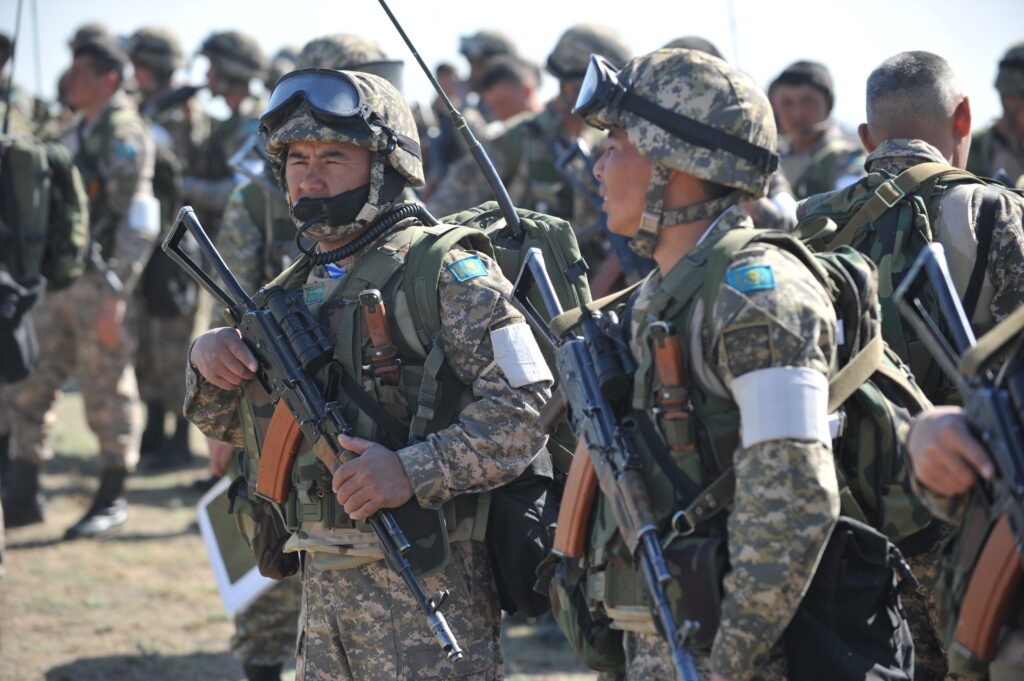
Kazakhstan’s parliament has approved a bill introducing a new type of military service in the form of reserve duty, aimed at enhancing the country’s defense capabilities. This initiative is expected to bolster the military’s readiness by training specialists in key areas, expediting mobilization processes, and increasing overall combat efficiency. The new legislation introduces a status for “military reservists,” who will be equated with active servicemen during training camps and exercises. The recruitment of reserve forces is set to begin in 2025, marking the start of a program modeled on successful practices implemented in other Commonwealth of Independent States (CIS) countries and beyond. The move aligns with Kazakhstan’s defensive strategy to maintain an army capable of safeguarding the nation’s sovereignty and territorial integrity. Reserve Force Details In the initial phase, the Ministry of Defense plans to enlist approximately 2,000 reservists from across the country, with future adjustments based on military needs. The service will be voluntary, requiring recruits to meet medical and age criteria: officers may serve up to the age of 60, while sergeants and soldiers can serve up to 50. Reservists will undergo training at military units in their local areas. The training program will be funded by the state budget. During 30-day training camps, participants will receive payments equivalent to their average monthly salary, while routine training sessions will guarantee them at least the minimum wage. Comprehensive Legal Reforms To accommodate the introduction of reserve service, the new bill includes about 100 amendments across six legal codes and 14 laws. A new chapter on reserve service will be added to the law “On Military Service and Status of Servicemen” to regulate the selection process, rights, duties, and specific conditions of reservists’ service. Under the new framework, reservists will be classified as servicemen and will be subject to military criminal law, similar to active-duty personnel. Amendments to the Criminal Code and the Code of Criminal Procedure will incorporate the unified term “serviceman” for both active and reserve military personnel. Social Support for Reservists The law also outlines measures for the social support of reservists, including provisions for payments, insurance contributions, and pensions. These benefits are designed to incentivize participation in the reserve service while ensuring financial security for those who enlist. A Voluntary System for National Defense The new reserve service will be exclusively voluntary, open to adult citizens of Kazakhstan who meet the necessary requirements. By offering training opportunities close to home and guaranteeing compensation for participants, the program seeks to attract skilled and motivated individuals to contribute to national defense. Strengthening Defense Readiness Kazakhstan’s decision to introduce reserve military service reflects a strategic commitment to bolstering its armed forces while remaining consistent with its defensive posture. By creating a robust pool of trained reservists, the nation is taking a proactive step toward ensuring its sovereignty and readiness in the face of potential challenges. The program's success will depend on careful implementation and sustained support, but it represents a significant milestone in Kazakhstan’s approach to modernizing its military.

Kazakhstan Again Leads Central Asia in Military Strength

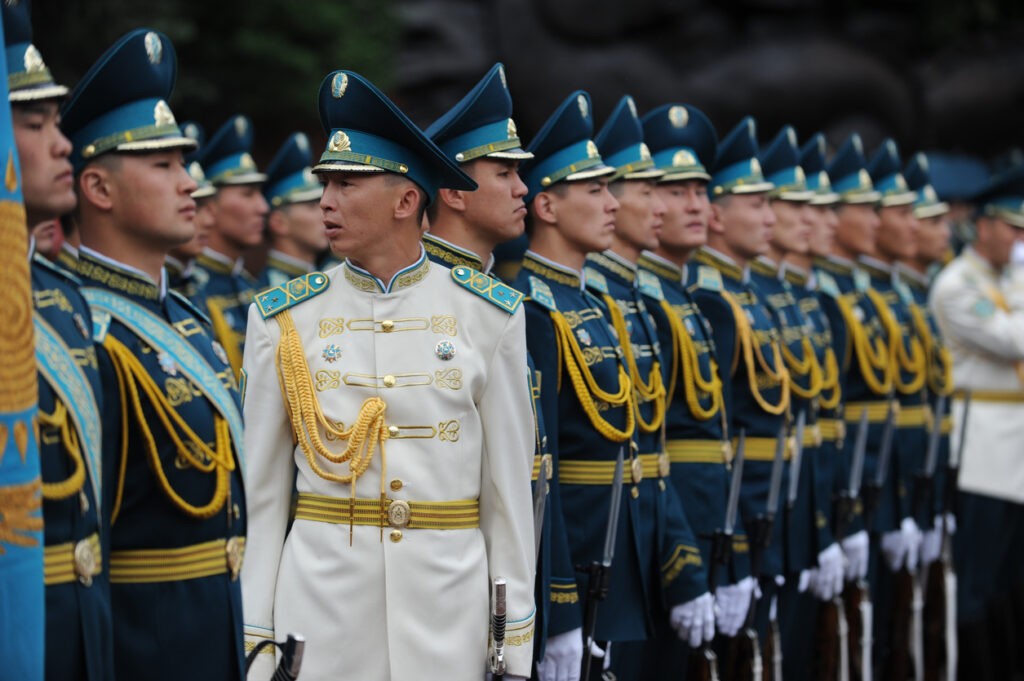
Global Firepower (GFP) has released its Military Strength Ranking for 2025, evaluating the military capabilities of 145 countries based on 60 factors, including resources, financial stability, logistics, and geographic considerations. In Central Asia, Kazakhstan continues to lead the region in military strength, ranking 57th globally, an improvement from its 58th position in 2024. Uzbekistan follows closely in 58th place, climbing seven spots from the previous year. Turkmenistan also made notable progress, rising from 83rd in 2024 to 77th this year. Kyrgyzstan saw a modest improvement, advancing to 100th from 105th, while Tajikistan moved up one spot to 107th this year. The GFP ranking evaluates around 60 criteria, such as troop levels, financial resources, logistics, and the availability of specific military assets. Kazakhstan performed particularly well in heavy weaponry, ranking 17th globally for the number of multiple-launch rocket systems (407 units) and 21st for self-propelled artillery. These strengths have significantly bolstered its defense indicators. Globally, the United States remains the top-ranked military power, supported by the world’s largest defense budget of $800 billion. Russia and China maintain their positions in second and third place, respectively. Bhutan, ranked 145th, is the weakest army on this year’s list.

Justice for Veterans: U.S. Acknowledges Cancer Cases Tied to Service at Uzbekistan’s K2 Base

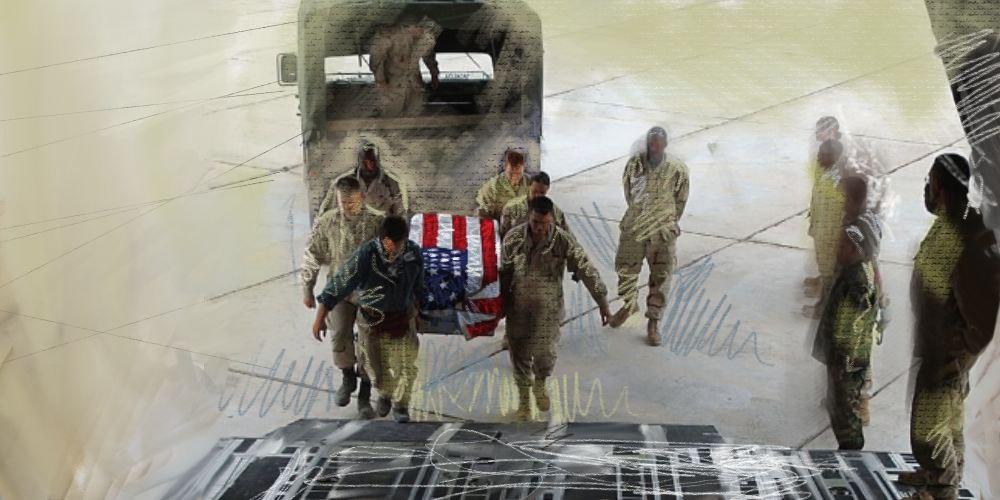
Thousands of American veterans who served at Uzbekistan’s K2 airbase have reported rare cancers and diseases - but only now, more than two decades later, is the U.S. government taking steps to address their dire situation. The U.S. Department of Veterans Affairs (VA) has announced plans to include bladder, urinary tract, and genitourinary cancers as conditions presumed to be linked to service at Uzbekistan’s Karshi-Khanabad airbase, known as K2. In 2001, the U.S. military moved into K2, a former Soviet airbase, to support a series of operations named “Enduring Freedom” which were purportedly aimed at tackling terrorism and Al-Qaeda in the wake of 9/11. However, in addition to the threat of terrorism, the troops faced another danger: the toxic environment. Reports from the base describe exposure to chemicals and radioactive materials. Soldiers recalled an underground “black bubble,” glowing lakes, and a chemical odor lingering in the air. [caption id="attachment_26149" align="aligncenter" width="634"] Image: Stronghold Freedom Foundation[/caption] The Karshi-Khanabad airbase was heavily used by the Soviet military during its operations in Afghanistan from 1979 to 1989, when it served as a site for producing, storing, and testing various weapons, including chemical weapons. The base also stored fuel, solvents, and other harmful substances. Additionally, it became a dumping ground for toxic waste, asbestos, enriched uranium, and other hazardous materials. Spills of these substances were frequent, leaving lasting environmental damage. Before the U.S. occupied K2, the destruction of Soviet-era missiles left some soil contaminated with low-level radioactive depleted uranium. The destruction of Soviet missiles was part of disarmament obligations under the 1987 Intermediate-Range Nuclear Forces (INF) Treaty. A 2001 survey found traces that could be harmful if inhaled, and a 2002 assessment confirmed small amounts of uranium, identified as non-U.S. depleted uranium, outside Camp Stronghold Freedom’s perimeter. The affected area was covered with clean soil, fenced off, and marked as off-limits in November 2001. Furthermore, approximately 392 chemical compounds were found at the K2 Air Base. Thousands of military personnel who served in K2 suffered from severe illnesses, including rare forms of cancer, associated with their time at the base. However, over the years, the U.S. government and the VA have delayed recognition of the link between service in K2 and these health issues, leaving many veterans without adequate support. [caption id="attachment_26150" align="aligncenter" width="1140"] Image: Stronghold Freedom Foundation[/caption] According to the Stronghold Freedom Foundation, K2 veterans are 500% more likely to get cancer than other veterans - 75% of U.S. service members deployed to Uzbekistan alone have developed at least one type of K2-related illness. On November 11, President Joe Biden announced an expansion of the PACT Act (Promise to Address Comprehensive Toxics Act), a law he signed in August 2022 to improve healthcare for veterans exposed to toxins. President Biden stated that the act has already helped over a million veterans and their families access benefits. Under new efforts, the VA will add bladder cancer, ureter cancer, multiple myeloma, and certain types of leukemia to the list of presumptive conditions. This expansion applies...

Death in Peacetime: Navigating Challenges and Responses in Kazakhstan’s Armed Forces

Deputies in the Mazhilis have raised the issue of violent deaths and suicides in the armed forces, whilst sections of the public have also called for the army to be converted to a contract basis and the draft age to be raised.   Alarming statistics In late September, Konstantin Avershin, a member of the Mazhilis Committee on International Affairs, Defense, and Security, spoke about the results of an investigation into suicides in law enforcement and security agencies. Over the past four years, 86 suicides have occurred in across said agencies, Avershin stated, with this data pertaining to the Ministry of Defense, the National Guard of the Interior Ministry, the Border Service of the National Security Committee, the State Protection Service, and the Ministry of Emergency Situations. “In four years, 40 suicides have been registered in the Armed Forces. In 2021 - 10, 2022 - 7, 2023 - 12, and 2024 - 11. By category these were: officers - 7, contract servicemen - 22, cadets - 4, conscript soldiers - 7. Pretrial investigations have been completed in 34 cases, and final procedural decisions have been made. In none of them were signs found of 'leading' to suicide,” according to Avershin. The proceedings in these cases were terminated due to a lack of corpus delicti. Despite this, based on the results of official investigations, disciplinary measures were taken against 180 persons: eleven were relieved of their posts, two were demoted, and 167 service personnel received various disciplinary sanctions in line with their rank. On October 8, Avershin raised another problem: the poor quality of food being provided to service personnel. According to his data, the funds allotted for rations per soldier is 2,250 tenge ($4.6) per day. By comparison, chess players, sport fishermen, ship modelers, and players of togyzumalak (a national board game) and checkers are entitled to 6,276.4 tenge ($12.9) per day, according to the Ministry of Tourism and Sport's regulations for 2024. “A soldier cannot be fed almost three times worse than a checkers player,” Avershin stated. Earlier, MP Nartai Sarsengaliyev asked Defense Minister Ruslan Zhaksylykov about the current situation in Kazakhstan's army. The deputy highlighted numerous high-profile cases, stating that over the past three years, 270 servicemen have died in Kazakhstan. “In August 2023, a commanding officer beat a recruit with a chair in a military unit. The case was closed after the parties reconciled. In June 2024, in one of the military units in the Zhambyl region, a soldier who had been in the army for only one month was admitted to intensive care in an unconscious state. The situation caused shocked society. National Guard soldier Yerbayan Mukhtar has been unconscious for five months after suffering a head injury. Those in charge say that 'Yerbayan 'fell in the bathroom and sustained a head injury.' Who would believe this? As a result of the injury, half of the soldier's skull was removed. Now, he needs constant care. Now his parents are taking Yerbayan abroad for treatment,” Sarsengaliyev stated. In...