• KGS/USD = 0.01144 0%
  • KZT/USD = 0.00201 0%
  • TJS/USD = 0.10568 -0.09%
  • UZS/USD = 0.00008 0%
  • TMT/USD = 0.28571 0%
  • KGS/USD = 0.01144 0%
  • KZT/USD = 0.00201 0%
  • TJS/USD = 0.10568 -0.09%
  • UZS/USD = 0.00008 0%
  • TMT/USD = 0.28571 0%
  • KGS/USD = 0.01144 0%
  • KZT/USD = 0.00201 0%
  • TJS/USD = 0.10568 -0.09%
  • UZS/USD = 0.00008 0%
  • TMT/USD = 0.28571 0%
  • KGS/USD = 0.01144 0%
  • KZT/USD = 0.00201 0%
  • TJS/USD = 0.10568 -0.09%
  • UZS/USD = 0.00008 0%
  • TMT/USD = 0.28571 0%
  • KGS/USD = 0.01144 0%
  • KZT/USD = 0.00201 0%
  • TJS/USD = 0.10568 -0.09%
  • UZS/USD = 0.00008 0%
  • TMT/USD = 0.28571 0%
  • KGS/USD = 0.01144 0%
  • KZT/USD = 0.00201 0%
  • TJS/USD = 0.10568 -0.09%
  • UZS/USD = 0.00008 0%
  • TMT/USD = 0.28571 0%
  • KGS/USD = 0.01144 0%
  • KZT/USD = 0.00201 0%
  • TJS/USD = 0.10568 -0.09%
  • UZS/USD = 0.00008 0%
  • TMT/USD = 0.28571 0%
  • KGS/USD = 0.01144 0%
  • KZT/USD = 0.00201 0%
  • TJS/USD = 0.10568 -0.09%
  • UZS/USD = 0.00008 0%
  • TMT/USD = 0.28571 0%
24 February 2026

Viewing results 1 - 6 of 20

Olympic Boxing Champion Serik Sapiyev Assaulted by Deputy

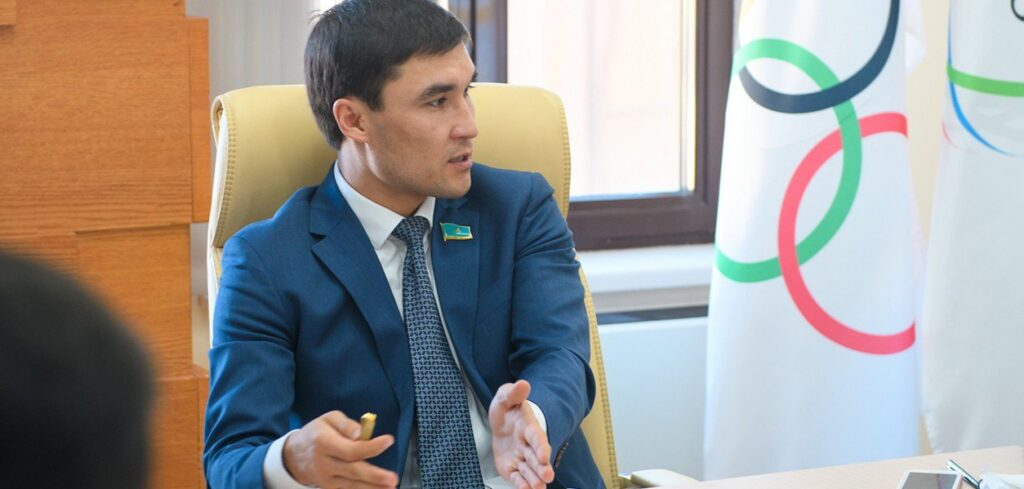
A criminal case has been opened in Kazakhstan following the assault of Olympic boxing champion Serik Sapiyev by his deputy, Dauren Esimkhanov, in the Karaganda region’s Department of Physical Culture and Sports. The incident has triggered public outcry and intensified scrutiny of internal dynamics within the regional sports administration. Sapiyev, who currently heads the department, stated that the altercation was work-related. While the regional administration urged the public and media not to draw premature conclusions, it acknowledged that Esimkhanov had committed an offense and must be held accountable. A native of Karaganda, Sapiyev rose to prominence after winning gold in the 69 kg weight category at the 2012 London Olympics, where he was also awarded the Val Barker Trophy for most technical boxer. A two-time world amateur champion and two-time Asian champion, Sapiyev retired from professional boxing in 2012. He launched a political career the following year, becoming a UNESCO Goodwill Ambassador in 2013 and later serving as a deputy in the Mazhilis, Kazakhstan’s lower house of parliament, in 2017. In 2018, Sapiyev stepped down from parliament to lead the Committee on Sports and Physical Culture under the Ministry of Culture and Sports. He left the ministry in 2021 and, in late 2024, assumed his current position in Karaganda. The altercation reportedly took place on January 21 at a sports complex in Karaganda and was confirmed by local police. The Karaganda Region Police Department announced a criminal case based on a statement from the 42-year-old Sapiyev, citing grounds of assault. Esimkhanov, a sambo champion with accolades at both the Asian and world levels, has not denied involvement. Sapiyev addressed the incident on Instagram, asserting that the conflict stemmed from attempts to interfere with staffing decisions in the region's sports institutions without his knowledge. “I want to clarify: what happened was not a personal or domestic conflict, but rather resistance from certain individuals who have unofficial influence in the region,” Sapiyev wrote. “Without my knowledge, an attempt was made to illegally rotate the heads of sports organizations in the region. When I discovered this, I tried to stop it peacefully. I want to openly state that no provocations will shake my determination to implement systemic reforms in Kazakhstani sports, which the head of state has repeatedly spoken about.” In response, Esimkhanov claimed on social media that misinformation was being spread. “Currently, information that does not reflect the objective reality is being circulated. I ask you not to succumb to provocations and attempts to destabilize the situation by unscrupulous individuals,” he wrote. Ermaganbet Bulekpaev, the Akim of the Karaganda region, whose office oversees the department, called for caution and restraint while the investigation is underway. He confirmed that the Department for Civil Service Affairs will conduct a full inquiry, including a comprehensive audit of the department’s operations. “There has been a violation, and responsibility must be taken for it,” Bulekpaev stated during a staff meeting. “An investigation is underway, and each action will be given a legal assessment.” The scandal comes on...


Tajikistan Expands Asset Disclosure Requirements for Officials

Tajikistan has broadened the scope of officials required to submit income and asset declarations, as part of amendments to its Anti-Corruption Law. The updated legislation now includes employees of the National Bank, other state-run credit and financial institutions, and officials working in Tajikistan’s foreign missions and representative offices abroad. The revised law updates parts 4 and 5 of Article 21 and introduces six new provisions detailing the conditions and procedures for filing declarations. Officials who fail to submit required information or who submit “knowingly false” declarations, face dismissal or removal from office. Under the new rules, declarations must be filed by individuals performing organizational, managerial, administrative, or financial functions at state enterprises and institutions, as well as entities in which the state holds a stake of at least 50%. Technical and maintenance personnel are exempt. A specific clause obligates civil servants in diplomatic missions and other foreign-based institutions to file a property certificate. The range of assets subject to disclosure has been significantly expanded. Officials must now declare: residential properties, dachas, and other real estate; garden and agricultural plots, with size specified; vehicles and equipment; livestock and poultry; shares in commercial enterprises; securities and bank deposits; precious metals and gemstones, both in Tajikistan and abroad. The income declaration must include earnings from primary and secondary employment, as well as income from academic, creative, and teaching activities; property rentals; agricultural production; bank deposits; and other sources, with specific identification of income type. Newly appointed officials must file a declaration upon taking office. All officials are required to submit annual declarations by April 1 for the preceding year. High-ranking officials appointed by the president or the government must file with the tax authority at their place of residence and submit a certified paper copy to the Executive Office of the President. Members of parliament report via the Majlisi Namoyandagon, while village and settlement leaders submit declarations to district or city administrations. Failure to comply, or the discovery of false information, may result in denial of appointment or dismissal from a current post. Tajikistan introduced asset declaration requirements in 2004, initially covering only real estate, land, and securities. In 2020, the rules were broadened to include other forms of property, including livestock. However, declarations have never been made public. In 2019, then-head of the Civil Service Agency, Juma Davlat, explained that “Tajik society is not ready for this.” He added that the issue of transparency would be reconsidered “once the level of thinking and understanding in society rises to the level of Western countries.”

Kazakhstan’s Rollout of Aitu Messenger Sparks Fears Over Internet Freedom

Kazakhstan is mandating the use of the national messenger Aitu among officials and state-owned enterprises, raising concerns that this move could signal future restrictions on internet freedom. The rollout of Aitu coincides with Russia's introduction of its own national messaging app, Max, which has been accompanied by efforts to block international platforms like WhatsApp and Telegram. The parallels are fueling fears that Kazakhstan may follow a similar path. Why Is Aitu Being Introduced? By September 15, employees of all government agencies and quasi-public sector organizations in Kazakhstan are required to switch to Aitu. The directive comes from the Digital Headquarters under the leadership of Prime Minister Olzhas Bektenov. On August 11, President Kassym-Jomart Tokayev instructed the government to strengthen protections around citizens’ personal data. “A significant part of business and official communication, including the transfer of citizens’ personal data, now takes place through international messengers,” he noted. Tokayev cited examples of sensitive data, such as individual identification numbers and medical information, being transmitted via foreign platforms. He linked this to repeated data breaches, stating that Kazakhstan experienced over 40 major leaks in 2025 alone, including a major incident in June that exposed data on millions of citizens. He argued that Aitu is a necessary step to prevent further leaks. Security Concerns Remain Unanswered Originally launched in 2018, Aitu was used on a limited scale during the COVID-19 pandemic and in educational initiatives. Despite its recent promotion, serious questions about its security remain unanswered. On August 29, Deputy Minister of Digital Development Dmitry Mun confirmed that Aitu is owned by Kazakhtelecom JSC, a national monopoly, and BTS. The app's infrastructure is reportedly hosted entirely within Kazakhstan. However, Yevgeny Pitolin, co-chair of the QazTech Alliance's Information Security Committee, criticized the lack of transparency: “There is almost no information about security. In official responses, the administration avoids these questions, claiming it is a matter of national security.” So far, six million people have registered with Aitu, according to the Ministry of Digital Development. Although this represents nearly one-third of Kazakhstan’s population of 20 million, the ministry has not disclosed how frequently the app is used. A Step Toward a Sovereign Internet? A major point of concern among Kazakhstanis is whether Aitu could pave the way for a sovereign internet model similar to those in Russia or China both of which tightly control domestic digital ecosystems. Russia’s Max messenger, modeled after China’s WeChat, integrates payments, government services, banking, and social networking. Though introduced by VK Corporation, the Russian government has embedded itself in its development. In July, the State Duma passed legislation mandating all official communication between citizens and government agencies to occur via Max. It now comes pre-installed on smartphones, and schools and hospitals are transitioning to it. Crucially, Max works only with SIM cards registered in Russia or Belarus, making cross-border communication difficult. Users have reported frequent disruptions in WhatsApp and Telegram access. Critics argue that the Russian state may be moving toward outright bans on foreign messengers. Kazakhstan Denies Similar Plans...

Kyrgyzstan Proposes Controversial Criminal Code Changes Targeting Recidivism, Limiting Official Liability

Kyrgyzstan’s Interior Ministry has submitted a bill aimed at restoring the concept of recidivism to the Criminal Code and limiting the liability of civil servants if their actions are deemed to protect national security. The proposal has sparked heated debate in both parliament and the public. Proposed Changes The draft law would reintroduce harsher penalties for repeat offenders. Recidivism, abolished in 2019 to ensure fairer treatment of convicted criminals, would once again become a legal category. According to the explanatory note, the earlier reform failed to yield the desired outcomes. "The abolition of the concept of recidivism did not have the expected effect," the note states. "Excluding harsher liability for members of organized criminal groups, who are often repeat offenders, has enabled them to consolidate and expand their influence." According to the bill's proponents, nearly 90% of inmates in Kyrgyzstan have prior convictions. They argue that current parole and probation policies treat repeat offenders too leniently. Combating organized crime has been a major priority in recent years. Dozens of so-called 'thieves-in-law' have been detained or neutralized, and suspects are now publicly compelled to renounce their criminal status. President Sadyr Japarov has already signed a law criminalizing the support or financing of criminal organizations. "Organized crime poses a serious threat to national security and affects virtually all sectors of society," the Cabinet said. Under the proposed legislation, penalties for recidivism would be no less than half the maximum sentence for a given crime. In cases of “particularly dangerous recidivism,” the minimum would be two-thirds. Moreover, reconciliation between victim and perpetrator would no longer be grounds for dismissal of charges. Authorities claim the measures will deter crime and diminish the appeal of criminal subcultures, particularly among young people. Public Criticism The most controversial element of the bill, however, is a provision that would exempt individuals from criminal liability if their actions were taken in defense of national sovereignty, the constitutional order, or environmental, economic, informational, or other forms of security. Former MP Felix Kulov criticized the vague language of the proposal on social media, warning it could lead to legal abuse. He cited a hypothetical case in which an environmental activist seriously injures or kills a litterer, arguing the act could be wrongly justified as "defending environmental security." "Such additions clearly do not belong in Article 18 of the Criminal Code," Kulov wrote. "The code already includes provisions for exceeding the limits of necessary defense and abuse of authority, and these new clauses would contradict them." Current MP Dastan Bekeshev reacted more bluntly: "This is crazy. If the law is passed, what is the point of justice at all?" The draft law is now under review in the parliament. If adopted, it would represent one of the most significant overhauls of Kyrgyzstan’s criminal legislation in recent years.

Kyrgyz Security Forces Warn Officials of Prosecution Over Inefficiency

The State Committee for National Security (GKNB) of Kyrgyzstan has issued a stern warning to municipal officials in Bishkek, threatening criminal prosecution for negligence and ineffective performance of official duties. The warning came during a meeting initiated by the GKNB and held at Bishkek City Hall. All heads of the capital’s territorial divisions were present. Officials were instructed to take a more responsible approach to their work, particularly regarding urban development, social services, and the responsible use of public funds. “All heads of local authorities are advised to draw their own conclusions so that their future activities will only benefit society and not cause harm,” stated Kamchybek Tashiev, head of the GKNB. Tashiev also criticized the procurement of cheap, low-quality goods through public tenders, emphasizing that quality and efficiency, not just cost, should guide spending decisions. The crackdown follows the high-profile arrest of Tokmok Mayor Maksat Nusuvaliyev, a move seen by analysts as a stark signal from the central government to regional administrations. Nusuvaliyev was detained during a similar meeting with Tashiev in Tokmok, in full view of his subordinates. He faces charges of corruption and misappropriation of funds intended for the construction of a sports school and a cultural park. His arrest followed complaints from local residents and concerns from central authorities over delays and inefficiencies in the projects. The government had previously allocated approximately $12 million for Tokmok’s urban improvement. However, President Sadyr Japarov later stated that the funds had yielded no tangible results. Along with Nusuvaliyev, two other officials and the head of the construction company overseeing the projects were also detained. A court has ordered that all four be held in pretrial detention for two months. Footage of the mayor’s detention was widely circulated online, further fueling public attention. In response to the scandal, Tashiev demanded immediate accountability from other local officials. They were given three days to either recommit to fulfilling their duties or resign voluntarily. In a striking directive aimed at reconnecting officials with local issues, Tashiev also ordered administrators in the Chui region to travel on foot through their districts to observe municipal problems firsthand.

Kyrgyzstan Proposes Salary Cuts for Underperforming Officials

The Kyrgyz presidential administration is developing new mechanisms to penalize officials for repeated disciplinary offenses, including salary reductions and forfeiture of bonuses. The initiative, aimed at improving accountability in the civil service, was announced by Azamat Osmonov, Head of the Department of Control of Execution of Decisions of the President and Cabinet of Ministers. According to Osmonov, 56 civil servants were disciplined in 2024 for misconduct. Among them: 7 officials, including akims (local governors), their deputies, and senior government officials, were dismissed. 27 officials, including one minister, received reprimands. 22 officials faced additional disciplinary actions. The presidential administration and the Cabinet of Ministers are set to convene a board meeting to review the performance of state agency heads for 2024. “Unfortunately, current regulations allow the same official to be reprimanded repeatedly without serious consequences. We intend to change this practice: if an official has already been disciplined, a repeated offense should lead to dismissal,” Osmonov stated. In addition to stricter dismissal policies, the government is considering financial penalties as an alternative punishment. “We are introducing the monetization of disciplinary measures: after receiving a reprimand, an official will be ineligible for bonuses, and their salary will be reduced. This should create additional motivation to comply with discipline,” Osmonov explained. The proposed mechanism is currently under development and will be integrated into the Code of Administrative Violations. Kyrgyzstan already enforces financial penalties for civil servants who fail to meet deadlines for addressing citizens' appeals. The current fine stands at 100 calculation indices (a fixed monetary unit used for penalties and state fees). “We will further refine this approach by drafting new legal regulations to enhance officials' accountability and improve the quality of work within state institutions,” Osmonov added.