• KZT/USD = 0.00214
  • TJS/USD = 0.10810
  • UZS/USD = 0.00008
  • TMT/USD = 0.29850
  • KZT/USD = 0.00214
  • TJS/USD = 0.10810
  • UZS/USD = 0.00008
  • TMT/USD = 0.29850
  • KZT/USD = 0.00214
  • TJS/USD = 0.10810
  • UZS/USD = 0.00008
  • TMT/USD = 0.29850
  • KZT/USD = 0.00214
  • TJS/USD = 0.10810
  • UZS/USD = 0.00008
  • TMT/USD = 0.29850
  • KZT/USD = 0.00214
  • TJS/USD = 0.10810
  • UZS/USD = 0.00008
  • TMT/USD = 0.29850
  • KZT/USD = 0.00214
  • TJS/USD = 0.10810
  • UZS/USD = 0.00008
  • TMT/USD = 0.29850
  • KZT/USD = 0.00214
  • TJS/USD = 0.10810
  • UZS/USD = 0.00008
  • TMT/USD = 0.29850
  • KZT/USD = 0.00214
  • TJS/USD = 0.10810
  • UZS/USD = 0.00008
  • TMT/USD = 0.29850
11 August 2026

Viewing results 1 - 6 of 19

Central Asia Rethinks Energy Security After the 2026 Fuel Crisis

The summer of 2026 marked a turning point for energy security in Central Asia. In July, drone strikes temporarily halted crude oil receipts and loadings at the Caspian Pipeline Consortium’s (CPC) marine terminal in Novorossiysk. Although CPC resumed normal operations on July 27, the incident exposed the vulnerability of one of the region’s principal export routes to external security risks. Russia, which for decades has been Central Asia’s principal supplier of refined petroleum products, has also faced prolonged pressure in its domestic fuel market. Reduced utilization at some refineries and rising domestic demand have created longer-term challenges. Restrictions on gasoline and diesel exports have added to the pressure, affecting the Russian economy and neighboring states that have traditionally relied on Russian supplies. For three decades, Central Asia’s system for supplying refined fuels remained relatively stable. Russian refineries covered shortages in local markets, providing fuel that was both comparatively affordable and predictable in volume. The events of 2026, however, reaffirmed a basic principle of national security: during large-scale crises, governments tend to prioritize domestic stability over external trade commitments. For Central Asian states, this has prompted a fundamental reassessment of long-established approaches to energy security. Any strategy dependent on a single external supplier ultimately becomes vulnerable to disruptions beyond its control, regardless of their origin. The current crisis has also revealed significant differences in how well prepared the region’s governments are to protect their domestic fuel markets. Kyrgyzstan has proved the most vulnerable. The country consumes around 1.6 million metric tons of fuel annually, with 90-95% of supplies imported from Russia. Faced with a sharp reduction in available supplies during May and June 2026, the Kyrgyz authorities were forced to begin urgent negotiations with alternative suppliers, including Kazakhstan, Uzbekistan, Turkmenistan, Azerbaijan, and Belarus. Uzbekistan has been in a somewhat stronger position. Until recently, Russian companies dominated the country’s imported gasoline market. During the first five months of 2026, Uzbekistan spent more than $1 billion on imports of crude oil and petroleum products, while spending on motor gasoline imports increased by 85.1% compared with the same period a year earlier. Tashkent has responded by prioritizing strategic fuel reserves. Ahead of the coming autumn and winter season, the government has begun building a 120,000-metric-ton reserve of motor gasoline. Kazakhstan, meanwhile, enjoys a considerably higher degree of energy self-sufficiency thanks to its developed refining sector, centered on the modernized refineries in Atyrau, Pavlodar, and Shymkent. It is therefore unsurprising that Bishkek turned first to Astana when seeking emergency fuel supplies. Kazakhstan’s potential to serve as a regional supplier nevertheless has clear limits. The country’s domestic fuel market periodically comes under structural pressure during the spring and autumn agricultural seasons and when planned maintenance is carried out at its refineries. As a result, Astana must balance support for its regional partners with maintaining stability at home. Although Kazakhstan annually agrees with Russia on duty-free import quotas of up to 1.12 million metric tons of Russian petroleum products under the indicative fuel balance mechanism, the current...

Kazakhstan Oil Output Falls 21% as CPC Halt More Than Halves Tengiz Production

Kazakhstan's oil and gas condensate output fell by about 21% on July 22 after the Caspian Pipeline Consortium stopped receiving Kazakh crude and suspended loadings at its Black Sea terminal. Output dropped to 1.63 million barrels per day from a July average of 2.07 million, Reuters said, citing an industry source. The sharpest reduction came at Tengiz, Kazakhstan's largest oilfield. Production fell by 56%, from an average 925,000 barrels per day in July to about 406,000 on Wednesday, reflecting how quickly a halt at Novorossiysk can force cuts at a field more than 1,500 kilometres away. Kazakhstan's Energy Ministry confirmed the reduction, stating that producers had cut output because CPC had restricted intake and their storage tanks were nearing capacity. "The adjustment was a technical measure intended to keep production operations stable," the ministry said. It added that CPC’s production facilities remained operational and could resume shipments when conditions allowed. Consultations were continuing with the consortium, producers, shipowners, and state agencies. No timetable was given. Tengiz Bears the Brunt Chevron began production from the $48 billion Future Growth Project in January 2025. The expansion was designed to add 260,000 barrels of crude per day and raise total Tengiz output to about one million barrels of oil equivalent per day at full capacity. Chevron owns 50% of Tengizchevroil, while ExxonMobil holds 25%, KazMunayGas 20%, and Lukoil 5%. The field provides a large share of Kazakhstan's oil production and export income. After the tanker ASIA was struck on July 19, Chevron told The Times of Central Asia that the crew was safe and the vessel was stable. "There has been no impact to TCO operations or exports," the company said. However, by July 22, the export halt had forced cuts at Tengiz. Chevron did not immediately comment on the new production figures cited by Reuters. The cut compounds a difficult year for the sector. Kazakhstan produced 45.7 million tonnes of oil in the first half of 2026, down 8.4% from a year earlier. The Energy Ministry still expects 98 million tonnes for the full year, after lowering its previous target because of Tengiz outages and earlier CPC disruption. Kazakhstan's OPEC+ crude quota rose to 1.608 million barrels per day for July. The national output figure includes gas condensate and cannot be compared directly with the crude allocation. The latest reduction removes barrels Kazakhstan intended to export. The timing adds to the revenue loss. Brent rose above $100 on July 23 after attacks on Saudi tankers in the Red Sea added to disruption around the Strait of Hormuz. Tanker Attacks Halt CPC Loadings The production cuts followed a series of attacks on tankers near CPC's marine terminal. The Chevron-chartered Yasa Polaris was hit on July 7 while empty and waiting offshore. Its crew was safe, and no pollution or major hull damage was reported. Nordic Zenith was struck on July 17 while empty and approaching the terminal. ASIA and NISSOS IOS were hit on July 19 while loading Kazakhstan-produced crude. Loading briefly resumed...

CPC Reportedly Stops Accepting Kazakh Oil as Storage Tanks Reach Capacity After Tanker Attacks

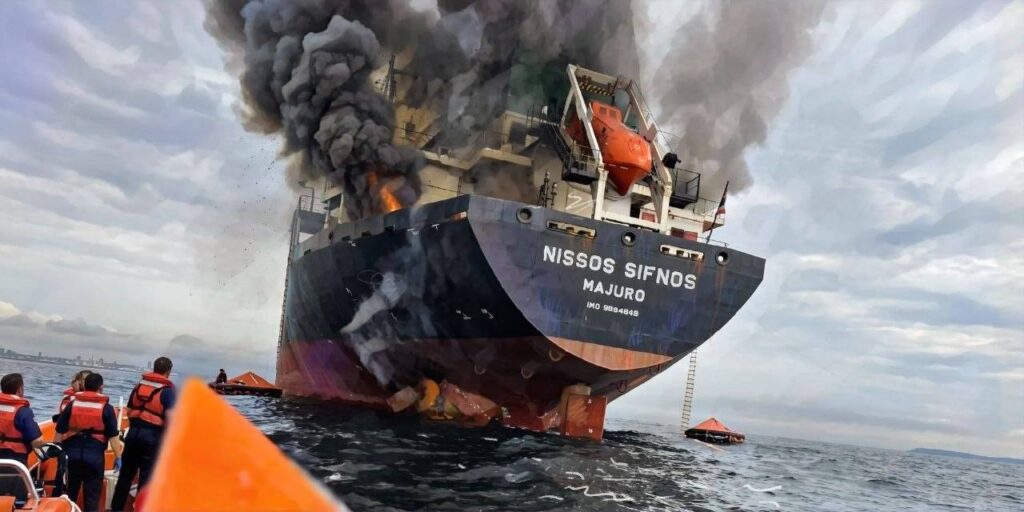
Citing three industry sources, on July 21 Reuters said the Caspian Pipeline Consortium had stopped accepting crude from Kazakhstan after tanker attacks halted Black Sea loadings. Two of the sources said the terminal's storage tanks were full. CPC has so far declined to comment. The stoppage marks a sharper disruption than the loading suspension announced on July 20. LSEG ship-tracking data showed that at least two tankers due to collect crude changed direction. Chevron owns 15% of CPC, while ExxonMobil is also a shareholder through Mobil Caspian Pipeline Company. Chevron told Reuters that "Chevron continues to monitor the situation at CPC. The safety and security of personnel remain our top priority." ASIA was one of the tankers struck before loadings were suspended. It was hit on July 19 while loading Tengizchevroil crude at the CPC terminal. Following the attack on ASIA, a Chevron spokesperson told The Times of Central Asia: “Chevron is aware of reports of an incident involving a vessel loading at Caspian Pipeline Consortium facilities near Novorossiysk. All crew are safe, and the vessel remains stable. The vessel has been moved to a safe anchorage, and we are coordinating with the ship operator and relevant authorities. There has been no impact to TCO operations or exports. Further questions regarding CPC operations should be directed to CPC.” As of early July 22, no producer had announced new output cuts in response to the CPC halt. The intake stoppage nevertheless removes the main export outlet for crude from Tengiz, Kashagan, and Karachaganak. The 1,510-kilometer pipeline carries oil from western Kazakhstan to the terminal near Novorossiysk. Terminal tanks normally buffer crude flows before tankers load offshore, but once they are full, the system has little room to receive additional oil. A prolonged shutdown could force producers to reduce output. Kazakhstan has not confirmed such reductions. CPC oil supplies fell 7% from May to 1.699 million barrels a day in June. Reuters linked the fall to a late-May accident at Tengiz and lower Russian volumes. The route handles about 80% of Kazakhstan's oil exports and almost 2% of global oil supply. The latest halt followed attacks on four tankers over four days. Nordic Zenith was hit on July 17 while approaching the terminal empty. ASIA and NISSOS IOS were struck on July 19 while loading Kazakh crude. NISSOS IOS was loading crude from Kashagan B.V. and Maten. Loadings briefly resumed that evening. A drone then struck NELSA at SPM-1 on July 20. A fire broke out on deck and in several compartments. CPC evacuated 20 of the ship's 22 crew members by tugboat, while the captain and chief officer remained aboard. The tanker stayed afloat; no casualties or oil spill were recorded, and the crude in its cargo tanks did not ignite. The NELSA was carrying Russian Urals crude, according to S&P Global shipping data. CPC then suspended oil loading. Kazakhstan's Energy Ministry said it remained in contact with the consortium while specialists assessed the vessel and the consequences of the strike....

When the War Reaches Kazakh Oil

Russia’s full-scale invasion of Ukraine unleashed the war now expanding across the Black Sea, but it did not erase the distinction between Russian military logistics and the lawful commerce of other states. Kazakhstan is not a party to the war, yet its principal oil export route passes through an expanding maritime target zone. The attacks near the Caspian Pipeline Consortium terminal therefore raise a larger question: can civilian trade carrying Kazakh crude be treated as part of Russia’s war economy simply because geography places its outlet on the Russian coast? Four vessels were attacked near CPC’s Black Sea terminal on July 17, 19, and 20. Nordic Zenith, chartered by ExxonMobil according to Reuters, was empty and approaching the terminal when it was hit on July 17. Two days later, ASIA and NISSOS IOS were struck at single-point moorings off Novorossiysk while loading Kazakhstan-produced oil. ASIA was taking Tengizchevroil (TCO) crude; NISSOS IOS was loading oil from Kashagan B.V. and Maten. A fire on ASIA was extinguished; no one was injured, both vessels remained afloat, and no oil entered the sea. Chevron told The Times of Central Asia that the crew was safe, the vessel was stable, and there had been “no impact to TCO operations or exports.” Loading briefly resumed that evening, but on July 20 a drone struck NELSA while it was loading at SPM-1. The impact on the tanker’s starboard side caused a fire on deck and in several compartments. Its 22-member international crew was evacuated except for the captain and chief officer; the vessel remained afloat, the fire was extinguished, and no oil spill occurred. CPC suspended loadings again. Ukraine’s General Staff said separately that its forces had struck two tankers used to transport Russian oil, petroleum products, and fuel for the Russian military in the Black Sea. It did not identify the vessels or connect the claim to the attacks at the CPC terminal. Russia’s Foreign Ministry blamed Kyiv, while CPC itself did not publicly attribute the attacks. Astana’s response to the attacks has remained measured and legalistic. The Foreign Ministry called the attacks an infringement on Kazakhstan’s economic interests and a threat to lawful international trade. It said an agreed mechanism for sharing information on civilian vessels entering the Black Sea to load CPC oil had been disregarded, endangering crews. It reserved Kazakhstan’s right to seek compensation under international law. Following the strike on NELSA, the Energy Ministry said it remained in constant contact with CPC while the tanker’s technical condition and the consequences of the attack were assessed. The statements focused on Kazakhstan’s rights. That is the distinction Astana is asserting: Kazakh cargoes, revenues, crews, and commercial partners should not be treated as extensions of Russia’s war economy merely because they use a terminal on Russian territory. Kazakh Crude and the Western Stake Russia’s invasion created the maritime battlefield in which these incidents occurred, and Ukraine has a legitimate interest in weakening the military logistics that sustain Russia’s campaign. But Kazakhstan is not Russia,...

Kazakhstan’s Main Oil Route Remains Vulnerable. It Is Expanding Alternatives

Kazakhstan’s prosperity has been built largely on oil, much of which still reaches world markets through infrastructure crossing Russian territory. That would be a strategic exposure for any country; for a landlocked state bordering Russia during the largest war in Europe since 1945, it is impossible to ignore. The Caspian Pipeline Consortium route to the Black Sea remains Kazakhstan’s most important oil artery, carrying about 80% of its crude exports. Three tankers were struck near the terminal on July 17 and 19, two while loading Kazakh oil. Loadings briefly resumed before a fourth tanker, NELSA, was hit on July 20, forcing another suspension. No casualties or oil spill were reported, but the attacks repeatedly interrupted Kazakhstan’s main export route. Kazakhstan treated the attacks as a direct threat to its own economic interests, not as an incident confined to Russia. Its Foreign Ministry condemned the July 17 and 19 strikes as unacceptable, said an agreed mechanism for sharing information about civilian vessels entering the Black Sea to load CPC oil had been disregarded, and demanded an immediate halt. Ukraine’s General Staff said it had struck two tankers overnight on July 19 as part of its campaign against Russian oil and military-fuel logistics, but did not identify them. CPC said the vessels at its terminal were loading Kazakh crude. The episode exposed Kazakhstan’s dependence on infrastructure beyond its control. That exposure reflects geography and inherited infrastructure, not Kazakhstan’s foreign policy alignment. It is a serious strategic vulnerability that Astana is trying to reduce. Kazakhstan did not choose its geography, and its export system was not designed for the rupture that followed Russia’s invasion of Ukraine. It is the world’s largest landlocked country, bordered by Russia and China, and sits on the Middle Corridor linking China and Central Asia with the South Caucasus and Europe. No government in Astana can alter those facts. The relevant question is how it has responded to them. Under President Kassym-Jomart Tokayev, Kazakhstan remains highly exposed to oil, but it is not an oil economy standing still. KAZENERGY’s 2023 National Energy Report put the hydrocarbon sector at about 23% of GDP in 2019 and about 20% in 2022. Kazakhstan’s Bureau of National Statistics put the oil and gas sector at 16.3% of GDP in 2024. The series are not directly comparable, but both indicate that hydrocarbons remain central even as non-oil sectors expand. Oil dependence has not disappeared. UNCTAD notes that oil exports still account for more than half of total exports and remain central to foreign exchange earnings and public finances. Kazakhstan has made more progress in reducing oil’s share of GDP than its weight in exports and state revenue. Any serious assessment has to account for both. Kazakhstan’s position on Ukraine also needs to be judged in context. Binary judgments obscure the constraints facing a country that shares a long border, trade channels, energy infrastructure and significant security exposure with Russia. Kazakhstan has not recognized Russia’s attempted annexations. In 2022, its Foreign Ministry said it would...

Kazakhstan Condemns Drone Attacks as CPC Oil Loadings Halt

Oil loadings at the Caspian Pipeline Consortium’s Black Sea terminal have been suspended again after a fourth tanker was struck by a drone on July 20. The NELSA was loading at single-point mooring SPM-1 when the drone hit the stern on its starboard side, between the superstructure and engine compartment. A fire broke out on the deck and inside the vessel but was extinguished after several hours. CPC said 22 crew members were evacuated aboard its tugboats, while the captain and chief officer remained on the tanker. NELSA stayed afloat. No oil spill occurred, and the crude in its cargo tanks did not ignite. Loading had resumed briefly on the evening of July 19 before the latest attack forced another suspension. Kazakhstan had previously condemned drone attacks on three tankers near the Caspian Pipeline Consortium’s Black Sea terminal on July 17 and 19, two of which were hit while loading Kazakh oil. The Liberia-flagged ASIA and the Marshall Islands-flagged NISSOS IOS were attacked at single-point moorings SPM-1 and SPM-3 near Novorossiysk. ASIA was loading Tengizchevroil crude. The Marshall Islands-flagged NISSOS IOS was loading oil from Kashagan B.V. and Maten. A fire broke out on ASIA and was extinguished with CPC emergency support. No crew members, CPC employees, or contractors were injured. Both tankers remained afloat, no oil entered the sea, and the moorings were not damaged. Loading was suspended while specialists assessed the damage. Following the attack on ASIA, a spokesperson for Chevron, whose Tengizchevroil crude was being loaded onto the vessel, told TCA: “Chevron is aware of reports of an incident involving a vessel loading at Caspian Pipeline Consortium (CPC) facilities near Novorossiysk. All crew are safe, and the vessel remains stable. The vessel has been moved to a safe anchorage, and we are coordinating with the ship operator and relevant authorities. There has been no impact to TCO operations or exports. Further questions regarding CPC operations should be directed to CPC.” The Kazakh Foreign Ministry described the strikes as an unacceptable infringement on Kazakhstan’s economic interests and a deliberate attempt to disrupt lawful international trade. “Kazakhstan demands an immediate halt to these attacks,” the ministry stated. The ministry said an agreed system for sharing information on civilian vessels entering the Black Sea to load CPC oil had been deliberately ignored. It said the failure endangered crews, called for practical security measures, and reserved Kazakhstan’s right to seek full compensation under international law. Ukraine’s General Staff said its forces struck two tankers in the Black Sea overnight on July 19. It said the vessels were used to transport Russian oil, petroleum products, and fuel for Russia’s armed forces. The post did not name the tankers. CPC said both ships at its terminal were loading oil produced in Kazakhstan and did not publicly identify the attacker. The July 19 incident followed an attack on Nordic Zenith on July 17. The Suezmax tanker was empty and approaching the terminal when two drones hit it. The crew extinguished a fire. Nearby CPC...