• KZT/USD = 0.00219
  • TJS/USD = 0.10810
  • UZS/USD = 0.00009
  • TMT/USD = 0.29850
  • KZT/USD = 0.00219
  • TJS/USD = 0.10810
  • UZS/USD = 0.00009
  • TMT/USD = 0.29850
  • KZT/USD = 0.00219
  • TJS/USD = 0.10810
  • UZS/USD = 0.00009
  • TMT/USD = 0.29850
  • KZT/USD = 0.00219
  • TJS/USD = 0.10810
  • UZS/USD = 0.00009
  • TMT/USD = 0.29850
  • KZT/USD = 0.00219
  • TJS/USD = 0.10810
  • UZS/USD = 0.00009
  • TMT/USD = 0.29850
  • KZT/USD = 0.00219
  • TJS/USD = 0.10810
  • UZS/USD = 0.00009
  • TMT/USD = 0.29850
  • KZT/USD = 0.00219
  • TJS/USD = 0.10810
  • UZS/USD = 0.00009
  • TMT/USD = 0.29850
  • KZT/USD = 0.00219
  • TJS/USD = 0.10810
  • UZS/USD = 0.00009
  • TMT/USD = 0.29850
02 September 2026

Viewing results 1 - 6 of 21

Kazakhstan’s Main Oil Route Remains Vulnerable. It Is Expanding Alternatives

Kazakhstan’s prosperity has been built largely on oil, much of which still reaches world markets through infrastructure crossing Russian territory. That would be a strategic exposure for any country; for a landlocked state bordering Russia during the largest war in Europe since 1945, it is impossible to ignore. The Caspian Pipeline Consortium route to the Black Sea remains Kazakhstan’s most important oil artery, carrying about 80% of its crude exports. Three tankers were struck near the terminal on July 17 and 19, two while loading Kazakh oil. Loadings briefly resumed before a fourth tanker, NELSA, was hit on July 20, forcing another suspension. No casualties or oil spill were reported, but the attacks repeatedly interrupted Kazakhstan’s main export route. Kazakhstan treated the attacks as a direct threat to its own economic interests, not as an incident confined to Russia. Its Foreign Ministry condemned the July 17 and 19 strikes as unacceptable, said an agreed mechanism for sharing information about civilian vessels entering the Black Sea to load CPC oil had been disregarded, and demanded an immediate halt. Ukraine’s General Staff said it had struck two tankers overnight on July 19 as part of its campaign against Russian oil and military-fuel logistics, but did not identify them. CPC said the vessels at its terminal were loading Kazakh crude. The episode exposed Kazakhstan’s dependence on infrastructure beyond its control. That exposure reflects geography and inherited infrastructure, not Kazakhstan’s foreign policy alignment. It is a serious strategic vulnerability that Astana is trying to reduce. Kazakhstan did not choose its geography, and its export system was not designed for the rupture that followed Russia’s invasion of Ukraine. It is the world’s largest landlocked country, bordered by Russia and China, and sits on the Middle Corridor linking China and Central Asia with the South Caucasus and Europe. No government in Astana can alter those facts. The relevant question is how it has responded to them. Under President Kassym-Jomart Tokayev, Kazakhstan remains highly exposed to oil, but it is not an oil economy standing still. KAZENERGY’s 2023 National Energy Report put the hydrocarbon sector at about 23% of GDP in 2019 and about 20% in 2022. Kazakhstan’s Bureau of National Statistics put the oil and gas sector at 16.3% of GDP in 2024. The series are not directly comparable, but both indicate that hydrocarbons remain central even as non-oil sectors expand. Oil dependence has not disappeared. UNCTAD notes that oil exports still account for more than half of total exports and remain central to foreign exchange earnings and public finances. Kazakhstan has made more progress in reducing oil’s share of GDP than its weight in exports and state revenue. Any serious assessment has to account for both. Kazakhstan’s position on Ukraine also needs to be judged in context. Binary judgments obscure the constraints facing a country that shares a long border, trade channels, energy infrastructure and significant security exposure with Russia. Kazakhstan has not recognized Russia’s attempted annexations. In 2022, its Foreign Ministry said it would...

Kazakhstan Condemns Drone Attacks as CPC Oil Loadings Halt

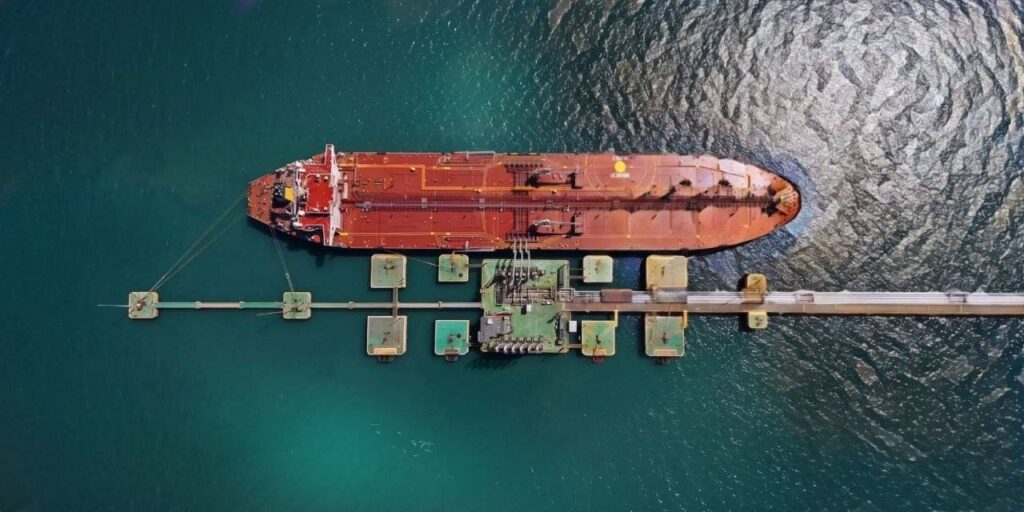
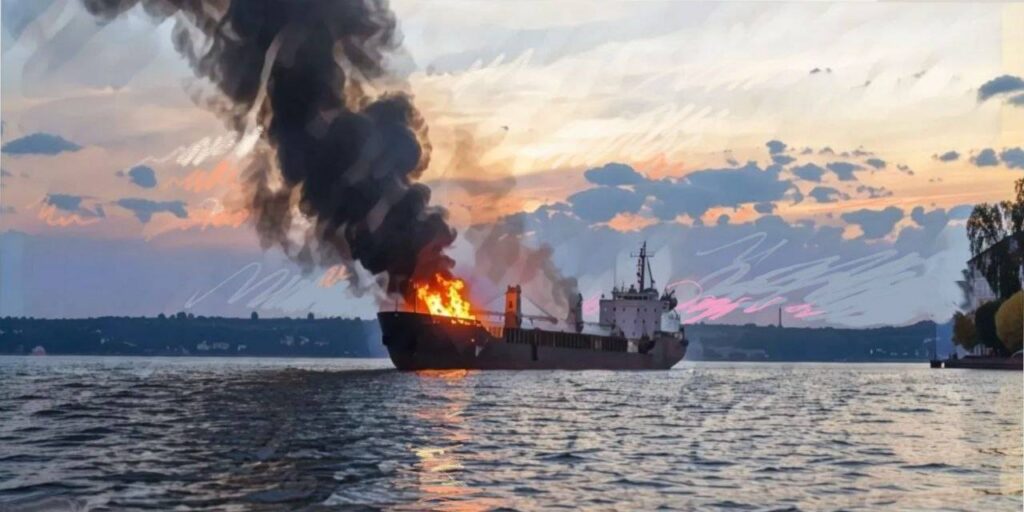
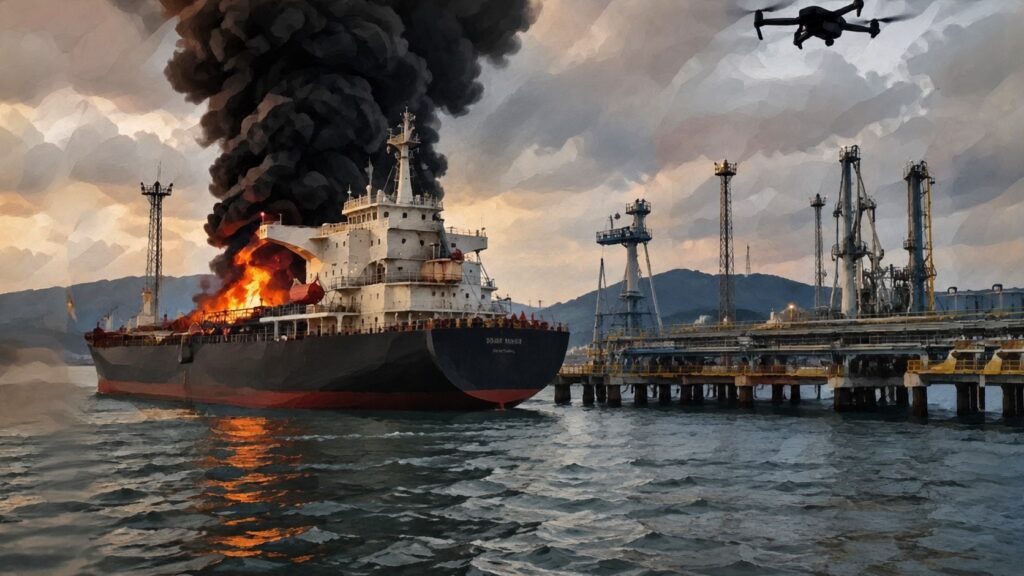
Oil loadings at the Caspian Pipeline Consortium’s Black Sea terminal have been suspended again after a fourth tanker was struck by a drone on July 20. The NELSA was loading at single-point mooring SPM-1 when the drone hit the stern on its starboard side, between the superstructure and engine compartment. A fire broke out on the deck and inside the vessel but was extinguished after several hours. CPC said 22 crew members were evacuated aboard its tugboats, while the captain and chief officer remained on the tanker. NELSA stayed afloat. No oil spill occurred, and the crude in its cargo tanks did not ignite. Loading had resumed briefly on the evening of July 19 before the latest attack forced another suspension. Kazakhstan had previously condemned drone attacks on three tankers near the Caspian Pipeline Consortium’s Black Sea terminal on July 17 and 19, two of which were hit while loading Kazakh oil. The Liberia-flagged ASIA and the Marshall Islands-flagged NISSOS IOS were attacked at single-point moorings SPM-1 and SPM-3 near Novorossiysk. ASIA was loading Tengizchevroil crude. The Marshall Islands-flagged NISSOS IOS was loading oil from Kashagan B.V. and Maten. A fire broke out on ASIA and was extinguished with CPC emergency support. No crew members, CPC employees, or contractors were injured. Both tankers remained afloat, no oil entered the sea, and the moorings were not damaged. Loading was suspended while specialists assessed the damage. Following the attack on ASIA, a spokesperson for Chevron, whose Tengizchevroil crude was being loaded onto the vessel, told TCA: “Chevron is aware of reports of an incident involving a vessel loading at Caspian Pipeline Consortium (CPC) facilities near Novorossiysk. All crew are safe, and the vessel remains stable. The vessel has been moved to a safe anchorage, and we are coordinating with the ship operator and relevant authorities. There has been no impact to TCO operations or exports. Further questions regarding CPC operations should be directed to CPC.” The Kazakh Foreign Ministry described the strikes as an unacceptable infringement on Kazakhstan’s economic interests and a deliberate attempt to disrupt lawful international trade. “Kazakhstan demands an immediate halt to these attacks,” the ministry stated. The ministry said an agreed system for sharing information on civilian vessels entering the Black Sea to load CPC oil had been deliberately ignored. It said the failure endangered crews, called for practical security measures, and reserved Kazakhstan’s right to seek full compensation under international law. Ukraine’s General Staff said its forces struck two tankers in the Black Sea overnight on July 19. It said the vessels were used to transport Russian oil, petroleum products, and fuel for Russia’s armed forces. The post did not name the tankers. CPC said both ships at its terminal were loading oil produced in Kazakhstan and did not publicly identify the attacker. The July 19 incident followed an attack on Nordic Zenith on July 17. The Suezmax tanker was empty and approaching the terminal when two drones hit it. The crew extinguished a fire. Nearby CPC...

Opinion: Kazakhstan, Oil, the Iran War and Dutch Disease

In 1977, The Economist coined a new term for the (potential) negative consequences of a short-term boom in natural resources: “Dutch disease.” The phenomenon got its name from an analysis of the decline of the manufacturing sector in the Netherlands following the 1960s natural gas discoveries at Groningen, in the northeastern Netherlands. The theory was that a surge in the price of a natural resource like oil or gas would likely cause currency appreciation, making imports cheaper and other sectors, like manufacturing, less competitive. Whether the recent spike in oil prices will contribute to Dutch disease in oil-rich Kazakhstan will likely depend on the length of the Iran war’s effect on oil prices (which could last well beyond the end of the conflict itself) and the government’s stewardship of Kazakhstan’s economy. President Kassym-Jomart Tokayev deserves credit for the government’s efforts to diversify the national economy. Investing in the nation’s manufacturing base, especially SMEs, educating the Kazakh workforce, and improving healthcare are all helping broaden the Kazakh economy and reduce the country’s dependence on oil. But oil is the main driver of Kazakhstan’s wealth, and while other sectors are increasing their share of Kazakhstan’s economy, oil and the wider extractive sector remain central to public finances, accounting for over 40% of government revenues. So, let’s do a deep dive on Kazakhstan’s oil. Most of Kazakhstan’s oil comes from the west of the country, including the Tengiz field near the Caspian Sea and the offshore Kashagan field in the northern Caspian. The Tengiz oil field is one of the deepest and largest oil fields in the world, while Kashagan, an offshore deposit, ranks as one of the largest global oil discoveries since the 1960s. Kazakhstan’s main export blend, CPC Blend, is a light, sweet crude, a desirable oil type that’s easy to refine into gasoline and diesel. Because the Iran war and restrictions around the Strait of Hormuz have disrupted tanker traffic and raised fears of supply shortages, global oil prices have climbed. And while high oil prices are generally a net positive for Kazakhstan, the current price - Brent crude was trading above $100 per barrel in mid-May 2026 - could present problems. In the short term, high oil prices tend to boost government revenues and budget surpluses. They can increase inflows to Kazakhstan’s National Fund, depending on production, tax receipts, transfers, and government withdrawal policy, and provide resources for government spending on infrastructure and social programs. They can also stimulate demand in related sectors, boosting Kazakhstan’s oil-related industries. And since oil exports typically make up more than half of the nation’s export revenues, high oil prices generally lead to a rise in Kazakhstan’s GDP. So far, so good. But high oil prices also carry risks. For one thing, they can strengthen the tenge and add to domestic demand, especially if higher revenues feed into faster government spending. Which is where Dutch disease comes in. As the stronger currency makes non-oil exports less competitive, capital and labor shift toward the energy...

Drone Strikes on Russian Baltic Ports Raise Risks for Kazakhstan’s Oil Exports

Drone attacks on Russian Baltic ports have heightened concerns about potential risks to Kazakhstan’s oil export routes. Ukrainian drone strikes targeted the ports of Primorsk and Ust-Luga in Russia’s Leningrad Oblast earlier this week, disrupting operations at both major oil export hubs. Primorsk has an estimated capacity of around one million barrels of crude oil and approximately 300,000 barrels of diesel fuel per day. Large fuel storage facilities are also located at both ports. Further strikes were reported on March 25, when drones again targeted both ports. Media reports indicated that shipments of oil and petroleum products were suspended, and that fires broke out at Ust-Luga. As of March 26, loadings at both ports were reportedly still suspended following the latest strikes, with no confirmed return to normal operations. Kazakhstan has increasingly used Baltic routes for part of its oil exports following periodic disruptions to the Caspian Pipeline Consortium (CPC) system. Commenting on the situation, Kazakh oil and gas journalist Oleg Chervinsky said that the port of Ust-Luga has been used to export Kazakh crude marketed under the KEBCO brand, with volumes rising after earlier challenges affecting CPC shipments. Kazakhstan’s national pipeline operator, KazTransOil, transports crude through Russian pipeline infrastructure under agreements with Russia’s Transneft. From there, oil can be delivered to Germany, shipped via Baltic ports such as Ust-Luga, or exported through Black Sea terminals, including Novorossiysk, which has also been targeted by drone attacks in the past year. According to open-source intelligence analysts cited in international media, energy infrastructure in the Ust-Luga industrial zone, including facilities linked to NOVATEK’s gas processing complex, was affected by the latest strike. The Ust-Luga site is located roughly 850 kilometres from the Ukrainian border. A similar attack on infrastructure in the Ust-Luga area was reported in August 2025. At that time, Kazakhstan’s Ministry of Energy stated that Kazakh oil exports had not been affected. As of March 26, the ministry had not publicly commented on the latest incidents. Officials have previously emphasized the importance of diversifying export routes amid geopolitical risks and infrastructure disruptions.

Kazakhstan Seeks to Expand Oil Exports Amid Geopolitical Uncertainty

Kazakhstan is seeking to reinforce its status as a stable oil supplier while accelerating the diversification of export routes and revising the terms of cooperation with foreign investors amid growing geopolitical uncertainty. These priorities were outlined by Energy Minister Yerlan Akkenzhenov during a speech at the CERAWeek conference in Houston and in a series of meetings with major international oil and gas companies. Discussions focused on structural changes in the global oil industry, ranging from geopolitical instability to the reconfiguration of logistics chains. According to the minister, Kazakhstan remains resilient while adapting to evolving conditions. Energy security continues to be a central concern for the sector, particularly the reliable operation of the Caspian Pipeline Consortium (CPC), through which the majority of Kazakhstan’s oil exports are transported. This route remains the most cost-effective and strategically important option. Authorities have openly acknowledged its critical role in the national economy, stressing the need to ensure uninterrupted transit. At the same time, efforts to develop alternative routes, including the Trans-Caspian corridor and increased shipments to China, are part of a strategy to reduce logistical and political risks. On the sidelines of the forum, government officials held talks with leading energy companies including Chevron, ExxonMobil, and Shell, all key investors in Kazakhstan’s oil and gas industry. Discussions with Chevron focused on expanding production at the Tengiz and Karachaganak fields, as well as developing export infrastructure. ExxonMobil reaffirmed its interest in increasing output at Tengiz and Kashagan, where localization levels are high, with Kazakhstani specialists accounting for more than 90% of the workforce. Talks with Shell focused on boosting production and expanding refining capacity, including refinery modernization and the production of winter-grade diesel fuel. In addition to operational issues, the discussions addressed the question of redistributing roles within joint projects. Kazakhstan is considering independently implementing certain gas-processing initiatives after partners failed to reach a final investment decision on the Karachaganak project. The development of the petrochemical industry and the expansion of refining capacity have been identified as separate priorities. Kazakhstan plans to double its oil-refining capacity to meet domestic demand and increase exports of petroleum products. To attract investment, the government has introduced a revised model contract offering tax incentives and encouraging geological exploration. Experts say Central Asia’s role in the global energy sector is increasing, with Kazakhstan playing a key part in regional stability. The minister said the country’s strategic objective is to maintain the sector’s investment appeal while ensuring maximum economic returns for the national economy. “Kazakhstan remains a predictable and reliable supplier of energy resources and is ready to translate the trust of its partners into the development of technological projects within the country,” Akkenzhenov said. The Times of Central Asia previously reported that Italian energy company Eni is accelerating the expansion of its projects in Kazakhstan. The company plans to complete construction of a hybrid power plant in Zhanaozen, one of the country’s main oil and gas hubs, by the end of the year.

Kazakhstan Restructures Oil Exports Amid Disruptions at CPC

Kazakhstan is rapidly restructuring its oil export routes in response to disruptions affecting the Caspian Pipeline Consortium (CPC), a critical channel for the country’s crude shipments. To maintain export volumes and avoid production slowdowns, authorities have turned to alternative infrastructure. According to a statement from KazMunayGas, the national oil company, approximately 300,000 tons of oil were rerouted in December 2025 after restrictions limited the CPC’s intake capacity. In coordination with KazTransOil JSC (KTO), the country redirected oil flows to other export corridors. These rerouted volumes were exported to Germany, China, and via the Baku-Tbilisi-Ceyhan (BTC) pipeline, with shipments also handled through the ports of Novorossiysk and Ust-Luga. As CPC restrictions remained in place into January 2026, the redirection strategy continued. Amid these challenges, Kazakhstan’s use of alternative routes gained momentum. KazMunayGas reported that oil deliveries to Germany’s Schwedt refinery totaled 2.1 million tons by the end of 2025, with projections indicating a rise to 2.5 million tons in 2026. Exports through the port of Aktau to the BTC pipeline reached 1.3 million tons in 2025 and are expected to grow to 1.6 million tons this year. Shipments to China remained stable, with 1.1 million tons delivered by the end of 2025. These developments reflect a gradual shift aimed at reducing Kazakhstan’s dependency on the CPC which has faced repeated operational setbacks. The CPC disruptions stem from a series of security incidents. In February and March 2025, the Kropotkinskaya station was targeted in drone attacks. On 29 November, a strike on the consortium’s remote mooring device caused damage to its marine terminal. Following the November incident, Kazakhstan’s Ministry of Energy stated that the CPC pipeline is an international energy project and warned that “any forceful impact on its facilities poses direct risks to global energy security.” After another attack on 13 January 2026, when drones targeted three oil tankers near the CPC terminal in the Black Sea, the Ministry of Foreign Affairs issued a sharper response. In emergency consultations with European partners, the U.S., and other stakeholders, Kazakhstan called for reinforced protection of hydrocarbon transportation routes and maritime corridors, emphasizing the need for adherence to international law.