• KGS/USD = 0.01144 0%
  • KZT/USD = 0.00211 0%
  • TJS/USD = 0.10678 0%
  • UZS/USD = 0.00008 0%
  • TMT/USD = 0.28490 0%
  • KGS/USD = 0.01144 0%
  • KZT/USD = 0.00211 0%
  • TJS/USD = 0.10678 0%
  • UZS/USD = 0.00008 0%
  • TMT/USD = 0.28490 0%
  • KGS/USD = 0.01144 0%
  • KZT/USD = 0.00211 0%
  • TJS/USD = 0.10678 0%
  • UZS/USD = 0.00008 0%
  • TMT/USD = 0.28490 0%
  • KGS/USD = 0.01144 0%
  • KZT/USD = 0.00211 0%
  • TJS/USD = 0.10678 0%
  • UZS/USD = 0.00008 0%
  • TMT/USD = 0.28490 0%
  • KGS/USD = 0.01144 0%
  • KZT/USD = 0.00211 0%
  • TJS/USD = 0.10678 0%
  • UZS/USD = 0.00008 0%
  • TMT/USD = 0.28490 0%
  • KGS/USD = 0.01144 0%
  • KZT/USD = 0.00211 0%
  • TJS/USD = 0.10678 0%
  • UZS/USD = 0.00008 0%
  • TMT/USD = 0.28490 0%
  • KGS/USD = 0.01144 0%
  • KZT/USD = 0.00211 0%
  • TJS/USD = 0.10678 0%
  • UZS/USD = 0.00008 0%
  • TMT/USD = 0.28490 0%
  • KGS/USD = 0.01144 0%
  • KZT/USD = 0.00211 0%
  • TJS/USD = 0.10678 0%
  • UZS/USD = 0.00008 0%
  • TMT/USD = 0.28490 0%

Viewing results 1 - 6 of 133

Border Violence Between Afghanistan and Pakistan: A New Risk for Central Asia

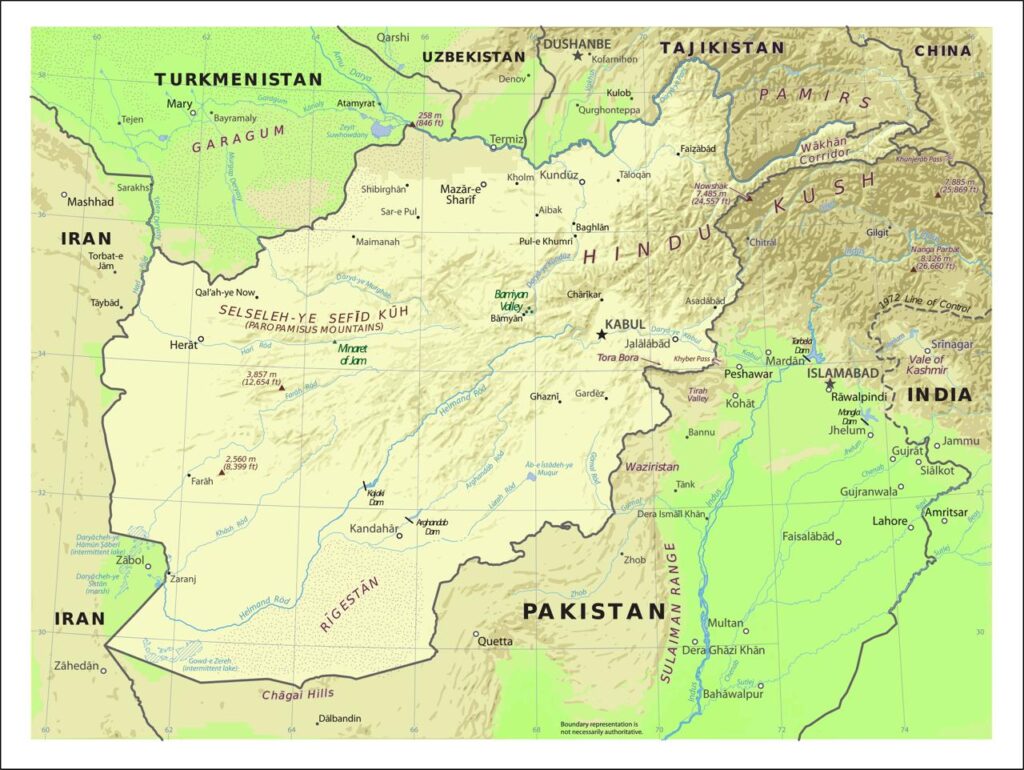
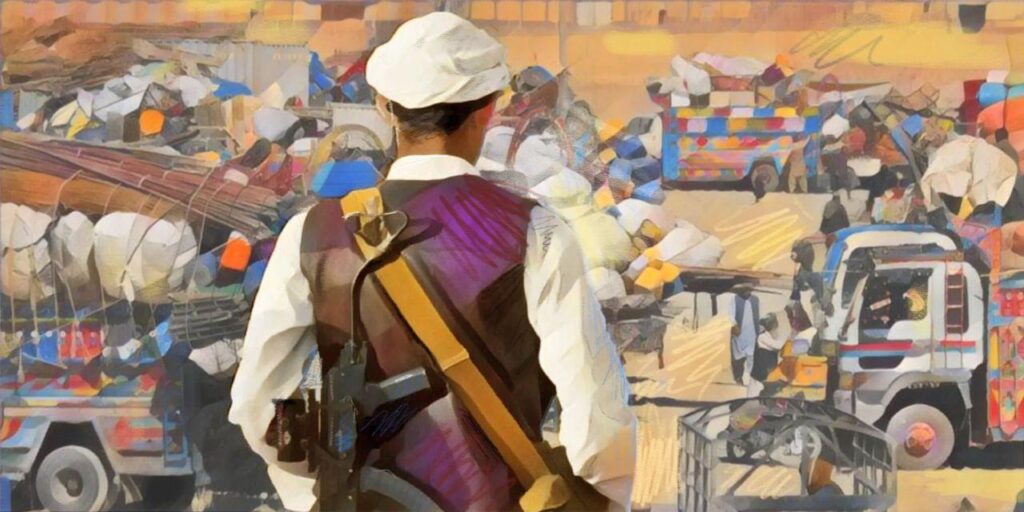
The escalating tensions between Afghanistan and Pakistan are forcing a reassessment of Afghanistan’s viability as a “partner space.” With cross-border clashes increasingly resembling a prolonged pattern rather than isolated incidents, and with both sides showing little willingness to compromise, the question grows more urgent: Can Afghanistan realistically become a partner for Central Asian countries, or is it destined to remain a persistent source of regional instability? This confrontation is deeply unsettling for the countries of Central Asia. Still in the early stages of formulating coherent policies toward Afghanistan, they have tentatively linked their development strategies to the hope of having a stable neighbor to the south – one that might serve as a bridge to South Asia. Against this backdrop, deteriorating Afghan-Pakistani relations breed more frustration and anxiety than hope. No country in the world, except Russia, has recognized the Taliban regime de jure. This broad reluctance reflects deep skepticism; few are willing to assume legal obligations or share responsibility for Kabul’s actions. Yet, Afghanistan remains far from isolated. Its geographic centrality makes it impossible to ignore. Accordingly, Central Asia has developed a distinct approach to dealing with its southern neighbor. It can be summarized as: We do not recognize, but we cooperate; we do not trust, but we verify; we do not agree, but we engage. In essence, Afghanistan’s neighbors, particularly the ones in Central Asia, have adopted a pragmatic, long-term strategy: engage without illusions or formal recognition, while maintaining the flexibility to adjust based on Kabul’s behavior. For these countries, Afghanistan does not stand as an independent priority. Its role is evaluated solely within the broader regional framework. In the most favorable scenario, Afghanistan serves as a transit corridor linking South and Central Asia. Yet even this utility is not indispensable; viable alternatives through Iran, the South Caucasus, Turkey, and China already exist and are expanding. Looking ahead, three broad scenarios can be envisioned: Optimistic: The Taliban demonstrate readiness for responsible engagement. This would enable Afghanistan’s gradual integration into trade and transport initiatives, expansion of economic ties, and a firm establishment as a bridge between Central and South Asia. Pessimistic: Afghanistan remains a chronic risk factor and flashpoint for regional crises. The ongoing Afghan-Pakistani confrontation, no longer a fleeting episode but an entrenched conflict, is a clear warning sign. If this becomes the norm, it will deter serious investment, no stakeholder will commit to a country that cannot guarantee peace with its neighbors. Inertia: Central Asian states continue their cautious balancing act under the logic that “a bad peace is better than a good war.” While cooperation continues at a minimal level, countries prioritize alternative routes and avoid deep commitments. Under this status quo, ambitious projects like the Trans-Afghanistan Railway and the TAPI pipeline are unlikely to materialize. The former risks losing the “trans” prefix; the latter may, for now, become little more than a Turkmenistan-Afghanistan venture. Nonetheless, there remains a window for diplomacy. Pressured by Turkey and Qatar, Kabul and Islamabad have agreed to resume negotiations aimed...

Opinion: Bridging Histories, Building Futures – Central Asia, Pakistan, and the Dream of a Railway

On 5 September 2025, the Times of Central Asia published an article titled “Trans-Afghan Railway: Can Uzbekistan Build a Railway Through Afghanistan to Reach the Sea?” Reading it stirred something deep within me. The piece was not just about steel tracks or trade corridors - it was about dreams, history, and the future of a region I have long been passionate about: Central Asia. I am not a political analyst; I am an engineer by training and a student of history by passion. Having worked in Afghanistan and witnessed the landscape of its geography and politics up close, I feel a personal connection to the idea of connectivity between Pakistan and Central Asia by rail. This is not just a policy debate for me - it is a lifelong vision tied to my family history, my professional journey, and my fascination with the region’s rich past. When the Soviet Union withdrew its last troops from Afghanistan on 15 February 1989, ending its long and bloody war, the region entered a new and uncertain chapter. That very moment coincided with the beginning of my own career. Just two months earlier, I had started my first job as a Junior Engineer. For me, the Soviet withdrawal was not only a historical milestone; it was also a symbolic reminder of how deeply Afghanistan and its neighbors were tied to global currents of power, conflict, and change. Standing at the threshold of my professional life, I wondered how this region - so often defined by wars - might instead be remembered for bridges, trade, and railways. My fascination with Central Asia is also deeply personal. From my mother’s side, my family traces its lineage back to Bukhara. This explains why many families in Pakistan carry the name Bukhari, as their ancestors once migrated southward from that historic Central Asian city. History was not abstract for me - it lived in the stories of my elders and in the books I devoured as a student. In my school years, I read the Baburnama twice. These memoirs of Zahīr ud-Dīn Muhammad Bābur, the founder of the Mughal Empire, fascinated me. Born in Andijan in the Ferghana Valley (modern-day Uzbekistan), Babur’s life was a reminder of how Central Asia and South Asia have always been linked - through migration, culture, politics, and ambition. In 1992, I made my first trip to Tashkent. The journey was more than a visit; it was a pilgrimage to the heart of a region I had admired from afar. That first encounter left an indelible mark on me, and more than three decades later, my passion for Central Asia remains unending. Long before modern projects and international agreements, history itself carved the routes of connectivity. The Khyber Pass, lying between present-day Pakistan and Afghanistan, has for centuries served as a gateway between Central and South Asia. Caravans laden with silk, spices, and stories once passed through its rugged cliffs. Empires - from the Mughals to the British - understood its importance. And...

Trans-Afghan Railway: Can Uzbekistan Build a Railway Through Afghanistan to Reach the Sea?

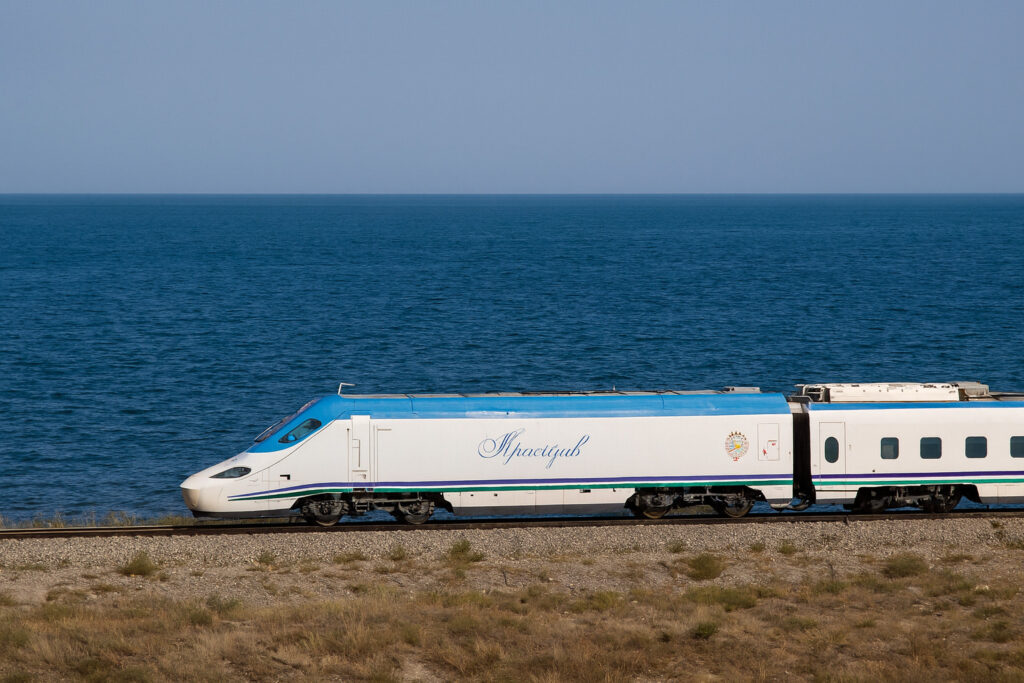
For years, Uzbekistan has planned to gain access to the sea by passing through Afghanistan: The Trans-Afghan Railway is one of the country’s top transport projects. The railway could not only bring Uzbekistan to the sea, but also turn it into a transit hub connecting the north and south. However, no matter how promising the project looks, existing obstacles leave its fate uncertain. The Taliban has not yet established full control over Afghan territories, and many of its state assets are frozen. This leaves the construction costs to Uzbekistan and Pakistan. The Taliban government’s lack of recognition may also complicate attracting international institutions and companies to the project, even after its completion. So how realistic is Uzbekistan’s new Trans-Afghan railway project? Why Is the Railway Needed? Proposed by Uzbekistan in December 2018 for the first time, the Trans-Afghan railway project aims to extend Afghanistan’s rail network from Mazar-i-Sharif through Kabul and Logar, before crossing into Pakistan via Kharlachi - replacing the earlier plan to run through Nangarhar Province. The railway would cross the Torkham border and pass through Peshawar into Pakistan. Once in Pakistan, cargo would be linked to the Pakistani railway system, reaching the country’s seaports of Karachi, Gwadar, and Qasim. However, in July 2023, Uzbekistan, Pakistan, and Afghanistan finalized a different route: Termez → Naibabad → Maidanshahr → Logar → Kharlachi. This means the corridor will not pass through the Torkham border as originally described. Now construction scheduled to start within five months, the railway is expected to handle up to 20 million tons of cargo annually and reduce transit time from Uzbekistan to Pakistan from 35 days to 3–5 days once operational. Financial Obstacles The line is planned to be 647 km long, with an estimated construction cost of $6.9 billion according to more recent Uzbek statements (though earlier estimates ranged from $4.6 to $7 billion). This figure remains subject to change until the final feasibility study is complete. Given Afghanistan’s complex ecological terrain, estimated costs could rise significantly. Pakistan has stated it would raise funds for the construction and financing of the part of the line to be built on Afghan territory. Observers believe the first issue to resolve before construction starts is the provision of security by the Taliban. Independent political analyst Yunus Sharifli argues that statements made by ISIS and threats targeting countries cooperating with the Taliban are further delaying construction. “At present, the deterioration of Afghanistan’s security situation makes it even harder to secure credit lines with financial institutions. The Taliban continues to struggle to establish legitimacy in Afghanistan. Yet the country as a whole remains bogged down in ethnic conflicts,” Sharifli stated. The Taliban’s policies toward women are also seen as one of the reasons complicating access to international financing mechanisms. Multilateral financial institutions and donor states condition their support on certain governance principles. This has become one of the main challenges in securing financing and attracting Western investors. Geographic Obstacles Part of the line is planned to cross the Salang Pass...

Kyrgyzstan Sees Rising Pakistani Investment Amid Expanding Economic Partnership

Foreign direct investment (FDI) from Pakistan in Kyrgyzstan has more than doubled over the past five years, rising from $2 million in 2020 to $4.6 million in 2024, according to the National Investment Agency. A sharp spike occurred in 2023, when Pakistani FDI reached $6.9 million, reflecting growing interest from Pakistani businesses in the Kyrgyz market. “Kyrgyzstan and Pakistan demonstrate stable, positive dynamics of cooperation. The number of joint projects in agriculture, energy, trade, and the digital economy is expanding every year. We see high potential for further deepening of the partnership,” said Farkhat Iminov, Director of the National Investment Agency. Expanding Sectoral Cooperation On August 6, Iminov met with Marwan Alex Ayyash, Deputy Head of Mission at the Embassy of Pakistan in Kyrgyzstan. The Pakistani side expressed interest in developing cooperation in Kyrgyzstan’s mining sector, particularly in gold, tungsten, copper, and granite deposits. Earlier, on July 28, Kyrgyzstan and Pakistan held the fifth meeting of the Intergovernmental Commission on Trade, Economic, Scientific, and Technical Cooperation. The key outcome was the signing of a Memorandum of Understanding between Kyrgyzstan’s National Investment Agency and Pakistan’s Investment Board. The agreement aims to implement joint projects and expand cooperation in priority sectors including tourism, energy, agriculture, industry, transport, and logistics.

Joint Military Exercises to Strengthen Ties Between Azerbaijan, Kazakhstan, Pakistan, Turkey, and Uzbekistan

News sources in Azerbaijan citing the Ministry of Defense of the Republic report that five nations, Azerbaijan, Turkey, Uzbekistan, Kazakhstan, and Pakistan, are set to participate in a significant joint military exercise, signaling a coordinated effort to enhance military cooperation, strengthen regional security, and bolster strategic partnerships among the participating countries. Scheduled to take place in September, the Eternal Brotherhood-IV multinational exercise highlights the growing collaboration in defense and security among these countries, which share common geopolitical and strategic interests. Purpose and Objectives The forthcoming exercises aim to improve interoperability among the armed forces of Azerbaijan, Turkey, Uzbekistan, Kazakhstan, and Pakistan. The participating nations - each with their unique military capabilities - are seeking to tackle evolving security challenges such as terrorism, regional instability, and transnational threats. Joint maneuvers will include combat training, search-and-rescue operations, sharing tactical expertise, and honing operational coordination in various combat scenarios. Geopolitical Significance The joint exercises underscore a shared commitment to regional peace and stability at a time of shifting dynamics in global geopolitics. With Central and South Asia witnessing challenges such as the ongoing threats from militant groups, border conflicts, and the need for safeguarding vital trade and energy routes, these drills offer participating nations the opportunity to showcase unity and resilience. As a NATO member, Turkey brings extensive military experience and technological support to the table, while Pakistan has counterterrorism expertise. Kazakhstan and Uzbekistan, with their strategic positions in Central Asia, bring a regional focus to the exercises, ensuring operational relevancy in the heart of Asia. Azerbaijan, meanwhile, is eager to strengthen ties with regional and global partners after its recent military successes. These exercises also send a clear message of the countries’ commitment to multilateral defense strategies to any external adversaries seeking to exploit regional vulnerabilities. A Broader Vision for Partnership The exercises will serve as a platform to test state-of-the-art defense technologies, develop combined operational strategies, and examine responses to scenarios involving asymmetric warfare and hybrid threats. For participating nations, it is an opportunity to refine their respective military tactics and elevate their personnel's proficiency by working alongside allies. Furthermore, the drills are expected to solidify political and military relationships among the nations, extending cooperation beyond defense into economic and strategic realms. By aligning priorities and enhancing mutual trust, the exercises could pave the way for future joint programs and initiatives aimed at fostering long-term collaboration. Such initiatives are especially relevant in the context of securing critical infrastructure projects like transnational pipelines and trade corridors. The joint military exercises are part of ongoing efforts to deepen relationships across Eurasia and South Asia through defense diplomacy. They reflect a broader vision of building an integrated regional security framework while respecting the sovereignty and unique needs of each nation involved. For the participating countries, the exercises are a strategic step toward achieving a stable and cooperative future in an increasingly uncertain global landscape.

Kazakhstan and Uzbekistan’s High-Stakes Race for Pakistan

In recent years, Kazakhstan and Uzbekistan have embarked on distinct yet complementary paths to enhance their connectivity with Pakistan. Kazakhstan has embedded itself within such institutionalized frameworks as the Middle Corridor (also known as the Trans-Caspian International Transport Route, or TITR). In this context, it has also sought to align with trans-Eurasian logistics designed to integrate South Asian trade routes into established infrastructural regimes. Uzbekistan, by contrast, marginalized from World Bank-backed corridors, has adopted a more adaptive and tactical approach by advancing alternative linkages such as the Termez–Karachi transport corridor and the Trans-Afghan Railway. Both strategies reflect the imperative to reduce dependence on Russian-controlled northern routes while leveraging Pakistan’s maritime infrastructure to reposition Central Asia within the matrix of regional and global trade. Thus, a few days ago, at a meeting with Uzbekistan’s Chamber of Commerce and Industry in Pakistan, the prospect of developing the Termez–Karachi transport corridor was discussed. Termez is on Uzbekistan's border with Afghanistan; the goods would travel via Kabul and Kandahar to Quetta, then to the Karachi port. The possibility of establishing an advanced logistics terminus in Termez with the assistance of Pakistan's National Logistics Corporation was explored. The two sides noted the need to create a permanent platform for business communications between them, such as an Entrepreneurs' Council coordinated by their respective Chambers of Commerce. This road route should not be confused with the Trans-Afghan Corridor (TAC, also called the Trans-Afghan Railway Project or the Uzbekistan–Afghanistan–Pakistan Railway Project), a $4.8 billion project to connect the three countries via 573 kilometers of rail. This rail route would run from Termez through Mazar-e-Sharif and Logar in Afghanistan, reaching Pakistan at the Kharlachi border crossing and extending to Kohat District, where a rail link southward already exists. In August 2024, the governments of Kazakhstan and Pakistan agreed to extend the TAC's route into northeast Kazakhstan to create the Trans-Afghan Multimodal Transport Corridor: multimodal because goods would arrive from Kazakhstan at Uzbekistan's Termez terminus by truck, for transshipment by rail to Pakistani ports. From there, they can reach a broad range of countries from Southeast Asia to South Asia to the Middle East. Kazakhstan, pursuing its goal to diversify its export pathways and reduce dependence on traditional northern routes, has explored several connectivity projects that have either direct or indirect implications for trade routes to Pakistan. Of these, the three most significant are the Trans-Afghan Multimodal Transport Corridor (TMTC), the Middle Corridor, and the Quadrilateral Traffic in Transit Agreement (QTTA). The Middle Corridor is the best-known of the three. Seeking to connect China to Europe via the Caspian region, it is not directly pertinent for Pakistan, but it would offer the potential to integrate with Pakistani trade routes, offering an alternative pathway for goods. The QTTA includes China, Kyrgyzstan, and Pakistan along with Kazakhstan. This transit deal aims to facilitate Kazakhstan's foreign trade by providing it with access to Pakistani ports via the Karakoram Highway, which connects Pakistan and China, thereby bypassing Afghanistan. It was agreed in 2017 and...