• KGS/USD = 0.01144 0%
  • KZT/USD = 0.00211 0%
  • TJS/USD = 0.10699 0.19%
  • UZS/USD = 0.00008 0%
  • TMT/USD = 0.28490 0%
  • KGS/USD = 0.01144 0%
  • KZT/USD = 0.00211 0%
  • TJS/USD = 0.10699 0.19%
  • UZS/USD = 0.00008 0%
  • TMT/USD = 0.28490 0%
  • KGS/USD = 0.01144 0%
  • KZT/USD = 0.00211 0%
  • TJS/USD = 0.10699 0.19%
  • UZS/USD = 0.00008 0%
  • TMT/USD = 0.28490 0%
  • KGS/USD = 0.01144 0%
  • KZT/USD = 0.00211 0%
  • TJS/USD = 0.10699 0.19%
  • UZS/USD = 0.00008 0%
  • TMT/USD = 0.28490 0%
  • KGS/USD = 0.01144 0%
  • KZT/USD = 0.00211 0%
  • TJS/USD = 0.10699 0.19%
  • UZS/USD = 0.00008 0%
  • TMT/USD = 0.28490 0%
  • KGS/USD = 0.01144 0%
  • KZT/USD = 0.00211 0%
  • TJS/USD = 0.10699 0.19%
  • UZS/USD = 0.00008 0%
  • TMT/USD = 0.28490 0%
  • KGS/USD = 0.01144 0%
  • KZT/USD = 0.00211 0%
  • TJS/USD = 0.10699 0.19%
  • UZS/USD = 0.00008 0%
  • TMT/USD = 0.28490 0%
  • KGS/USD = 0.01144 0%
  • KZT/USD = 0.00211 0%
  • TJS/USD = 0.10699 0.19%
  • UZS/USD = 0.00008 0%
  • TMT/USD = 0.28490 0%

Viewing results 1 - 6 of 133

Afghanistan as Part of Central Asia: Expectations, Reality, Challenges, and Threats

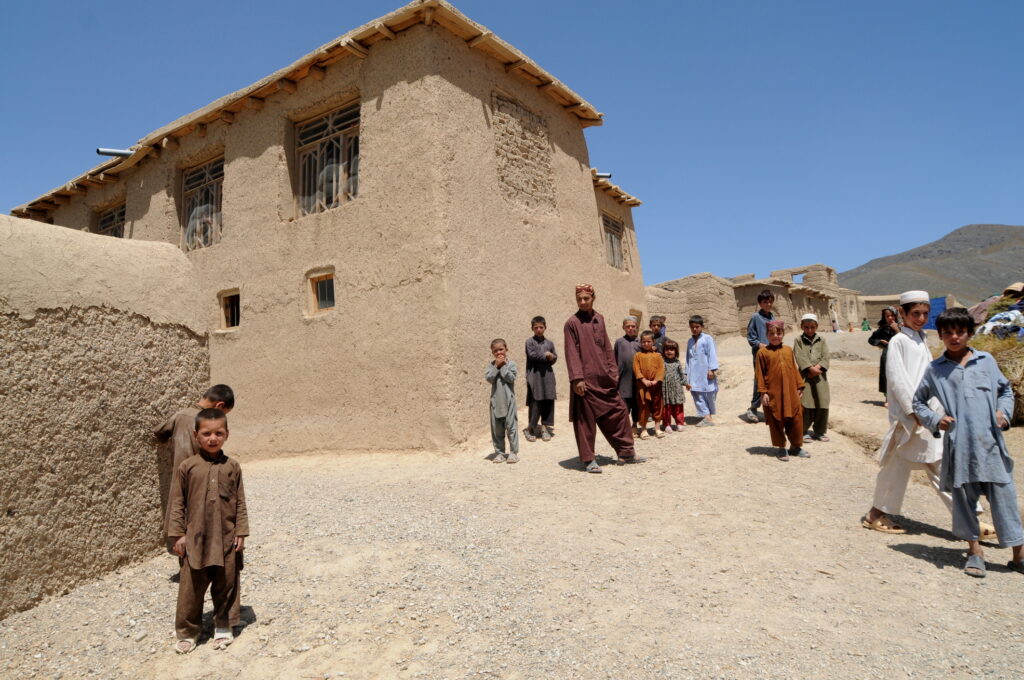
Afghanistan has increasingly been regarded in expert and journalistic circles as part of Central Asia, which is justifiable from a physical-geographical perspective. However, given current regional realities, it is still premature to classify the country as part of Central Asia in terms of being internationally recognized as such. The outcome of the 19th-century rivalry between the British and Russian Empires for influence in Central Asia, known as the "Great Game," not only established the modern southern borders of the region but also set Afghanistan and its northern neighbors on entirely different social and historical paths. The countries differ in value systems, ideologies, public consciousness, and, of course, economic development. At the same time, experts from the Russian Institute for Central Asian Studies note that "In the early 21st century, approaches to analyzing regional realities shifted towards geo-economics. The spatial dimension of Central Asia began to be seen as a zone for pipeline transit." This perspective is hard to argue against — Afghanistan’s current geopolitical interests and challenges are largely tied to the economic interests of countries at the regional level. This includes India, Iran, China, the UAE, Pakistan, Russia, Turkey, and the Central Asian states, for whom Afghanistan's prospects are evident. Chiefly, these prospects concern its transit potential as a territory connecting various parts of Asia. Four out of the six logistics corridors under the Asian Development Bank’s Central Asia Regional Economic Cooperation Program (CAREC) pass through Afghanistan into Uzbekistan, Tajikistan, and Turkmenistan. Other relevant projects include the "China–Pakistan Economic Corridor" under the "One Belt One Road" initiative, the "Trans-Afghan Corridor," and the TAPI Gas Pipeline. However, Afghanistan's current situation, particularly given the stagnant Afghan-Pakistani conflict, casts doubt on the feasibility of these and other major projects involving Afghanistan. As previously stated by TCA, the future of these large-scale projects involving Central Asian countries, as well as regional stability, a fundamental condition for steady economic development, depends directly on whether an understanding is reached between these two nations. Thus, a geo-economic approach to redefining Central Asia’s new boundaries still requires a different reality. Meanwhile, within Central Asia itself, there is little enthusiasm for political rapprochement with Taliban-ruled Afghanistan. The primary focus is on trade/economic and humanitarian cooperation, with no broader agenda, particularly at a regional level. Tajikistan’s position is significant here, as its authorities continue to view the Taliban as a threat and tread cautiously in building relations with them.  What Prevents Central Asian Countries from Accelerating Relations with Afghanistan? The answers lie not only in different developmental trajectories and scenarios. First and foremost, Afghanistan is still associated with "uncertainty" and numerous risks, particularly in terms of security. According to many assessments, the Afghan-Pakistani zone will, in the long term, remain a source of terrorist and religious-extremist threats to Central Asia. These conclusions are based on a retrospective analysis of escalating tensions, current processes in Afghanistan, and the geopolitical confrontation of global powers in the area. For example, the Soviet invasion in 1979 fostered the consolidation of the Afghan mujahideen,...

Amid Sanctions, China’s Xinjiang Strengthens Ties with Central Asia

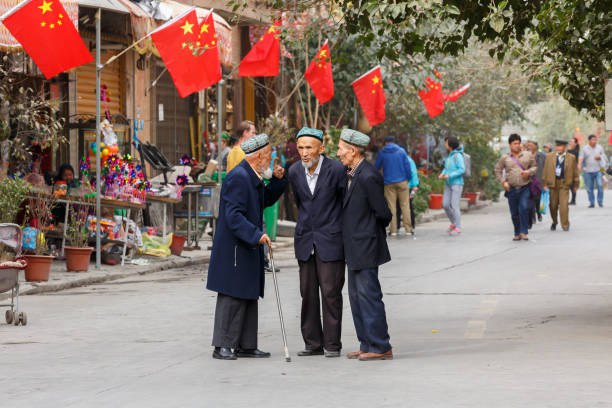
China’s Xinjiang region is deepening its engagement with Pakistan and Central Asia as part of efforts to counter Western sanctions and bolster its role in the Belt and Road Initiative (BRI). On November 26, officials from Xinjiang met with their counterparts from Kazakhstan’s Zhetysu region for the first meeting under a new cross-border coordination mechanism. The discussions focused on cross-border tourism, infrastructure, market regulation, quarantine measures, and joint crime prevention. The meeting culminated in the signing of a memorandum on cross-border tourism. The discussions took place near the port of Khorgos, a critical hub for the China Railway Express, which connects China with Europe. Khorgos is home to China’s first cross-border cooperation center, where residents of neighboring countries can engage in business and shop visa-free. The center allows duty-free purchases of up to 8,000 yuan ($1,104) per day. Xinjiang Governor Erkin Tunyoz stressed the importance of strengthening ties with Zhetysu in areas such as trade, tourism, security, and agriculture. This cooperation is becoming increasingly crucial for Beijing as Xinjiang grapples with sanctions from the United States and other Western countries over alleged human rights abuses—a claim that China denies. Sanctions include the U.S. Uyghur Forced Labor Prevention Act, which prohibits imports from Xinjiang suspected of being produced using forced labor. Similar measures have been implemented by Canada, the United Kingdom, and the European Union. In addition to its collaboration with Kazakhstan, China has established a dialogue mechanism with the five Central Asian countries—Kazakhstan, Kyrgyzstan, Tajikistan, Turkmenistan, and Uzbekistan. Since 2020, foreign ministers from these nations have met annually to discuss logistics, trade, investment, agriculture, mining, and security. Li Lifan, a Central Asia scholar at the Shanghai Academy of Social Sciences, described Xinjiang as a “bridgehead” for the BRI. He highlighted the region’s rich natural resources and its role as a base for major industries, including automobile manufacturing. In 2023, trade between Xinjiang and Central Asian countries surged by 50%, reaching 283 billion yuan ($39 billion). Despite these successes, Li cautioned about future challenges. He noted uncertainties surrounding potential Western secondary sanctions, geopolitical tensions, and Russia's ongoing war in Ukraine. Additionally, U.S.-China relations remain fraught, with further unpredictability anticipated under the leadership of Donald Trump. “Full economic development may only be achievable once global tensions ease,” he said.

Navigating Afghan-Pakistani Conflict: Central Asia’s Mediating Role in Regional Stability

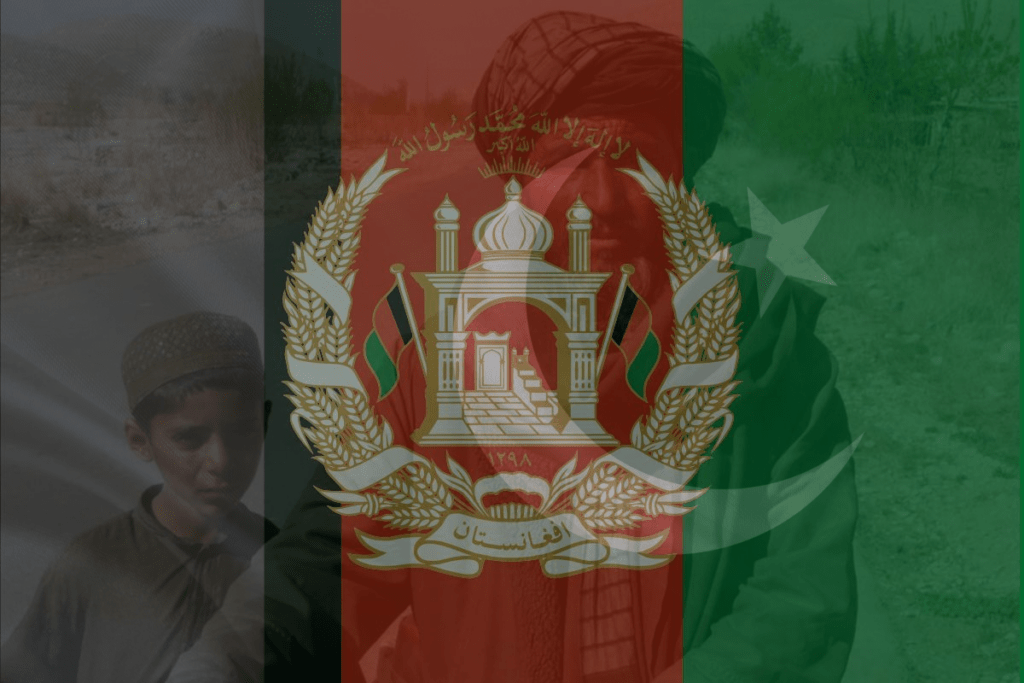
Recently, there has been a significant increase in tensions between Afghanistan and Pakistan, with both sides regularly exchanging accusations. In addition to this, border conflicts have become more frequent, with border crossings periodically closed. According to Modern Diplomacy, both countries are in a state of quite severe political conflict, and distrust and hostility from the Afghan population towards Pakistan is growing even though the "victory of the Taliban and the reincarnation of the Islamic Emirate... should have been a victory for Pakistan and strengthened its position in the region.” The confrontation between the two neighbors in South Asia is a source of concern for other countries in the region, especially for the Central Asian republics, which are increasingly acquiring the status of independent players in their dealings with Afghanistan. Due to their proximity, these republics to varying degrees link their development with a stable Afghanistan designed to become a bridge to South Asia. Negative dynamics in Afghan-Pakistani relations are a cause of much wringing of hands. Pakistan was among the first states to recognize the independence of the former Soviet Central Asian republics and has dynamic ties with them. Pakistan's trade turnover with the region is roughly $500 million annually, most of which comes from imports to Pakistan. The nations are linked by the Quadrilateral Traffic in Transit Agreement (QTTA), the Turkmenistan-Afghanistan-Pakistan-India (TAPI) gas pipeline project, the CASA-1000 energy project, and the Uzbekistan–Afghanistan–Pakistan Railway Project. The majority of these projects use Afghanistan as a bridge between Central Asia and Pakistan. In this regard, the countries of Central Asia are interested in a political situation which excludes confrontational approaches; none of them are interested in further destabilization in Afghanistan. In the Central Asian republics, there is a well-established understanding of Pakistan's exceptional and particularly important role in Afghanistan’s stability. Pakistan has a defining influence on security in Afghanistan and has historically been the most integrated in Afghan issues at the level of political and multi-ethnic conflicts. Pakistan is linked to its neighbor by historical and socio-cultural ties. In reality, however, a different story is emerging. At both a global and regional level, active measures out of Islamabad set to discredit the de facto Taliban-led government of Afghanistan have been observed. Islamabad has undertaken a robust information campaign, which has put forward an entrenched narrative about Afghanistan being one of the world’s major sources of terrorism. In this information war, Islamabad, being a fully-fledged member of the international community, has clear advantages and has used all available tools, including access to global platforms. Islamabad also has access to specialized committees and departments of the UN, which regularly prepare reports on the situation in Afghanistan. Unsurprisingly, it has used these to include ideas favorable its' position on the world stage. Acting as a source of information, Islamabad has presented its point of view, which the international community has largely accepted as objective information. However, it does not provide specific data, such as the size of terrorist groups or the location of their training camps....

Pakistan Joins Transport Corridor Between Indian Ocean and Eastern Europe

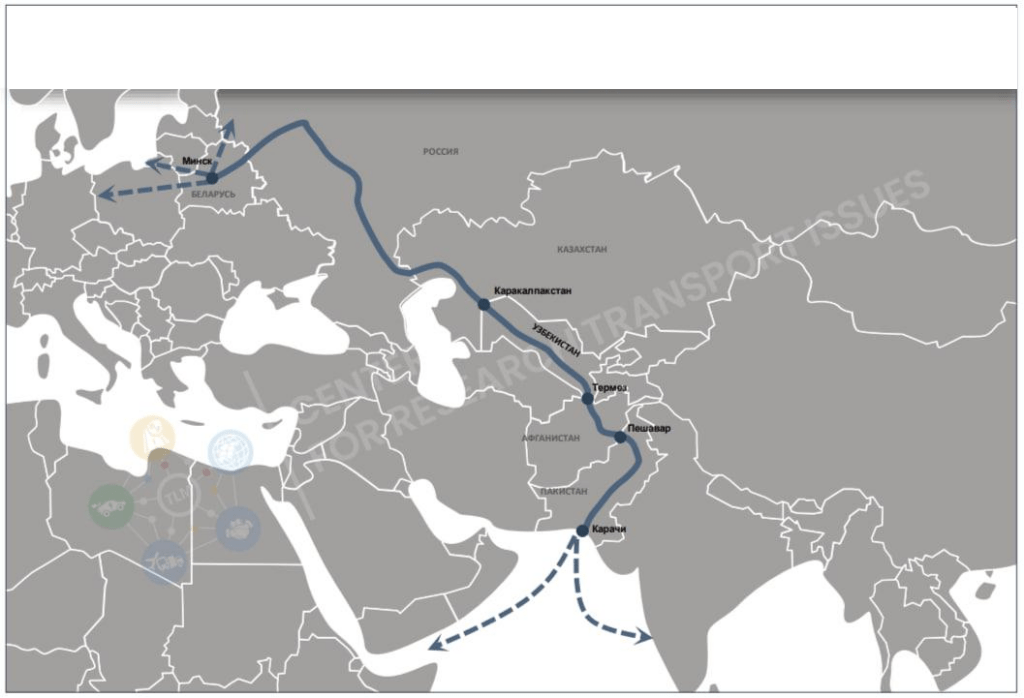
Uzbekistan’s Ministry of Transport has announced that Pakistan has officially joined the memorandum of understanding on establishing and developing the international transport corridor "Belarus–Russia–Kazakhstan–Uzbekistan–Afghanistan–Pakistan–Indian Ocean." The Pakistani Ministry of Communications signed this memorandum on September 18. The process of creating this multimodal transport corridor began in August 2022, at a meeting between the Uzbek government and the Eurasian Economic Commission – the governing body of the Russian-led Eurasian Economic Union that also includes Armenia, Belarus, Kazakhstan, and Kyrgyzstan. In November 2023, the transport ministries of Russia, Kazakhstan, and Uzbekistan signed a memorandum of understanding, launching the project's active phase of work. The group's first meeting on developing the proposed multimodal transport corridor was held in April 2024 in Termez, Uzbekistan. During that meeting, Belarus joined the memorandum, while Afghanistan and Pakistan announced the beginning of internal procedures for joining the project. At that meeting, a roadmap was signed, including specific plans for the development of cargo transportation, analysis of cargo flows, introduction of electronic digital documents, and optimization of customs procedures. The participating countries expect that the new corridor will become an important link in Eurasia's transport system, providing convenient and efficient routes for the transit of goods and strengthening economic cooperation.

Work Begins on Afghan Section of the TAPI Gas Pipeline

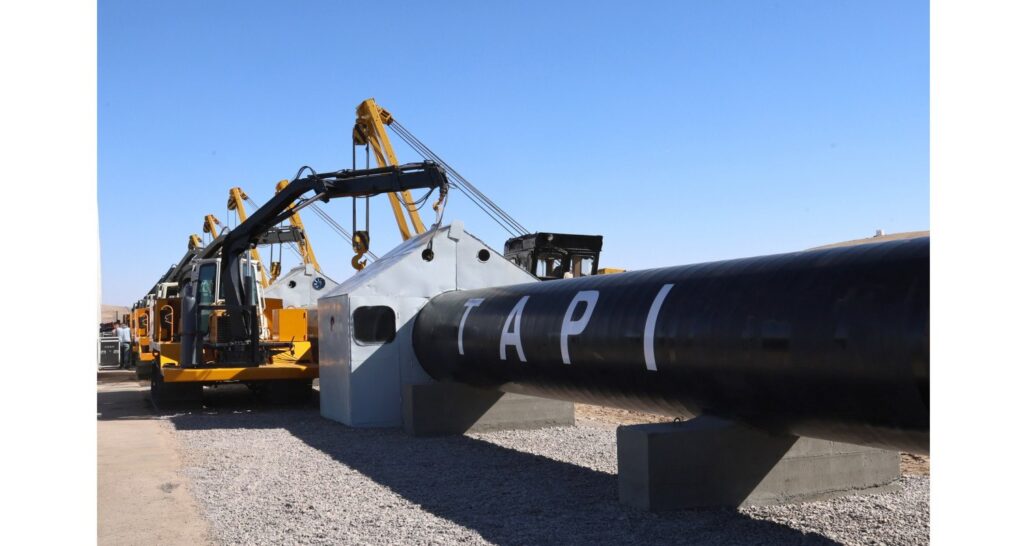
Turkmenistan and Afghanistan have now begun construction of the Afghan section of the Turkmenistan-Afghanistan-Pakistan-India (TAPI) natural gas pipeline. To mark the launch of work on the pipeline’s Serhetabat-Herat section, Chairman of the Halk Maslahaty (People’s Council) of Turkmenistan, Gurbanguly Berdimuhamedov, and Mullah Mohammad Hassan Akhund, the Prime Minister of the Taliban-led Afghan government, attended a ceremony  at a checkpoint on the Turkmen-Afghan border on September 11. The staged installation of the TAPI pipeline, already completed in Turkmenistan, will eventually transfer 33 billion cubic meters of Turkmen natural gas annually to Afghanistan, Pakistan, and India. At an estimated cost of $10 billion, the TAPI pipeline will span 1,814 kilometers.  With 816 kilometers running through Afghanistan, the project will meet the country's gas needs, generating around $450 million in annual transit fees, before continuing on to Quetta and Multan in Pakistan and Fazilka in India. Gas-rich Turkmenistan currently exports natural gas to China and Russia but once completed, the TAPI project will enable the country to diversify its export routes and help realize far-reaching plans to transport its gas across the Caspian Sea to Azerbaijan, Turkey, and Europe. Mullah Mohammad Hassan Akhund stated that the commencement of work on the TAPI project on Afghan soil would strengthen relations between Afghanistan and Turkmenistan, whilst speaking from Ashgabat via videoconferencing, Turkmenistan President Serdar Berdimuhamedov, announced, "The commencement of the TAPI project [on the Afghan territory] and other projects is beneficial not only for Afghanistan but also for the countries in the region." In addition to TAPI, the ceremony opened a 177-meter-long railway bridge at the Turkmen-Afghan border on Serhetabat-Turgundi railroad, launched the construction of the Serhetabat-Herat (Afghanistan) fiber-optic communication line, a warehouse complex in the dry port of the Turgundi railway station at the Turkmen-Afghan border, and the Turgundi-Sanabar section of the Turgundi-Herat railway. The event also marked the commission of the Nur-el-Jahad power plant in Afghanistan's Herat province,  as part of the first phase of the Turkmenistan-Afghanistan-Pakistan (TAP) power transmission line project.

Kazakhstan, Turkmenistan and Afghanistan Plan New Railway Line

On July 20, government representatives from Kazakhstan, Turkmenistan, and Afghanistan gathered in Aktau, Kazakhstan, to discuss the construction of a new railway line running from the Turkmenistan border through Afghanistan to Pakistan via Turgundi—Herat—Kandahar—Spin Buldak, The joint implementation of the project was proposed by head of the Agency for Transport and Communications of Turkmenistan, Mammetkhan Chakyev, who also announced that Turkmenistan and the Afghan side had already agreed  to create a logistics centre in Turgundi, a border town in northern Herat Province of Afghanistan.  Construction is due to commence shortly and once in operation, will provide facilities for the transhipment of grain, rail containers, and other cargo. Kazakhstan's invitation to participate in the project rests on its production of high-quality railway tracks and as stated by Chakyev, “Turgundi-Herat is not only the construction of a railway but also the further development of freight traffic and the attraction of goods in this direction. With the participation of the Kazakh side, we can significantly increase the attractiveness of this corridor." Afghan representatives stating their readiness to forward the transport of goods from Kazakhstan and Turkmenistan to Pakistan, highlighted the effectiveness of the route for all concerned as well as the benefits it afforded to importing Chinese goods through Kazakhstan and Turkmenistan. Kazakhstan’s Deputy Prime Minister Serik Zhumangarin announced his support for Turkmenistan's proposal for the joint construction of the new railway route and its provision of a western corridor from Afghanistan to Pakistan and India.