• KGS/USD = 0.01144 0%
  • KZT/USD = 0.00216 0%
  • TJS/USD = 0.10659 0%
  • UZS/USD = 0.00008 0%
  • TMT/USD = 0.28530 0%
  • KGS/USD = 0.01144 0%
  • KZT/USD = 0.00216 0%
  • TJS/USD = 0.10659 0%
  • UZS/USD = 0.00008 0%
  • TMT/USD = 0.28530 0%
  • KGS/USD = 0.01144 0%
  • KZT/USD = 0.00216 0%
  • TJS/USD = 0.10659 0%
  • UZS/USD = 0.00008 0%
  • TMT/USD = 0.28530 0%
  • KGS/USD = 0.01144 0%
  • KZT/USD = 0.00216 0%
  • TJS/USD = 0.10659 0%
  • UZS/USD = 0.00008 0%
  • TMT/USD = 0.28530 0%
  • KGS/USD = 0.01144 0%
  • KZT/USD = 0.00216 0%
  • TJS/USD = 0.10659 0%
  • UZS/USD = 0.00008 0%
  • TMT/USD = 0.28530 0%
  • KGS/USD = 0.01144 0%
  • KZT/USD = 0.00216 0%
  • TJS/USD = 0.10659 0%
  • UZS/USD = 0.00008 0%
  • TMT/USD = 0.28530 0%
  • KGS/USD = 0.01144 0%
  • KZT/USD = 0.00216 0%
  • TJS/USD = 0.10659 0%
  • UZS/USD = 0.00008 0%
  • TMT/USD = 0.28530 0%
  • KGS/USD = 0.01144 0%
  • KZT/USD = 0.00216 0%
  • TJS/USD = 0.10659 0%
  • UZS/USD = 0.00008 0%
  • TMT/USD = 0.28530 0%

Viewing results 1 - 6 of 162

Gasoline Smuggling a Growing Business in Kyrgyzstan

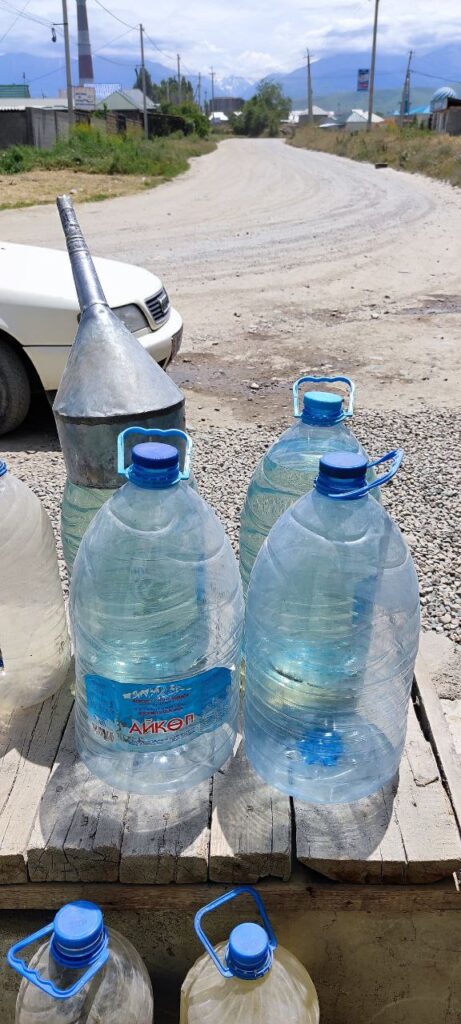
Smuggled gasoline is being sold from plastic bottles on the outskirts of Bishkek. This fuel is cheaper than at official gas stations, but motorists say the quality is no worse. Kyrgyzstan's State Tax Service of Kyrgyzstan seized almost 100,000 liters of gasoline from illegal fuel and lubricant traders in the first four months of 2024 alone. The sellers were fined one million som ($11,500). Fines are doing little to stop illegal gasoline sellers. One trader explained to The Times of Central Asia that selling smuggled gasoline is very profitable, earning them about $40 a day. The fine is only $35, and since a violator must be caught to be punished, most go about their business unaffected. As of 2023, the official average salary in Kyrgyzstan stood at $376 a month. A liter of gasoline at such illegal points costs, on average, 10% less than at official gas stations: the trade is thriving and gaining momentum yearly. The State Tax Service explained to The Times of Central Asia that their competence includes checking electronic invoices and the presence of cash registers or patents to pay taxes to the state. As a rule, illegal sellers have neither, so they are fined, and their products are confiscated. However, the tax authorities cannot completely stop the activities of traders. Two other government agencies can check fuel sellers: the traffic police and the ministry of natural resources. But Kyrgyzstan has a moratorium on business inspections, so officials' hands are tied. Illegal sellers sell both Russian and Kazakhstani gasoline. The supply chain is well organized -- tanker truck owners take the fuel from the bases of official gas stations to special storage sites. Then gasoline is poured into plastic containers and sold on highways. The average capacity of a gasoline tanker is about 15 tons, and one tanker can transport up to 100 tons per day. Despite the ban on exporting fuels and lubricants from Kazakhstan, gasoline and diesel from there are still smuggled into Kyrgyzstan. Points of sale for such fuel are concentrated along the border with Kazakhstan, on the northern outskirts of Bishkek. Kazakh gasoline is cheaper than Kyrgyz, which contributes to its popularity. Fuel from the neighboring country is delivered in hidden containers in ordinary cars and heavy trucks, and there are even secret underground gasoline pipelines in border communities. The business of selling smuggled gasoline also thrives thanks to corruption. For example, last year, officers of the State Committee for National Security detained several employees of the State Tax Service, who, for a fee, made false transportation documents within the country and false consignment notes and seals.

Police Officers in Bishkek Fired Over Mob Conflict with Foreign Students

The Kyrgyz Interior Minister and various heads of district police departments, whose duties include ensuring law and order in Bishkek, attended a meeting to discuss the recent mob conflict with foreign-students, wherein the Interior Ministry board of directors and staff members received disciplinary citations. The head of the Interior Ministry's Internal Investigation Service, Zholboldu Kochkonov, briefed law enforcers on the results of an internal investigation which was conducted following the events of May 13th and 17th, when foreign students and workers were beaten, and violent scenes erupted on the streets and in several Bishkek hostels. "A total of 20 employees have been brought to disciplinary responsibility. Of them, 10 employees of the Bishkek Sverdlovsk District Department of Internal Affairs, including the head of the unit, have been relieved of their posts," Kochkonov stated following the meeting. According to the head of the Internal Investigation Service, an additional 10 employees of the Bishkek City Main Department and the Sverdlovsk District Department of Internal Affairs were given various types of disciplinary penalties. Kochkonov said that an investigation was launched into the officers' failure after the May 13th fight, and it was due to their inaction that the conflict escalated into the large-scale riots seen on May 17th. As TCA reported, on May 13th, a fight between local youths and foreign students took place in a hostel in Bishkek. Four days later, a rally and riots occurred in the center of the city in which around a thousand people participated. More than 40 people were hospitalized. Following the unrest, President Japarov promised swift action should the events be repeated, stating that, “Anyone, whether he is our citizen or a foreign citizen, who threatens the integrity of our state, organizes chaos, will be punished mercilessly.”

Kyrgyzstan’s President Warns of Swift Crackdown If Unrest Flares Again

President Sadyr Japarov of Kyrgyzstan on Monday has addressed the nation about recent unrest and anti-foreigner sentiment, saying “our hot-blooded youth” were led astray by inflammatory internet posts and warning of a crackdown if it happens again. Japarov spoke after a week of tension in Bishkek that began with a fight between local and foreign people at a hostel on May 13 and culminated with large crowds of angry Kyrgyz youths roaming intersections on the night of May 17-18. There were scattered attacks on foreigners, whose population includes students and workers from Egypt, Pakistan and other countries. Some people were hospitalized. Riot police were on standby as officials negotiated with the crowds and persuaded them to disperse peacefully. “Now, if such an event happens again, then the law enforcement agencies will switch to the method of dispersal by force from the first minutes. Thank God, now the power structures are not as weak as they used to be,” Japarov said. “Anyone, whether he is our citizen or a foreign citizen, who threatens the integrity of our state, organizes chaos, will be punished mercilessly.” Japarov said the demands of Kyrgyz youth for tough action against illegal migration were “certainly correct” and that the government had taken steps to address the problem. But he chastised those who were “led by the temptations of provocateurs” seeking to spread chaos. The president referred to “bloggers” trying to foment a “large-scale uprising in the crowd,” though he did not offer more details on the alleged agitators. Kyrgyzstan has experienced periodic unrest on a much bigger scale over the years, and three presidents have been ousted by uprisings since 2005. Japarov, who had been in exile and in prison, came to power in 2021 after being freed by supporters whose protests against a disputed election toppled the previous government. The Central Asian country had been known for a lively media scene and other relative freedoms in a region with authoritarian traditions. Japarov has rolled back some of those rights, tightening control over foreign funded non-governmental organizations despite international concerns and increasing pressure on some media critical of the government. Japarov said law enforcement officials arrested “the perpetrators” of the May 13 brawl and appealed to the country to consider the damage that the unrest of the last week can do to tourism and the economy, as well as the nation’s interaction with the world. He noted that more than one million Kyrgyz citizens live abroad (the total population is about seven million), and that the number of working migrants in Kyrgyzstan is 5,322 people and foreign students number 42,620. “We should be happy about that,” he said.

An Uneasy Calm After Unrest in Bishkek

On the night of May 18, riots took place in Bishkek. The reason - a fight between foreign medical students and local youth. The trigger was a video of a scuffle, which occurred on May 13, when Egyptian citizens beat several locals. This video was then widely circulated on social networks. Local politicians have stated that they believe the situation was fueled from the outside.   What happened? On the night of May 18, protesters blocked several streets in the center of Bishkek. According to the Interior Ministry, the number of people continued to grow, and there was a threat of mass disorder, so all personnel from the capital's police were placed on alert. All hostels and dormitories in the city where foreign citizens live were put under guard. The protesters expressed dissatisfaction with the large number of migrants coming into the country from Egypt, Pakistan, India, and Bangladesh. The head of Kyrgyzstan's National Security Committee said law enforcement agencies detained several provocateurs who were calling for the overthrow of the government. By morning, the participants in the unauthorized rally had been dispersed. In total, about 1,000 people took part in the unrest, according to the capital's police. Law enforcement urged citizens not to give in to provocations and show a high-level of civil responsibility. The Ministry of Health of the Kyrgyz Republic reported that following the incident, 41 people sought medical assistance in Bishkek. Four Egyptians were detained - local media claim they were participants in the conflict that took place on May 13. Later, it became known that some Kyrgyz citizens had also been detained. The confrontation between local residents and foreigners has acquired an international dimension, with a number of government agencies in neighboring countries expressing their concern. For example, Kazakhstan introduced a special regime on the border with Kyrgyzstan. The authorities in Pakistan, meanwhile, have organized emergency flights, and a number of their students and workers are leaving Kyrgyzstan. Several thousand students from India, Pakistan, Egypt, Bangladesh and Nepal study at Bishkek's medical institutes. There are also migrant workers from these countries living in the country, who are mainly employed in the production of garments.   Who benefits from the unrest? According to deputy Dastan Bekeshev of the Jokorku Kenesh, the unrest is an attempt to find the authorities' vulnerabilities. "One of the indicators of economic growth is when citizens of the country hire foreign citizens as workers. And there is no way for us to avoid conflicts with foreign citizens. Conflicts are also arranged by our own citizens abroad. Of course, guests should not forget that they are guests and must coexist peacefully with the citizens of the country they are in. But we should also learn tolerance and wisdom when various conflicts occur. There are law enforcement agencies and they have every opportunity to punish a foreigner and expel him from Kyrgyzstan for a long time. Our laws on external migration are very strict," the parliamentarian wrote on his Telegram channel. The MP said...

Real Estate Worth $8 Million Found in Dubai Belonging to Son of Ex-Prosecutor General of Uzbekistan

The Organized Crime and Corruption Reporting Project (OCCRP) and 75 media partners worldwide have released an investigation, Dubai Unlocked, which uncovers the foreign owners of real estate in Dubai. According to the report, the son of former Uzbek Prosecutor General, Alisherbek Kadirov, has commercial real estate in Dubai with an estimated value of approximately $8 million. According to Gazeta.uz, the investigation is based on leaked data on real estate in Dubai from 2020 and 2022, mostly from the Dubai Land Department, as well as from state-owned utility companies. The authors note that they only included people whose identities are of public interest. "Among the participants of the list is one representative of Uzbekistan. This is Alisherbek Kadirov, son of former Prosecutor General Rashitjon Kadirov. In 2018, shortly after the detention of Rashitjon Kadirov, the Interior Ministry declared Alisherbek Kadirov a wanted man. According to the investigation, he owns four offices in the business center, Marina Plaza, the total cost of which is estimated at $ 7.97 million," stated the report. Rashitjon Kadirov headed the Prosecutor General's office of Uzbekistan from 2000-2015, and was then elected judge of the Constitutional Court (2015-2017). In February 2018, the initiation of criminal proceedings against him became known. In June 2019, he was sentenced to ten years imprisonment on charges of bribery, incitement to bribery, fraud, willful evasion of taxes and other mandatory payments, interference in investigation, and other crimes. He was released on parole in January 2023.

“I Hope Saltanat’s Family Can Find Peace” – Women of Kazakhstan Speak Out on Bishimbayev’s Sentence

On November 9, 2023, former Kazakh Minister of the National Economy, Kuandyk Bishimbayev was caught on surveillance cameras arguing with and then brutally beating his common-law wife, 31-year-old Saltanat Nukenova, for around eight hours outside a restaurant he owned in Astana. A forensic examination showed that she had been strangled, but the cause of death was recorded as traumatic injury to the brain. The high-profile case which was live-streamed garnered international attention. Despite pleading not guilty to premeditated murder, Bishimbayev was sentenced to 24 years’ imprisonment for torturing and murdering Nukenova, and his cousin Bakytzhan Baizhanov to four years for his part in covering up the crime. Prosecutor Aizhan Aimaganova, who became widely-known during the trial, said in an interview with Tengrinews.kz that she believes the verdict will change the country forever. "Family and domestic violence is a pressing problem... I hope that after this trial, women will realize that going to law enforcement is not useless. It is necessary to talk about problems. I think now any domestic tyrant will think twice before raising his hand," she said. [caption id="attachment_18029" align="aligncenter" width="872"] Prosecutor Aizhan Aimaganova; image: Press service of the Astana Court[/caption] While the length of the sentence is a victory for advocates against gender-based violence, both within Kazakhstan and in the many parts of Europe where the trial was also followed closely, many Kazakhs feel it is still too early to say that justice has been done. In an open discussion that is rare in Central Asia, many citizens are posting their concerns on social media that the Nazarbayev-era official will find a way to get out of prison early: there is already speculation that Bishimbayev, a former member of the country’s elite, will leverage his political connections to secure an early release – or be recognized as terminally ill. Following the verdict, TCA took to the streets of Kazakhstan to ask women their opinion. "I finally feel relieved,” Sara, an SMM manager from Astana told TCA. “Twenty-four years is a justified sentence in my opinion. Although tragic, this case drew public attention to a great many issues, such as the need for both a new law against domestic abuse and charities to support victims of domestic violence, which is very prominent in Kazakhstan. The whole country watched the case unfold, and that attention was put to good use since many other domestic violence cases got the attention they deserved. I hope that our justice system will make sure that Bishimbayev doesn't get a chance to get out early and serve his full sentence. The same applies to Baizhanov." "Considering various aspects, including the status of his family and the presence of his children, this sentence is probably objective, especially given the jury's involvement,” 21-year-old journalist, Kamila told TCA. “The main issue now is to prevent his release on parole once the unrest subsides, though I know this is only possible if the victim’s family give their consent.” "From an objective point of view, 24-years for a brutal...