• KGS/USD = 0.01143 0%
  • KZT/USD = 0.00201 0%
  • TJS/USD = 0.10510 -0.28%
  • UZS/USD = 0.00008 0%
  • TMT/USD = 0.28575 0%
  • KGS/USD = 0.01143 0%
  • KZT/USD = 0.00201 0%
  • TJS/USD = 0.10510 -0.28%
  • UZS/USD = 0.00008 0%
  • TMT/USD = 0.28575 0%
  • KGS/USD = 0.01143 0%
  • KZT/USD = 0.00201 0%
  • TJS/USD = 0.10510 -0.28%
  • UZS/USD = 0.00008 0%
  • TMT/USD = 0.28575 0%
  • KGS/USD = 0.01143 0%
  • KZT/USD = 0.00201 0%
  • TJS/USD = 0.10510 -0.28%
  • UZS/USD = 0.00008 0%
  • TMT/USD = 0.28575 0%
  • KGS/USD = 0.01143 0%
  • KZT/USD = 0.00201 0%
  • TJS/USD = 0.10510 -0.28%
  • UZS/USD = 0.00008 0%
  • TMT/USD = 0.28575 0%
  • KGS/USD = 0.01143 0%
  • KZT/USD = 0.00201 0%
  • TJS/USD = 0.10510 -0.28%
  • UZS/USD = 0.00008 0%
  • TMT/USD = 0.28575 0%
  • KGS/USD = 0.01143 0%
  • KZT/USD = 0.00201 0%
  • TJS/USD = 0.10510 -0.28%
  • UZS/USD = 0.00008 0%
  • TMT/USD = 0.28575 0%
  • KGS/USD = 0.01143 0%
  • KZT/USD = 0.00201 0%
  • TJS/USD = 0.10510 -0.28%
  • UZS/USD = 0.00008 0%
  • TMT/USD = 0.28575 0%
28 February 2026

Viewing results 1 - 6 of 12

Russian TV Host’s Talk of ‘Military Operations’ in Central Asia Triggers Backlash in Uzbekistan

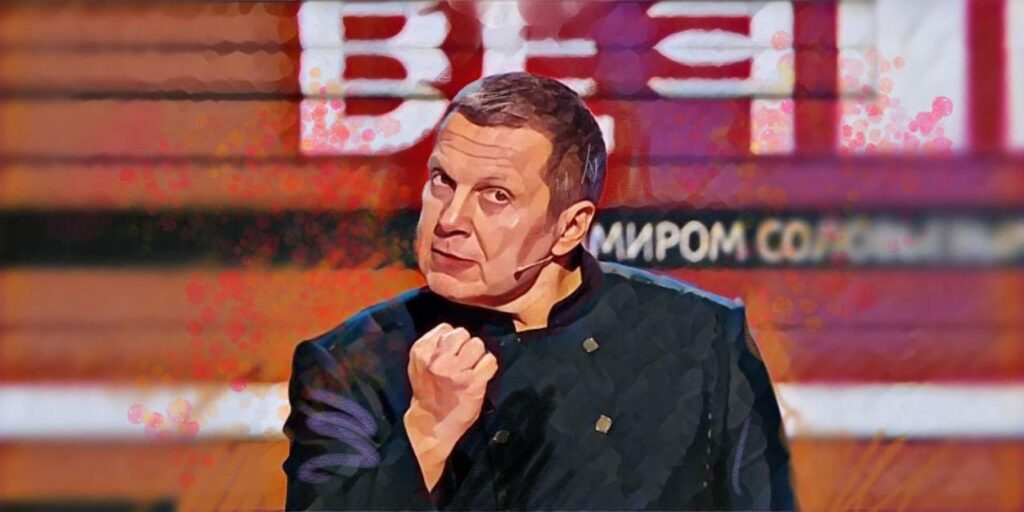
Controversial remarks by Russian television host Vladimir Solovyov, suggesting that Moscow could launch “special military operations” in Central Asia and Armenia, have provoked a strong backlash in Uzbekistan, where scholars, journalists, and political analysts warn that such rhetoric reflects dangerous political tendencies. Speaking on his Solovyov Live program, the prominent pro-Kremlin commentator claimed that regions like Armenia and Central Asia are far more critical to Russia’s national interests than distant allies such as Syria or Venezuela. He urged Russian authorities to abandon international law if it stands in the way of what he described as Russia’s national security. Solovyov was born in Moscow in 1963 and trained in economics and philosophy; after the collapse of the Soviet Union, he spent part of the early–mid-1990s living in the United States, where he worked as a businessman involved in commercial ventures rather than journalism or politics, before returning to Russia following financial difficulties. In the late 1990s and early 2000s, he entered radio and television, initially presenting himself as a liberal, pro-market commentator, but over time evolving into one of Russia’s most prominent pro-Kremlin television hosts, known for his hardline nationalist rhetoric and for aggressively promoting state narratives on domestic and foreign policy. “We must say openly: the games are over. International law and the international order mean nothing to us,” Solovyov declared, openly questioning why, if a so-called special military operation was justified in Ukraine, similar actions should not be carried out elsewhere within Russia’s claimed zone of influence. Solovyov characterized Central Asia as “our Asia,” framing it as part of Russia’s rightful sphere of influence. He warned that instability in the region represents a direct threat to Russia’s security and advocated for the Kremlin to clearly define the boundaries of its “zone of influence,” regardless of international norms. He also criticized Russia’s approach to the war in Ukraine, arguing that a lack of early harsh measures prolonged the conflict and resulted in greater losses. “We should stop casting pearls before swine and openly state that we do not care what Europe thinks,” he added. In recent years, tensions over Russian attitudes toward Central Asia have surfaced in regional discourse. In 2024, Uzbek political figure Alisher Qodirov publicly criticized what he called rising “Russian chauvinism,” responding to televised statements by Russian nationalists such as Zakhar Prilepin advocating territorial claims on Uzbekistan and Russian commentators on state TV asserting that peoples like the Uzbeks and Kazakhs did not exist before 1917, comments that Qodirov said were enough to call for cutting Russian broadcasts into Uzbekistan. Observers have also linked broader social trends in Russia - including xenophobic attacks on Central Asian migrant workers and statements by Russian officials linking Central Asian migration and security to Russia’s interests - to a narrative among some Russian public figures framing Central Asians as outsiders within Russia and Central Asia as a contested space. The remarks triggered immediate condemnation in Uzbekistan. Sherzodkhon Qudratkhodja, a political scientist and professor, said Solovyov had expressed, in plain terms, ideas...
Nomad TV: Russia’s Latest Media Venture in Kyrgyzstan

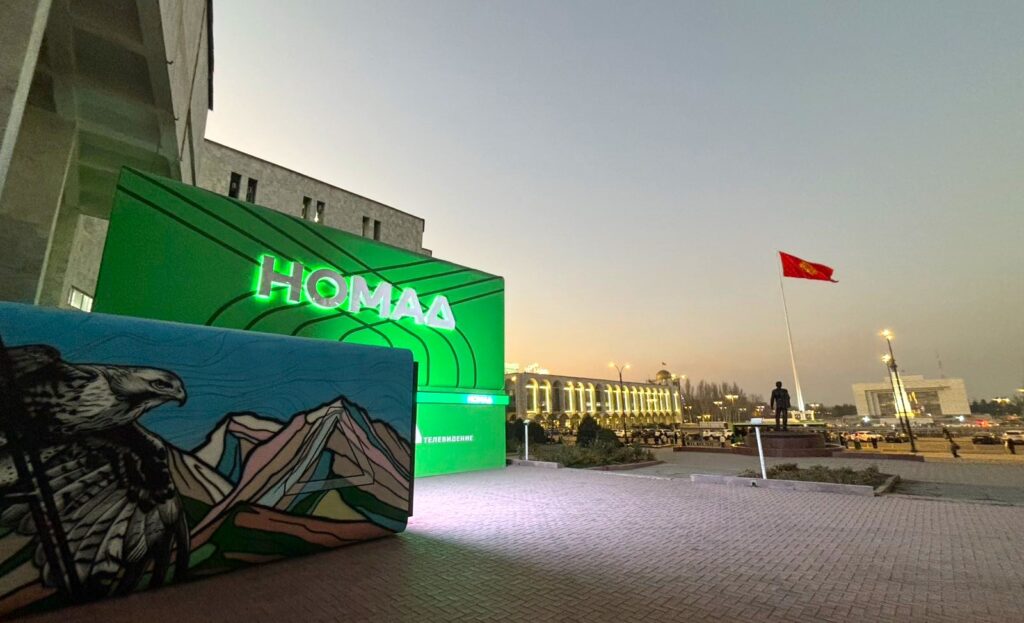
Kyrgyzstan has a new TV station. At first glance, it’s the kind of cozy, local news channel satirized in 2004’s Anchorman. The headline item on December 10th was the fact that it had snowed in Bishkek, with the on-screen reporter treading around the city asking residents whether they felt cold. “Not really,” is the general response, given that plummeting temperatures are hardly a new phenomenon in the Kyrgyz capital. “What kind of precautions did you take against the weather?” the reporter asks one gentleman. “Put on a hat and gloves,” comes the droll reply. This piece is followed by an interview with a representative of the city’s police service, advising people to tread carefully on the icy pavements. Similar soft news items follow: an interview on the progress of Asman eco-city on Lake Issyk Kul; the modernization of a factory in Bishkek; and the announcement of a new coach for the national football team. These are hardly stories to make waves. Indeed, most people in Bishkek are unaware of the new channel’s existence. “It hasn't been a major discussion point; the only presence that I felt is this huge, green box that has been installed on the central square,” Nurbek Bekmurzaev, the Central Asian editor of Global Voices, told The Times of Central Asia, referring to the broadcaster’s temporary studio at the heart of the city. Yet Nomad is one of the best-funded media outfits in the country, offering salaries twice as high as those paid by rival organizations. And, in one form or another, it seems clear that the money is coming from the Russian state. So why has the Kremlin, which is hardly underrepresented in Kyrgyzstan’s media sphere, decided to throw such sums at a local news station? [caption id="attachment_40853" align="aligncenter" width="1600"] Nomad TV’s temporary studio on Ala-Too square in the heart of Bishkek; image: TCA, Joe Luc Barnes[/caption] A Bold Start Nomad’s initial coverage was not so banal. On November 23, the channel began broadcasting with a cascade of high-profile interviews linked to Vladimir Putin’s state visit to Kyrgyzstan on November 25-27. This followed a lavish launch ceremony at the city’s opera house, attended by Russian Foreign Ministry spokeswoman, Maria Zakharova, and the Kyrgyz deputy Prime Minister Edil Baisalov. Putin himself lauded the new channel in his speech on November 26, and gave its chief editor, Natalia Korolevich, an exclusive interview the following day. This followed a feverish autumn, which the broadcaster had spent poaching talent from newsrooms around Bishkek. This included Mirbek Moldabekov, a veteran broadcaster from the state television channel, UTRK; the head of Sputnik in Kyrgyzstan, Erkin Alimbekov; and his wife, Svetlana Akmatalieva, a journalist from the National TV and Radio Corporation. The channel’s producer is Anna Abakumova, a former RT journalist who gained fame reporting from Russian-occupied territories in Ukraine. These aggressive recruitment tactics have split the profession in Kyrgyzstan. Journalist Adil Turdukolov asserted in an interview with Exclusive.kz that anyone who has chosen to work for Nomad “is not particularly concerned with...

Tajikistan Nears Full Transition to Ruble in Trade with Russia, As Bilateral Trade Surges

Tajikistan has nearly completed its transition to ruble payments in trade with Russia, with over 90% of transactions now conducted in Russian currency, according to Firdavs Tolibzoda, head of the National Bank of Tajikistan. This marks a significant shift from 2021, when trade between the two countries was evenly split between the ruble and the U.S. dollar. Tolibzoda highlighted that Tajik banks are working to minimize financial risks by primarily cooperating with Russian banks that are not subject to international sanctions. The shift away from the dollar in Tajik-Russian trade began after Western sanctions were imposed on Russia following its invasion of Ukraine. Over the past three years, Tajik exchange offices have no longer faced periodic shortages of U.S. currency, a problem that was common before the transition to ruble payments. In 2024, bilateral trade between Tajikistan and Russia is expected to reach $1.98 billion, reflecting a 15.6% increase from 2023. However, trade remains highly imbalanced. Russian imports account for 95.2% of total trade, with Tajikistan purchasing oil products and essential goods, while Tajikistan’s exports to Russia amounted to just $96 million, primarily consisting of vegetables, fruits, and mineral products such as ores and concentrates. Despite Russia’s dominant role as Tajikistan’s largest trading partner, China is rapidly catching up. In 2024, Russia accounted for 22.1% of Tajikistan’s total foreign trade turnover, while China’s share reached 21.8%. Trade with China grew by 30.1% over the past year, almost double the growth rate of trade with Russia, indicating a shifting dynamic in Tajikistan’s economic partnerships.

With the Russian Language Waning in Central Asia, Will Other Languages Replace It?

Russian is still the most widespread foreign language in Kazakhstan, though its role is declining there, and across Central Asia in general. At the same time, the people of the region have been slow to learn other languages, in part due to economic factors such as slowing globalization, according to the Kazakhstani political analyst Zamir Karazhanov, who is head of the Kemel Arna Public Foundation.   The language of cities Since declaring independence in 1991, all the counties of Central Asia have made promoting their national languages a priority. But foreign languages, which link the region with the rest of the world, have also historically been seen as critical. In practice, however, the study and use of foreign languages other than Russian is not widespread. The Russian language is losing its prominence in Kazakhstan as the number of ethnic Russians declines. According to official statistics, as of January 1, 2024, Russians made up 14.89% of the country’s population, down from close to 40% in 1989. Nevertheless, thanks to the education system and Kazakhstan’s proximity to Russia, the level of proficiency in Russian remains high. In Kazakhstan and Kyrgyzstan, Russian is a second official language. In Tajikistan, it is called the “language of interethnic communication”. In Uzbekistan and Turkmenistan, however, it does not have an official status. More than 90% of Kazakhstanis know Russian to some degree, while 20% of the population considers it their native language. Meanwhile, those figures for Turkmenistan are 40% and 12% respectively. In Kyrgyzstan, about 44% know Russian and 5% consider it their native language; in Uzbekistan, it is about 50% and 2.7%; and in Tajikistan, 55% and 0.3%. Kazakhstan's President Kassym-Jomart Tokayev has repeatedly spoken about the need to preserve the Russian language in Kazakhstan, and the unacceptability of language-based discrimination. Last year, he unveiled the International Russian Language Organization, established by the CIS Heads of State Council. “The new organization is open to all countries and, of course, very relevant from the point of view of global humanitarian cooperation,” explained Tokayev, while underlining that measures to promote the Russian language in the Eurasia region and elsewhere are congruous with the trend of strengthening national identities. “Kazakhstan will continue the policy of bolstering the status of the state language of Kazakh,” Tokayev said at the time. Today, Kazakhstan has many Russian-language media, while Russian remains the lingua franca at meetings among post-Soviet countries. Even though Russian is concentrated in big cities, all Kazakhstanis receive a significant amount of western and other foreign news from Russian sources. “Russian is spoken in most of Kazakhstan. In the biggest city, Almaty, communicating in Russian is not a problem. But, if you move 30-50 km outside the city, it gets harder to speak it. Russian is the language of cities and the language of interethnic interaction,” the political analyst Karazhanov told The Times of Central Asia. “Of course, the number of native speakers of the Kazakh language is growing, and the number of Russian speakers is declining, but Kazakh...

Huge Increase in Gas Supplies to Uzbekistan Sparks Debate Over Russian Influence

In a significant development for energy dynamics in Central Asia, the volume of Russian natural gas transiting through Kazakhstan to Uzbekistan is poised for a substantial increase. By 2026, the annual transfer is set to leap from the current 3 billion cubic meters (bcm) to 11 bcm, as announced by Kazakhstan’s Minister of Energy, Almasadam Satkaliyev earlier this month. The genesis of this increase can be traced back to last year, when Uzbekistan began importing gas from Russia. This came after a pivotal agreement was signed between UzGasTrade and the Russian energy giant, Gazprom, delineating a daily gas supply of up to 9 million cubic meters, or equivalently, 2.8 bcm annually. This initial arrangement set the stage for further negotiations aimed at securing medium and long-term contracts to bolster Uzbekistan’s energy security and support its economic development. To accommodate this increase, substantial upgrades to Uzbekistan's main gas distribution system are underway. An investment of $500 million, sourced from foreign and multilateral loans, has been earmarked for this purpose. These enhancements are crucial to ensure the efficient and reliable delivery of the increased volumes to meet domestic demand. Adding another layer to this energy partnership, Gazprom’s CEO, Alexey Miller disclosed that discussions are ongoing for agreements that would solidify gas supply and transit obligations between Russia, Kazakhstan, Kyrgyzstan, and Uzbekistan for a duration of 15 years. Expected to be finalized by mid-2024, these agreements would signal a long-term commitment between the participating nations. This significant increase highlights the growing energy needs of Uzbekistan, but experts are divided as to whether it represents or will serve as a catalyst for a strategic and geopolitical alignment with Russia. Posting on Twitter, Dr. Luca Anceschi, Professor of Eurasian Studies at the University of Glasgow, argued that such “regimes have become even more entrenched in their authoritarian ways, [and] getting closer to the Kremlin - and this Kremlin more in particular - is a convenient move to establish an international environment conducive to regime maintenance.” In response, Professor at the National Defense University, Erica Marat cautioned against conflating “sentiments in the society” with the actions of the Uzbek authorities. Senior Lecturer at the OSCE Academy in Bishkek, Asel Doolotkeldieva, meanwhile, stated that “economic inter-dependence [will] be the last to wane in changing influences in the region… The argument about the increasing economic role of Russia does not take into account the diversification of Central Asia's other ties: with China, the Gulf States, and Asia.” Still, others have argued that since the invasion of Ukraine, Moscow’s influence has diminished, noting that Uzbekistan has “strictly [followed] international sanctions,” adopting a neutral stance. In October 2023, an Uzbek court even arrested a citizen for joining Russian troops fighting in Ukraine. Speaking to TCA about the increase in gas supplies and its possible implications, long-standing Central Asia journalist Bruce Pannier of the Davis Center at Harvard stated that “Uzbekistan has turned from a gas exporter to a gas importer in recent years, and its major foreign investors in developing...

Two Years On from Invasion of Ukraine, Attitudes Towards Russia in Central Asia Have Changed

Tomorrow will mark the two year anniversary of the start of Russia's so-called special military operation in Ukraine. In that time, many people in Central Asia have begun to openly call this action an invasion and a war. This is a war between two countries that are close in many respects, two former republics from a large union that the nations of Central Asia were also part of. How and why has the attitude of Central Asians towards Russia and Ukraine changed in the last two years? The attacks on Ukraine were felt immediately in Central Asia, from the first day when migrants suddenly started arriving from the north. These were mostly young people, sometimes in groups, and sometimes with their families. It quickly became clear that this exodus was comprised of people who did not want to fight, and there were many of them. Also from day one, even though there are many ethnic Russians living in Kazakhstan, the new migrants were noticeably different from the local Russian faces. Their behavior and mode of dress were not the same as those already residing in Tashkent, Bishkek or Almaty. From the very beginning, there were conflicts although mostly they amounted to little more than drunken brawls that were soon forgotten. In February 2022, the cost of residential rentals skyrocketed following the attack on Ukraine, but prices seem to have since stabilized. Overall, though, most locals treated their new neighbors with understanding. Nobody wants war. Especially since, in the countries of this region, people still remember or at least heard stories about the evacuation of a large number of people from Russia and Ukraine during the Second World War. In those times, many children whose parents died during the occupation of western portions of the USSR by Germany found second families and second homes. Uzbeks, Tajiks, Kazakhs, Kyrgyz, Uyghurs, Tatars - many Central Asians who had the opportunity adopted children from war-torn republics of the Soviet Union. Perhaps the most fundamental change is felt in the attitude of Central Asian people towards Russia as something immutable and monumental. Something previously unthinkable transpired: despite all its economic and political power, this huge northern neighbor could also be viewed as vulnerable. The fact that Ukraine is obviously not alone in its war against Russia  does not change this perception. In Central Asia, it is often said that in any negative situation, one must look for positive opportunities, and in a tangential way, the years of restrictions caused by the Covid-19 pandemic served as preparation for the trials brought by the war. A realization had come to pass that it was necessary to prepare oneself to rely solely on domestic resources. The war further complicated a precarious situation as sanctions imposed on Russia also hit Central Asia. First, the financial system went into meltdown, then trade, and then the production sector, much of which was tied to the Russian economy. However, this situation forced Uzbekistan, Kazakhstan, Kyrgyzstan, Tajikistan and Turkmenistan to look for new...