• KZT/USD = 0.00215
  • TJS/USD = 0.10810
  • UZS/USD = 0.00008
  • TMT/USD = 0.29760
  • KZT/USD = 0.00215
  • TJS/USD = 0.10810
  • UZS/USD = 0.00008
  • TMT/USD = 0.29760
  • KZT/USD = 0.00215
  • TJS/USD = 0.10810
  • UZS/USD = 0.00008
  • TMT/USD = 0.29760
  • KZT/USD = 0.00215
  • TJS/USD = 0.10810
  • UZS/USD = 0.00008
  • TMT/USD = 0.29760
  • KZT/USD = 0.00215
  • TJS/USD = 0.10810
  • UZS/USD = 0.00008
  • TMT/USD = 0.29760
  • KZT/USD = 0.00215
  • TJS/USD = 0.10810
  • UZS/USD = 0.00008
  • TMT/USD = 0.29760
  • KZT/USD = 0.00215
  • TJS/USD = 0.10810
  • UZS/USD = 0.00008
  • TMT/USD = 0.29760
  • KZT/USD = 0.00215
  • TJS/USD = 0.10810
  • UZS/USD = 0.00008
  • TMT/USD = 0.29760
12 August 2026

Viewing results 1 - 6 of

Kazakhstan Resumes CPC Oil Exports After Output More Than Halves

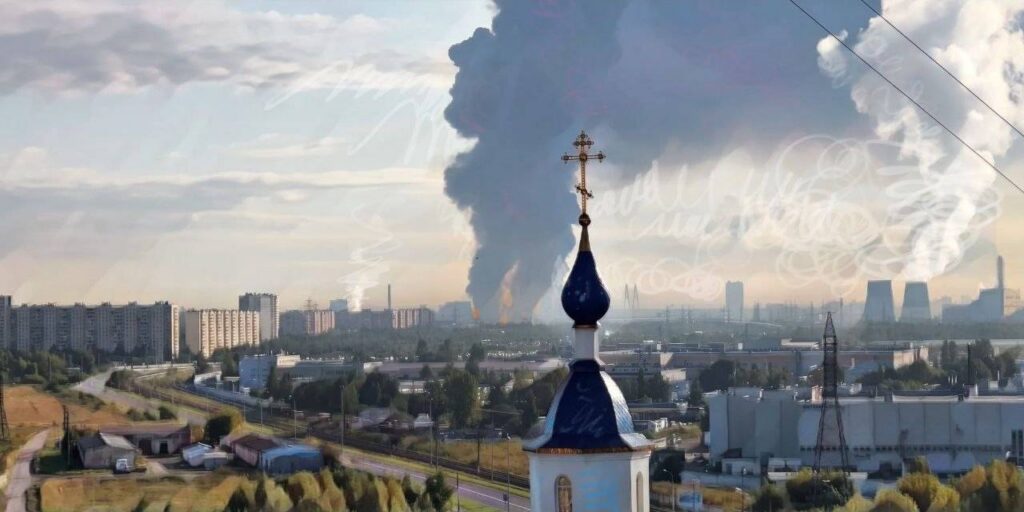
Kazakhstan resumed oil exports through the Caspian Pipeline Consortium on July 27 after the consortium restarted accepting crude and loading tankers at its Black Sea terminal near Novorossiysk. The Energy Ministry said the SEAMAJESTY and MILOS tankers were loading crude supplied by Tengizchevroil at two of the terminal’s single-point moorings. CPC said its pipeline had been back online since 12:28 p.m. Moscow time. Loading operations resumed after a week-long suspension. The ministry said terminal operations would continue according to assessments of the security situation and compliance with safety requirements. It remains in contact with CPC management, oil producers, and other companies involved in the shipments. The restart followed the sharpest production decline recorded during the disruption. Kazakhstan’s oil and gas condensate output fell to about one million barrels per day on July 26, according to an industry source. That was less than half the June average of 2.16 million barrels per day. Production had already fallen by about 21% as of July 22, to 1.63 million barrels per day. Tengiz, Kazakhstan’s largest oilfield, bore the heaviest initial reduction. Its output dropped by 56%, from a July average of 925,000 barrels per day to about 406,000 barrels per day. By July 26, the cuts had spread across Kazakhstan’s three largest oil projects. Daily production at Tengiz, Kashagan, and Karachaganak fell by between 70% and 90% compared with June levels, according to an industry source. The Energy Ministry and the projects’ operators did not comment on the field-level figures. Producers reduced output after CPC restricted intake from Kazakhstan and suspended tanker loadings. Storage tanks at the terminal had reached capacity, leaving the pipeline system with little room to receive additional crude. The Energy Ministry described the reductions as a technical measure intended to keep production operations stable. The halt followed a series of drone attacks on tankers near the CPC terminal. Three vessels were struck on July 17 and 19, including two loading Kazakh oil. Loadings briefly resumed before another tanker, NELSA, was hit at a single-point mooring on July 20. No casualties or oil spills were reported. Kazakhstan condemned the attacks and said an agreed information-sharing mechanism intended to protect civilian vessels carrying CPC crude had been disregarded. The government described the incidents as a threat to international energy security and demanded an immediate halt. The 1,510-kilometer CPC pipeline carries crude from western Kazakhstan through Russia to the Black Sea. It handles more than 80% of Kazakhstan’s oil exports, including most production from Tengiz, Kashagan, and Karachaganak. The shutdown added to a difficult year for the sector. Kazakhstan produced 45.7 million tonnes of oil in the first half of 2026, down 8.4% year-on-year. The ministry expects full-year production of 98 million tonnes after lowering its previous target because of earlier Tengiz outages and CPC disruptions. It was not immediately clear how quickly output would return to earlier levels. The reopening restores Kazakhstan’s main export outlet, but the speed and scale of the cuts again exposed its dependence on infrastructure vulnerable to...

Why Tokayev Urged Putin to Freeze the War in Ukraine

Kazakh President Kassym-Jomart Tokayev has delivered his most direct public appeal to Vladimir Putin for an end to Russia's war in Ukraine. Speaking alongside the Russian president during the 22nd Kazakhstan-Russia Interregional Cooperation Forum in Omsk on July 25, Tokayev called for freezing the war and returning to what he described as the "Istanbul Formula 2.0." For many observers, the statement marked a significant departure from the cautious language traditionally used by leaders across the post-Soviet region. Although Azerbaijani President Ilham Aliyev has repeatedly criticized the war and reaffirmed support for Ukraine's territorial integrity, Tokayev's intervention was notable because he advanced a concrete proposal directly to Putin on Russian territory. Tokayev's remarks were consistent with Kazakhstan's long-standing foreign policy, which has emphasized negotiated settlements and diplomatic conflict resolution. While Russia remains one of Kazakhstan's largest trading partners and a crucial infrastructure partner, Astana has not recognized Moscow's annexation of Ukrainian territory. The war has also become a direct economic concern for Kazakhstan. More than 80% of the country's crude exports move through the Caspian Pipeline Consortium (CPC), whose Black Sea export route has recently been affected by attacks on tankers and related security incidents. Those disruptions have highlighted Kazakhstan's continued dependence on the CPC corridor and the risks posed by an expanding conflict zone. Tokayev's Proposal According to the Kremlin transcript, Tokayev told Putin that he had been receiving “many signals” from Europe and the United States regarding the current state of the Russia-Ukraine conflict and had already discussed them with the Russian president by telephone. Tokayev also stressed that he regarded the conflict as an interstate war rather than a civil war. He added that Kazakhstan had always treated the Ukrainian people, their culture and their language with respect. He further said Putin had demonstrated “maximum diplomatic flexibility” during his meeting with U.S. President Donald Trump in Anchorage, Alaska. “This is simply my humble opinion, since people keep asking me: perhaps the conflict should already be frozen, and we should return to the ‘Istanbul Formula 2.0,’ because significant results had been achieved there. Then, naturally, under guarantees from the major powers, including Russia, it would be possible to move toward long-awaited peace,” Tokayev said. Tokayev also made clear that he did not intend to serve as an official mediator in any future negotiations. Tokayev did not define the formula in detail. Russia and Ukraine held talks in Istanbul in 2022 and resumed direct negotiations there in 2025, but neither round produced a settlement. It remains unclear whether he envisaged a ceasefire along the current front line, how occupied territory would be treated, or what guarantees any major powers would provide. Planned or Spontaneous? Major strategic decisions in the post-Soviet space have traditionally been shaped behind closed doors. That is one reason why Tokayev's remarks, delivered while sitting beside Putin, immediately attracted the attention of political analysts. Several experts argue that such a proposal was unlikely to have been made spontaneously. Tokayev's call to freeze the fighting and resume negotiations...

Tokayev Calls for Ukraine War Freeze as Black Sea and Caspian Risks Grow

Kazakh President Kassym-Jomart Tokayev has called for Russia and Ukraine to freeze the war and return to negotiations, delivering one of his clearest public appeals for an end to the conflict while seated beside Russian President Vladimir Putin. "Perhaps this conflict should already be frozen and we should return to the Istanbul Formula 2.0, since significant results were achieved there," Tokayev said during talks in Omsk on July 25. He said major powers, including Russia, should provide security guarantees before the sides moved towards a lasting peace. Russia and Ukraine held talks in Istanbul soon after Russia's full-scale invasion in 2022 and resumed direct negotiations there in 2025, though neither round produced a settlement. Moscow and Kyiv dispute how close the 2022 talks came to an agreement and why they collapsed. Tokayev described the war as an "interstate conflict," and said that Kazakhstan respects the Ukrainian people, their culture and language. He also expressed concern over the deaths of young Russians and Ukrainians. Tokayev declined any formal role for Astana, but stated that he had received proposals and appeals concerning mediation, including from Europe and the United States. He said Kazakhstan was not an outsider, but that Russia was capable of resolving the issue without an intermediary. He also reaffirmed Kazakhstan's strategic partnership and allied relationship with Russia, praising what he called Putin's diplomatic flexibility during the Russian president's August 2025 meeting with U.S. President Donald Trump in Anchorage. The Kremlin rejected the idea of a freeze. Spokesperson Dmitry Peskov said it was impossible under Kyiv's current position. He repeated Moscow's claim that fighting could stop if Ukraine made what Russia considers the necessary decisions. Russia's stated terms include Ukrainian withdrawal from Donetsk, Luhansk, Zaporizhzhia, and Kherson regions, including areas Moscow does not control. Putin also wants Kyiv to renounce its aim of joining NATO. Ukraine has rejected those conditions. Tokayev's position has developed publicly, but has remained centered on negotiations. In September 2024, he said Russia was "militarily invincible" and argued that continued escalation could bring about a wider disaster. He called for hostilities to stop before negotiations moved to territorial issues. Kazakhstan has also kept its distance from several central Kremlin claims. In June 2022, Tokayev refused to recognize the Russian-backed entities in Donetsk and Luhansk, describing them as "quasi-state territories." Astana has continued to cite the UN Charter, state sovereignty, and territorial integrity. The latest appeal came as the war reached shipping routes close to Kazakhstan and disrupted the country's main oil export corridor. On July 25, Iran accused Ukraine of attacking an Iranian commercial vessel in the Caspian Sea. Tehran said an explosion killed one sailor and injured another, summoning Ukraine's chargé d'affaires and describing the strike as hostile and criminal. Ukrainian President Volodymyr Zelensky said his forces had achieved "very strong results" with long-range strikes in the Caspian, and that targets included a Russian warship and vessels used for military cargo shipments involving Iran. Zelensky did not identify the vessels, and Iran did not name...

EU Sanctions Seminar in Bishkek Puts Kyrgyzstan’s Russia Trade Under Scrutiny

The European Union held a full-day sanctions seminar in Bishkek on June 9, aimed at Kyrgyz companies, banks, logistics operators and virtual-asset businesses. The session comes less than seven weeks after Brussels used its anti-circumvention tool against Kyrgyzstan for the first time. The EU Delegation to the Kyrgyz Republic said the seminar was designed to raise awareness of EU sanctions, explain their application, and improve cooperation to prevent circumvention. The published agenda set out a program covering the EU sanctions system, financial restrictions, dual-use trade controls, penalties, trade-flow risks, and practical compliance. It also included question-and-answer sessions on financial sanctions and dual-use goods. The Kyrgyz Chamber of Commerce and Industry said the event would cover sanctions policy. Trainers were expected to come from the European Commission, EU member states, international law firms, banks, logistics companies, technology firms, and the virtual-asset sector. The timing gives an otherwise technical seminar a political edge. On April 23, the Council of the EU adopted its 20th sanctions package against Russia. Brussels banned the export of computer numerical control machines and radios to Kyrgyzstan, where there is a high risk that the products could be re-exported to Russia. The Council said trade data showed a significant rise in the re-export of common high-priority items. Those narrow categories carry large compliance risk. They include machine tools, electronics, radio equipment and other components that can support military production, drones, communications systems, and advanced industrial supply chains. The EU is not attempting to stop Kyrgyz trade with Russia; it is trying to close routes for goods that European regulators say should not reach Russia through third countries. Kyrgyzstan has drawn closer EU scrutiny since Russia’s full-scale invasion of Ukraine in 2022. A member of the Eurasian Economic Union, goods can enter Kyrgyzstan, clear customs, and then move through regional trade channels. That role has supported growth in Kyrgyzstan, but has placed freight forwarders, importers and banks under closer foreign review. The concern had been building before the April decision. During a February visit to Bishkek, EU sanctions envoy David O’Sullivan discussed Kyrgyz banks, cryptocurrency and sensitive imports with Kyrgyz officials. Local coverage said the EU was watching about 80 dual-use product categories shipped from Europe to Kyrgyzstan. Around 50 had been found directly in Russian weapons, while 30 more were described as economically critical industrial items used in their production. The April package also increased pressure on Kyrgyz financial channels. The EU placed a transaction ban on 20 Russian banks and targeted four financial institutions in third countries. Keremet Bank and Capital Bank were among the affected Kyrgyz lenders. The EU also designated a Kyrgyz entity operating a platform where large volumes of the government-backed A7A5 stablecoin are traded. Virtual assets remain one of the most sensitive areas. On June 3, Kyrgyzstan’s financial-market regulator revoked the license of CJSC TengriCoin as a virtual-asset trading operator. The regulator cited systematic legal violations, failure to comply with official requirements, and failure to submit required reports. It also reminded market participants...

Why the Caspian Is Becoming Eurasia’s New Energy Crossroads

Russia’s war in Ukraine and instability in the Middle East are accelerating the emergence of a new Eurasian energy architecture, with the Caspian region increasingly at its center. In international politics, moments when several global crises simultaneously create opportunities for new centers of influence are rare. Today, a vast area stretching from Central Asia to the South Caucasus is experiencing just such a moment. Russia’s invasion of Ukraine has fundamentally reshaped Europe’s approach to energy security. Tensions in the Middle East have also raised questions about the reliability of traditional energy supply routes. Meanwhile, the global energy transition is driving demand for both clean-energy sources and alternative transport corridors. Against this backdrop, the Caspian region is no longer viewed as a peripheral economic space. It is increasingly emerging as a critical hub in Eurasia’s evolving energy system. Baku Energy Week 2026 shows how far this shift has come, highlighting Azerbaijan’s transformation from a traditional oil and gas producer into a strategic connector linking Central Asia, Türkiye, Europe, the United States, and the Middle East. One of the forum’s most significant political signals came in the form of a message from U.S. President Donald Trump to participants. His remarks went beyond a routine diplomatic greeting and reflected a broader shift toward a more pragmatic view of global energy policy. Trump described the United States as a strong supporter of Azerbaijan’s oil and gas industry and said the U.S.-Azerbaijan energy partnership would become more important in the years ahead. For much of the past decade, Western energy strategies appeared increasingly focused on rapid decarbonization and climate objectives. However, rising energy prices, Europe’s energy crisis, and growing global electricity demand have prompted policymakers to reassess those priorities. Trump openly reaffirmed support for the oil and gas sector and emphasized that the United States remains a long-standing energy partner of Azerbaijan. More importantly, Washington appears to recognize Baku’s strategic role in global energy security. The Trump administration increasingly views energy security as an element of geopolitical competition and is prepared to support projects that diversify supplies of hydrocarbons and critical raw materials. Speaking at the opening of Baku Energy Week, Azerbaijani President Ilham Aliyev said Trump’s policies had helped return energy policy to “normality.” Aliyev also noted that the oil and gas industry had faced sustained pressure from advocates of a rapid energy transition. It was therefore no coincidence that Azerbaijan signed a series of agreements during the forum with major American companies, including Chevron, JPMorgan, Oracle, and Comstock Resources. Particularly noteworthy was a cooperation agreement covering critical minerals and rare earth elements. For Washington, access to these resources is increasingly a matter not only of energy policy but also of technological and national security amid intensifying competition with China. In effect, Washington is beginning to view Azerbaijan as an important platform in a changing Eurasian energy map. While Washington is signaling renewed political backing, Turkish President Recep Tayyip Erdoğan remains one of the principal architects of the region’s practical integration. Over the past...

Kyrgyzstan Orders 50 Companies to Cease Activity Over Sanctions Risks

Kyrgyzstan has ordered 50 companies to cease activity after state agencies flagged them for sanctions risks, as Bishkek faces growing pressure over Russia-linked trade and payment channels. The move follows months of pressure from Western governments, which say some routes through Central Asia can be used to bypass sanctions imposed over the war in Ukraine. The Ministry of Justice did not name the companies, their owners, or their sectors. It also did not say whether any of them had direct links to Russia. The list was prepared by the Ministry of Economy and Commerce and other state bodies after checks into possible attempts to evade sanctions restrictions. The order was issued under an interagency mechanism for identifying dishonest participants in foreign economic activity and transactions with increased sanctions risks. The mechanism allows state bodies to use a simplified procedure to terminate the activity of legal entities after a formal submission. The Justice Ministry linked the move to efforts to protect the national economy from possible secondary sanctions. The European Union adopted its 20th sanctions package against Russia on April 23, less than a month before the Ministry of Justice order. The package added measures on energy, finance, trade, and crypto channels. It also used the EU’s anti-circumvention tool against Kyrgyzstan for the first time. Under that measure, the EU banned exports of computer numerical control machines and radios to Kyrgyzstan when there is a high risk that the goods will be re-exported to Russia. The Council of the EU said trade data showed a sharp rise in re-exports of common high-priority items through Kyrgyzstan to Russia. The EU treats the goods as sensitive because they can support industrial production, communications, and military-linked supply chains. The financial aspect of the sanctions has also reached Kyrgyzstan. The EU said it was targeting four financial institutions in third countries for circumventing sanctions or connecting to Russia’s financial messaging system. Local media identified Keremet Bank and Capital Bank as the Kyrgyz banks included in the package. The EU also designated a Kyrgyz entity that operates a platform where significant amounts of the A7A5 stablecoin are traded. Local outlets identified the entity as TengriCoin, registered in Bishkek, and linked it to the Meer platform. The pressure on Kyrgyz banks and crypto companies has been growing. The U.S. Treasury designated Keremet Bank in January 2025, saying the bank had coordinated with Russian officials and Promsvyazbank, a sanctioned Russian state defense lender, to support cross-border transfers. In August 2025, the UK government sanctioned Capital Bank of Central Asia, its director Kantemir Chalbayev, Grinex, Meer, TengriCoin, Old Vector, and other targets linked to Russian payment and crypto channels. London said the ruble-backed A7A5 token had moved $9.3 billion on a dedicated crypto exchange in four months. Kyrgyz officials have rejected the broader claim that the country helps Russia evade sanctions. The Foreign Ministry said on April 28 that Kyrgyzstan acts within national laws and its international obligations. It said Bishkek had supplied the requested documents to European partners...