One of the most notable of Kyrgyzstan’s agreements at the SCO Summit in Bishkek last week may be its deal with Pakistan to boost annual bilateral trade to US$200 million within the next two years. From a base of roughly US$16 million in 2025, that would represent roughly a twelvefold increase. It’s an ambitious target, made more so by associated geoeconomic undercurrents. As long as Bishkek avoids taking sides in any Indo-Pakistan unresolved border or other geopolitical disputes and sticks to trade and commercial issues, Kyrgyzstan should have little to worry about.
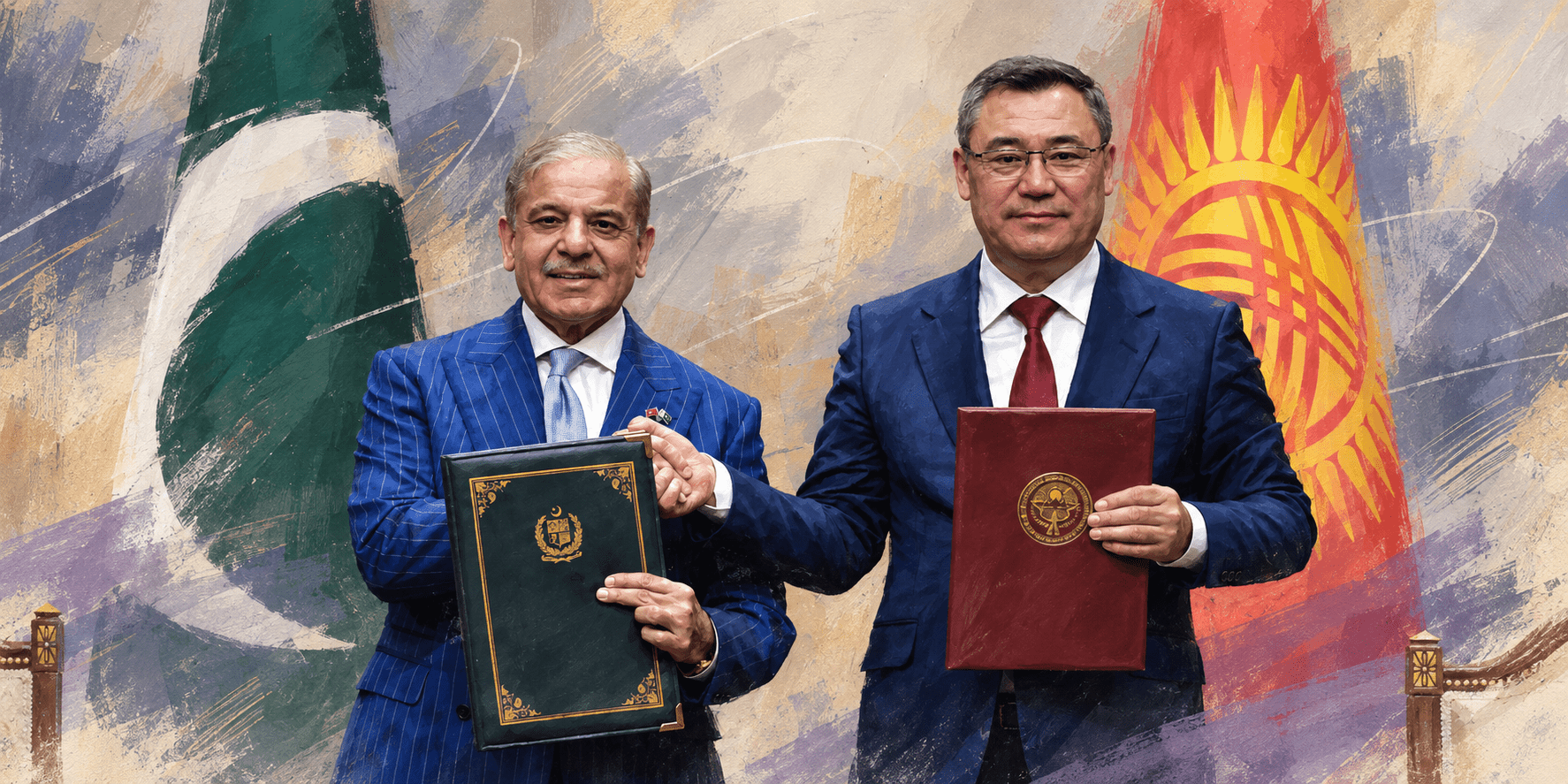
President Sadyr Japarov emphasized the economic benefits, casting the Joint Statement with Pakistan as a means of bringing greater resources and opportunities to the Kyrgyz people. “The economy should become the foundation of the Kyrgyz-Pakistani partnership,” he told reporters after the talks.
Prime Minister Sharif similarly argued that current trade was “not a patch on our friendship, our brotherhood and our very strong relations.” In other words, Sharif thinks that the level of trade between Pakistan and Kyrgyzstan is far too low compared with the strength of their political and diplomatic relationship.
The Joint Statement of Japarov and Sharif reads that the two governments “agreed to expand industrial and investment cooperation in the fields of mining and processing industries, agriculture, food, textile and light industries, pharmaceuticals, the halal industry and digital technologies, with particular emphasis on establishing joint ventures, localizing production, exchanging technologies and implementing mutually beneficial investment projects.”
The leaders also agreed to promote the Tamchy Special Financial Investment Territory as a platform for international investment, fintech, innovation, and global business. Kyrgyzstan has pushed this priority hard in recent years, with Tamchy SFIT Chairman and Deputy Chairman of the Cabinet of Ministers Ayaz Baetov and Tamchy SFIT Deputy Chairman and Minister of Economy and Commerce Bakyt Sydykov spearheading the effort.
The Trade Picture
If historical patterns are indicative of future behavior, growth in trade over the next two years points toward pharmaceuticals (already Kyrgyzstan’s largest import category from Pakistan, at over $6 million of roughly $14 million U.S. dollars in 2025), textiles and ready-made garments (Pakistan’s largest global export sector), dried fruit, rice and other agricultural goods, and a newer category: virtual assets and engagement in the digital and IT space.
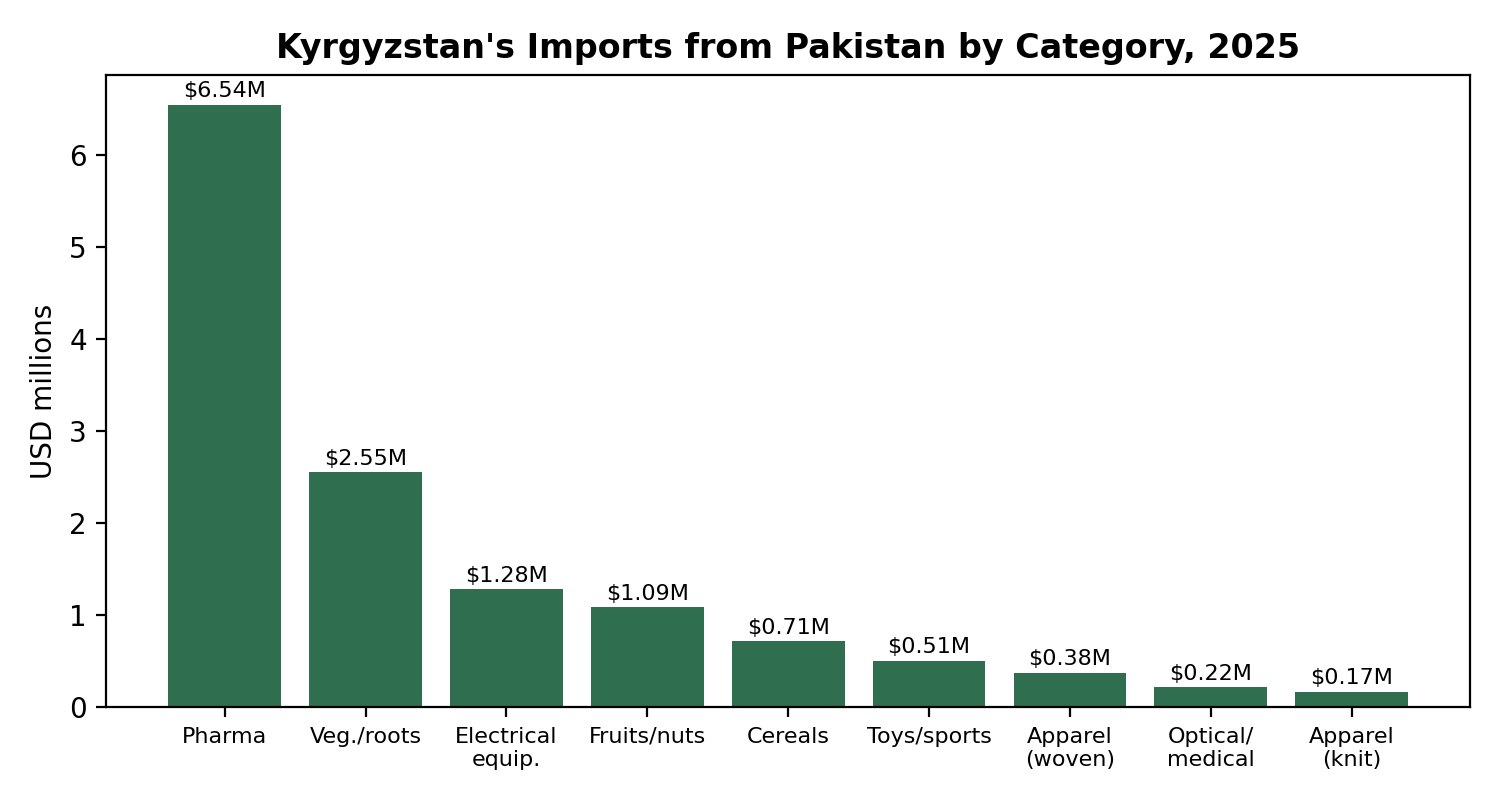
Trade figures: UN Comtrade via TradingEconomics.com, 2025 data.
Kyrgyzstan’s side of the ledger is thin by comparison. Its exports to Pakistan totaled $1.6 million in 2025, led by mineral fuels at about $719,000. Raw hides and leather accounted for about $341,000.
It is worth being precise about what this agreement actually does. It does not describe $200 million of commerce that will simply appear. The Joint Statement seeks to spur that trade by fixing transit problems, which touch, then, on geoeconomics and unresolved territorial issues.
Kyrgyz officials have emphasized improving logistics and pointed to Pakistan’s Arabian Sea ports as a route to global markets. The tested route runs through western China and across the Khunjerab Pass, following the Karakoram Highway to Sost dry port in Gilgit-Baltistan, administered by Pakistan and claimed by India, then on to Karachi. Kyrgyzstan already tested the route’s feasibility with a pilot shipment in April 2026, under the existing 1995 Quadrilateral Traffic and Transit Agreement, signed by Pakistan, China, Kyrgyzstan and Kazakhstan.
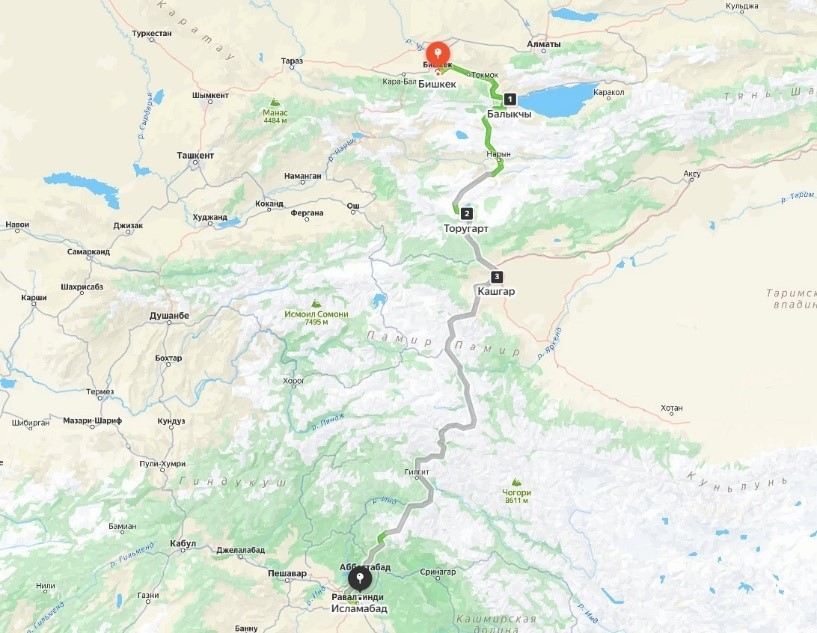
Karakoram Highway: The route starts in Bishkek going through Torugart, Kashkar, Hungerab, Islamabad which then go on to Pakistan’s seaports(3,300 km) Source: Ministry of Transport and communications of the Kyrgyz Republic.
The Kyrgyzstan-Pakistan Joint Statement says the transit trade agreement will help in “turning both countries into important transport hubs across South Asia and Central Asia.” Pakistan is seeking to expand its role as a transit hub; Kyrgyzstan is seeking access to the sea.
To be clear, India regards Gilgit-Baltistan as part of its territory under Pakistani occupation. Pakistan, meanwhile, has proposed “provisional provincial” status for the region — which, it says, would let Gilgit-Baltistan’s residents elect representatives to Pakistan’s National Assembly and gain federal-level representation. These lands have been disputed since the First Kashmir War (1947–48), fought at the time of the partition of British India.
West Asia
The war in West Asia strengthens the logic for a Bishkek to Karachi land route (3,300 km) rather than weakens it. It’s always good to diversify one’s trading patterns and partners.
Since early 2026, the war involving Iran, the United States and Israel has disrupted shipping through the Strait of Hormuz. This summer, Yemen’s Houthis also announced a blockade targeting Saudi-linked shipping. These disruptions strengthen the case for alternative routes.
India-backed Chabahar lies outside Hormuz, on the Gulf of Oman, but still requires transit through Iran. A corridor through western China and the Karakoram Highway to Karachi would avoid transit through Iranian territory. It would not automatically avoid Bab el-Mandeb, which depends on the onward destination. The Pakistani route could therefore become comparatively more attractive for Bishkek the longer the conflict in West Asia continues.
Seen from Delhi’s perspective, $200 million is not, on its own, a meaningful trade figure. What matters is Pakistan’s attempt to position itself as a South Asian gateway for Central Asian trade, alongside India’s existing ties with Bishkek and investment in Chabahar.
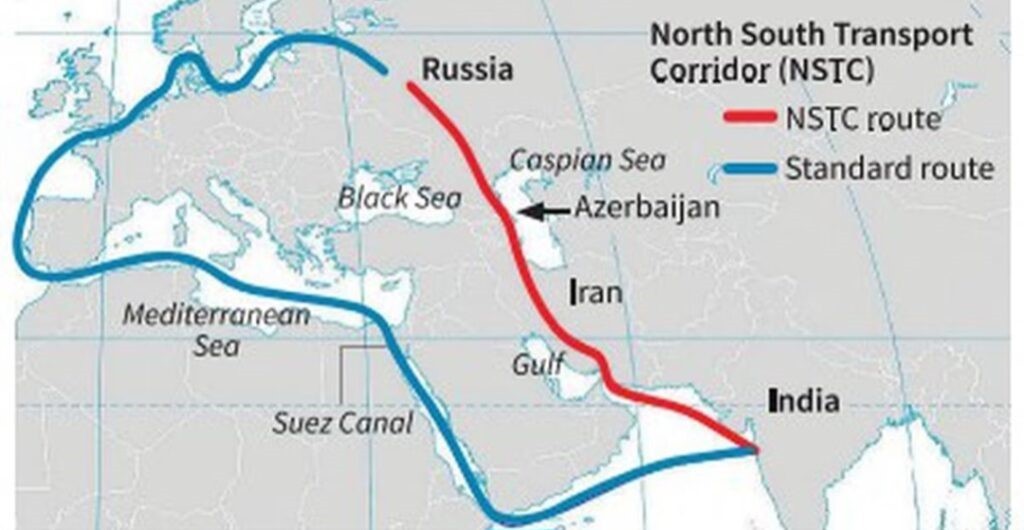
The International North South Transport Corridor – Global Defense News – GSDN
Indo-Kyrgyz Relations
Kyrgyzstan and India have a strategic partnership established in 2019. At the SCO summit last week, Prime Minister Modi said connectivity initiatives must respect national sovereignty and territorial integrity. Given the scale of trade potential across Eurasia, there’s plenty of room for both India and Pakistan to trade with Kyrgyzstan.
While India and Pakistan jockey for weight across Central Asia, the real story at this year’s SCO summit was Bishkek — and its skillful navigation of trade issues amid regional rivalries.
Bishkek fully embraces the SCO’s mantra of resolving disagreements peacefully before they escalate. Member states have committed to foreign relations that “exclude bloc-based and confrontational methods of addressing international and regional development issues,” favoring dialogue over confrontation — and Bishkek understands that this is what matters.
Opening the summit, President Japarov reinforced that same diplomatic raison d’être, telling fellow leaders that the SCO “must remain free from bloc-based thinking and confrontation” and must instead serve as a platform for building trust and stability — the sine qua non for long-term trade and economic development.
If smart diplomacy prevails and all sides stay focused on business, the ambitious $200 million Kyrgyz-Pakistan target may yet be within reach. Only time will tell.