Kazakhstan’s Tokayev in France: It’s All About Nuclear Energy
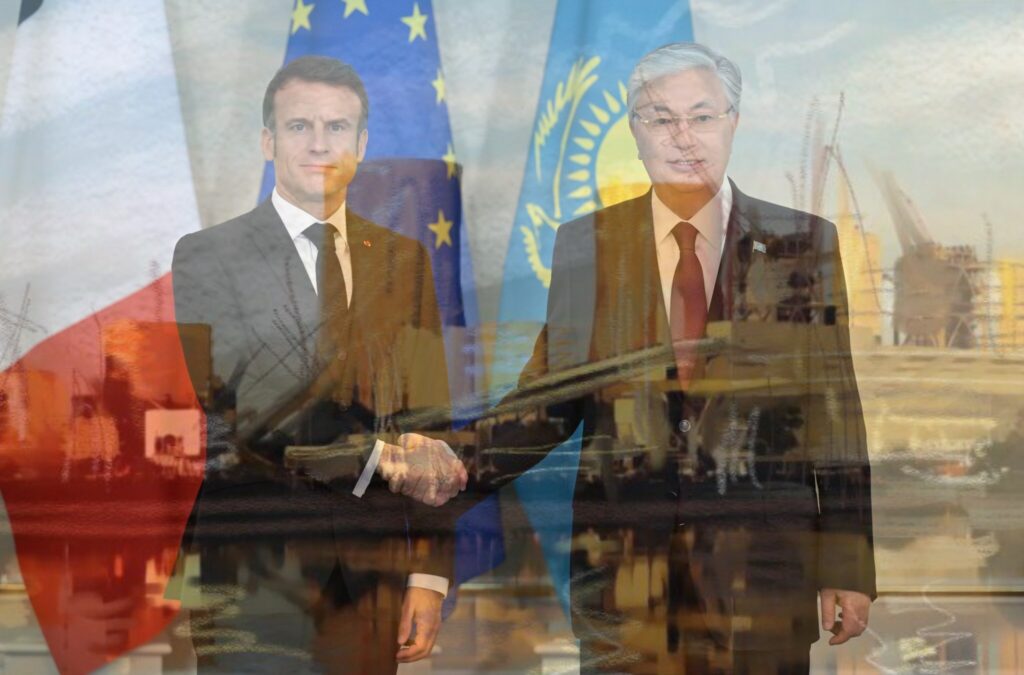
For France – a country that gets around 70% of its electricity from nuclear energy – Kazakhstan’s decision to build its first nuclear power plant presents an ideal opportunity to strengthen economic ties with the Central Asian state. For Astana, potential cooperation with French nuclear corporations could help reduce dependence on Russia and its State Nuclear Energy Corporation, Rosatom. But will things really go that smoothly? In November 2023, following the meeting between Kazakh President Kassym-Jomart Tokayev and his French counterpart Emmanuel Macron, in Astana, it became clear that, for Paris, establishing a strong nuclear partnership with the largest Central Asian nation was the top priority with regard to Kazakhstan. The following year, Tokayev flew to Paris for another round of talks with Macron. Reports suggest that nuclear cooperation was once again one of the key topics the two leaders discussed. On November 4, a day prior to the Macron-Tokayev summit, French and Kazakh officials signed 24 documents on cooperation worth $2 billion. Unsurprisingly, energy was a central focus. Kazakhstan agreed to establish closer ties with two French nuclear giants: Orano and Électricité de France (EDF). According to Gabidulla Osspankulov, Chairman of the Investment Committee of the Kazakh Foreign Ministry, Orano’s great experience in uranium extraction makes it a key partner for Astana. That is why the former Soviet republic aims to use the company’s technologies and experience in uranium production in Kazakhstan. Ospankulov also expects both Orano and EDF to be part of a consortium that will build the nuclear power plant in the Central Asian country. Paris, on the other hand, is likely seeks to not only be involved in the construction of the nuclear facility, but also to get Kazakhstan’s spent nuclear fuel for reprocessing. In exchange, Astana – possibly the world’s largest uranium producer – can increase its uranium exports to France. From the French perspective, such an arrangement would be very beneficial, especially after Niger's military government revoked Orano’s permit to operate at its Imouraren uranium mine – one of the biggest in the world. The problem, however, lies in geography and logistics. On the eve of the Macron-Tokayev summit, the French train manufacturer Alotom and the Kazakhstan Temir Zholy Electric Locomotive Assembly Plant signed a deal on the supply of 117 French-made freight electric locomotives, weighing up to 9,000 tons, to the former Soviet republic. Will they be used for the transport of Kazakh uranium to France? Russia and China, as the Central Asian nation’s giant neighbors, could easily, under any pretext, block the transport of Kazakh nuclear materials through their territories to Europe. Rail remains the dominant mode of transport for Kazakhstan’s uranium exports, but its reliance on Russian and Chinese routes poses a strategic challenge for Astana. To avoid using the two nations’ railways, Astana would have to boost uranium and potentially also spent nuclear fuel exports via the Caspian Sea Route, primarily through the Middle Corridor. It is, therefore, no surprise that modernization of this network remains Kazakhstan’s primary objective. But...