• KGS/USD = 0.01144 0%
  • KZT/USD = 0.00215 0%
  • TJS/USD = 0.10599 -0.28%
  • UZS/USD = 0.00008 0%
  • TMT/USD = 0.28571 0%
  • KGS/USD = 0.01144 0%
  • KZT/USD = 0.00215 0%
  • TJS/USD = 0.10599 -0.28%
  • UZS/USD = 0.00008 0%
  • TMT/USD = 0.28571 0%
  • KGS/USD = 0.01144 0%
  • KZT/USD = 0.00215 0%
  • TJS/USD = 0.10599 -0.28%
  • UZS/USD = 0.00008 0%
  • TMT/USD = 0.28571 0%
  • KGS/USD = 0.01144 0%
  • KZT/USD = 0.00215 0%
  • TJS/USD = 0.10599 -0.28%
  • UZS/USD = 0.00008 0%
  • TMT/USD = 0.28571 0%
  • KGS/USD = 0.01144 0%
  • KZT/USD = 0.00215 0%
  • TJS/USD = 0.10599 -0.28%
  • UZS/USD = 0.00008 0%
  • TMT/USD = 0.28571 0%
  • KGS/USD = 0.01144 0%
  • KZT/USD = 0.00215 0%
  • TJS/USD = 0.10599 -0.28%
  • UZS/USD = 0.00008 0%
  • TMT/USD = 0.28571 0%
  • KGS/USD = 0.01144 0%
  • KZT/USD = 0.00215 0%
  • TJS/USD = 0.10599 -0.28%
  • UZS/USD = 0.00008 0%
  • TMT/USD = 0.28571 0%
  • KGS/USD = 0.01144 0%
  • KZT/USD = 0.00215 0%
  • TJS/USD = 0.10599 -0.28%
  • UZS/USD = 0.00008 0%
  • TMT/USD = 0.28571 0%

Viewing results 1 - 6 of 31

CAREC Ministers Approve Climate Action Plan and Launch Regional Climate Fund

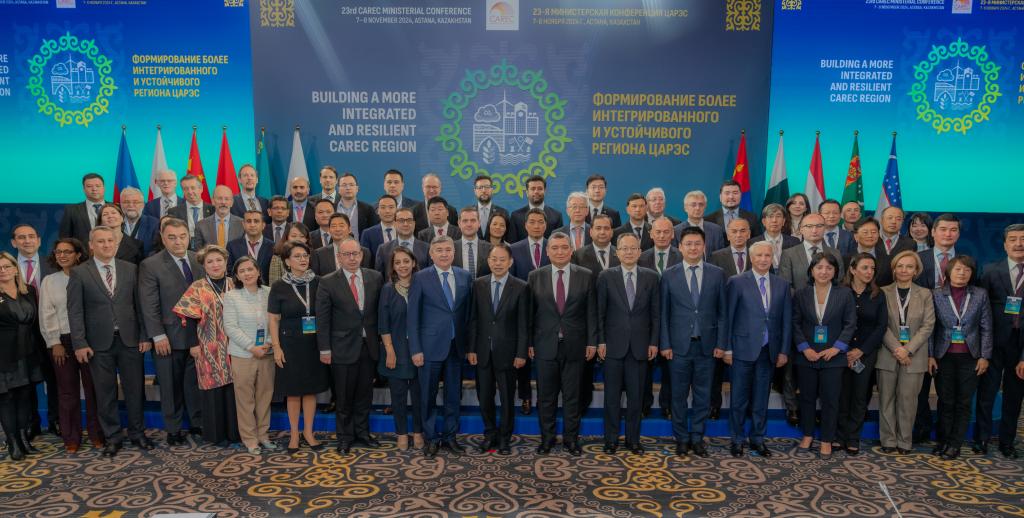
At the 23rd CAREC Ministerial Conference held in Astana on November 8, member countries of the Central Asia Regional Economic Cooperation (CAREC) Program—Afghanistan, Azerbaijan, China, Georgia, Kazakhstan, Kyrgyzstan, Mongolia, Pakistan, Tajikistan, Turkmenistan, and Uzbekistan—endorsed a new Climate Change Action Plan (CCAP) and launched the CAREC Climate and Sustainability Project Preparatory Fund (CSPPF). These initiatives aim to strengthen regional collaboration on climate resilience, low-carbon growth, and sustainable development. The CAREC Program is a partnership of 11 countries and development partners that promotes sustainable development through regional cooperation, with the Asian Development Bank (ADB) hosting the CAREC Secretariat. In his address at the conference, ADB President Masatsugu Asakawa stated, “The approval of the CAREC Climate Change Action Plan and the establishment of the Climate and Sustainability Project Preparatory Fund are significant milestones in our collective efforts to address climate change. By working together, we can build resilient infrastructure, develop early warning systems, and create a greener future powered by renewable energy.” The CCAP, covering the period from 2025 to 2027, prioritizes initiatives aligned with the CAREC Climate Change Vision and focuses on four main areas to address climate challenges in the region. It aims to enhance climate risk preparedness, strengthen the water-energy-food nexus, promote low-carbon growth by reducing emissions and expanding renewable energy, and create a CAREC climate platform. The CSPPF will support CAREC countries in developing viable regional climate projects that align with their commitments under the Paris Agreement. On November 8, ADB signed fund contribution agreements with China’s Ministry of Finance and South Korea’s Ministry of Economy and Finance, generating an initial $5 million in funding for the CSPPF. Speaking at the Ministerial Conference, Kazakhstan’s Prime Minister Olzhas Bektenov highlighted the CAREC Program’s significance for Central Asia, noting that over the past 20 years, it has mobilized about $51 billion for the region, with more than $9 billion invested in Kazakhstan. During his visit to Kazakhstan, ADB’s Asakawa met with President Kassym-Jomart Tokayev to discuss ongoing cooperation and future initiatives. From 1994 to 2024, ADB financed projects in Kazakhstan valued at approximately $7 billion. Notably, ADB participated in the construction of the Western Europe–Western China highway corridor and the reconstruction of the Aktobe–Kandyagash road.

Project To Support Women and Youth Launched in Turkmenistan

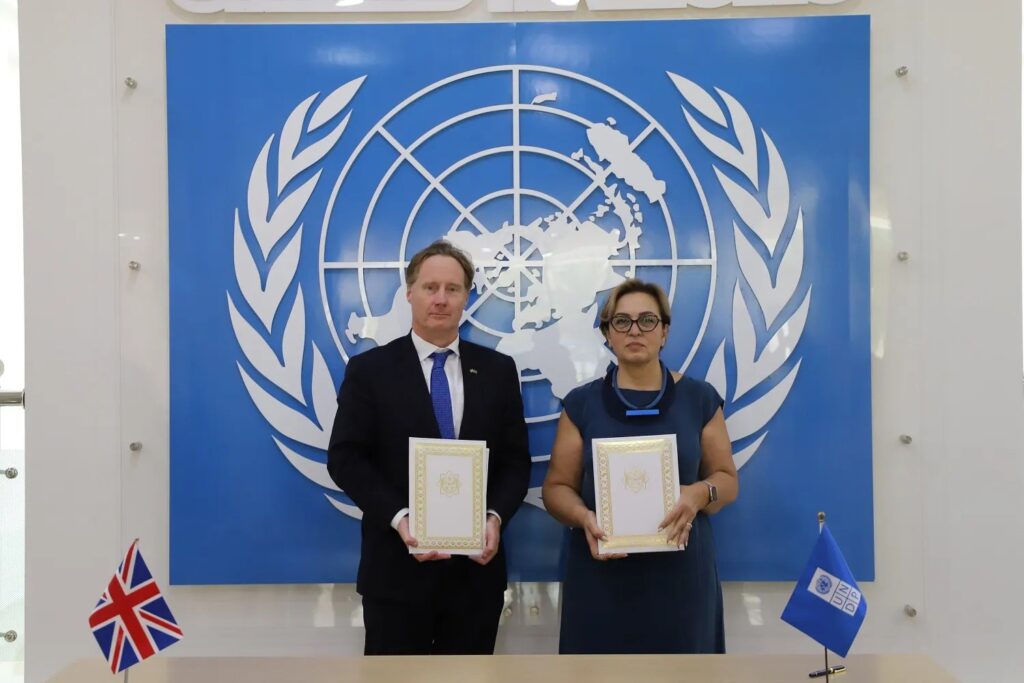
A new project developed by the United Nations Development Program (UNDP) in cooperation with the British Embassy has been launched in Turkmenistan to support the country's economic diversification and empowerment of women and youth. The project aims to stimulate sustainable economic growth and increase Turkmenistan's global competitiveness by developing a creative and innovative economy. Narine Sahakyan, UNDP Resident Representative in Turkmenistan, emphasized the importance of unlocking the creative sector's potential to achieve economic prosperity. She said stimulating entrepreneurship and innovation will open new economic diversification and growth opportunities. British Ambassador to Turkmenistan, Stephen Conlon also spoke about the importance of the creative economy, noting the UK's experience in this area. Conlon stated that the creative sector contributes to economic growth, strengthens national identity, and supports local communities, especially in rural areas. Within the project framework, the UNDP plans to launch recommendations for the development of the creative economy and support for entrepreneurship and innovation. One of the key events will be a forum on the creative economy, which will bring together representatives of the government, international organizations, and businesses. The forum will be a platform within which to share experiences and discuss legislative measures to support the creative sector. The United Nations Development Program (UNDP) is actively cooperating with Turkmenistan on various projects aimed at sustainable development. One of the key projects deals with managing the consequences of the Aral Sea crisis. Together with the Government of Turkmenistan, the UNDP is implementing a project aimed at preserving ecosystems in the Aral Sea basin, improving the use of land and water resources, and increasing the sustainability of local communities. Another important project is Digital Transformation, which aims to help Turkmenistan implement advanced inter-agency data exchange systems to improve the efficiency of public services.

Over 200 UNDP Projects Implemented in Kazakhstan

During a meeting between Kazakhstan's Vice Prime Minister, Nurlan Baibazarov and Katarzhina Vaviernia, permanent representative of the United Nations Development Program (UNDP) in Kazakhstan, discussions focused on UNDP projects aimed to promote the economic development of UN member states. To date, over  200 projects worth over $200 million have been implemented in the country with support from the government of Kazakhstan, public organizations, the business sector, UN agencies, and other partners.  Broad ranging, the initiatives include the development of small and medium businesses, green energy, agriculture, and ecotourism. Nurlan Baibazarov  noted that Kazakhstan is ready to present the third Voluntary National Review on implementing the Sustainable Development Goals at the High-Level Political Forum in New York in 2025 and stated: "Achieving the Sustainable Development Goals is a national priority for Kazakhstan. We pay great attention to discussing the implementation of the goals at different platforms to find optimal solutions for our state's sustainable development. The voluntary review will objectively reflect the country's main achievements, challenges, and emerging problems." In addition, it was noted that Kazakhstan is interested in strengthening cooperation with UNDP, and in particular,  the successful implementation of the UNDP Country Program for 2021-2025.

Dushanbe: Water for Sustainable Development

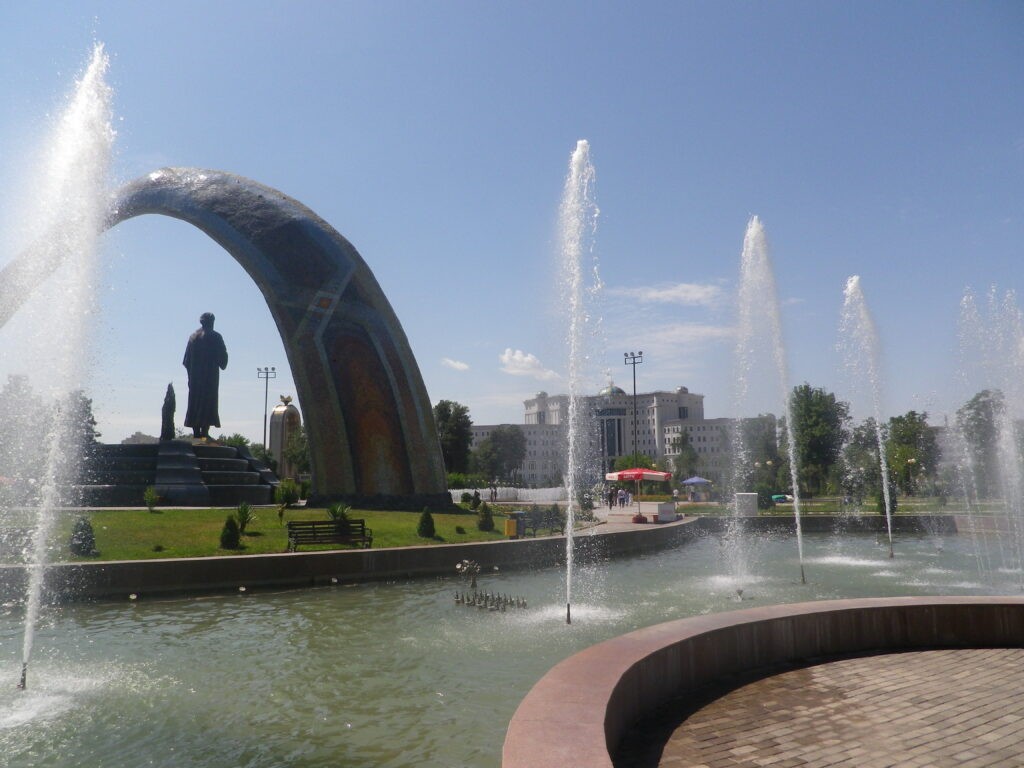
Tajikistan is collaborating with the United Nations to host an international meeting next month about water, an increasingly scarce resource in Central Asia. The June 10-13 conference will promote the role of water in sustainable development, building on two similar gatherings in Dushanbe in 2018 and 2022. It follows a climate change conference currently underway in Almaty, Kazakhstan. Delegates to the Tajikistan meeting will talk about safe drinking water and sanitation, cross-border cooperation on water resources and the impact of climate change. Academic researchers, government officials, representatives of financial institutions and civil society members are expected to attend.

Kazakhstan’s President Commends Growing Cooperation Between Central Asian States

On May 16, Kazakhstan's President Kassym-Jomart Tokayev hosted the first meeting in Astana of Security Council secretaries from Kazakhstan, Kyrgyzstan, Tajikistan and Uzbekistan, and the military attaché of the Embassy of Turkmenistan in Kazakhstan. In his opening address, Tokayev announced that the aim of the meeting was to provide an effective platform for the collaborative prevention of external and internal challenges and threats, and to develop necessary response measures. The Kazakh leader began by noting the steady growth of trade and economic cooperation between the Central Asian countries and stated that over the past five years, intraregional trade  had risen by 80 percent to exceed $10 billion.  He explained that large regional projects not only bring tangible mutual benefits, but also change the entire configuration of the Central Asian economy. The development of transport and logistics potential is becoming a new reference point for the rapid development of the region. Cultural and humanitarian ties have also intensified, contributing to the further rapprochement of the Central Asian states. Returning to the pressing issue of the need to join forces in countering transboundary challenges and threats, he announced: “First of all, we are talking about the fight against international extremism and terrorism, drug trafficking, and arms trafficking. In this regard, Afghanistan must be the focus of our common attention. Complex multidirectional processes are now evident in this country. Whilst signs point to a stabilization and revival of the economic situation, there remain high risks associated with the activity of international terrorist organizations, as evidenced by the bloody terrorist attack in the Moscow region [in March]. In our opinion, one of the strategic tasks at present is the active involvement of Afghanistan in regional ties. And for this, much depends on the coordinated position of our countries. We consider it urgent to create a UN Regional Center for Sustainable Development Goals for Central Asia and Afghanistan in our country.” Tokayev expressed his satisfaction with the growing regional cooperation and mutual trust and concluded:  “Some 10 years ago, there was no such situation in the Central Asian region. Now heads of state, heads of government, secretaries of the Security Councils, heads of law enforcement agencies, not to mention heads of economic departments, closely interact with each other. And this is a very good sign that the situation in the Central Asian region is moving towards sustainable development.”    

Central Asia as an Emerging Economic Region

Central Asia, spanning an area from the Caspian Sea in the west to China in the east and from Afghanistan in the south to Russia in the north, is rapidly emerging as a significant economic block. Comprising five post-Soviet states — Kazakhstan, Kyrgyzstan, Tajikistan, Turkmenistan, and Uzbekistan — this region is distinguished by its rich natural resources and strategic geographic position, as well as its natural beauty and cultural heritage. With a combined population of around 75 million people, Central Asia has emerged as a dynamically developing market that is increasingly attracting global interest. The transformation unfolding in Central Asia holds both promise and significant challenges for its residents and foreign investors alike. This shift is driven by increasing calls for political reform, the dynamism of a youthful population, and an imperative for sustainable development alongside the pressing need to diversify economic bases.   Structural changes following independence in 1991 set the stage for robust growth from 2000s onward Following the collapse of the Soviet Union in 1991, Central Asian countries faced the challenge of transitioning from centrally-planned to market-oriented economies. This period was marked by significant economic difficulties across the region including negative GDP growth and hyperinflation, compounded by the complexities of privatization, legal reforms, and both social and political instability. The nations responded with different development strategies aimed at market liberalization, infrastructure improvement, and the utilization of natural resources. By 2000, Central Asia experienced a noticeable economic resurgence, marking a striking contrast to the conditions in 1991. In that year, Uzbekistan's GDP growth was at -0.5%, Kyrgyzstan at -7.9%, and Kazakhstan at -11%. A decade later, these countries reported positive growth rates of 4.2%, 5.3%, and 13.5%, respectively. This remarkable turnaround can be attributed to the "low base effect," where the initially low economic indicators set the stage for significant improvements over time. The total GDP of Central Asian countries has grown seven times since the beginning of the 2000s. In comparison with the global economic growth rate of +2.6% annually, the Central Asian region grew by an average of 6.2% between 2000 and 2023 according to IMF data. All Central Asian states are forecasted to outpace the IMF’s projected growth rate for emerging markets and developing economies 2024 which stands at 4.2%; however, actual growth will depend on reforms and foreign investment. Kazakhstan has set the highest growth goal with a five-year target GDP increase to $450 billion, which would require an achievable but challenging 6% annual growth. As illustrated below, Kazakhstan stands out as the economic powerhouse of Central Asia with a GDP almost 1.5 times that of all the other countries combined.     Labor markets: Optimal demographics for growth and innovation According to United Nations data, approximately 75 million people live in Central Asia, representing 1% of the world’s population. Relative to the global median age, all of Central Asia boasts a young population. A youthful population fuels economic growth by replenishing the workforce, driving innovation, and expanding consumer markets. It supports older demographics...