• KGS/USD = 0.01144 0%
  • KZT/USD = 0.00204 0%
  • TJS/USD = 0.10760 0.28%
  • UZS/USD = 0.00008 0%
  • TMT/USD = 0.28612 0.42%
  • KGS/USD = 0.01144 0%
  • KZT/USD = 0.00204 0%
  • TJS/USD = 0.10760 0.28%
  • UZS/USD = 0.00008 0%
  • TMT/USD = 0.28612 0.42%
  • KGS/USD = 0.01144 0%
  • KZT/USD = 0.00204 0%
  • TJS/USD = 0.10760 0.28%
  • UZS/USD = 0.00008 0%
  • TMT/USD = 0.28612 0.42%
  • KGS/USD = 0.01144 0%
  • KZT/USD = 0.00204 0%
  • TJS/USD = 0.10760 0.28%
  • UZS/USD = 0.00008 0%
  • TMT/USD = 0.28612 0.42%
  • KGS/USD = 0.01144 0%
  • KZT/USD = 0.00204 0%
  • TJS/USD = 0.10760 0.28%
  • UZS/USD = 0.00008 0%
  • TMT/USD = 0.28612 0.42%
  • KGS/USD = 0.01144 0%
  • KZT/USD = 0.00204 0%
  • TJS/USD = 0.10760 0.28%
  • UZS/USD = 0.00008 0%
  • TMT/USD = 0.28612 0.42%
  • KGS/USD = 0.01144 0%
  • KZT/USD = 0.00204 0%
  • TJS/USD = 0.10760 0.28%
  • UZS/USD = 0.00008 0%
  • TMT/USD = 0.28612 0.42%
  • KGS/USD = 0.01144 0%
  • KZT/USD = 0.00204 0%
  • TJS/USD = 0.10760 0.28%
  • UZS/USD = 0.00008 0%
  • TMT/USD = 0.28612 0.42%

Viewing results 1 - 6 of 19

Central Asia Confronts Iran War Fallout as Trade Routes and Citizens Come Under Pressure

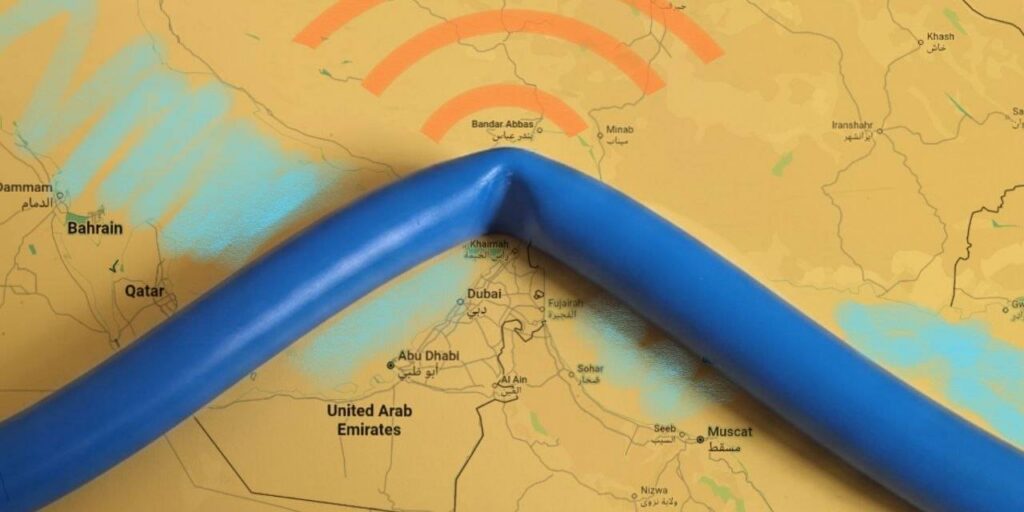
Central Asian governments are racing to protect citizens and keep trade moving as the U.S.–Israel war with Iran widens across the Middle East, disrupting airspace and driving up shipping and energy costs. The effects of the conflict are reaching a region that has spent the past four years trying to diversify trade routes and reduce dependence on maritime chokepoints, now disrupted by rising risk and transport volatility. The threat to its citizens has become immediate for Central Asian governments. On March 1, Kazakhstan’s Foreign Ministry said that it was working on evacuation measures for its nationals in escalation zones and urged citizens to follow official updates from diplomatic missions. It also advised Kazakh citizens in Iran to explore overland exits, including via Azerbaijan, Armenia, Türkiye, and Turkmenistan, given airspace closures and flight suspensions. Uzbekistan’s Foreign Ministry issued safety guidance for citizens in the United Arab Emirates, urging them to avoid crowded areas and adhere to official security directives as tensions in the region escalated. Tajik nationals have already been among those leaving Iran through Azerbaijan’s Astara crossing, with The Times of Central Asia reporting yesterday that five civilians from Tajikistan are among foreigners from numerous countries who have crossed from Iran into Azerbaijan. For Central Asia, the crisis is hitting both its people and its trade routes. The same border crossings used for evacuations sit on corridors that carry freight and connect the region to southern markets. Azerbaijan’s role as a transit hub has grown sharply over the past decade, but in this crisis, it is also a pressure valve for land exits from Iran. As of March 2, more than 300 people have been evacuated from Iran via Azerbaijan. Any tightening at borders or disruptions to rail and road links around the Caspian immediately affect how Central Asian states move both people and cargo. Oil and shipping costs are rising sharply. On March 1, oil prices jumped by around 10%, with analysts warning prices could move toward $100 a barrel if disruption in the Strait of Hormuz worsens. The impact across Central Asia has been uneven. Kazakhstan may see stronger export revenues in the short term due to higher crude prices, but that gain comes with volatility and increased import costs across the region. ING stated that stronger commodity prices could improve the external balance of fuel exporters such as Kazakhstan, while increasing inflation risks for importers. Shipping poses a deeper structural risk. Tanker owners and traders have slowed or suspended transits through the Strait of Hormuz because of security fears and insurance constraints, even without a formal blockade. Higher risk premiums feed directly into freight rates on the routes Central Asian exporters use to reach Europe, the Gulf, and South Asia. When insurers reprice war risk, smaller shippers and landlocked economies absorb the cost first. Iran is central to Central Asia’s trade geography. It serves as a transit state for the southern corridor linking Central Asian rail and port networks to Türkiye, Europe, and the Gulf. Central Asian...

Icy Relations Between Pakistan and Afghanistan Threaten Central Asian Trade Plans

On November 25, the Afghan authorities accused Pakistan of a new round of airstrikes in eastern Afghanistan. The bombing killed nine children and a woman, injuring several others. The attacks are the latest escalation in rapidly worsening tensions between Islamabad and the Taliban-led government in Kabul, with key border crossings currently closed, and Afghan refugees being expelled from Pakistan. At the heart of the crisis is Pakistan’s claim that Kabul is providing support to the Tehrik-e-Taliban Pakistan (Pakistani Taliban, or TPP), a militant group seeking to topple Pakistan’s government and impose its strict interpretation of Islamic law. The fallout may ripple beyond bilateral relations, with significant consequences for Central Asian trade, particularly the Pakistan-Afghanistan-Uzbekistan plan for a Trans-Afghan railway. The planned 647-kilometer line is set to connect the northern Afghan city of Mazar-e-Sharif with Peshawar in Pakistan. When combined with existing infrastructure, this will mean that trains can travel from southern Uzbekistan all the way to the Pakistani ports of Gwadar and Karachi, granting landlocked Uzbekistan and Afghanistan a long-sought gateway to the Indian Ocean. But mounting instability, along with Islamabad’s willingness to shut borders as leverage, may now place the project in serious jeopardy. “The moment a state weaponizes geography, every financier in Tashkent, Moscow, or Beijing prices in risk, delays commitments, and quietly explores alternative alignments,” Anant Mishra, Marie Skłodowska-Curie Research Fellow at the International Centre for Policing and Security at the University of South Wales, told The Times of Central Asia. So, what are the prospects for salvaging the Trans-Afghan railway? How can Pakistan and Afghanistan de-escalate? And what does this turmoil mean for Central Asia’s wider economic ambitions? A sudden frost On July 17, Uzbekistan’s Transport Minister Ilkhom Makhkamov, Pakistan’s Railway Minister Muhammad Hanif Abbasi, and Afghanistan’s acting Public Works Minister Mohammad Esa Thani signed an agreement to conduct a feasibility study for the proposed railway. Many hoped the railway would presage a new era of fraternal relations between Central and South Asia. “Civil society, the intelligentsia, media, and business community of Pakistan have been loudly calling for intimate trade relations with the Central Asian Republics,” Khadim Hussain, Research Director at the Centre for Regional Policy and Dialogue (CRPD), Islamabad, told TCA. For Uzbekistan, which has aggressively pursued diversification of trade routes to reduce reliance on transit through Iran and Kazakhstan, the project promised a cheaper, faster corridor to global markets. According to Nargiza Umarova, Head of the Center for Strategic Connectivity at the Institute for Advanced International Studies, University of World Economy and Diplomacy in Tashkent, the trans-Afghan is one of two high-priority transport projects, along with the China-Kyrgyzstan-Uzbekistan railway – work on which began in April 2025. But the ink had barely dried on the July accord when tensions between Afghanistan’s Taliban government and Islamabad began escalating, throwing the ambitious railway into doubt. [caption id="attachment_40211" align="aligncenter" width="1600"] Uzbek passenger and freight trains parked in Andijan; image: TCA, Joe Luc Barnes[/caption] In early October, Pakistan launched an airstrike in Kabul targeting the leader of the...

Central Asia’s Road to the Southern Seas: A Search for Stability

India has confirmed that it received a six-month sanctions waiver from the United States for its involvement in developing Iran’s Chabahar port. According to The Times of India, the decision followed intensive diplomacy by New Delhi, which convinced Washington that Chabahar provides India’s only practical overland access to Central Asia that avoids Pakistan. Through Chabahar, India is building a land-based counterpart to the China-Pakistan Economic Corridor, creating an alternative axis linking the Indian Ocean with Eurasia while bypassing Islamabad and Beijing. The exemption, valid until April 2026, gives India room to negotiate with Washington. For Central Asia, the episode reflects a broader challenge: choosing viable routes to the southern seas. Current debates about “Afghan transit” focus largely on the Trans-Afghan Railway and the so-called Kabul corridor connecting northern Afghanistan with Pakistan’s ports. Yet Afghanistan’s transport network is forming along multiple lines. Alongside the eastern route, a western corridor from Herat to Kandahar and Spin Boldak is also developing, offering access both to Pakistan and to Chabahar. The integration of western Afghanistan’s infrastructure with Iran’s transport network makes this corridor more reliable under today’s political and security conditions. It aligns with projects pursued by Iran, Turkmenistan, and Afghanistan and positions Herat as a major hub. It is also close to the North–South Transport Corridor, the Lapis Lazuli and Middle Corridors, and the Caspian and Persian Gulf regions. The planned Mazar-i-Sharif–Herat line fits the logic of the Five Nations Railway Corridor, potentially giving Tajikistan and Uzbekistan access to Chabahar and, if stability improves, to Pakistan’s ports as well. By contrast, the eastern route will remain constrained by the unstable Afghan–Pakistani border and the volatile relationship between Kabul and Islamabad. Afghanistan’s own priorities also differ from outside assumptions: the Herat–Kandahar–Spin Boldak line primarily serves as an internal transport spine linking the west and south. For Kabul, the route to Gwadar is more a political gesture than a practical goal. Some analysts note that developing the western corridor also helps rebalance the country’s economic geography toward its more diverse western regions. These dynamics strengthen the western route’s appeal. The Taliban leadership has even urged Afghan businesses to reduce reliance on Pakistani ports, signaling a structural shift in trade orientation. Both Chabahar and Gwadar face political risks. Pakistan’s transit routes pass through areas affected by insurgency, including Balochistan and Khyber Pakhtunkhwa, as well as the broader narcotics routes of the Golden Crescent. The greatest uncertainty remains the fluctuating relationship between Kabul and Islamabad. Gwadar, while technologically superior, is undermined by chronic instability. Chabahar’s capacity is more modest, but its integration with Iran’s road and rail network provides reliability. The United States adds another layer of complexity. The waiver suggests Washington is balancing its Iran sanctions regime with its strategic partnership with India. The United States is not directly involved in regional infrastructure but retains enough influence to shift the balance between the western and eastern routes. Under certain conditions, Gwadar may appear less problematic for Washington than Chabahar. At the same time, selective sanctions exemptions...

Digital Geopolitics and AI Strategy in Central Asia

Central Asia, long known as a crossroads of global trade routes, is once again emerging as a stage for strategic competition. This time, the old caravan routes have been replaced by digital highways. The new contest is over technologies and data flows. For countries in the region, especially Kazakhstan, choosing a digitalization model and an AI development strategy is no longer just a technical matter. It is a fundamental decision tied to national security and long-term competitiveness. Equally important is the “digital ideology” behind these choices, something clearly illustrated today by two giants of the Global South: China and India, each with over a billion people and very different approaches to digital growth. The Dragon's Shadow: China's Systematic Expansion in Central Asia China’s ongoing real estate crisis, rising debt, and slowing domestic demand have pushed Beijing to look outward for growth. One major tool is the Digital Silk Road, announced in 2015 as part of the Belt and Road Initiative. This long-term program aims to export Chinese digital technologies. For Central Asian states, it brings an appealing “one-stop shop” of turnkey solutions: everything from 5G mobile and 10G-PON fixed networks to smart city systems (Huawei, ZTE), surveillance platforms (Hikvision), and fintech tools (Ant Group, Tencent). The benefits come with risks. A heavy reliance on one supplier creates the danger of vendor lock-in. When an entire digital ecosystem is tied to a single foreign provider, questions of security and long-term debt become inevitable. Kazakhstan has shown flexibility by experimenting with mixed models rather than relying exclusively on Chinese systems. Competing Models: China's "Walled Garden" and India's "Digital Public Infrastructure" China: The model is centralized, built on state corporations and giant platforms. It delivers speed and scale of growth, but at the cost of strict control and regulation. The Chinese government has tightened its grip on big tech companies (Alibaba and Tencent), imposed stricter rules on the collection and use of personal data under the Personal Information Protection Law (2021), and limited the fintech divisions of major firms to prevent systemic risks. India: The state has developed India Stack, a package of open digital platforms (Aadhaar, UPI, DigiLocker) that serve as the rails for thousands of startups and services. This gave India global leadership in digital payments and created a model of open digitalization. Central Asia is already partially repeating this experience (Kazakhstan’s eGov.kz, Kaspi.kz, and the digital tenge), though without the depth and openness that made the Indian approach unique. Today, Central Asia is forming a pragmatic hybrid: Chinese hardware for rapid infrastructure, Indian logic in public services (GovTech, eGov.kz), and European regulatory standards under the GDPR (in force since 2018), which serves as a global benchmark of trust in data. This “three-axis” hybrid allows a balance between speed of implementation and regulatory control. Europe's Alternative: Global Gateway and the Digital Silk Way Europe seeks to strengthen its position in Central Asia and the South Caucasus by offering an alternative to Chinese expansion. Its key tool is the EU Global Gateway...

Central Asia Rethinks Trade Routes Amid Middle East Crisis

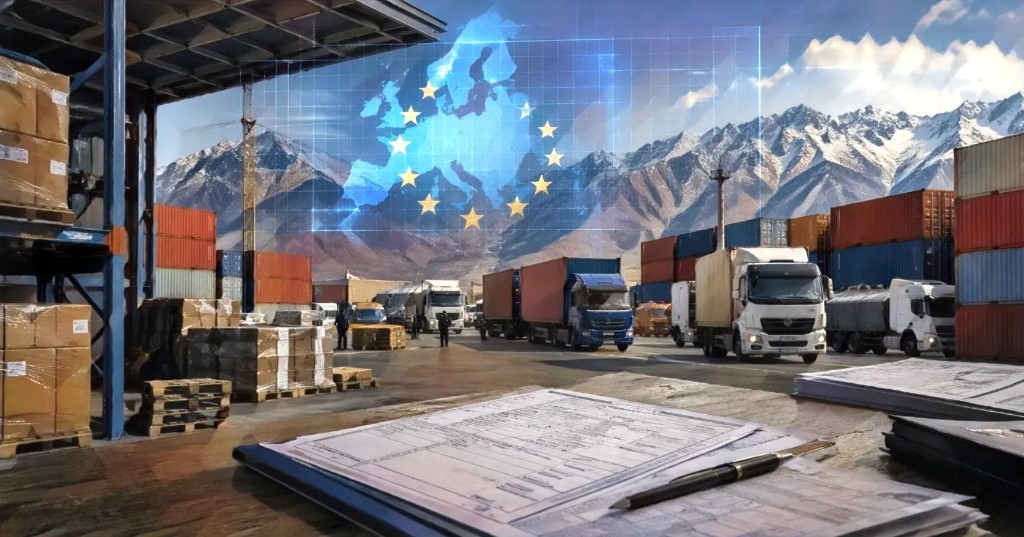
The escalating conflict between Iran and Israel is threatening to disrupt Central Asia’s southern trade and transport corridors, prompting governments in the region to reassess their export strategies. According to the Russian outlet Nezavisimaya Gazeta, Kazakhstan and Uzbekistan are exploring alternative routes to mitigate risks associated with instability in the Persian Gulf. A major concern is the potential closure of the Strait of Hormuz, a critical chokepoint for global trade. This poses a significant challenge for Kazakhstan, which relies on Iran as its sole southern railway outlet. Kazakhstan Seeks Alternative Kazakhstan’s Minister of National Economy, Serik Zhumangarin, emphasized the importance of maintaining uninterrupted cargo movement. “If rail service through Iran is disrupted, and this is our only southern route, the state is prepared to redirect cargo through alternative paths,” he said. Though exports via Iran remain relatively limited, about $350 million in 2024 and $120 million from January to May 2025, Kazakhstan had planned to expand its use of the Iranian corridor. In early June, Astana and Tehran agreed to boost wheat and barley shipments to three million tons annually. Alternatives under consideration include multimodal routes incorporating rail and ferry links across the Caspian Sea via Turkmenistan and Azerbaijan, as well as the Trans-Caspian or “Middle Corridor” connecting China to Georgia via the Caspian. Air freight is also being considered for select goods. While these alternatives involve added logistical challenges, the government has pledged support to businesses should the conflict persist. Zhumangarin reassured that rerouting exports is unlikely to significantly affect prices, noting that most of Kazakhstan’s exports are globally traded commodities whose prices are shaped by international markets. As previously reported by The Times of Central Asia, Kazakh officials had already warned of risks to southern routes. Nonetheless, Zhumangarin emphasized that contingency plans are in place and that “it’s too early to say how the situation will evolve.” Uzbekistan Focuses on Diversification Uzbek President Shavkat Mirziyoyev has likewise responded swiftly, ordering an immediate assessment of the crisis's impact on trade and transportation, and calling for urgent diversification of export routes. According to the presidential press service, transport costs could rise by as much as 30%. “The need to redirect cargo flows to safer ports and negotiate alternative trade corridors with partner countries was emphasized,” the statement said. Authorities have been instructed to support export-oriented businesses and identify new markets to help stabilize domestic prices. Until recently, Uzbekistan had been expanding trade ties with Iran, aiming to increase bilateral trade to $2 billion annually. However, these plans are now under review due to the regional instability. Experts: Southern Routes Not Yet Critical Despite the growing concerns, experts say Uzbekistan is not heavily dependent on southern corridors. Grigory Mikhailov, editor-in-chief of the logistics portal LogiStan.info, noted that most of Uzbekistan’s trade continues through Russian ports (St. Petersburg, Vladivostok, Novorossiysk) and China. “These routes are well-established, reliable, and offer predictable delivery times. Sanctions have had little to no impact on cargo passing through Russia,” Mikhailov said. He added that the Iranian route...

After High Hopes, Central Asia Views Iran Trade Routes with More Caution

Like some Central Asian neighbors, Uzbekistan is urgently reviewing possible changes to some trade routes because of conflict in the Middle East, even though that could entail sharply higher transport costs. The contingency planning follows a surge in trade talks between officials from Iran and countries in Central Asia earlier this year, prior to the intense strikes that Israel and Iran launched at each other this month. A ceasefire between Israel and Iran appeared to be holding on Wednesday, but questions remain about Iran’s ability to build a nuclear bomb even after the U.S. attacked Iranian nuclear sites. U.S. President Donald Trump said the sites were “obliterated,” but, according to some Western media organizations, a preliminary U.S. intelligence report concluded that the U.S. attacks may have only set back Iran’s nuclear program by months. A June 25 statement by the Central Intelligence Agency says that “Iran’s nuclear program has been severely damaged by the recent, targeted strikes.” Against this murky backdrop, and the partial uncertainty over Central Asia’s extensive web of trade links, Uzbekistan is reviewing transport and logistics arrangements to keep its economy and connections with international partners running as smoothly as possible. Uzbek President Shavkat Mirziyoyev discussed options with key advisers at a meeting on Monday. “The military actions that have taken place in the Middle East in recent days have further aggravated the already unstable situation. This cannot but affect Uzbekistan's foreign economic relations and access to world markets,” Uzbekistan’s presidential office said. “In particular, the need to diversify export routes and redirect cargo to other, safer ports was noted. According to preliminary estimates, this could lead to an increase in transportation costs by up to 30%. In this regard, instructions were given to coordinate alternative routes with partner countries and support export-oriented enterprises,” the presidency said. It said the trade and transport ministers, as well as other key officials, have been instructed to help business groups with export-import operations and finding new sales markets. Maintaining price stability in the domestic market and sustainable production rates are also key concerns. Last month, Uzbek and Iranian officials met in Tehran and agreed to expand trade between their countries to an annual $2 billion, four times the current amount. Iranian ports offer Central Asian exporters access to the Indian Ocean and international markets beyond. “The five Central Asian republics — Kazakhstan, Uzbekistan, Turkmenistan, Tajikistan and Kyrgyzstan — are increasingly seeking alternatives to the traditional transit routes that have tied them to Moscow or made them dependent on Chinese infrastructure,” said a commentary posted by the Begin-Sadat Center for Strategic Studies, an Israel-based group that studies Mideast security and foreign policy. “Iran offers an appealing option: a gateway to the Persian Gulf and Indian Ocean, access to European markets via Turkey, and industrial and technological partnerships that diversify the region’s economic relationships,” said the analysis, which was published on June 4, shortly before the recent round of fighting between Israel and Iran. Officials in Kazakhstan have warned of disruption to southern...