• KGS/USD = 0.01144 0%
  • KZT/USD = 0.00200 0%
  • TJS/USD = 0.10475 -0.19%
  • UZS/USD = 0.00008 0%
  • TMT/USD = 0.28490 0%
  • KGS/USD = 0.01144 0%
  • KZT/USD = 0.00200 0%
  • TJS/USD = 0.10475 -0.19%
  • UZS/USD = 0.00008 0%
  • TMT/USD = 0.28490 0%
  • KGS/USD = 0.01144 0%
  • KZT/USD = 0.00200 0%
  • TJS/USD = 0.10475 -0.19%
  • UZS/USD = 0.00008 0%
  • TMT/USD = 0.28490 0%
  • KGS/USD = 0.01144 0%
  • KZT/USD = 0.00200 0%
  • TJS/USD = 0.10475 -0.19%
  • UZS/USD = 0.00008 0%
  • TMT/USD = 0.28490 0%
  • KGS/USD = 0.01144 0%
  • KZT/USD = 0.00200 0%
  • TJS/USD = 0.10475 -0.19%
  • UZS/USD = 0.00008 0%
  • TMT/USD = 0.28490 0%
  • KGS/USD = 0.01144 0%
  • KZT/USD = 0.00200 0%
  • TJS/USD = 0.10475 -0.19%
  • UZS/USD = 0.00008 0%
  • TMT/USD = 0.28490 0%
  • KGS/USD = 0.01144 0%
  • KZT/USD = 0.00200 0%
  • TJS/USD = 0.10475 -0.19%
  • UZS/USD = 0.00008 0%
  • TMT/USD = 0.28490 0%
  • KGS/USD = 0.01144 0%
  • KZT/USD = 0.00200 0%
  • TJS/USD = 0.10475 -0.19%
  • UZS/USD = 0.00008 0%
  • TMT/USD = 0.28490 0%

Viewing results 1 - 6 of 25

Turkmenistan Effectively Bans Passengers from Taking Food Abroad

Since February, passengers departing from Turkmenistan’s capital Ashgabat have effectively been prohibited from taking food products out of the country. The restrictions reportedly apply to meat and fish products, canned goods and even bread. No official explanation has been provided. According to turkmen.news, a ban on the export of most food items was introduced at Ashgabat International Airport in February. The measures affect passengers flying to Turkey, the United Arab Emirates and other destinations. Controls are reportedly carried out before the main customs inspection, in the oversized baggage area. Only after this additional screening are travelers allowed to proceed to standard border control procedures. However, few passengers reportedly pass the initial check without issue. Eyewitnesses cited by the outlet say that many passengers are found carrying canned kaurma (meat preserved in fat), as well as sausages, smoked and salted fish, canned meat and fish, condensed milk, homemade preserves, vinegar and bread. Confiscated products must be left behind. Passengers accompanied by relatives are reportedly allowed to hand over the food to them. Those traveling alone are said to ask taxi drivers to return the items to their homes, while some leave bags on airport benches. There has been no official statement clarifying the situation. The Customs Service of Turkmenistan has not published any formal ban on the export of food products, except for sturgeon. Food items are also not listed among prohibited exports on the website of Turkmenistan Airlines. Sources cited by turkmen.news suggest that the tightened controls may be linked to cases in which Turkmen food products were confiscated at foreign airports, particularly in Istanbul and the Russian city of Kazan. In early February, more than 10 kilograms of honey and over 53 kilograms of meat were reportedly seized from Turkmen citizens in Kazan. A year earlier, turkmen.news reported increased scrutiny of passengers carrying food. At that time, checks were described as less systematic and, according to sources, were often accompanied by alleged demands for bribes rather than consistent enforcement of formal regulations. For many Turkmen students studying abroad, food brought from home is not only a matter of preference but also an economic necessity. Preserved products such as canned goods and kaurma can be stored for extended periods and significantly reduce living expenses. Turkmen food products are generally cheaper than comparable goods in Turkey, Russia or the United Arab Emirates.
Kyrgyz Official Concerned Over “High Barriers” in U.S. Visa Bond Policy

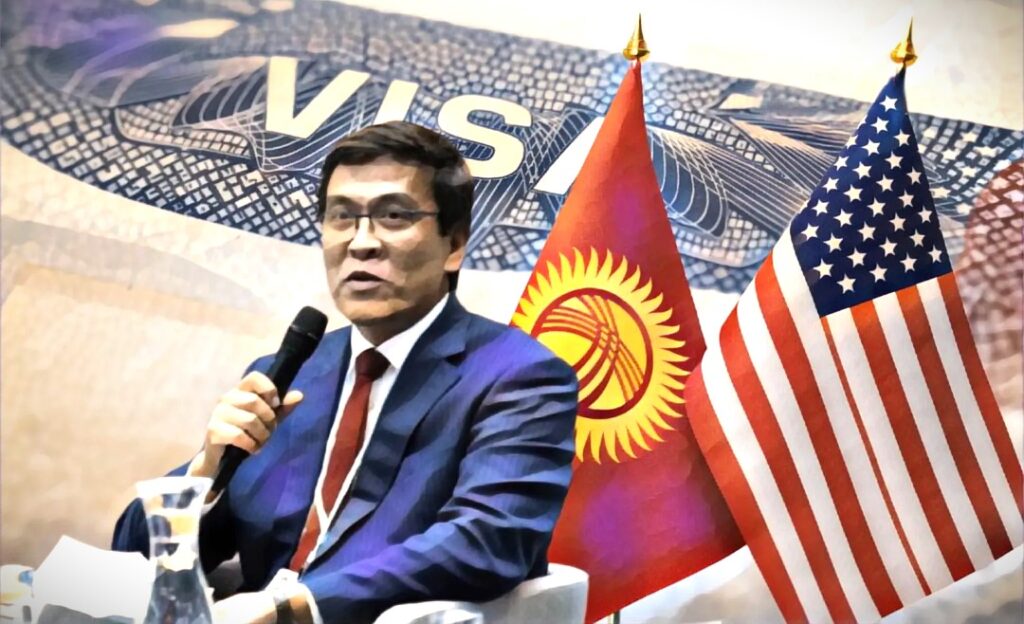
Kyrgyzstan should review its visa-free system for American citizens after the United States expanded its visa bond policy to include the Central Asian country, according to a senior Kyrgyz official who said there should be “mutual respect.” The suggestion that there should be some reciprocity following the U.S. measure came from Edil Baisalov, deputy chairman of Kyrgyzstan´s Cabinet of Ministers and a prominent ally of President Sadyr Japarov. Currently, U.S. travelers to Kyrgyzstan can stay for up to 30 days without obtaining a visa. “I believe that we should initiate a review of our visa-free regime for U.S. citizens following the new visa requirements announced yesterday by the State Department, under which Kyrgyz citizens are required to pay a visa deposit of up to $15,000 when submitting visa applications,” Baisalov said on X on Thursday. “Visa policy is a matter of parity and mutual respect. If such high barriers are introduced for our citizens, we cannot pretend that nothing has happened.” However, he did not offer any analysis about what, if any, changes should be made to the visa-free system for U.S. visitors. Any visa dispute with the far more powerful United States could be risky for Kyrgyzstan, which has meanwhile joined with other Central Asian countries in trying to develop closer ties to the administration of U.S. President Donald Trump. Nationals from 38 countries, including Kyrgyzstan, Tajikistan and Turkmenistan, are subject to visa bonds under the U.S. State Department policy, which is part of a wider crackdown on immigration. The policy took effect for citizens from Turkmenistan on January 1 and will be implemented for nationals from Kyrgyzstan and Tajikistan starting on January 21. “Any citizen or national traveling on a passport issued by one of these countries, who is found otherwise eligible for a B1/B2 visa, must post a bond for $5,000, $10,000, or $15,000.  The amount is determined at the time of the visa interview,” the State Department said. B-1 (business) and B-2 (tourism) refer to non-immigrant visas for people who want to stay temporarily in the U.S. Visa holders who have posted bond are also required to enter the United States via designated international airports, including seven in the U.S. and two in Canada. The U.S. visa bond policy is a setback for Kyrgyzstan, which had previously appealed to the United States to relax its visa requirements. Kyrgyz Foreign Minister Zheenbek Kulubaev raised the issue during a meeting with U.S. Deputy Secretary of State Christopher Landau on the sidelines of the U.N. General Assembly in New York in September.

U.S. Adds Turkmenistan to Visa Bond List, Raising Entry Costs for Travelers

The Trump administration has added seven countries, including Turkmenistan, to a list requiring some visa applicants to post bonds of up to $15,000 to enter the United States, according to a notice published on the U.S. State Department’s travel website. The measure took effect on January 1. The newly designated countries are Bhutan, Botswana, the Central African Republic, Guinea, Guinea-Bissau, Namibia, and Turkmenistan. With these additions, the total number of countries subject to the bond requirement has risen to thirteen, most of them in Africa. As reported by the Associated Press, the policy applies to passport holders from the listed countries seeking certain non-immigrant visas who are considered at higher risk of overstaying. According to U.S. officials, the bonds, ranging from $5,000 to $15,000, are intended to ensure compliance with visa conditions. The State Department has stated that the requirement is designed to encourage timely departure from the U.S. Payment of the bond does not guarantee visa issuance; if a visa is denied, or if the applicant complies with all visa terms, the bond is refunded. The policy is part of a broader tightening of U.S. entry rules under President Donald Trump. Recent changes include mandatory in-person interviews for most visa applicants, expanded disclosure of social media histories, and more detailed reporting of personal travel and residency records. For Turkmenistan, the move marks a shift in U.S. policy. Although the six-month suspension on issuing new U.S. visas to Turkmen citizens has been partially lifted, access to the U.S. has, in practice, become significantly more restricted. Heightened scrutiny and increased financial requirements have sharply narrowed the pool of applicants eligible for tourist and business visas. In effect, travel to the U.S. is now largely limited to a small segment of Turkmen citizens who can demonstrate sufficient financial means and meet stricter security and compliance criteria. As a result, the formal easing of visa restrictions has not translated into broader mobility but instead introduced new filtering mechanisms. A similar approach has previously been observed in Turkmenistan’s outbound travel policies. According to turkmen.news, Turkmen travel agencies require a security deposit of $500 when arranging 60-day visas to the United Arab Emirates. The measure is intended to offset fines imposed if travelers fail to leave the UAE after their visa expires. In December of last year, The Times of Central Asia reported that the United States had lifted its suspension on the entry of Turkmen citizens holding non-immigrant visas. That suspension had been imposed under a June executive order signed by President Trump that restricted entry from nineteen countries. A subsequent order expanded controls on nations the White House said had serious deficiencies in screening and vetting procedures, paving the way for measures such as the visa bond requirement. Tajikistan and Kyrgyzstan were also added to the U.S. list. Restrictions on citizens of these countries are set to take effect on January 21, 2026. In July of last year, the U.S. State Department imposed additional restrictions on the issuance of B-1/B-2 visas for Kyrgyz...

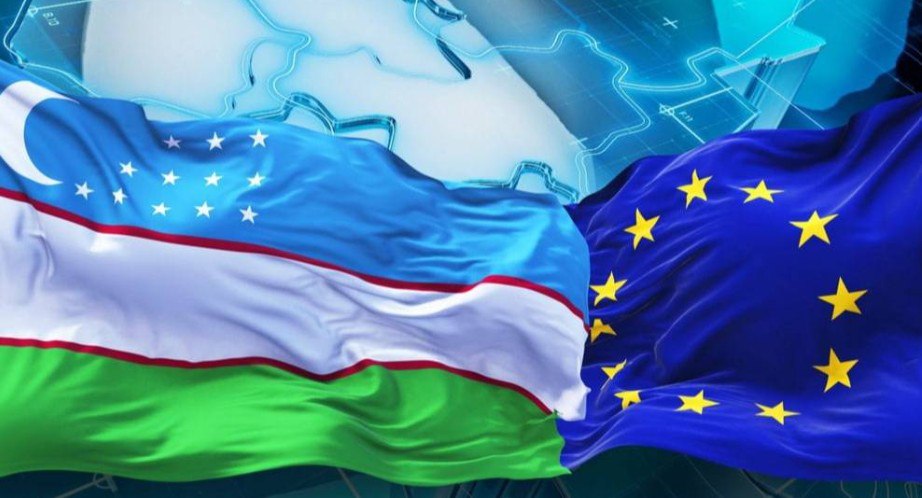
EU and Uzbekistan Discuss Steps Toward Easing Visa Access

Uzbekistan’s Foreign Ministry has initiated the first round of consultations with experts from the European Commission’s Directorate-General for Migration and Home Affairs, according to the Dunyo news agency. The discussions focused on the potential easing of visa procedures for Uzbek citizens traveling to the European Union for purposes such as work, study, truck driving, or group tourism. Representatives from the European side outlined a number of preconditions Uzbekistan must fulfill before the European Commission can formally consider simplifying visa requirements. Both sides agreed to continue consultations in the coming period to advance the process. The talks follow President Shavkat Mirziyoyev’s official visit to Brussels on October 23-24, during which Uzbekistan and the EU signed an Enhanced Partnership and Cooperation Agreement. The new framework replaces the 1996 agreement and expands bilateral cooperation in trade, investment, digital technologies, environmental protection, and climate resilience. Negotiations on the updated agreement began in 2019 and concluded in 2022. While in Brussels, Mirziyoyev also held meetings with executives from leading European companies and financial institutions, including Linde, SUEZ, Meridiam, Commerzbank, and the European Investment Bank. The sides agreed to pursue new projects worth more than €10 billion across sectors such as energy, chemicals, logistics, critical minerals, textiles, and pharmaceuticals. These investments add to an existing EU-led project portfolio in Uzbekistan valued at more than €40 billion.

Moldova To End Visa-Free Travel for Kyrgyzstan and Tajikistan

Moldova has formally withdrawn from the Commonwealth of Independent States (CIS) visa-free travel agreement, a move that will introduce visa requirements for citizens of Kyrgyzstan and Tajikistan. The Moldovan parliament approved the government’s proposal to terminate the 1992 Bishkek Agreement, according to inbusiness.kz. The CIS, which originally included 11 post-Soviet states upon its creation in 1991, now counts only seven full members. Although Moldova ended its membership in the CIS earlier, it had continued to uphold visa-free travel arrangements with several former Soviet republics, including countries in Central Asia. The new legislation does not affect Kazakhstan or Uzbekistan. Moldovan officials told local media that Chişinău intends to preserve visa-free travel with these two countries through separate bilateral agreements. “For citizens of Kazakhstan and Uzbekistan, the procedure for travel remains unchanged,” Azattyq.org reported, citing Moldovan government sources. In 2024, Moldova also announced plans to open its first embassy in Kazakhstan’s capital, Astana. The new visa requirements apply solely to citizens of Kyrgyzstan and Tajikistan, who will now need to obtain visas for work, study, or personal travel to Moldova. Authorities in Chişinău explained that the decision is part of Moldova’s broader effort to align its legal framework with European Union standards. EU regulations require visas for all CIS nationals, and Moldova is gradually adjusting its migration and visa policies in preparation for EU accession. The move comes in the wake of Moldova’s October 2024 referendum, in which voters supported the country’s path toward EU membership. Since then, the government has withdrawn from numerous CIS treaties, exited the CIS Interparliamentary Assembly, ceased payments to the Mir television network, and closed its local bureau. Relations between Moldova and Kyrgyzstan have been further strained by unresolved issues, including Kyrgyzstan’s calls for the repayment of a Soviet-era debt and Moldova’s ban on Kyrgyz airlines due to their inclusion on the EU’s aviation safety blacklist. Kyrgyz civil activist Almaz Tazhybay told Vesti.kg that Kyrgyz carriers will only regain access to Moldovan airspace after meeting EU safety requirements. Moldovan authorities have emphasized that the policy is not targeted at any specific country. Officials in Chişinău describe the changes as part of a broader legal realignment as Moldova pursues its goal of joining the European Union by 2030.

Kazakhstan Leads Central Asia in Latest Global Passport Rankings

Kazakhstan holds the most powerful passport in Central Asia, according to the latest update of the Henley Passport Index. The index ranks 199 passports by the number of destinations their holders can access without a prior visa. Kazakh citizens can now travel to 79 countries visa-free. Following Kazakhstan in the regional ranking is Kyrgyzstan, whose passport ranks 73rd globally with access to 63 countries. Uzbekistan is close behind in 74th place, with 62 visa-free destinations. Tajikistan ranks 80th (56 countries), while Turkmenistan trails at 85th, with just 49 destinations accessible without a visa. The Henley Passport Index calculates scores by awarding one point for each destination where no visa is required, or where travelers can obtain a visa on arrival, a visitor’s permit, or an electronic travel authorization. A score of zero is assigned if a visa is required prior to departure or if government pre-approval is needed for a visa on arrival. On the global stage, Singapore retains the top spot for the second consecutive year, granting its passport holders visa-free access to 193 countries. Japan and South Korea share second place, each offering visa-free travel to 190 destinations. The top ten is dominated by European countries. The Times of Central Asia previously reported on last year’s edition of the Henley Passport Index and its implications for mobility in the region.