• KGS/USD = 0.01144 0%
  • KZT/USD = 0.00207 0%
  • TJS/USD = 0.10463 0%
  • UZS/USD = 0.00008 0%
  • TMT/USD = 0.28490 0%
  • KGS/USD = 0.01144 0%
  • KZT/USD = 0.00207 0%
  • TJS/USD = 0.10463 0%
  • UZS/USD = 0.00008 0%
  • TMT/USD = 0.28490 0%
  • KGS/USD = 0.01144 0%
  • KZT/USD = 0.00207 0%
  • TJS/USD = 0.10463 0%
  • UZS/USD = 0.00008 0%
  • TMT/USD = 0.28490 0%
  • KGS/USD = 0.01144 0%
  • KZT/USD = 0.00207 0%
  • TJS/USD = 0.10463 0%
  • UZS/USD = 0.00008 0%
  • TMT/USD = 0.28490 0%
  • KGS/USD = 0.01144 0%
  • KZT/USD = 0.00207 0%
  • TJS/USD = 0.10463 0%
  • UZS/USD = 0.00008 0%
  • TMT/USD = 0.28490 0%
  • KGS/USD = 0.01144 0%
  • KZT/USD = 0.00207 0%
  • TJS/USD = 0.10463 0%
  • UZS/USD = 0.00008 0%
  • TMT/USD = 0.28490 0%
  • KGS/USD = 0.01144 0%
  • KZT/USD = 0.00207 0%
  • TJS/USD = 0.10463 0%
  • UZS/USD = 0.00008 0%
  • TMT/USD = 0.28490 0%
  • KGS/USD = 0.01144 0%
  • KZT/USD = 0.00207 0%
  • TJS/USD = 0.10463 0%
  • UZS/USD = 0.00008 0%
  • TMT/USD = 0.28490 0%

Viewing results 1 - 6 of 173

Baku-Tbilisi-Kars railway launched to link Europe, Turkey, Georgia, Azerbaijan and Central Asia

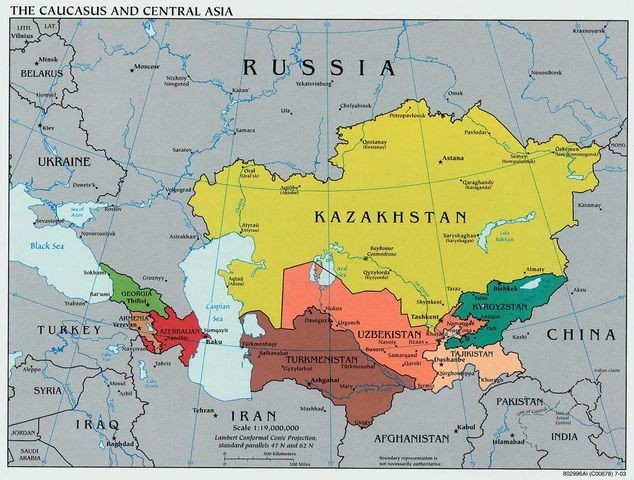
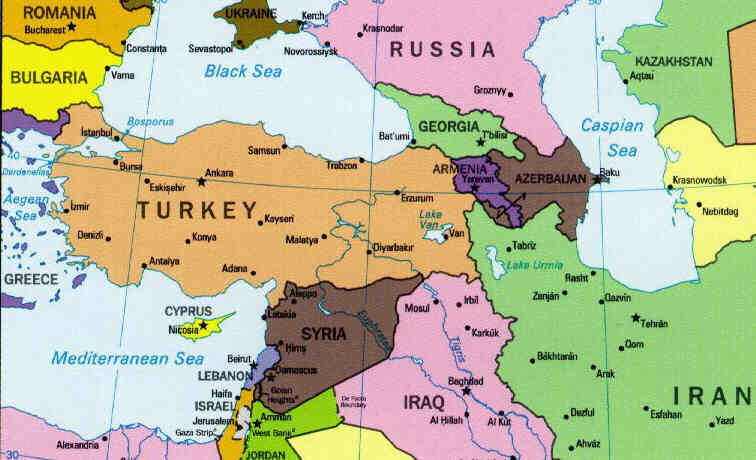
BAKU (TCA) — Azerbaijan, Georgia, and Turkey have launched a rail link connecting the three countries, establishing a freight and passenger link between Europe and China that bypasses Russia and Armenia and will also serve Kazakhstan and other Central Asian countries, RFE/RL's Azerbaijani Service reports. Continue reading

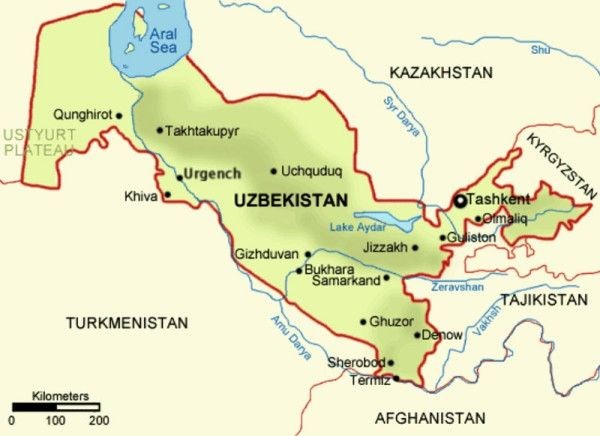
Uzbekistan & Turkey: is it love?

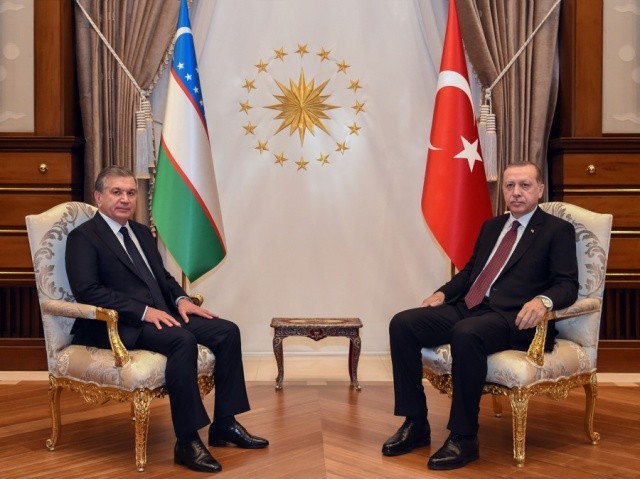
TASHKENT (TCA) — Uzbekistan has taken efforts to mend its relations with Turkey, a move analysts say is part of President Mirziyoyev’s plan to attract much-needed investments in the Uzbek economy. We are republishing this article on the issue, originally published by EurasiaNet.org: The just-concluded Uzbek-Turkish summit meeting in Ankara was like a meeting of long-lost friends. “You could tell from our eyes how we had missed one another over these 20 years,” Uzbekistan’s President Shavkat Mirziyoyev said, standing near his Turkish counterpart, Recep Tayyip Erdogan, during a joint briefing. “We understood one another without saying even half a word, even without words, just by looking at one another.” When Mirziyoyev flew into Ankara for a two-day visit on October 25 – trip made at Erdogan’s initiative – it marked the first state visit by an Uzbek president to Turkey in 18 years. Both the Uzbek and Turkish leaders were in a buoyant mood during the joint briefing. “We are happy with the initiative being undertaken by Uzbekistan. And we are instructing all ministries and [nongovernmental] organizations to develop full-fledged cooperation with Uzbekistan,” Erdogan said. Companies from the two countries struck 30 agreements worth $3.5 billion during Mirziyoyev’s visit. The deals covered a wide array of sectors, including energy, transportation, textiles, electronics, construction and agriculture. The goal, the governments said, is to see annual bilateral trade turnover increase to $3-4 billion in the coming years – up from $1.2 billion in 2016. Mirziyoyev set the tone for things before flying out of Tashkent, signing a decree ordering the simplification of the visa regime for Turkish citizens. Now entrepreneurs from Turkey will be able to apply for one-year visas without requiring an invitation, and receiving the travel permit will take only three days. Tourists will be eligible for a 30-day visa. This point had served as perhaps the main stumbling block in developing better relations, not least since Uzbek citizens are able to visit Turkey without a visa. “The day is coming when our friendly, brother nations will not need visas at all. We are absolutely working toward this,” Mirziyoyev told reporters in Ankara. Bringing down the veil of distrust was only made possible by the passing of Uzbekistan’s late president, Islam Karimov, who died last September. In a notable gesture of goodwill, Erdogan traveled to Samarkand on November 18 to visit Karimov’s grave, but not before announcing publicly that he wanted to turn a page with Uzbekistan. The story of Uzbek-Turkish relations started well. Turkey was the first out of the gate to recognize Uzbekistan’s declaration of independence in the dying days of 1991. Four days after that, Karimov returned the favor by visiting Ankara, becoming the first among the Central Asian presidents to do so. “My country will go forward by the Turkish route,” Karimov told his hosts, appearing to confirm widespread suspicions that the newly independent southern states of the collapsed Soviet Union would automatically be drawn into Ankara’s orbit by their shared Turkic cultural legacy. The appeal...

Uzbekistan president visits Turkey to expand cooperation

TASHKENT (TCA) — On October 25, President of Uzbekistan Shavkat Mirziyoyev arrived in Turkey with a two-day state visit at the invitation of Turkish President Recep Tayyip Erdogan. It is the first official visit to Turkey by Uzbekistan's president since 1999. Mirziyoyev and Erdogan held a meeting in a narrow format. During the negotiations, cooperation between Uzbekistan and Turkey in political, trade, economic, investment, transport and communication spheres were discussed, the press service of the Uzbek president said. The visit of President Erdogan to Uzbekistan in November 2016 demonstrated Turkey’s interest in strengthening cooperation with Uzbekistan. The two heads of state also held negotiations within the framework of One Belt, One Road forum on May 14 this year and the summit on science and technology of the Organization of Islamic Cooperation held on September 10 in Astana. Turkey is an important trade partner of Uzbekistan. In 2016, bilateral trade amounted to 1.2 billion US dollars. For 9 months of this year, the mutual trade increased by 29 percent. There are about 500 Turkish companies in Uzbekistan. During the negotiations, Mirziyoyev and Erdogan noted that there are still unused opportunities for mutually beneficial cooperation, and that this visit will give a new impetus to the development of contacts between ministries and departments, businessmen of the two countries. It was said that Uzbekistan can export to Turkey a wide range of industrial products, transformers, cables and other electrical goods, polymers, copper and copper products, mineral fertilizers, yarn, fruit and vegetables, and processed food. In Uzbekistan, Turkish companies take part in the organization of production, in free economic and small industrial zones, of products with high added value on the basis of deep processing of mineral resources and raw materials. The negotiations paid special attention to the issues of transport and logistics. It was decided to optimize transit tariffs and provide preferences in order to increase the competitiveness and attractiveness of international transport corridors passing through the territory of Uzbekistan and Turkey.

EBRD to fund Trans-Anatolian gas pipeline to supply Caspian gas to Europe

BISHKEK (TCA) — The European Bank for Reconstruction and Development (EBRD) on October 18 said its Board of Directors has approved a US $500 million regional project that will help finance the delivery of crucial energy supplies from the Caspian Sea to Europe along the Southern Gas Corridor (SGC). Potentially, Turkmenistan may join the project by transporting its natural gas across the Caspian Sea to Azerbaijan. The EBRD said its financing will fund the completion of the Trans-Anatolian Natural Gas Pipeline (TANAP) that passes through Turkey. TANAP is a key part of the SGC which will strengthen Europe’s energy security, promote interconnectivity and open gas markets. It will also help provide a better energy supply mix for consumers in the Balkans and south-eastern Europe as well as achieve significant CO2 reductions through the substitution of obsolete coal-fired power plants. The Bank’s engagement in the project will ensure adherence to the highest environmental standards and allow continuing extensive dialogue with all stakeholders of SGC. The Southern Gas Corridor includes gas infrastructure investments into a 3,500-kilometre pipeline running through six countries with a total cost of US $40 billion. The key components are the Shah Deniz offshore gas field in Azerbaijan, the Southern Caucasus Pipeline in Azerbaijan and Georgia, TANAP in Turkey and the Trans Adriatic Pipeline (TAP) through Greece, Albania and Italy. The initial annual throughput capacity will be up to 16 billion cubic metres, which is equivalent to the annual energy consumption of more than 10 million households in the region.

Uzbekistan: Turkish business returning, cautiously

TASHKENT (TCA) — Turkish businesses that faced troubles in Uzbekistan under President Karimov have begun returning to the Uzbek market under the new President Mirziyoyev, who appears to have pursued a thaw in relations with Ankara. Mirziyoyev’s planned visit to Turkey in October may become a breakthrough in bilateral relations. We are republishing this article on the issue, originally published by EurasiaNet.org: Continue reading

Turkish companies to invest $590 million in Kazakhstan

ASTANA (TCA) — Nine investment documents for a total of $590 million were signed between Kazakhstan and the largest Turkish holdings, such as Calik Holding, Yildirim Holding, Yildizlar SSS Holding, and Agrobest Group, on September 9 in Astana, the official website of the Prime Minister of Kazakhstan reported. Continue reading