• KGS/USD = 0.01144 0%
  • KZT/USD = 0.00208 0%
  • TJS/USD = 0.10429 0.1%
  • UZS/USD = 0.00008 0%
  • TMT/USD = 0.28530 0%
  • KGS/USD = 0.01144 0%
  • KZT/USD = 0.00208 0%
  • TJS/USD = 0.10429 0.1%
  • UZS/USD = 0.00008 0%
  • TMT/USD = 0.28530 0%
  • KGS/USD = 0.01144 0%
  • KZT/USD = 0.00208 0%
  • TJS/USD = 0.10429 0.1%
  • UZS/USD = 0.00008 0%
  • TMT/USD = 0.28530 0%
  • KGS/USD = 0.01144 0%
  • KZT/USD = 0.00208 0%
  • TJS/USD = 0.10429 0.1%
  • UZS/USD = 0.00008 0%
  • TMT/USD = 0.28530 0%
  • KGS/USD = 0.01144 0%
  • KZT/USD = 0.00208 0%
  • TJS/USD = 0.10429 0.1%
  • UZS/USD = 0.00008 0%
  • TMT/USD = 0.28530 0%
  • KGS/USD = 0.01144 0%
  • KZT/USD = 0.00208 0%
  • TJS/USD = 0.10429 0.1%
  • UZS/USD = 0.00008 0%
  • TMT/USD = 0.28530 0%
  • KGS/USD = 0.01144 0%
  • KZT/USD = 0.00208 0%
  • TJS/USD = 0.10429 0.1%
  • UZS/USD = 0.00008 0%
  • TMT/USD = 0.28530 0%
  • KGS/USD = 0.01144 0%
  • KZT/USD = 0.00208 0%
  • TJS/USD = 0.10429 0.1%
  • UZS/USD = 0.00008 0%
  • TMT/USD = 0.28530 0%

Viewing results 43 - 48 of 2302

Uzbekistan and Afghanistan Aim to Boost Trade to $5 Billion

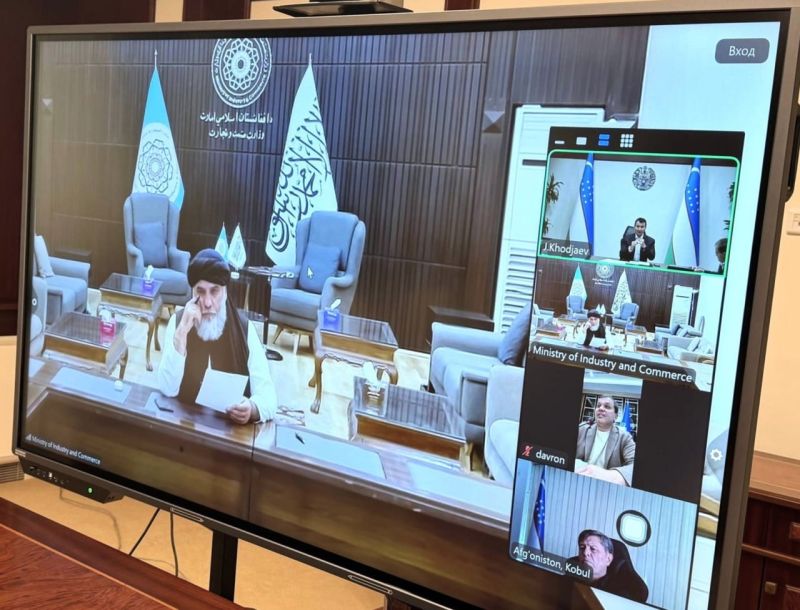
Uzbekistan and Afghanistan plan to accelerate the introduction of a preferential trade regime and significantly expand bilateral trade, Deputy Prime Minister Jamshid Khodjaev said. In a post on his LinkedIn page, Khodjaev wrote that on February 24 he held a video conference with Afghanistan’s Minister of Industry and Trade, Nuriddin Azizi. “We discussed practical steps to expand trade and economic cooperation and preparations for an upcoming visit of the Afghan delegation to Uzbekistan,” he said. Khodjaev noted that Uzbekistan values its “friendly and constructive relations” with Afghanistan. According to him, over the past five years bilateral trade has grown 2.5 times, from $653 million in 2021 to $1.7 billion in 2025. “Our shared goal is to increase this figure to $5 billion,” he wrote. The discussions also addressed the development of interregional ties and the infrastructure needed to promote goods, including showrooms and warehouse facilities. The two sides considered industrial cooperation in agricultural processing, construction materials, and textiles, as well as joint initiatives in food security. “We agreed to accelerate the entry into force of the Preferential Trade Agreement and to advance projects in investment and industrial cooperation,” Khodjaev stated. He added that, after Ramadan, work would continue in a practical format, including a business forum in Kabul and the preparation of a roadmap outlining priority areas. Earlier data indicate that in 2024 bilateral trade reached approximately $1.1 billion, with more than $1 billion accounting for Uzbek exports to Afghanistan.
Uzbek Janitor Who Saved Child in St. Petersburg Receives Awards and Ticket Home

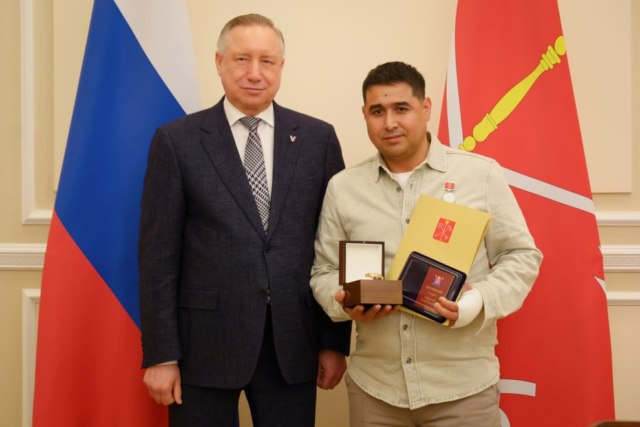
Khayrullo Ibadullayev, an Uzbek migrant worker who saved a child from falling out of a seventh-floor window in St. Petersburg, has received official recognition in both Russia and Uzbekistan, as well as a return air ticket to his home country. According to the press service of Uzbekistan’s Migration Agency under the Cabinet of Ministers, the agency presented Ibadullayev with a plane ticket to Uzbekistan and thanked him for his bravery. Officials stated that his actions had strengthened the image and reputation of Uzbek citizens working abroad. Ibadullayev was also awarded the Jasorat medal by President Shavkat Mirziyoyev, a state decoration given for acts of courage. His wife, Gullola Safarova, expressed gratitude to the Uzbek authorities. “First of all, I want to thank our President for awarding my husband the Jasorat medal and honoring him so highly,” she said. Safarova recalled that when her husband called and told the family he was holding a child in his arms, they were initially alarmed. “When he said he had caught a child who fell from above, the first thing we asked about was the child’s health. We were happy and told him he did the right thing,” she said. She added that her husband had previously demonstrated similar compassion. In 2025, he reportedly donated blood during a child’s surgery, contributing to saving the patient’s life. Russian state news agency TASS reported that St. Petersburg Governor Alexander Beglov presented Ibadullayev with the “For Valor in Rescue” distinction during a ceremony at the Smolny government complex. According to the city administration’s press service, Beglov said: “You did not think about yourself. You were injured but saved the life of a seven-year-old child. Our entire city thanks you.” Ibadullayev, who has been working in St. Petersburg since December 2025 for a cleaning company, also received a commemorative watch from the governor. The child survived the fall and was hospitalized. Officials have described his condition as stable.

Syria After Assad: What the New Regional Order Means for Central Asia

The overthrow of Bashar al-Assad in December 2024 fundamentally reshaped Syria’s regional position. The collapse of the old power structure weakened Iran’s entrenched military and economic networks and left Russia’s previously secured foothold uncertain. As Damascus enters a new political phase, external actors are recalibrating their strategies in a landscape that looks markedly different from that of the past decade. For Central Asian governments, the shift is not merely regional. Syria is becoming a testing ground for how mid-sized states navigate post-conflict environments shaped by larger powers, and a potential arena for economic and diplomatic outreach. As influence is redistributed and new investment and trade corridors are reconsidered, decisions taken in Damascus will increasingly intersect with Central Asia’s own foreign policy and economic calculations. In this emerging landscape, a power vacuum is being filled by states seeking to advance their interests. From the earliest days of Syria’s post-Assad transition, Turkey has been particularly active. As part of its declared comprehensive support for the new Syrian authorities, Ankara has taken steps to consolidate its position in the Syrian Arab Republic. Turkey is actively participating in infrastructure reconstruction, investing in economic projects, and expanding military-technical cooperation with Damascus. In August 2025, Syria and Turkey signed a military cooperation agreement covering areas including counterterrorism training, cybersecurity, demining, military engineering, logistics, and enhanced coordination between their armed forces. That same month, the two sides agreed to establish an intergovernmental business council under the Turkish Foreign Economic Relations Board to promote trade and investment cooperation between public and private companies. Turkish exports to Syria reached $3 billion in 2025, reflecting the rapid expansion of Ankara’s economic presence. For Central Asia, Ankara’s activism carries particular weight. Turkey has simultaneously deepened its political, economic, and security cooperation across the Turkic world, meaning its posture in Syria intersects with its broader regional strategy. A central element of Turkey’s Syria policy remains the issue of refugee returns. However, the prospect of large-scale repatriation is complicated by several factors, notably the long-term presence of around 2.5 million Syrian displaced persons in Turkish society and the absence of stable socio-economic conditions in Syria to support reintegration. Over more than a decade of conflict, a generation of Syrians has grown up in Turkey, many of whom are deeply embedded in the country’s social and economic life. Turkey’s obligations under the 1951 UN Convention Relating to the Status of Refugees, including the principle of non-refoulement, further constrain policy options. Taken together, these factors make large-scale return unlikely until Syria achieves sustained political stabilization and adequate living conditions. In the longer term, Turkey’s objective of neutralizing what it describes as the Kurdish threat emanating from Syrian territory will continue to shape its strategy. Israel has also intensified its military and political engagement since the change of power in Damascus. It has taken steps to establish control over areas adjacent to the Golan Heights and to create a buffer zone, arguing that such measures are necessary to safeguard national security against potential terrorist threats. Israeli officials...

Turkic States Set to Expand Mutual Trade and Strengthen Economic Integration

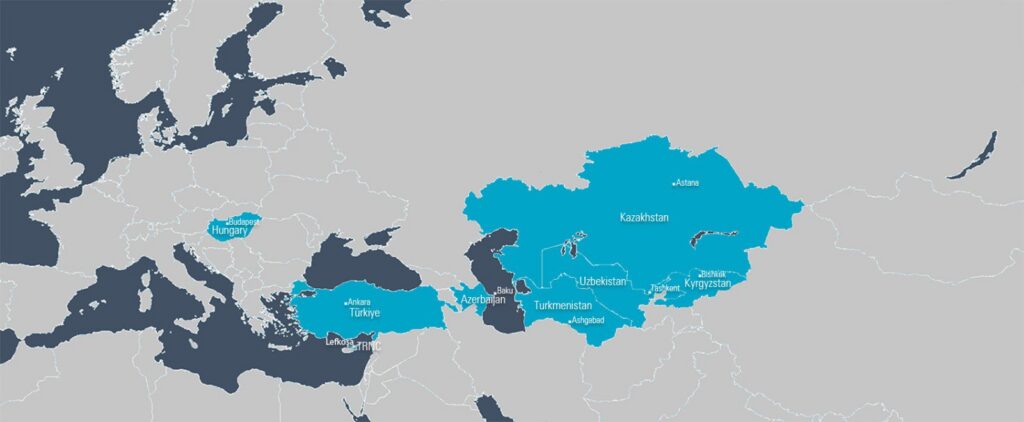
The 14th meeting of ministers responsible for economy and trade of the Organization of Turkic States (OTS) was held on February 20 in Turkistan, Kazakhstan. The gathering brought together ministerial delegations from member states to advance economic cooperation, deepen trade ties, and promote sustainable and inclusive growth across the Turkic region. Founded in 2009 to foster comprehensive cooperation among Turkic-speaking nations, the OTS includes Azerbaijan, Kazakhstan, Kyrgyzstan, Turkey, and Uzbekistan as full members. Turkmenistan, Hungary, and Northern Cyprus participate as observers. According to the OTS Secretariat, the Turkic region recorded an average economic growth rate of 6.86% in 2025, more than double the global average. Despite this performance, OTS Secretary General Kubanychbek Omuraliev called for intensified efforts to expand intra-regional trade. Omuraliev highlighted ongoing negotiations on the Agreement on Services and Investment Facilitation, describing it as a decisive step toward deeper economic integration. He also pointed to strengthened institutional mechanisms, including the Council of Central (National) Banks of the OTS, the Turkic Green Finance Council, enhanced cooperation among Financial Intelligence Units and Competition Authorities, and closer coordination between the Turkic Investment Fund and the Union of Turkic Chambers of Commerce and Industry (TCCI). Delegations discussed practical measures to increase intra-OTS trade, improve the investment climate, and enhance regional connectivity. Participants emphasized the need for coordinated policies to reduce trade barriers, support small and medium-sized enterprises, and facilitate cross-border commerce. Kazakhstan’s Deputy Minister of National Economy, Asan Darbayev, underscored the symbolism of holding the meeting in Turkistan, a historic spiritual center of the Turkic world and a key node of the ancient Silk Road. He noted that the OTS is steadily evolving from a dialogue platform into a mechanism for practical cooperation, building new value chains and expanding trade links. In 2025, mutual trade among OTS member states exceeded $11.9 billion. Kazakhstan’s largest trade volumes were with Turkey ($4.9 billion), Uzbekistan ($4.3 billion), Kyrgyzstan (nearly $2 billion), and Azerbaijan ($425 million). Investment ties are also strengthening. Between 2005 and 2025, foreign direct investment from OTS countries into Kazakhstan surpassed $6.3 billion. Over the same period, Kazakh investments in OTS economies reached $5 billion, including more than $1.3 billion in 2025 alone. The meeting concluded with the signing of a Memorandum of Understanding on Partnership in Trade and the adoption of a Roadmap for Cooperation in Economy, Trade, Investment, and Finance. As previously reported by The Times of Central Asia, in December 2025 the Board of Governors of the Turkic Investment Fund announced that the fund would begin operations in the first quarter of 2026. Headquartered in Istanbul, the Turkic Investment Fund is the first joint financial institution established by OTS member states. Its mandate is to promote economic cooperation, boost intra-regional trade, and finance major joint initiatives aimed at strengthening long-term regional integration.

Uzbekistan Pledges Support for Gaza Reconstruction

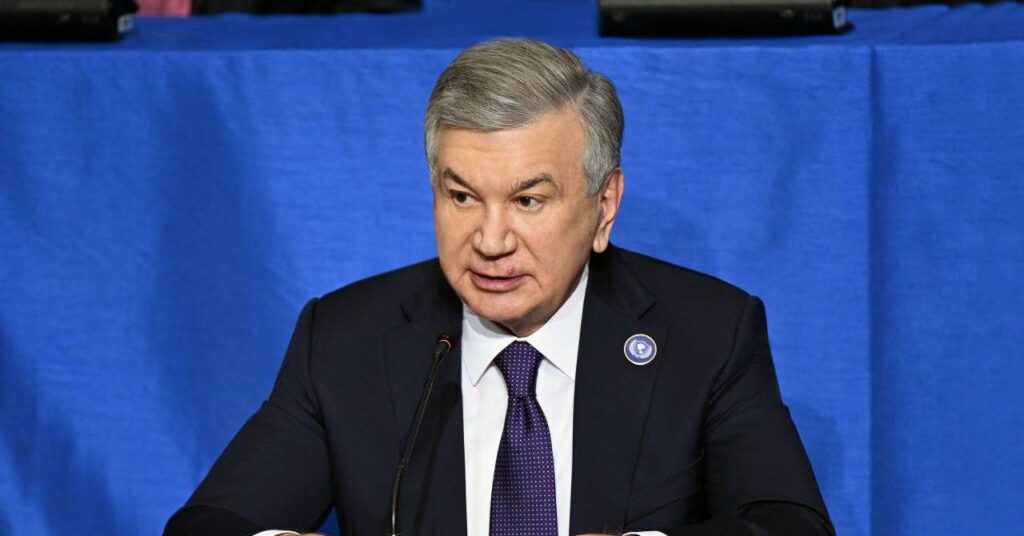
United States President Donald Trump introduced Uzbekistan’s President Shavkat Mirziyoyev as “a friend” during the inaugural meeting of the Board of Peace in Washington, setting a cordial tone for a summit focused on post-conflict recovery in Gaza. In brief remarks while welcoming Mirziyoyev, Trump said Uzbekistan was “doing great” and had “no problems.” The summit, held on February 19 at the United States Institute of Peace, brought together heads of delegations from Azerbaijan, Kazakhstan, Bahrain, Indonesia, Argentina, Paraguay, Romania, Egypt, Qatar, Pakistan, Hungary, Albania, Armenia, Vietnam, Cambodia, the United Arab Emirates, Turkey, Kuwait, Saudi Arabia, Israel, and Morocco, among others. Discussions focused on reconstruction and humanitarian assistance for the Gaza Strip, as well as broader efforts to promote stability in the Middle East. In his address, Mirziyoyev thanked Trump for convening the inaugural meeting of the Board, describing the summit as the result of his “political will and pragmatism.” Uzbekistan supported the initiative to establish the Board of Peace and declared its readiness to participate in its practical implementation. “I am confident that the Board’s work will create favorable conditions for the economic and social restoration of Gaza,” Mirziyoyev said. He stressed that any mechanism for external governance in Gaza must be based on the support of its population. Coordinated efforts by all stakeholders, he added, would help ensure that the post-conflict process remains sustainable and that reconstruction advances efficiently. Mirziyoyev also announced that Uzbekistan is prepared to contribute to the construction of residential buildings, kindergartens, schools, and hospitals in Gaza. He described the meeting as a symbol of international solidarity and urged participants to seize what he called a historic opportunity to help build a renewed Gaza with a functioning economy and improved living conditions.

The Board of Peace and Central Asia: Asserting Agency in a Fragmented Order

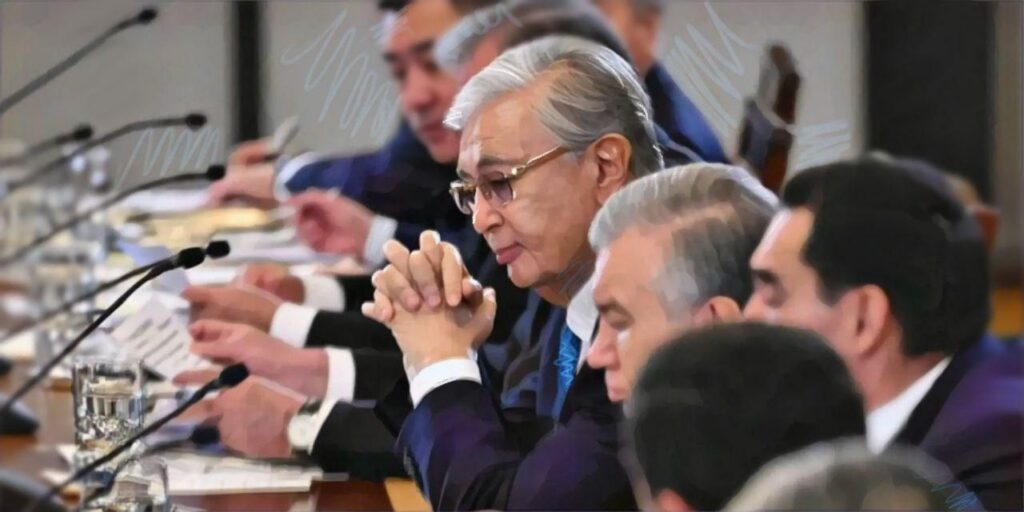
President Kassym-Jomart Tokayev’s speech at the inaugural meeting of U.S. President Donald Trump’s Board of Peace in Washington on February 19 was not only a foreign policy event, but one with significant domestic resonance. The initiatives announced include Kazakhstan’s participation in the reconstruction of Gaza, financial commitments, and readiness to send peacekeepers. Against the backdrop of economic challenges and ongoing constitutional reforms, however, a substantial segment of Kazakh society is questioning whether such an active foreign policy posture is justified at this time. The Board of Peace, the charter for which was ratified in Davos in January 2026 on the sidelines of the World Economic Forum, is positioned as an alternative to traditional multilateral institutions. According to Trump, the new body should not merely discuss conflicts, but will also "almost be looking over the United Nations and making sure it runs properly." Symbolically, the Board’s launch comes amid U.S. reductions and withholding of UN-related funding and withdrawals from multiple international bodies, alongside a partial U.S. payment toward UN arrears and the parallel creation of alternative financial and security mechanisms. According to the U.S. Mission to Kazakhstan, at the first meeting of the Board of Peace, nine members pledged a combined $7 billion aid package for the Gaza Strip. Kazakhstan, Uzbekistan, Azerbaijan, the UAE, Morocco, Bahrain, Qatar, Saudi Arabia, and Kuwait indicated their willingness to contribute. Additionally, Trump pledged $10B in U.S. funding, framing peace and reconstruction as a strategic priority. However, experts note that these sums fall far short of projected needs. According to joint UN-EU-World Bank estimates, the full reconstruction of Gaza could require up to $70 billion. In addition, the implementation of projects is complicated by the issue of disarming Hamas, which is designated as a terrorist organization in the U.S. and the European Union. At present, there is no indication that any Western or regional government intends to revise that designation. A notable feature of the Washington summit was the synchronized participation and subsequent public statements of key member states of the Organization of Turkic States (OTS). Kazakhstan, Uzbekistan, Azerbaijan, and Turkey effectively acted as what appeared to be an aligned geopolitical grouping, albeit without a formal declaration of joint action. What Is Kazakhstan Seeking? For Astana, participation in the Board of Peace appears to represent a renewed step in its multi-vector foreign policy doctrine. Tokayev directly stated Kazakhstan’s readiness to send medical units and observers to international stabilization forces and to allocate more than 500 educational grants for Palestinian students. In effect, Kazakhstan is reinforcing its image as a “Middle Power” prepared not only for diplomatic mediation but also for tangible contributions to international security efforts. This course aligns with the country’s existing participation in UN missions. Currently, 139 Kazakh military personnel are serving in the Golan Heights under the UN Disengagement Observer Force mandate. Nevertheless, the intensification of foreign policy engagement is raising domestic questions. Concerns voiced on social media and among experts include whether the international agenda risks diverting attention from internal economic pressures, including...