• KGS/USD = 0.01144 0%
  • KZT/USD = 0.00204 0%
  • TJS/USD = 0.10398 0%
  • UZS/USD = 0.00008 0%
  • TMT/USD = 0.28490 0%
  • KGS/USD = 0.01144 0%
  • KZT/USD = 0.00204 0%
  • TJS/USD = 0.10398 0%
  • UZS/USD = 0.00008 0%
  • TMT/USD = 0.28490 0%
  • KGS/USD = 0.01144 0%
  • KZT/USD = 0.00204 0%
  • TJS/USD = 0.10398 0%
  • UZS/USD = 0.00008 0%
  • TMT/USD = 0.28490 0%
  • KGS/USD = 0.01144 0%
  • KZT/USD = 0.00204 0%
  • TJS/USD = 0.10398 0%
  • UZS/USD = 0.00008 0%
  • TMT/USD = 0.28490 0%
  • KGS/USD = 0.01144 0%
  • KZT/USD = 0.00204 0%
  • TJS/USD = 0.10398 0%
  • UZS/USD = 0.00008 0%
  • TMT/USD = 0.28490 0%
  • KGS/USD = 0.01144 0%
  • KZT/USD = 0.00204 0%
  • TJS/USD = 0.10398 0%
  • UZS/USD = 0.00008 0%
  • TMT/USD = 0.28490 0%
  • KGS/USD = 0.01144 0%
  • KZT/USD = 0.00204 0%
  • TJS/USD = 0.10398 0%
  • UZS/USD = 0.00008 0%
  • TMT/USD = 0.28490 0%
  • KGS/USD = 0.01144 0%
  • KZT/USD = 0.00204 0%
  • TJS/USD = 0.10398 0%
  • UZS/USD = 0.00008 0%
  • TMT/USD = 0.28490 0%

Viewing results 79 - 84 of 1438

Kazakhstan-Uzbekistan Jibek Joly Train Tour Extended to Tajikistan

Kazakhstan’s national railway company, Kazakhstan Temir Zholy (KTZ), has announced the expansion of its popular Jibek Joly (Silk Road) tourist train route to include Tajikistan, adding a new stop to one of Central Asia’s flagship railway tourism initiatives. The updated route will now reach the Tajik capital, Dushanbe, extending the tour beyond Kazakhstan and Uzbekistan for the first time. The inaugural journey on the extended route is scheduled to depart from Almaty on March 20, 2026, and return on March 25, passing through a series of historic Silk Road cities: Turkestan (Kazakhstan), Samarkand (Uzbekistan), Dushanbe (Tajikistan) and Tashkent (Uzbekistan). The tour package includes rail travel, guided sightseeing, entrance to cultural and historical sites, and organized transfers. Its launch coincides with Nauryz, the region’s traditional spring holiday, allowing travelers to experience vibrant local celebrations along the way. First introduced in November 2024, the Jibek Joly train originally ran between Almaty, Turkestan, and Tashkent, and has since become a highly visible symbol of the region’s growing tourism sector. The project reflects broader efforts to promote Central Asia as a unified tourist destination. Regional leaders have advocated for a shared visa-free regime for foreign visitors, similar to Europe’s Schengen Zone, to encourage cross-border travel and boost international tourism. Officials say that initiatives like Jibek Joly can help strengthen cultural ties, foster regional integration, and raise Central Asia’s profile on the global tourism map.


The Potential and Problems of Tourism in Kazakhstan

Kazakhstan boasts unique natural landscapes that could attract international visitors, and significantly enrich the country's economy. Each year, the government allocates increasing funds to support tourism. However, services and infrastructure in many tourist destinations still remain well below international standards. Undeniable Improvements According to Talgat Gazizov, Chairman of the Board of the national company Kazakh Tourism, more than 1,100 tours to Kazakhstan are currently available on 18 major online platforms across Europe and Asia – a threefold increase compared to 2023. This reflects growing interest among international tour operators. As previously reported by The Times of Central Asia, authorities are also weighing up the possibility of opening casinos in designated tourist zones, accessible exclusively to foreign citizens. In 2025, Kazakhstan invested nearly $2.5 billion in the development of its tourism sector, a 32% year-on-year increase. The number of tourists staying in accommodation facilities rose by 12%, surpassing 10 million. Kazakhstan also improved its position in the World Economic Forum’s global tourism index, climbing from 66th to 52nd place. The stated goal is to break into the top 50. Currently, 328 tourism investment projects are underway. Notable among them are the Oi-Karagai mountain resort, Hilton and Mandarin Oriental hotel complexes, the Zhibek Zholy entertainment complex, and the Keruen Inn roadside service chain. These projects are expected to create around 10,000 permanent jobs. A Comprehensive Development Plan for the Almaty Mountain Cluster includes expanding ski resorts and integrating them into a unified system. The celebrated Shymbulak ski base and Medeu high-altitude skating rink, both located near Almaty, are among the country’s most distinctive attractions. The plan envisions 30 new cable cars and 161 kilometers of ski slopes, aiming to boost annual tourist numbers from 1.8 million to 5 million. Authorities note that, globally, ski tourists spend seven times more than beach tourists. The Shchuchinsk-Borovskaya (Burabai) resort area is also a development priority. Infrastructure expansion around Lakes Katarkol, Maloye and Bolshoye Chebachye, and Zhukei is intended to ease pressure on Lakes Shchuchye and Borovoye. The number of inbound tourists to Burabai is projected to reach 94,000 by the end of 2029, with 32,500 people employed in the local tourism industry. In western Kazakhstan, development is planned along the Mangistau Peninsula, including Teply beach and Kendirli resorts on the Caspian Sea. Efforts are also underway to improve access to the striking rock formations of Bozhyr and Tamsha, which rival world-famous geological landmarks. Services and Infrastructure Lag Behind Despite progress, serious shortcomings persist, chief among them underdeveloped services. The lack of public toilets in tourist zones and along highways has been repeatedly highlighted. Government data shows that many resort areas in the Akmola, Karaganda, and Pavlodar regions, as well as in the Abai and Zhetysu regions, lack reliable water supply and central sewage systems. The use of well water remains a pressing concern. In the Abai region, some recreation centers are situated dangerously close to water sources. Lake Alakol, a popular summer destination, requires urgent shoreline reinforcement. Similar dredging work is also necessary in Caspian...

“We Are Contenders”: Uzbekistan’s Chess Talents Aim High

“Uzbekistan, the new chess superpower?” says the website of Europe Échecs, a French chess publication. The lead article in the January 2026 edition of the monthly magazine focuses on the extraordinary rise of Uzbek chess and shows photos of Nodirbek Abdusattorov and Javokhir Sindarov, two grandmasters from the Central Asian country who were atop the standings early this week in the Tata Steel Chess Tournament in the Netherlands. Abdusattorov and Sindarov faced each other in the ninth round on Tuesday, playing to a draw that kept both of them in the lead of the elite contest that ends on February 1 after 13 rounds. Abdusattorov was first with six points, while Sindarov was second with five and a half points. However, the race is tightening -- Sindarov now shares second place with 14-year-old Turkish prodigy Yağız Kaan Erdoğmuş and Dutch player Jorden van Foreest. Sometimes called the “Wimbledon of chess,” the Tata Steel event in the seaside town of Wijk aan Zee has attracted the game’s greats over many years. They have included Garry Kasparov, Anatoly Karpov and Magnus Carlsen. The presence of two Uzbek players in the 14-participant Masters competition this year is a testament to the depth of top-tier talent in Uzbekistan, which is challenging India and other top chess nations in the world. Born in Tashkent, 21-year-old Abdusattorov became a grandmaster at the age of 13 and is ranked twelth in the world with a rating of 2751. He has previously competed in the Tata Steel event, finishing in the top three in the last three years, according to the tournament. He won the FIDE World Rapid Chess Championship in 2021 and was part of the team from Uzbekistan that won gold at the 2022 Chess Olympiad in Chennai, India. FIDE is the international governing body of chess. “It made us realize that we aren't just ‘participants´ anymore; we are contenders,” Rayhona O'ktamova of Uzbekistan wrote in a Chess.com blog titled: “Why Everyone is Suddenly Talking About Uzbekistan.” “What I love most isn't just the trophies, it's how the atmosphere in our country changed,” O´ktamova said. “Before, if a kid said ‘I want to be a professional chess player,´ parents might say, ‘Maybe study something more serious?´ But now? You see kids in every park with a board. Chess has become our ‘national sport.´ It’s our art, our marathon, and our pride.” Sindarov, who was also born in Tashkent, is another high performer. The 20-year-old was 12 when he became a grandmaster and now has a world ranking of 21 and a rating of 2726. He won the FIDE World Cup in 2025, qualifying for this year’s Candidates Tournament, which determines who can challenge the world champion. The current champion is India’s Gukesh Dommaraju. “I hope this is just the beginning — the victories of Uzbek chess will only grow from here,” Sindarov said after winning the FIDE World Cup. Alongside Abdusattorov, Sindarov was also in Uzbekistan’s winning team at the 2022 Chess Olympiad. The city of...

How Expats Experience Life in Kazakhstan

Kazakhstan has long sought to cultivate a positive image abroad, as reflected in its foreign direct investment. By mid-2025, the country had attracted $9.4 billion from Eurasian nations alone, securing the top position among Central Asian nations. On the tourism front, 7.5 million foreigners visited Kazakhstan in the first half of 2025, with growth also recorded in related service sectors. The country's visa-free regime with several nations likely contributed to the increase. Yet statistics reveal little about everyday life, particularly for foreigners who have made Kazakhstan their temporary or long-term home. To look beyond the numbers, The Times of Central Asia spoke with expatriates living across the country. Expectations vs. Reality Most interviewees admitted to having few expectations before their arrival, citing limited awareness of Kazakhstan in their home countries. One recounted a peculiar question posed by their family before departure: “People don’t really talk about Kazakhstan very often in the U.S., and when they do, they’re often very misinformed about what life is like here. For example, my family asked if I would have running water.” While few voiced concerns about basic amenities, several mentioned the difficulty of finding specific goods and services. “It can be frustrating sometimes trying to find specific items, and line culture (waiting one’s turn) is non-existent. It’s definitely every man for himself,” said one expat. The same individual noted that although bureaucratic procedures can be cumbersome, essential services, such as obtaining a personal identification number, remain accessible, a sentiment echoed by others. Those living in Almaty, Kazakhstan’s southern capital, praised the public transportation system while acknowledging worsening traffic: “Traffic jams have become awful over the past two years, but that’s a problem in all major cities,” said a French expat. “It’s a shame there are no more city bike rentals. I really hope they’ll come back in the spring.” [caption id="attachment_42814" align="aligncenter" width="2560"] Downtown Almaty; image: TCA[/caption] Adapting to Society and Intentions to Stay Most respondents said they had few difficulties adjusting to life in Kazakhstan, crediting their ability to communicate in Russian as a key factor in social integration and building local friendships. Three interviewees said they spent more time with fellow expatriates, with two attributing this to the nature of their stay, while one felt his professional and daily interactions with locals were sufficient. One interviewee said their smooth adaptation was helped by the modernity of Kazakhstan’s major cities: “I’ve spent some time out in the Karaganda region, in small villages. I think adapting there would be a much bigger adjustment,” they told TCA. All interviewees described locals as exceptionally hospitable, even to strangers: “You always hear about hospitality being important here and in other Central Asian countries. Whenever we needed help, friends or even people we didn’t know were incredibly helpful.” In discussing professional environments, most agreed that work culture is far more relaxed than in the West. However, one noted a downside: “In Kazakhstan, there’s a very strict hierarchy. Of course, it varies by firm, but in more traditional companies,...

TCA Interview: Musician Merey Otan on the Reinvention of Kazakh Musical Instruments

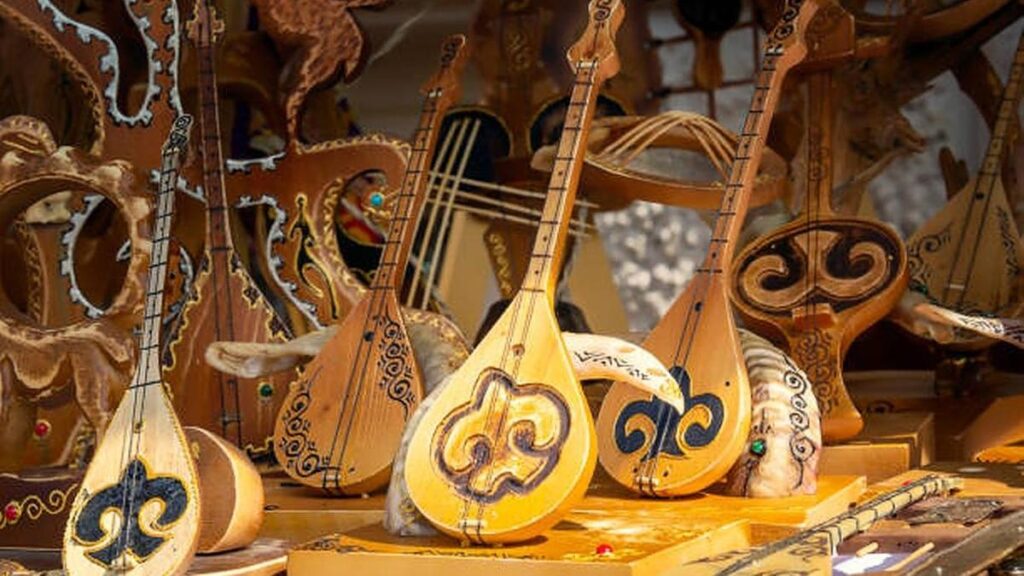
Until recently, Kazakh national instruments were largely associated with school concerts, folk ensembles, and official ceremonies. The dombra (a long-necked, two-stringed plucked instrument), kobyz (a bowed string instrument with two horsehair strings), and sybyzgy (a wooden end-blown flute traditionally made from apricot wood) seemed to occupy a separate cultural space: symbolically important, yet detached from everyday life. “Before, the dombra was for me only part of school concerts,” recalls Sanzhar Uvashev, 24, a sales specialist from Almaty. “It was brought out on holidays, people dressed in national costumes, played a couple of obligatory songs, and that was it. I never thought this instrument could sound different, or be part of contemporary music.” Today, that distance is steadily narrowing. The sound of the dombra is increasingly featured in contemporary original music, electronic compositions, film scores, and social media. Young musicians are not abandoning tradition, but they are no longer treating it as something frozen in time. To understand how this rethinking is taking place, and why tradition need not remain 'untouched', The Times of Central Asia spoke with Merey Otan, a researcher and musician who works with Kazakh instruments in a modern cultural context. ТCA: Merey, how did your study of national instruments begin? Was it a deliberate decision? MO: It started during my master’s studies, when I was writing a thesis on contemporary music in Kazakhstan. As part of that research, I interviewed the ethno-rock band Aldaspan and kobyz player Almat Saizhan. I was especially interested in how the dombra and kobyz were being transformed and modernized and eventually devoted a whole chapter of my work to this topic. So yes, it was a conscious choice. TCA: People often argue that tradition should be preserved in its original form. What’s your take on that? MO: I’ve heard that view often, especially from traditional musicians. Some believe, for example, that an electronic dombra desecrates the instrument. Given the sacred meaning of the dombra and kobyz, I understand that stance. In sociology, these people are sometimes called purists. But I disagree. The world is changing, and some traditions from the nomadic era have lost their relevance or even become barriers. I believe traditions can, and sometimes should, evolve. If modifying an instrument helps engage younger generations, why not? TCA: Where do you personally draw the line between respect for heritage and experimentation? MO: I see nothing wrong with experimentation. On the contrary, bands like Steppe Sons show deep respect for heritage. Their members have formal musical education and a strong grounding in tradition. However, it's important to consider the concept of cultural appropriation from postcolonial theory. This occurs when privileged groups use the culture of marginalized communities for personal gain. In music, this might look like a Western artist profiting from Kazakh instruments without acknowledging Kazakh musicians. That, in my view, is disrespectful. TCA: Is there still criticism about the “incorrect” use of traditional instruments? MO: Yes, certainly. When Aldaspan introduced the electronic dombra, public figures like Bekbolat Tleukhan were highly critical....

Switzerland Backs Winter Tourism Development in Kyrgyzstan

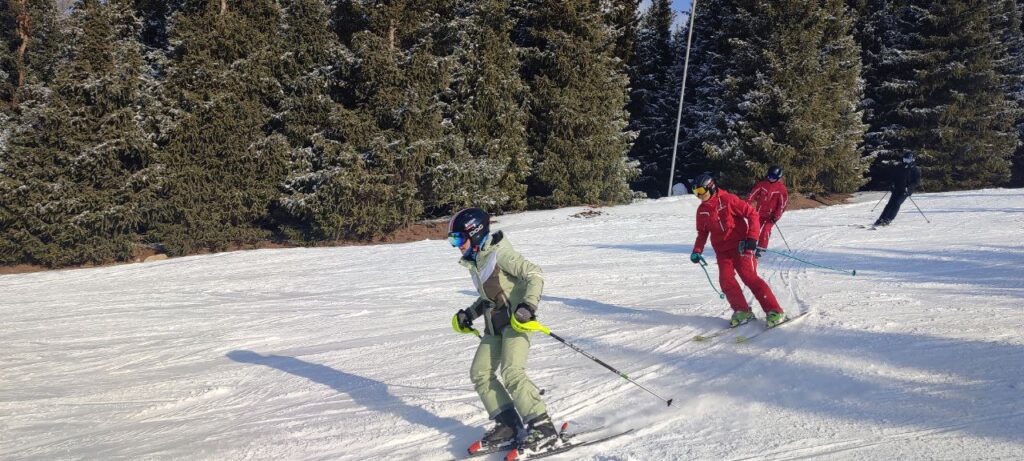
Switzerland is providing practical support to Kyrgyzstan in developing its winter tourism sector, with a strong focus on training professional staff. A program for ski instructor training is currently underway in the city of Karakol, Issyk-Kul region, with Swiss backing. Switzerland's ambassador to Kyrgyzstan, Sirocco Meserli, recently visited a cross-country skiing training session, a sport that has seen systematic development in Kyrgyzstan since 2022. According to Swiss diplomats, specialists from Switzerland have arrived to train Kyrgyz instructors and sports school coaches in modern international methods tailored for children, adults, and tourists. The initiative is part of the Sustainable Winter Tourism project, funded by the Swiss government. The final stage of this year’s training sessions with Swiss experts is currently taking place. [caption id="attachment_42787" align="aligncenter" width="300"] @TCA[/caption] Meserli stated that the program covers skiing techniques, instructional methods, tourist engagement, and safety protocols. “Infrastructure development is important, but qualified personnel who can provide a high level of service and a positive tourist experience play a decisive role,” he said. The project introduces international training standards for instructors at the Admission, Aspirant, and Instructor levels, commonly used in alpine skiing and snowboarding training globally. The Swiss side has emphasized the project’s long-term goals: not only to train instructors but also to lay the foundation for winter sports as a sustainable economic sector, fostering growth in tourist traffic, job creation, and service offerings during the winter season. [caption id="attachment_42788" align="aligncenter" width="300"] @TCA[/caption] Kyrgyz experts see high potential in this area. Approximately 94% of Kyrgyzstan’s territory is mountainous, and new ski resorts are actively being developed across the country. “Skiing is becoming popular. Young people are eager to learn. All instructors speak Kyrgyz, Russian, and English, and demand for training has grown significantly,” ski instructor Daniyar Toichbek told The Times of Central Asia. Karakol remains Kyrgyzstan’s primary ski destination. During the winter season, numerous rental shops operate in the city, where a full set of ski equipment can be rented for about $35, making winter recreation accessible to both locals and international visitors.