

• KGS/USD = 0.01144 0%
  • KZT/USD = 0.00207 0%
  • TJS/USD = 0.10440 -0.19%
  • UZS/USD = 0.00008 0%
  • TMT/USD = 0.28490 0%
  • KGS/USD = 0.01144 0%
  • KZT/USD = 0.00207 0%
  • TJS/USD = 0.10440 -0.19%
  • UZS/USD = 0.00008 0%
  • TMT/USD = 0.28490 0%
  • KGS/USD = 0.01144 0%
  • KZT/USD = 0.00207 0%
  • TJS/USD = 0.10440 -0.19%
  • UZS/USD = 0.00008 0%
  • TMT/USD = 0.28490 0%
  • KGS/USD = 0.01144 0%
  • KZT/USD = 0.00207 0%
  • TJS/USD = 0.10440 -0.19%
  • UZS/USD = 0.00008 0%
  • TMT/USD = 0.28490 0%
  • KGS/USD = 0.01144 0%
  • KZT/USD = 0.00207 0%
  • TJS/USD = 0.10440 -0.19%
  • UZS/USD = 0.00008 0%
  • TMT/USD = 0.28490 0%
  • KGS/USD = 0.01144 0%
  • KZT/USD = 0.00207 0%
  • TJS/USD = 0.10440 -0.19%
  • UZS/USD = 0.00008 0%
  • TMT/USD = 0.28490 0%
  • KGS/USD = 0.01144 0%
  • KZT/USD = 0.00207 0%
  • TJS/USD = 0.10440 -0.19%
  • UZS/USD = 0.00008 0%
  • TMT/USD = 0.28490 0%
  • KGS/USD = 0.01144 0%
  • KZT/USD = 0.00207 0%
  • TJS/USD = 0.10440 -0.19%
  • UZS/USD = 0.00008 0%
  • TMT/USD = 0.28490 0%

Viewing results 415 - 420 of 1462

Majority of Kazakhstanis Are Religious, But Discrimination Persists, Studies Suggest

A recent study by analysts at Energyprom.kz sheds light on the religious landscape of Kazakhstan. According to data from the educational platform Jagran Josh, Kazakhstan's population includes approximately 15.4 million believers.  The majority, 11.3 million, identify as Muslim, while about 4 million identify as Christian. A smaller segment, approximately 670,000 individuals, comprise atheists, agnostics, and those with no religious affiliation. Additionally, there are around 5,000 Hindus, 40,000 Buddhists, and about 50,000 practitioners of traditional local beliefs. It is important to note that these figures are compiled from various sources, some dating back to 2015 or earlier. Consequently, they are more suitable for broad international comparisons rather than a precise assessment of Kazakhstan's current religious demographics. Regional Characteristics of Religiosity More recent data, based on a 2024 survey of 1,500 respondents (aged 18 to 65) conducted by the Committee on Religious Affairs of the Republic of Kazakhstan, provides deeper insights into domestic religiosity. The survey revealed that 24.1% of Kazakhstani citizens consider themselves practicing believers who strictly observe religious precepts. The majority, 62.7%, identify as believers but observe only some rituals and traditions. About 9.2% of respondents stated they do not consider themselves believers yet still participate in certain rituals. A smaller proportion, 1.3%, reported no religious affiliation and no participation in rituals, while 0.9% identified as convinced atheists and 0.5% as agnostics. Regionally, Shymkent recorded the largest share of conditionally religious people who observe only certain traditions, at 77.6%. The Atyrau region exhibited the highest proportion of strict practitioners, at 46%. Conversely, the Pavlodar region led in the number of non-believers who nevertheless participate in rituals, at 24.6%. Atyrau also had the highest proportion of complete non-believers, at 10%. In terms of religious affiliation, 65.1% of respondents identified as followers of the Hanafi school of Islam, with another 11.6% belonging to other branches of Islam. Orthodox Christianity was practiced by 14.8% of respondents, Catholicism by 2.1%, and Protestantism by 1.8%. Hinduism, Buddhism, paganism, and Tengriism collectively accounted for less than 2%. An additional 0.8% reported believing but not identifying with any particular religion. The proportion of daily prayers increased from 17.7% to 19.3% over the last quarter. However, 27.9% of respondents reported never praying. Regarding attendance at places of worship (mosques, churches, etc.), 6.2% visit regularly, 14.5% do so weekly, and 33.8% two to three times a year. Notably, 10.4% of respondents have never been to a place of worship. Daily religious discussions with relatives were reported by 4.3% of Kazakhstani citizens, while 27.3% admitted that they never discuss religion within their families. Religious Discrimination Over the past three months, 41.3% of respondents reported experiencing discrimination on religious grounds. The most frequently cited incidents included the publication of offensive images (19.3%), negative comments on social media (11.5%), bans on visiting mosques or churches by the clergy (7.8%), and restrictions on education due to wearing a hijab (10.8%). Although official statistics on incidents directly classified as religiously motivated are not maintained, 54 criminal offenses were recorded between January and April 2025...
Construction Begins on New British School Campus in Astana

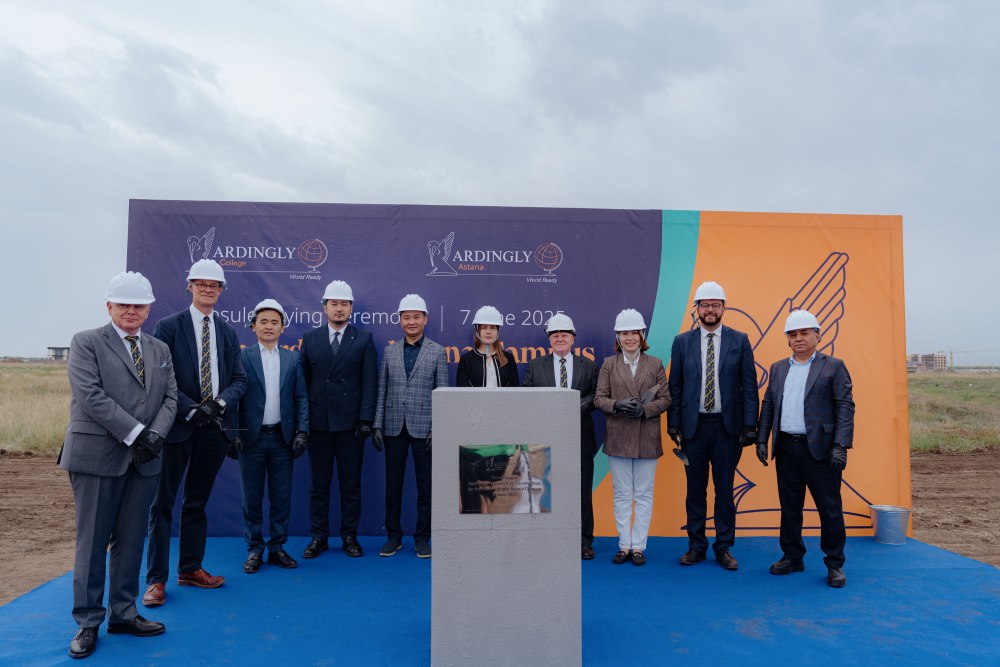
A capsule-laying ceremony on June 7 marked the official start of construction on the new Ardingly College campus in Astana, a major milestone in Kazakhstan-UK educational cooperation. Ardingly Astana is a branch of Ardingly College, a prestigious British coeducational day and boarding school founded in 1858 in West Sussex, England. The Astana branch will follow the Cambridge curriculum, offering instruction in English and preparing students for A-Level examinations. The school’s faculty will include educators with international and UK-based teaching experience. The first phase of the new campus is expected to open in 2026, with the capacity to accommodate up to 1,000 students. The campus will include state-of-the-art facilities such as a swimming pool, sports complexes, music and art studios, and science laboratories. Designed as an educational hub for students from Kazakhstan and across Central Asia, Ardingly Astana aims to merge the British academic model with innovative teaching methods, equipping students for admission to leading universities worldwide. The project also seeks to attract international educators and promote cross-border knowledge exchange and educational integration. The development is supported by Kazakh Invest, Kazakhstan’s national investment promotion agency. The capsule-laying ceremony was attended by representatives of the British Embassy in Kazakhstan, Ardingly College, Ardingly Astana, and Kazakh Invest. Azamat Kozhanov, Deputy Chairman of Kazakh Invest, underscored the project’s significance: “The opening of a campus of one of the UK’s top educational institutions in the heart of Eurasia symbolizes trust, partnership, and a strategic vision for the future. It will be more than just a school, it will be an ecosystem for nurturing ideas and developing future leaders. Education remains a priority for investment, and we are ready to provide full support for such projects. We are confident that Ardingly Astana will attract talented students and educators from around the world.” The project marks a significant step in advancing both educational and investment ties between Kazakhstan and the United Kingdom.

Ruins of a Burned Medieval City Unearthed in Southern Kazakhstan

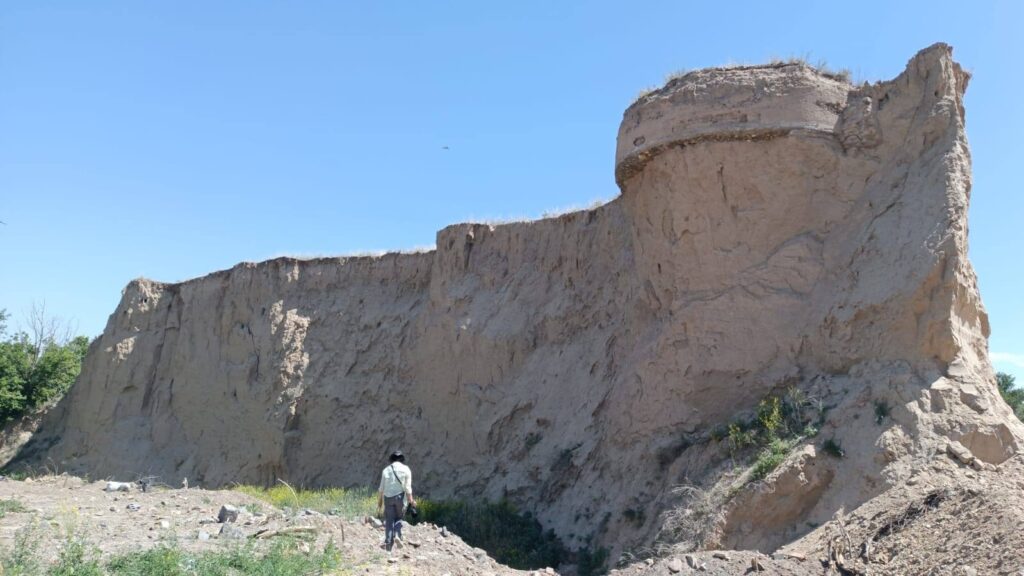
Archaeologists in Kazakhstan may have uncovered the ruins of a long-lost medieval city previously known only from historical texts. The discovery was announced by Olga Gumirova, executive director of the Petroglyph Hunters Foundation. Tower, Masonry, and a Burned Past The remains were found in the Zhetysu region, and experts believe the site could be as archaeologically significant as Talkhiz or Koylyk, both of which are included on the UNESCO World Heritage List. "It looks like we've found the medieval city that everyone has been looking for! First, we saw the remains of brickwork in a quarry, a miraculously preserved tower, and then a wall... Medieval bricks protruded from the ground. The city was severely burned during the Mongol invasion," Gumirova wrote on Facebook. Archaeologists have been informed, though analysis and discussion are just beginning. Talkhiz, now part of the Almaty region, was established in the 8th century as a hub of trade and industry. Koylyk, also known as Antonovskoe, thrived from the 8th to 14th centuries. Both are recognized as cultural heritage sites of global significance. Twenty-Five New Sites in the Saryarka Steppes Meanwhile, archaeologists from the Saryarka Archaeological Institute made significant discoveries in the Shet district of Karaganda region. In May 2025, researchers uncovered 25 new historical and cultural sites, including burial mounds, necropolises, and complex structures from the Bronze, Iron, and Medieval Ages. “Work is just beginning, but we can already confidently speak about the importance of the finds,” said Alexei Kukushkin, director of the institute. Dating and full excavation await official approval. Eastern Kazakhstan’s “Golden Man” A remarkable earlier discovery occurred in 2018 in the Tarbagatai district of East Kazakhstan. An expedition led by archaeologist Zeynolla Samashev uncovered a burial site containing nearly 3,000 gold artifacts dating back to the 7th-8th centuries BCE. Items included women’s earrings, gemstone necklaces, and ornate horse gear, highlighting the artistic and cultural richness of the era. Buddhist Temple Found in Zhambyl Region In another discovery underscoring Kazakhstan’s diverse historical legacy, archaeologists unearthed the remains of a Buddhist temple in the Ayranada Gorge, Merken district, Zhambyl region. Fragments of a structure and a partially buried stone sculpture of a Buddha were found, reinforcing the area's importance along the Great Silk Road. “The Buddhist temple and the head of Buddha could become interesting tourist attractions,” said Anna Krokosheva, senior researcher at the Museum of Ancient Taraz. However, the site remains difficult to access, located at over 3,000 meters above sea level with no existing infrastructure. Krokosheva noted that this inaccessibility has helped preserve the artifacts. From steppe burial mounds to ancient ruins, Buddhist temples to gold-laden tombs, Kazakhstan continues to reveal a rich, multilayered historical narrative. The recently discovered city in Zhetysu may become a vital link in this story, an archaeological treasure of national and potentially global significance. What remains hidden beneath the soil may yet reshape our understanding of medieval Kazakhstan.

Film About Turkmen Poet Wins International Award in London

The film Magtymguly Pyragy, a collaborative production by filmmakers from Uzbekistan and Turkmenistan, has won the “Audience Recognition” award at the Eurasian Creative Guild (ECG) Film Festival 2025 in London. The movie tells the story of Magtymguly Pyragy, an 18th-century Turkmen poet and philosopher, focusing on his ideals of peace, love for the homeland, and aspirations for national awakening. The project was jointly produced by directors, actors, and creative teams from both countries. This collaboration has been widely praised as a powerful symbol of cultural dialogue and brotherhood. Viewers and jury members commended the film for its compelling visuals, immersive historical atmosphere, and the strong performances delivered by its cast. Organizers of the festival noted that the film goes beyond artistic achievement, serving as a cultural bridge that fosters mutual understanding and promotes universal values such as freedom, dignity, and humanity. The ECG Film Festival annually gathers filmmakers from over 20 countries to celebrate and promote cinema from the Eurasian region. In related celebrations, Turkmenistan hosted a summit of heads of government in October and a conference of culture ministers in May 2024 to commemorate the 300th anniversary of Magtymguly Pyragy’s birth.

Opinion: What Uzbekistan’s FIFA World Cup Breakthrough Tells Us About State-Building

When Uzbekistan's goalkeeper Utkir Yusupov made those crucial saves against the UAE last night, securing his country's first-ever FIFA World Cup qualification, he was putting the finishing touches to a decade-long story about how nations build capacity, and what happens when they finally get it right. Uzbekistan's journey to the 2026 World Cup is not just a sports story. Go deeper, and you'll find something more interesting: a case study in institutional development. The Numbers Don't Lie Consider what Uzbekistan has pulled off in recent years. At Rio 2016, the country won 13 Olympic medals, placing 21st globally. In Tokyo, they obtained three gold medals despite disruptions caused by the pandemic. Uzbekistan achieved its best-ever performance at the Paris Olympics, securing 13 medals (8 gold, 2 silver, and 3 bronze), placing them 13th overall in the medal standings, first among post-Soviet states, and fourth among Asian nations overall. But the real story is the systematic nature of their success. Seven of those 13 Rio medals came in boxing alone, with three golds. At the 2023 World Boxing Championships in Tashkent, Uzbek fighters received five gold medals, the tournament's best overall performance. Boxers also dominated the Paris Olympics, bringing five gold medals to the national team’s account. Uzbekistan’s youth football teams have been even more dominant: AFC U-23 champions in 2018, U-20 Asian Cup winners in 2023, and U-17 continental champions twice since 2012. This is not random. Big tournaments reward institutional capacity, not just individual talent. Success on this scale requires functional sports federations, coherent youth development systems, and the kind of long-term planning that only works when bureaucracies can actually implement policies rather than just announce them. Small Economy, Outsized Results What makes Uzbekistan's breakthrough particularly striking is the economic context. Uzbekistan is not Germany or Japan leveraging massive GDP advantages. Uzbekistan's sports budget doubled to roughly $230 million by 2025, serious money for the country, but pocket change compared to what traditional powers spend. Yet they're outperforming nations with far deeper pockets. Their junior teams dominate youth football rankings. Their boxers routinely defeat athletes from wealthier countries. That efficiency ratio, results per dollar invested, suggests something important is happening at the governance level. The government has built over a hundred new sports facilities while doubling coaches' salaries. President Mirziyoyev's Presidential Olympics program scouts talent across all regions, attracting the best prospects to national training centers. Athletes now receive meaningful incentives: houses, cars, and scholarships. This is a systematic investment with clear metrics and accountability. The Quiet Politics of Athletic Success Sports remain one of the few arenas where state effectiveness can reveal itself without the outsized intrusion of politics. You can't fake your way to consistent Olympic medals or sustained success in FIFA youth competitions. These achievements require multiple sectors - education, healthcare, and urban planning - to function in coordination. Uzbekistan's sporting surge coincides with broader signs of improved state capacity under Mirziyoyev's administration. The infrastructure investments are real. The youth development programs are producing measurable results....

Uzbekistan Sends 183 Tons of Aid to Afghanistan for Eid al-Adha

Uzbekistan has delivered 183 tons of humanitarian aid to Afghanistan in honor of Eid al-Adha, reaffirming its commitment to supporting its southern neighbor. According to the administration of Termez city in Uzbekistan’s Surkhandarya region, the aid was transported to Afghanistan’s Balkh province. The shipment included essential food items such as flour, rice, sugar, pasta, vegetable oil, red beans, mung beans, instant meals, and sweets. This assistance was dispatched on the instruction of President Shavkat Mirziyoyev and has been described as a gesture of solidarity and compassion from the Uzbek people during the religious holiday. The aid was officially handed over in the border city of Hairatan, at the site of the Astras company. The handover ceremony was attended by Uzbekistan’s Special Representative for Afghanistan, Ismatulla Irgashev; Surkhandarya regional governor Ulugʻbek Qosimov; deputy governor of Balkh province, Nurulhodi Abuidris; and other officials from both countries. Afghan representatives expressed their gratitude to President Mirziyoyev and the Uzbek people for their continued humanitarian support and extended warm Eid greetings in return. In a similar gesture earlier this year, Uzbekistan sent approximately 200 tons of aid to Afghanistan for the Navruz and Eid al-Fitr holidays, consisting of similar food supplies.
