• KZT/USD = 0.00219
  • TJS/USD = 0.10810
  • UZS/USD = 0.00009
  • TMT/USD = 0.29760
  • KZT/USD = 0.00219
  • TJS/USD = 0.10810
  • UZS/USD = 0.00009
  • TMT/USD = 0.29760
  • KZT/USD = 0.00219
  • TJS/USD = 0.10810
  • UZS/USD = 0.00009
  • TMT/USD = 0.29760
  • KZT/USD = 0.00219
  • TJS/USD = 0.10810
  • UZS/USD = 0.00009
  • TMT/USD = 0.29760
  • KZT/USD = 0.00219
  • TJS/USD = 0.10810
  • UZS/USD = 0.00009
  • TMT/USD = 0.29760
  • KZT/USD = 0.00219
  • TJS/USD = 0.10810
  • UZS/USD = 0.00009
  • TMT/USD = 0.29760
  • KZT/USD = 0.00219
  • TJS/USD = 0.10810
  • UZS/USD = 0.00009
  • TMT/USD = 0.29760
  • KZT/USD = 0.00219
  • TJS/USD = 0.10810
  • UZS/USD = 0.00009
  • TMT/USD = 0.29760
02 September 2026

Viewing results 43 - 48 of 1876

U.S. Reportedly Secures Ukrainian Pledge to Avoid Strikes on CPC Infrastructure

Turkey has begun restricting some commercial vessels from entering the Black Sea on voyages to Novorossiysk, adding a potential new obstacle to Kazakhstan’s oil exports through the Caspian Pipeline Consortium amid reports that Ukraine has agreed to spare CPC infrastructure and qualifying non-Russian tankers from attack. Turkey’s Directorate-General of Coastal Safety has told multiple ships bound for Novorossiysk that it is not currently issuing transit permits for those voyages or needs more time to review applications through the Dardanelles. The authorities have not publicly explained the measure. Some vessels were told the restriction also applied to ships heading to Ukraine, while traffic bound for Bulgarian and Turkish ports continued. There is no confirmation that any tanker scheduled to load Kazakh crude at the CPC terminal has been denied passage. The measure nevertheless comes at a difficult point for CPC, where repeated attacks and stoppages have already made some shipowners reluctant to accept voyages to the terminal near Novorossiysk. On August 7, Reuters reported that CPC loadings fell more than 20% behind schedule in July, to around 1.2 million to 1.3 million barrels per day. That removed about 400,000 barrels a day of CPC Blend from the international market. Loadings averaged roughly 1.1 million to 1.2 million barrels per day in the first week of August, while Kazakhstan’s oil production has fallen 14% from June. CPC normally handles around 1.5 million to 1.7 million barrels per day and carries more than 80% of Kazakhstan’s oil exports. Four tankers completed loading after the July 30 attacks, but operations remained intermittent as tanker availability and security concerns continued to limit the recovery. The Turkish restrictions emerged on the same day as a potentially important change in the security picture around CPC. According to an unnamed U.S. government official cited by Bloomberg, Ukraine has agreed not to target CPC infrastructure or qualifying non-Russian vessels bound for the terminal, provided they are not under Ukrainian sanctions, are not carrying Russian cargo, and are not owned by Russian individuals or entities. Ukraine has also established points of contact through which commercial shippers can provide vessel information and seek safe passage. The arrangement follows months of U.S. pressure over the exposure of Kazakhstan-origin crude and Western commercial interests at CPC. During a July 29 call, U.S. Secretary of State Marco Rubio and Kazakhstan’s Foreign Minister Yermek Kosherbayev discussed the need for “reliable and uninterrupted” exports of Kazakhstan-origin oil through the system. The commitment could reduce one source of risk for ships serving CPC, but it does not immediately resolve the commercial disruption. Previous attempts by companies to identify vessels that should not be targeted did not prevent all attacks, while war-risk insurance and charter costs have risen sharply. Ankara has become increasingly vocal as attacks spread across the Black Sea. Turkey’s Foreign Ministry said the Turkish-owned civilian vessels Yaşar and Nadezhda were attacked by drones on August 3 after leaving Novorossiysk, injuring crew members including Turkish citizens. It warned that further escalation could have broader consequences, including...

How the Russia–Ukraine War Is Reshaping Central Asia’s Geopolitical Balance

More than four years after Russia launched its full-scale invasion of Ukraine, the conflict continues to alter political and economic relations across the former Soviet space. In an interview with The Times of Central Asia, Uzbek political scientist Mukhtor Nazirov examined Moscow’s evolving regional role, Central Asia’s search for wider external partnerships, and the areas in which Russia remains difficult to replace. “The war changed Russia,” Nazirov said. “It became more closed, more militarized, and its political logic increasingly became military. Central Asian countries suddenly found themselves dealing with a Russia that was no longer the same as it had been before the war.” Before 2022, Russia’s relations with Central Asia rested on long-established political, economic, and security ties. Since the invasion, international isolation and wartime pressures have complicated that relationship. “The war consumed everything,” Nazirov explained. “It influenced not only politics and the economy, but also public thinking, the country’s openness, its ideology, and the overall direction of the state. As Russia changed during the war, its dialogue with Central Asian countries became increasingly difficult.” “Central Asian states gained a moral justification to look for other options,” he said. “Russia is no longer the Russia it used to be.” Russia nevertheless remains deeply embedded in the region’s economy. Infrastructure, logistics networks, export routes, and labor migration still bind Central Asian states to the Russian market. Kazakhstan exports most of its oil through Russia’s Novorossiysk port, while trade from Uzbekistan and other countries continues to rely heavily on northern corridors. Millions of Central Asian citizens also work in Russia. “The economic foundation still exists,” Nazirov told TCA. “Much of Central Asia remains part of an economic structure that was formed during the Soviet period. Infrastructure is shared, and many export routes still pass through Russia.” However, the durability of Moscow’s influence is under closer scrutiny as other powers expand their regional presence. “Political closeness alone is not enough,” Nazirov said. “Any partnership eventually comes down to economics. If Russia wants to remain influential, it must have a strong economic foundation. If it cannot provide that, then others will naturally begin filling the gap.” China and the European Union have expanded their economic engagement as sanctions and wartime demands have constrained Russia. Interest has also grown in the Middle Corridor, or Trans-Caspian International Transport Route, which offers an alternative to routes through Russia. “The rhetoric surrounding the Middle Corridor became much stronger during the war,” he said. “The project already existed, but the war created momentum.” The EU’s Global Gateway initiative and new connectivity financing have given Central Asian governments additional channels for trade, investment, and transport. “This space is being filled partly by China and partly by the European Union,” he said. “They are proposing alternatives, and naturally Central Asian countries are turning toward those opportunities.” Russia remains the main destination for Central Asian labor migrants, although governments are pursuing employment opportunities in South Korea, Europe, and the Gulf states. “I would not say diversification has already taken place,” Nazirov...

Russia Migration Rules Tighten as Central Asian Work Entries Fall

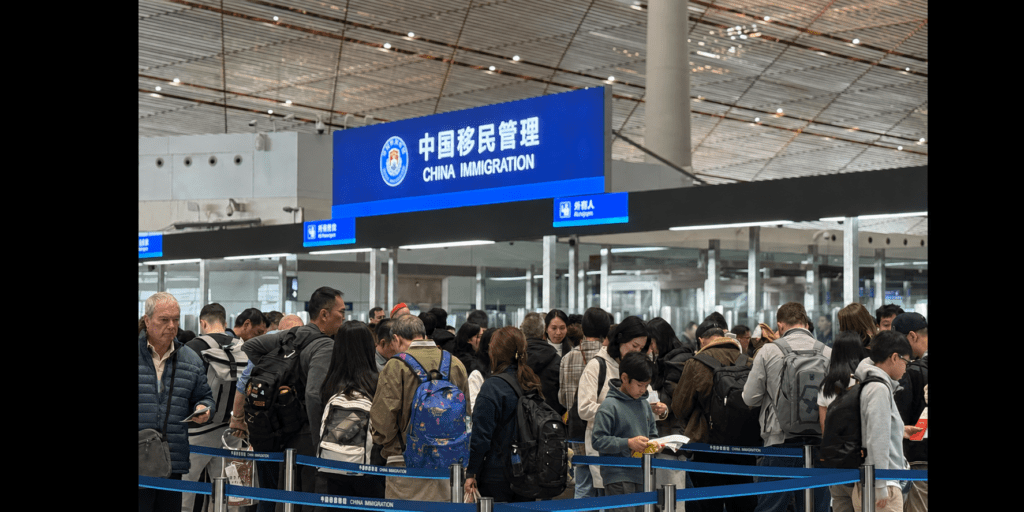
Entries to Russia for work by citizens of Uzbekistan, Tajikistan, and Kyrgyzstan fell by 15% in the first half of 2026 amid tighter migration rules and higher costs for workers. The Border Service of Russia’s Federal Security Service recorded about 1.9 million work-related entries by citizens of the three countries between January and June, down from more than 2.3 million in the same period of 2025, according to data published through Russia’s Unified Interdepartmental Information and Statistical System. The restrictions are also separating some migrant workers from their children. Since April 1, 2025, foreign children applying to Russian state schools have been required to prove that they are legally resident in the country and pass a Russian-language test. Those who fail cannot enroll and must wait at least three months before taking the test again. Rakhmat, a Tajik migrant worker preparing to bring his children, aged seven and nine, to Russia, told Radio Free Europe/Radio Liberty that he might have to send them back to live with their grandparents if they fail. Tajikistan’s education minister has said that about 9,000 children have already returned from Russia after being denied school places. Russian Education Ministry figures cited by Asia-Plus show that the number of foreign children attending Russian schools fell by about 44,000 during the 2025–26 academic year. Enrollment among children from Uzbekistan, Tajikistan, and Kyrgyzstan dropped by 27%, from 122,000 to 89,000. For adult migrants, tighter oversight increasingly comes through their phones. Since September 1, 2025, visa-free foreign nationals working in Moscow and the surrounding region have been required to register through the Amina mobile application. Its central function is to report a migrant’s place of residence while automatically transmitting the phone’s geolocation to the Russian Interior Ministry. Russian authorities present the system as a way to enforce migration rules and reduce corruption. Critics argue that continuous location tracking subjects foreign nationals to intrusive surveillance. Migrants who stop transmitting location data may be placed on Russia’s register of controlled persons, restricting their access to banking and other services and potentially leading to deportation. On September 1, 2026, the Amina requirement will be extended to adults from visa-free countries who remain in Moscow or the Moscow region for more than 90 days for purposes other than work, including foreign students. The experimental system remains limited to the capital region and does not yet apply across Russia. Kyrgyzstan’s Center for Employment of Citizens Abroad has published guidance explaining who must install Amina, what information it transmits, and how migrants can avoid breaching the new registration rules. The Times of Central Asia previously reported that Russia's tightening migration policy is prompting Central Asian countries to seek alternative labor markets while expanding employment opportunities at home.

Turkmenistan’s Neutrality: Diplomatic Space, Economic Limits

Permanent neutrality has shaped Turkmenistan’s foreign policy for more than three decades. It has given Ashgabat a distinct diplomatic identity and helped it maintain relations with competing regional powers. Its economic benefits, however, have been more limited. On December 12, 1995, the UN General Assembly adopted a resolution without a vote that recognized and supported Turkmenistan’s declared permanent neutrality. The Assembly adopted a further resolution in 2015 and reaffirmed its support for a third time on March 21, 2025. The UN reinforced a policy declared by Ashgabat. It did not create the status or guarantee Turkmenistan influence beyond its borders. The strongest evidence of neutrality’s diplomatic value came during the civil war in Tajikistan. Turkmenistan hosted UN-sponsored inter-Tajik peace talks in Ashgabat during the 1990s. The negotiations contributed to the process that produced the 1997 peace agreement. Hosting those talks did not make Turkmenistan the principal mediator. The UN and regional governments played larger roles. Ashgabat nevertheless provided a venue considered acceptable by the opposing sides. Turkmenistan has followed a similar policy toward Afghanistan. It has maintained contacts with successive authorities in Kabul while supplying electricity and pursuing transport and energy projects across the border. Since the Taliban returned to power in 2021, Ashgabat has continued its economic engagement without making its relationship dependent on formal political alignment. Neutrality helps Turkmenistan keep diplomatic channels open, but it is not the only explanation for this policy. The two countries share a long border, and Afghanistan is central to several planned export and transit routes. Energy provides a clearer measure of what neutrality can and cannot deliver. Turkmenistan has sought buyers in Russia, China, Iran, Türkiye, South Asia, and Europe. Its ability to reach those markets has depended mainly on pipelines, financing, and relations with transit countries. China became Turkmenistan’s main gas customer after the Central Asia-China pipeline opened in 2009. By 2026, Turkmenistan was exporting around 30 billion cubic meters of gas to China each year. A new agreement signed in April 2026 to expand the Galkynysh gas field could support another 10 billion cubic meters of annual production, further deepening the energy relationship with Beijing. Turkmenistan’s experience with other buyers has been less stable. Russia’s Gazprom stopped purchasing Turkmen gas in 2016 before resuming much smaller imports in 2019. Supplies to Iran ended in 2017 during a dispute over unpaid bills. Ashgabat secured a modest new outlet in March 2025, when Turkmen gas began flowing to Türkiye under a swap arrangement through Iran. The one-year agreement covered about 1.3 billion cubic meters, with officials discussing possible annual supplies of up to 2 billion cubic meters. The Türkiye deal showed that Ashgabat could find new customers, but the volume remained small beside exports to China. The route also depended on Iranian infrastructure. Turkmenistan’s larger diversification projects remain incomplete. Construction has advanced on the Afghan section of the Turkmenistan-Afghanistan-Pakistan-India pipeline, known as TAPI. Turkmen officials expect the first Afghan section to reach Herat by the end of 2026, but plans for extending...

Kazakhstan Interfaith Center Chair Gulsana Kozhabay: Astana Congress Must Turn Dialogue into Action

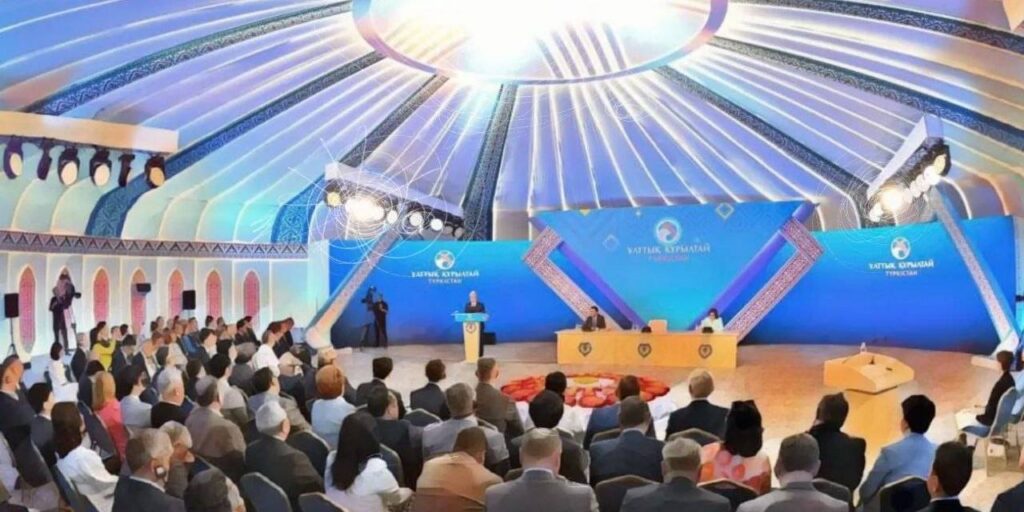
Kazakhstan wants the Astana Congress of the Leaders of World and Traditional Religions to take a more active role in conflict prevention and postwar reconciliation, including through permanent expert engagement and a possible Islamic-Jewish roundtable in Israel in 2027. In an interview with The Times of Central Asia, Gulsana Kozhabay, chair of the board of the International Center for Interfaith and Interreligious Dialogue, explains how the Congress could expand its work between its triennial gatherings while remaining politically neutral. Speaking in a personal capacity, she discusses the limits of religious diplomacy in the conflict in Gaza. She also addresses Kazakhstan’s ambition to develop its own school in this field and explains why she believes interfaith dialogue must increasingly lead to practical action rather than declarations alone. TCA: What role can Kazakhstan’s humanitarian and spiritual diplomacy play in promoting peace, and how can the International Center contribute? Kozhabay: Let us begin by explaining in simple terms what spiritual diplomacy means. In the context of this interview, we primarily understand it as religious diplomacy. It has several layers. It includes relations between different religions, dialogue within a single religion, engagement among the Abrahamic faiths, and work at local, regional and international levels. Religious leaders and organizations can work with states, international organizations and civil society, or act independently. Many researchers believe that we are living in a post-secular period. Jürgen Habermas is one of the principal theorists associated with this approach. Modernization and technological development have clearly not pushed religion to the margins. Religions continue to play an important role in society, culture, and even politics. In many countries, including the Vatican, states in the Middle East, Egypt, Israel, the United States, and Russia, religious leaders command considerable trust, exercise influence in society, and have direct access to very large audiences. Habermas’s work is widely associated with the concept of a post-secular society and the continuing place of religion in public life. Religious diplomacy cannot, of course, prevent or resolve every conflict and crisis, or replace political negotiations. Its main value lies in preserving channels of communication alongside political dialogue, or when that dialogue becomes difficult. Reducing mistrust, countering hate speech, and explaining to the public the value of peace and human life are important elements of religious diplomacy and are reflected in the Astana Peace Declaration 2025. In his ecological encyclical Laudato si’, Pope Francis wrote that religions should engage in dialogue to protect nature, defend the poor, and build networks of respect and fraternity. Kazakhstan has always supported peaceful dialogue and a constructive international agenda. This is one of our strengths. We do not claim the role of a great power and do not seek to impose our decisions on other countries. Kazakhstan acts as a middle power that can build bridges, bring different parties to the same table, and offer neutral venues for dialogue. This is also part of Kazakhstan’s soft power. Kazakhstan is trusted as a state that consistently supports dialogue at the political level and among cultures,...

India Uzbekistan Free Trade Agreement Floated as Tashkent Courts Minerals Investment

India has floated the possibility of a free trade agreement with Uzbekistan as Tashkent seeks Indian investment in copper and rare-earth processing. Indian Commerce and Industry Minister Piyush Goyal described a potential agreement as a “promising idea” during an India-Uzbekistan Business Forum in New Delhi, saying the two governments could examine it further. He also called for bilateral trade to reach approximately $3 billion within three years. Uzbek government figures put trade turnover at $1.3 billion in 2025, an increase of 33% from the previous year. The relationship remains heavily weighted toward Indian exports: Uzbekistan imported goods worth $1.15 billion from India while exporting $164.6 million in the opposite direction. Mining provided the clearest new commercial focus during the visit by Uzbekistan’s Minister of Investments, Industry and Trade, Laziz Kudratov. He highlighted the country’s deposits of gold, copper, uranium and rare-earth elements, and invited Indian companies to provide capital and technology for copper refining and the production of higher-value rare-earth products. More than 250 officials and business representatives attended the forum. Despite the, the event ended up being very light on investment announcements. Uzbekistan is already trying to turn its mineral deposits into a domestic processing industry. In March, the government announced a $4.2 billion critical-minerals program comprising 120 projects. [when?] The first projects include the production of high-purity selenium, tellurium and rhenium, while the country is also seeking to expand its established tungsten and molybdenum industries. India’s interest has a clear supply-chain rationale. China supplied between 60% and 81% of India’s permanent-magnet imports by value between 2022 and 2025, and an even larger share by volume. Rare-earth permanent magnets are used in electric-vehicle motors, wind turbines, electronics and defense equipment. New Delhi has begun looking overseas for alternative supplies. Under its National Critical Mineral Mission, the state-owned Khanij Bidesh India Limited has secured exploration and mining rights covering five lithium-brine blocks in Argentina. It has also examined potential lithium and cobalt investments in Australia. Beyond mining, pharmaceuticals appear to offer the strongest established basis for expanding trade, with Uzbekistan inviting Indian companies to establish local production facilities. According to the Indian Ministry of Foreign Affairs, approximately 400 Indian-owned companies already operate in Uzbekistan. [source?] While no formal negotiations have begun, a free trade agreement could lower duties on these products. That said it would not remove larger regulatory logistical obstacles. India and Uzbekistan have no direct land connection, meaning freight must cross several borders or travel through Iranian ports and overland transport corridors. Uzbek Foreign Minister Bakhtiyor Saidov said the visit produced agreements to expand investment and industrial cooperation, but provided no details of individual projects. For now, both the proposed trade agreement and the minerals partnership remain at an exploratory stage.