• KZT/USD = 0.00219
  • TJS/USD = 0.10860
  • UZS/USD = 0.00008
  • TMT/USD = 0.29850
  • KZT/USD = 0.00219
  • TJS/USD = 0.10860
  • UZS/USD = 0.00008
  • TMT/USD = 0.29850
  • KZT/USD = 0.00219
  • TJS/USD = 0.10860
  • UZS/USD = 0.00008
  • TMT/USD = 0.29850
  • KZT/USD = 0.00219
  • TJS/USD = 0.10860
  • UZS/USD = 0.00008
  • TMT/USD = 0.29850
  • KZT/USD = 0.00219
  • TJS/USD = 0.10860
  • UZS/USD = 0.00008
  • TMT/USD = 0.29850
  • KZT/USD = 0.00219
  • TJS/USD = 0.10860
  • UZS/USD = 0.00008
  • TMT/USD = 0.29850
  • KZT/USD = 0.00219
  • TJS/USD = 0.10860
  • UZS/USD = 0.00008
  • TMT/USD = 0.29850
  • KZT/USD = 0.00219
  • TJS/USD = 0.10860
  • UZS/USD = 0.00008
  • TMT/USD = 0.29850
21 November 2026

Viewing results 49 - 54 of 1996

Opinion: C5+1 in Samarkand: What Uzbekistan Expects and What Washington Wants

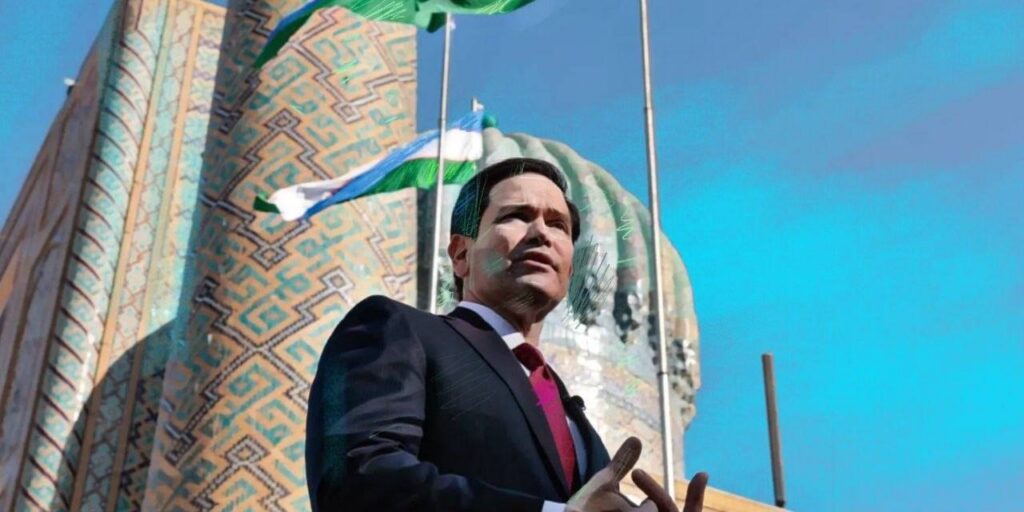
U.S. Secretary of State Marco Rubio has arrived in Uzbekistan with a delegation representing more than 200 American companies. He is attending a C5+1 ministerial meeting with the foreign ministers of Kazakhstan, Kyrgyzstan, Tajikistan, Turkmenistan, and Uzbekistan. The agenda includes regional connectivity, energy security, trade, private investment, and economic modernization. The visit brings the format back to its birthplace. The first C5+1 ministerial meeting was held in Samarkand on November 1, 2015, with then-Secretary of State John Kerry. The November 6, 2025, summit in Washington gave the relationship a substantial commercial dimension. Uzbekistan and the United States announced economic agreements and trade contracts worth approximately $34.5 billion. President Donald Trump also said Uzbekistan intended to purchase and invest more than $100 billion in the United States over the following decade. Samarkand is now hosting a ministerial meeting accompanied by a large business delegation. The immediate question is how much of the previously announced portfolio has moved toward financing and implementation. In late September, Uzbekistan's Minister of Investment, Industry, and Trade, Laziz Kudratov, valued the project portfolio with the United States at $35 billion, with approximately $7 billion already completed. On that accounting, about $28 billion remains. In my assessment, the strongest overlap between American and Uzbek interests lies in processing critical minerals inside Uzbekistan, using American financing and technology to serve international supply chains. Washington wants alternative sources of strategic materials. Tashkent wants investment in industrial production rather than simply exporting raw materials. Their positions are less closely aligned on technology and relations with Iran. Uzbekistan seeks access to American artificial intelligence infrastructure while maintaining cooperation with China. It also regards Iran as an important transit partner. Washington's approach to sensitive technologies and sanctions could complicate both ambitions. Another Uzbek priority is ending the application of the Jackson–Vanik Amendment to Uzbekistan, a U.S. trade-law provision dating from 1974 that continues to affect the legal framework for bilateral commerce. Rubio can support its repeal, but Congress must make the decision. Investment Deals The C5+1 format has become more commercially focused. At the Washington summit, the U.S. Department of Commerce organized a dedicated venue for business agreements and announced more than $25 billion in commercial deals involving the five Central Asian countries. Since the Washington summit, Uzbekistan has developed additional channels for economic cooperation with the United States. A bilateral Business and Investment Council has brought together officials and business representatives. Cooperation has also expanded into critical minerals, energy, infrastructure, and advanced manufacturing. In June 2026, Uzbekistan's Ministry of Investment, Industry, and Trade, its Fund for Reconstruction and Development, the U.S. International Development Finance Corporation (DFC), and the Export-Import Bank of the United States (EXIM) announced a joint investment platform. Uzbekistan has also adopted a critical minerals development program for 2026–2030, covering 120 projects valued at $4.2 billion. The first stage includes 12 projects worth $166 million, with plans to produce high-purity selenium, tellurium, and rhenium. These plans reflect Tashkent's industrial priorities. Uzbekistan wants foreign partners to help build processing facilities and...
Uzbekistan Signs Space Accords as Rubio Opens Samarkand Talks

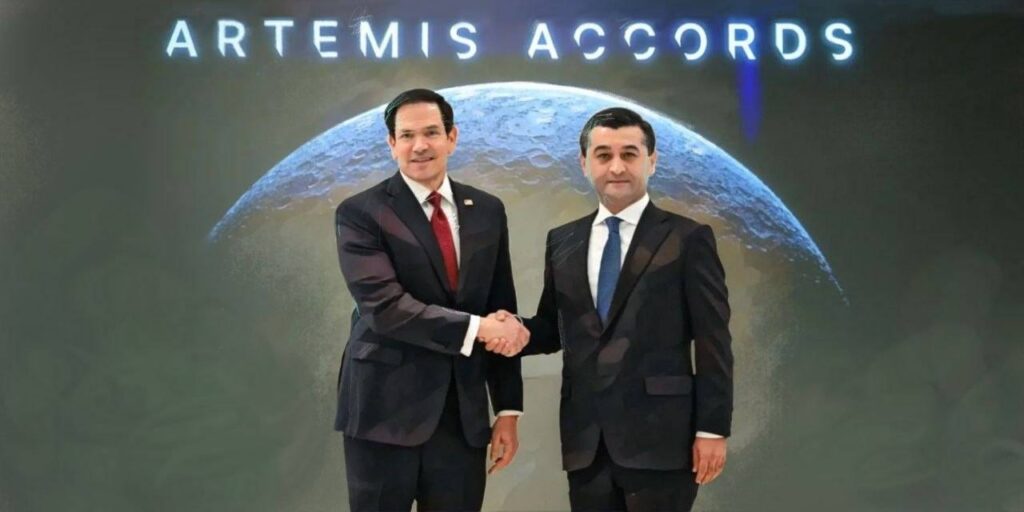
Uzbekistan joined the U.S.-led Artemis Accords on October 19 as Secretary of State Marco Rubio held talks in Samarkand. The signing accompanied the first Enhanced Strategic Partnership Dialogue between the two countries, with critical minerals among the priorities. Foreign Minister Bakhtiyor Saidov announced the signing after bilateral talks with Rubio. He said Uzbekistan had become the 77th country to join the framework for peaceful space exploration. Saidov said accession would support closer cooperation with NASA and other participating space agencies. He identified training for Uzbek specialists and access to space technologies as potential benefits. Established in 2020, the Artemis Accords set out principles for civilian space exploration. Signatories commit to peaceful operations and greater transparency, including sharing scientific data. The framework also addresses interference between missions and the preservation of historic sites in space. NASA describes the accords as nonbinding principles. Posting on X, Rubio confirmed he had met all five Central Asian foreign ministers during the C5+1 gathering. He said cooperation would expand commercial opportunities and strengthen regional security. American businesses also joined the visit as Washington seeks deeper economic ties across Central Asia. The visit follows the November 2025 White House summit, where Trump hosted all five Central Asian presidents. That meeting gave the partnership a stronger commercial focus, with aircraft orders and minerals projects featuring prominently. Samarkand brings ministers and businesses together to advance that agenda. The strategic dialogue focused on implementing agreements reached by the countries’ leaders and expanding economic cooperation. Saidov said the discussions covered energy and advanced technologies, alongside critical minerals. Education and security cooperation were also on the agenda. Rubio said separately that the talks addressed infrastructure and space cooperation, as well as engagement through C5+1, which brings together the United States and Kazakhstan, Kyrgyzstan, Tajikistan, Turkmenistan, and Uzbekistan. In a separate meeting with Kazakh Foreign Minister Mukhtar Tileuberdi, Rubio reaffirmed plans to expand economic and security cooperation. He thanked Kazakhstan for supporting “President Trump’s peace initiatives, including the Abraham Accords.” Speaking to reporters in Samarkand, Rubio said nearly 300 American businesses were represented, and that agreements potentially worth billions of dollars were under discussion. He presented the visit as the start of deeper U.S. economic engagement with Central Asia. “I think we’ll have some concrete deals to announce,” he said, according to Euronews. A final list of agreements and their value had not been circulated at the time of those remarks. Rubio identified critical minerals as a priority, arguing that concentrated supplies created risks for countries dependent on them. "This is not about coming here to say, stop talking to somebody else or stop working with some other country," he said. Days earlier, at the October 15 summit of the Conference on Interaction and Confidence Building Measures in Asia in Baku, Kazakhstan’s President Kassym-Jomart Tokayev proposed a transport strategy spanning several international initiatives. His proposal included China’s Belt and Road and the planned Trump Route for International Peace and Prosperity (TRIPP) through Armenia. It illustrated the region’s pursuit of transport links involving...

CICA’s Next Chapter in Asian Cooperation

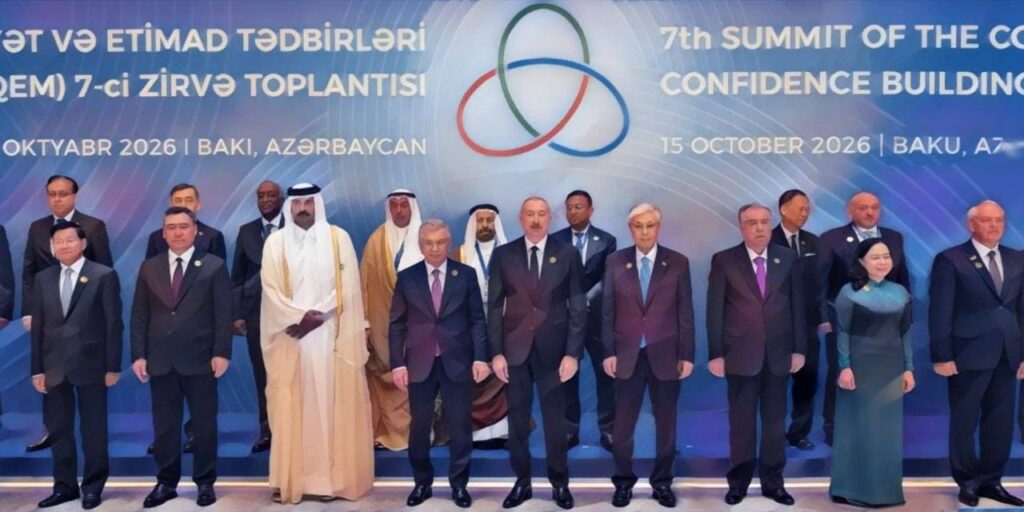
At the October 15 summit of the Conference on Interaction and Confidence Building Measures in Asia (CICA) in Baku, Kazakhstan proposed a mechanism for preventive diplomacy to address disputes before they escalate. President Kassym-Jomart Tokayev said the mechanism would give each member state a role in decision-making and help translate political commitments into coordinated action. If adopted, the proposal could increase Astana’s influence among Asia’s larger powers by making its founding initiative more enduring. Influence Through an Asian Agenda Kazakhstan already coordinates CICA’s military-political dimension, working with Türkiye on military exchanges, training-center visits, and seminars that include mediation. Kazakhstan could draw on these exchanges when seeking members’ agreement on a mandate for preventive diplomacy. They provide experience of organizing cooperation in a politically sensitive field, although a standing role in addressing emerging disputes would require a separate political agreement defining what members authorize the mechanism to do. The Think Tank Forum offers another example of Kazakhstan’s influence over CICA’s institutional development. China initiated the Forum in 2014; its transformation into a permanent CICA advisory body followed in October 2021, when member states acted on Tokayev’s initiative. Azerbaijan hosted the first meeting outside China in September 2025, at which the handover to the Indian Council of World Affairs was announced; the latter now chairs the Forum for 2026–2027. Kazakhstan thus helped turn a Chinese initiative into a permanent CICA advisory body that Azerbaijani and Indian institutions subsequently helped sustain. China also contributes funding and seconded personnel to the Secretariat; Kazakhstan can build influence by securing agreement on standing arrangements through which other members pursue their priorities. At the Baku summit, Tokayev also proposed establishing a CICA Water Partnership to promote joint research, technology exchange, and water-saving measures. He suggested that Central Asian countries and Azerbaijan could jointly advance a proposal for an International Water Organization under the United Nations. These proposals could give Kazakhstan a role in shaping cooperation on water security within CICA and, through a joint regional initiative, at the UN. Kazakhstan's Foundational Role in CICA's Development Kazakhstan conceived CICA in 1992 and has led its institutional development, including the effort to transform it into a full-fledged international organization. The initiative has a constituency extending well beyond Central Asia. Fifteen states adopted CICA’s first founding declaration in 1999. With Laos’s accession at Baku, CICA now has 29 members, ranging from China, India, Pakistan, and Russia to Iran, Israel, and South Korea. The 2022 Astana summit launched CICA’s transformation into a full-fledged international organization. The Road Map endorsed by member states in 2023 specified reforms through which to pursue that transformation. The reforms cover the Charter, implementation of confidence-building measures, procedural rules, and the Secretariat’s organization. These changes affect CICA’s capacity to carry agreements forward between high-level meetings. Within CICA, the consensus rule makes collective agreement a condition both of institutional change and of policy coordination. Kazakhstan thus has an interest in the procedures through which future cooperation will be organized. Cambodia’s pre-summit ratification of the convention on the Secretariat’s...

Russia and Kyrgyzstan Sign Military Cooperation Plan for 2027

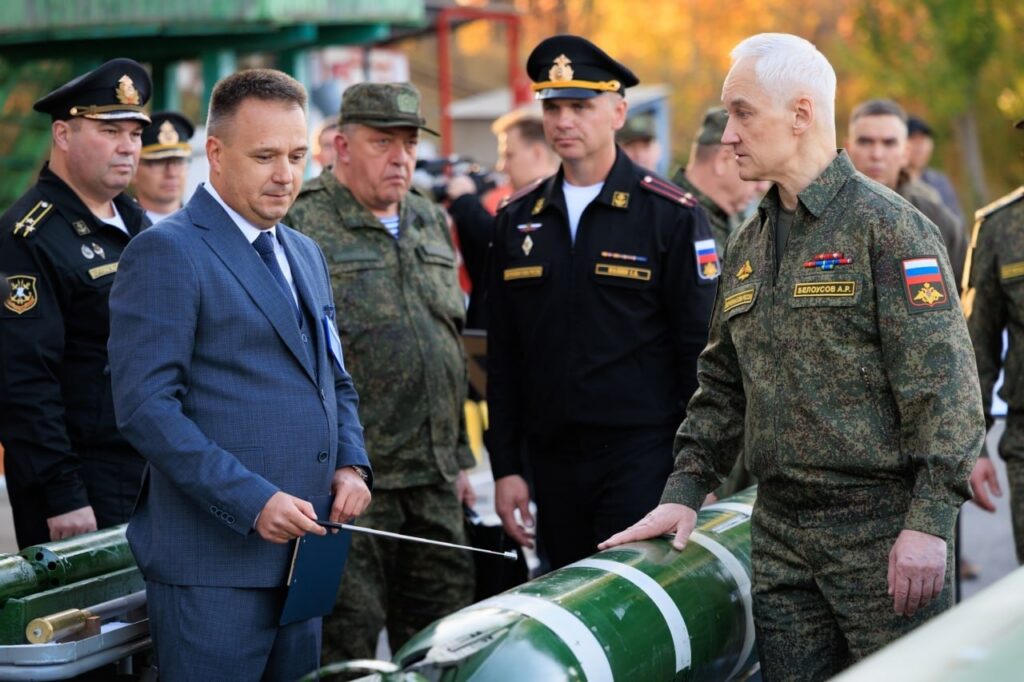
Russia and Kyrgyzstan signed a military cooperation plan for 2027 on October 15, a day after Russian lawmakers approved measures to simplify arms deliveries to Bishkek. Defense ministers Andrei Belousov and Ruslan Mukambetov signed the agreement in Cholpon-Ata, on the shores of Lake Issyk-Kul, ahead of a meeting of defense ministers from the Commonwealth of Independent States (CIS). The plan's contents have not been made public. Russia's Defense Ministry said the two sides discussed military personnel training, military-technical cooperation, and the operation of the joint Russian military base in Kyrgyzstan. Russia's military presence in Kyrgyzstan consists of four facilities, including Kant Air Base, around 20 kilometers from Bishkek, which Russian forces have used since 2003. It is part of the forces of the Russian-led Collective Security Treaty Organization (CSTO). The other facilities are a Russian Navy communications station in Chaldovar, a seismic monitoring station in Mailuu-Suu, and a naval weapons testing base near Karakol on Lake Issyk-Kul. Belousov inspected the Issyk-Kul facility on October 14. The base tests anti-submarine weapons and systems designed to protect ships and submarines from torpedo attacks. The joint military base operates under bilateral agreements. Its current structure took shape after Russia's military facilities in Kyrgyzstan were brought together under an agreement signed in 2012, which entered into force in 2017. On October 14, Russia's State Duma ratified a protocol simplifying military-technical cooperation with Kyrgyzstan. Signed in November 2025, the protocol allows military equipment to be supplied under contracts between authorized organizations without additional import and export licenses. It also simplifies procedures for spare parts, repairs, and maintenance. The changes could speed up deliveries to the Kyrgyz military, although no new contracts have been announced. In 2025, Russia and Kyrgyzstan signed a strategic military partnership program covering 2026–2030. The two defense ministries have now agreed on their work for the coming year. Kyrgyzstan also maintains military ties with other countries. In February 2026, representatives of U.S. Central Command, the U.S. Air Force, and the Montana National Guard discussed joint training plans for fiscal year 2027 with Kyrgyz military officials.

Kazakhstan and Azerbaijan Launch Trans-Caspian Fiber-Optic Cable

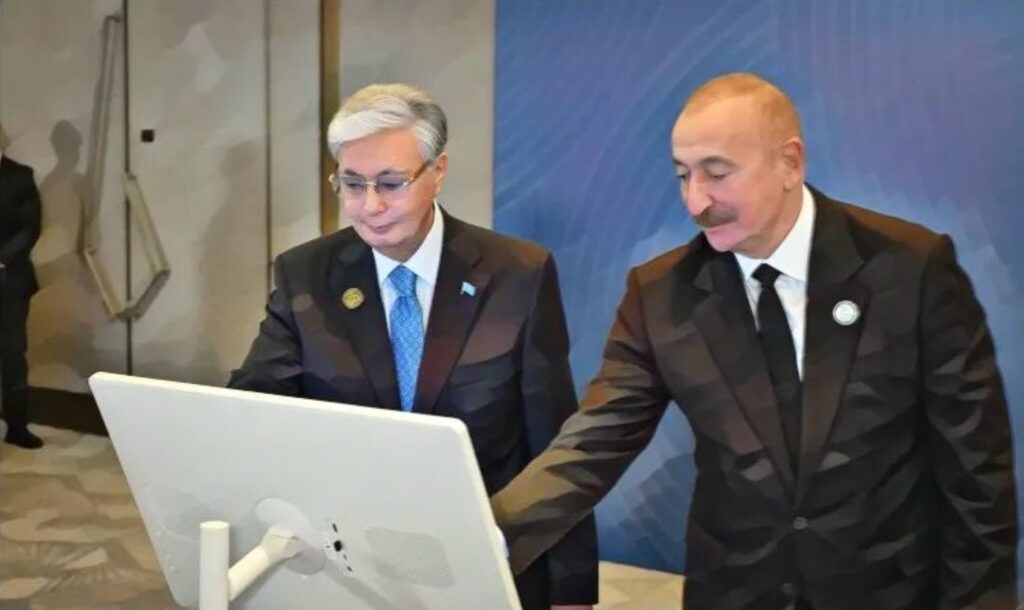
Kazakhstan and Azerbaijan have launched the first fiber-optic communications link across the Caspian seabed. The approximately 380-kilometer cable connects Aktau and Sumgait, with Presidents Kassym-Jomart Tokayev and Ilham Aliyev inaugurating the line in Baku on October 15. Russian operators have long dominated Kazakhstan’s international connectivity. A 2025 Internet Society report identified them as the country's principal suppliers of international bandwidth. The new route will give operators the option of directing data through Azerbaijan, Georgia, and Turkey toward Europe, providing redundancy independent of existing routes through Russia. This is particularly important during outages or congestion on existing connections. Part of the broader Digital Silk Way initiative, the cable could also benefit Uzbekistan and Kyrgyzstan, both of which rely on Kazakhstan for international internet connectivity. The cable, supplied by a Chinese manufacturer, uses optical fiber made in Japan and terminal equipment from Western suppliers, according to the Caspian Policy Center. It has a design capacity of at least 400 terabits per second and was developed through CaspiLink, a joint venture between Kazakhstan’s Kazakhtelecom and Azerbaijan’s AzerTelecom. The project had been under discussion since 2019. In 2024, planned investment was estimated at more than 23 billion tenge (approximately $50 million). Marine surveys began in August 2025. Underwater cable laying began in July 2026 and was completed on August 5, with the line inaugurated on October 15. Kazakhstan also hopes to use the new connection to attract technology companies. Bagdat Mussin, chairman of Kazakhtelecom’s management board, said the cable could support Kazakhstan’s Data Center Valley, a complex under development in Ekibastuz for cloud computing and artificial intelligence. Mussin also told reporters that adjustments to the line would continue through the end of 2026, with the benefits expected to be felt no earlier than early 2027, according to Tengrinews. As The Times of Central Asia previously reported, Kazakhstan must also secure reliable electricity supplies and sufficient demand for its planned data center capacity. Kazakhstan's Ministry of Artificial Intelligence and Digital Development estimates that the new route could help more than double the country's international data transit to 21.6 Tbps in the coming years. How much traffic will initially use the cable, including traffic redirected from existing routes through Russia, remains unclear.

Russian Lawmakers Propose School Fees for Central Asian Migrants’ Children

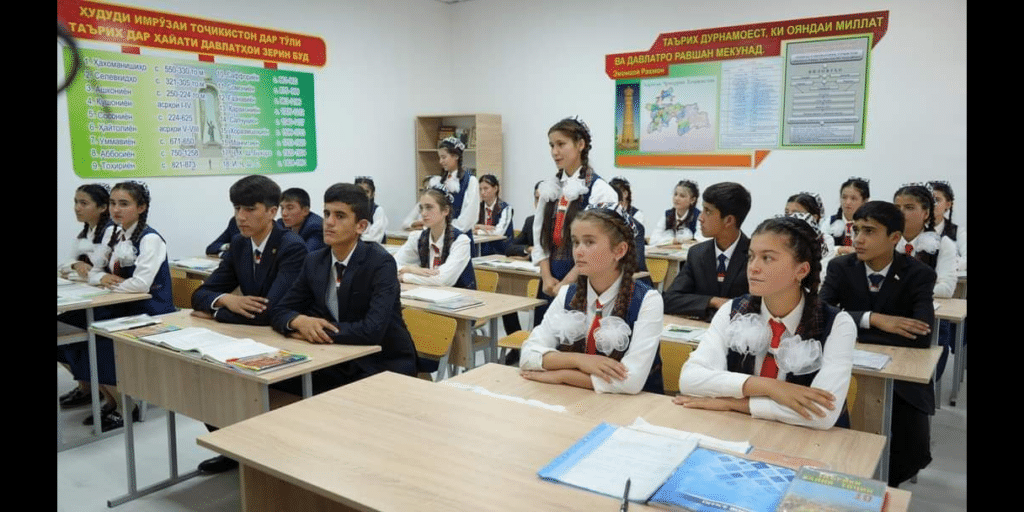
Russia relies on millions of workers from Central Asia, but lawmakers want to charge some of their children, typically aged 15–17, for the final two years of public schooling. The move comes after tougher enrollment rules that have left thousands of migrant children struggling to attend Russian schools. The proposal, submitted to the government by deputies from the Liberal Democratic Party of Russia (LDPR) on October 14, would require foreign citizens and stateless people to pay for education in grades 10 and 11. LDPR leader Leonid Slutsky argued that migrant families should bear the costs of educating their children in Russian upper-secondary schools, allowing public funds to be redirected toward Russian students. The party claimed that more than 130,000 foreign children attend grades 10–11, costing the state over 37 billion rubles (about $440 million) annually. However, these figures contradict data from Russia's Ministry of Education analyzed by the data project Tochno, which found approximately 130,000 foreign pupils and another 3,000 stateless pupils enrolled across all school grades in 2025–26, with only 4% of foreign pupils attending grades 10–11. That would put the number of foreign pupils in the final two grades at roughly 5,200, casting doubt on the LDPR's estimated savings. Growing Pressure on Migrant Families The proposed fees follow a series of Russian restrictions that have already made it more difficult for Central Asian families to educate their children in Russia. Since April 2025, foreign children seeking admission to Russian schools have been required to demonstrate sufficient Russian-language proficiency and provide documentation establishing their legal residence. Enrollment among children from Uzbekistan, Tajikistan, and Kyrgyzstan fell by 27% in the 2025–26 school year, from approximately 122,000 to 89,000. In January 2026, Tajikistan's Minister of Education and Science Rahim Saidzoda reported that approximately 9,000 Tajik children had returned from Russia during 2025 following difficulties continuing their education there. Kyrgyzstan's membership in the Eurasian Economic Union (EAEU) raises a separate legal question. The EAEU treaty recognizes the right of migrant workers' children to receive education in the country where their parents work, subject to that country's legislation. However, it does not explicitly guarantee free tuition, leaving unclear whether children of workers from EAEU member states would qualify for exemptions. For migrant families, the immediate consequences would depend on the eventual tuition charges and exemptions. Some parents might choose vocational education for their children after grade nine, while others could leave them with relatives in their home countries rather than incur additional schooling expenses in Russia. Additional education costs could discourage migrant workers from bringing their families to Russia, even as the country continues to rely on Central Asian labor. Central Asia's Dependence on Remittances The proposed fees would affect families whose earnings are often vital to their home countries' economies. Tajikistan is the most dependent on remittances relative to the size of its economy, Kyrgyzstan relies particularly heavily on earnings from Russia, and Uzbekistan receives the largest remittance inflows in absolute terms. According to The Times of Central Asia's Central Asia Balance...