• KZT/USD = 0.00215
  • TJS/USD = 0.10810
  • UZS/USD = 0.00009
  • TMT/USD = 0.29850
  • KZT/USD = 0.00215
  • TJS/USD = 0.10810
  • UZS/USD = 0.00009
  • TMT/USD = 0.29850
  • KZT/USD = 0.00215
  • TJS/USD = 0.10810
  • UZS/USD = 0.00009
  • TMT/USD = 0.29850
  • KZT/USD = 0.00215
  • TJS/USD = 0.10810
  • UZS/USD = 0.00009
  • TMT/USD = 0.29850
  • KZT/USD = 0.00215
  • TJS/USD = 0.10810
  • UZS/USD = 0.00009
  • TMT/USD = 0.29850
  • KZT/USD = 0.00215
  • TJS/USD = 0.10810
  • UZS/USD = 0.00009
  • TMT/USD = 0.29850
  • KZT/USD = 0.00215
  • TJS/USD = 0.10810
  • UZS/USD = 0.00009
  • TMT/USD = 0.29850
  • KZT/USD = 0.00215
  • TJS/USD = 0.10810
  • UZS/USD = 0.00009
  • TMT/USD = 0.29850
28 August 2026

Viewing results 19 - 24 of 360

New Study Finds Sharp Decline in Amu Darya Flows

Central Asia’s water woes continue to grow worse. The water flow in the Amu Darya, one of Central Asia’s two great rivers, is slowly but significantly diminishing in Tajikistan, where the river originates. A recently released report shows the Amu Darya’s water flow in the middle and lower reaches in Tajikistan has fallen over the course of recent decades by 54-77%. And the report lays the blame firmly on human activity, not climate change. Up In the Mountains of Tajikistan The study published on ScienceDirect looked at data collected over 90 years and concludes that “streamflow decreased by 54–77% in the middle and lower reaches” of the Amu Darya in Tajikistan. Interestingly, the report mentions that precipitation in the mountains of Tajikistan has actually increased between 6 and 13%, but the Amu Darya’s water level is falling because people are using more water. The expansion of agriculture is the reason, accounting for 92% of the water reduction in Tajikistan, but the recent construction of water reservoirs is also playing a role. Lower flows of water were noted on many of the tributaries in Tajikistan that feed into the Amu Darya, including the “Vakhsh, Kunduz, Kofirnihon, Surkhandarya, Zeravshan, and Kashkadarya (rivers),” which showed streamflow reductions of 4–34%. The report said that areas in the upper reaches of the Amu Darya should see increased water levels, but this is mainly due to climate change hastening the melting of snow and glaciers. Once the glaciers are gone, the water will rapidly decrease. Bad News Downstream Water problems upstream in Tajikistan translate to bigger problems downstream in Uzbekistan and Turkmenistan. Both have already noticed a reduction in the amount of water in the Amu Darya, most visibly that the river has not reached the Aral Sea for about two decades now, contributing to the sea shrinking by some 90% since the 1960s. Every year the river recedes further south, forcing downstream communities suddenly without water to relocate. Climate change is now hastening this process in the arid, desert lands along the Uzbek-Turkmen border, but both countries are preparing for a bigger, impending shock. The Taliban started construction of the Qosh Tepa Canal in 2022, with the project scheduled to be completed in 2028. While Central Asia was liberally taking water from the Amu Darya for agricultural use, Afghanistan was in no position to claim its share until now. The canal will draw water from the Amu Darya at an area across from Uzbekistan and open up new agricultural land in northern Afghanistan, where food has long been in short supply. The 280-kilometer canal is expected to take some 16-20% of the water left in the Amu Darya after it leaves Tajikistan. Upstream Tajikistan’s falling water levels, of course, mean the Qosh Tepa Canal will also be receiving less and less water. The Combination For most of the 2020s, large areas of Central Asia have been experiencing droughts, prompting the governments there to implement water conservation measures. But as they find more ways to save...

Tajikistan Warns of Mudslides as Central Asia Expands Flood Cooperation

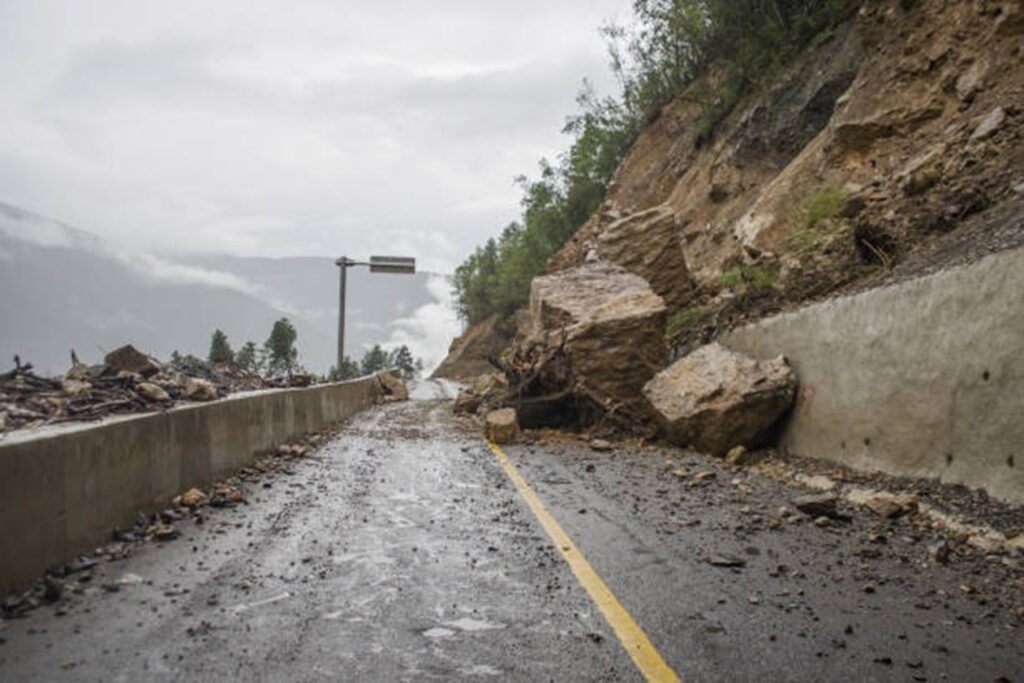
Authorities in Tajikistan say heavy rain could trigger mudslides in parts of the country in the coming days and have warned people to be extremely careful when traveling on roads near mountains and riverbanks. The warning was issued on Wednesday, days after government officials, scientists, and other delegates from across Central Asia met in Bishkek to discuss ways to address cross-border mudflows and floods. The three-day meeting, which ended on Friday, was organized by Kyrgyzstan’s Ministry of Emergency Situations and the Regional Environmental Center for Central Asia, a group that gets support from the World Bank and other international partners. Mudslides and flooding often hit parts of Central Asia in the spring and early summer, when rainfall, rising temperatures, snow and glacier melt, and increasing water levels threaten communities that scientists say are more vulnerable because of climate change. In the spring of 2024, flooding in Kazakhstan displaced thousands of people and damaged many homes and other buildings in what the government called the worst natural disaster in the country in 80 years. Central Asian governments are increasing cooperation on mitigation measures, including early warning systems, data sharing, and other projects to better protect their populations. As temperatures rise faster in Central Asia than the global average, Tajikistan is especially vulnerable because it is a mountainous country where glacier melt is a growing concern. Heavy rains and mudslides are possible through Friday, July 3, in mountainous and hilly areas across the country, as well as in Sughd Region in northwest Tajikistan, which borders Uzbekistan, and in Khatlon Region in the southwest, which borders Uzbekistan and Afghanistan, Tajikistan’s Ministry of Transport said. Citing meteorological experts, the ministry also warned of dust storms in Khatlon and the capital, Dushanbe, because of strong winds blowing from the south. “As a result of rising temperatures, glacier melt, and increasing water levels in the Panj, Vakhsh, Varzob, and Zeravshan rivers, there is a risk of mudflows in these areas,” the ministry said. It added that it had “instructed all road maintenance departments and institutions to monitor the condition of highways around the clock.” The possibility of flooding from glacier melt and rising river levels is not only a problem in mountainous areas in upstream countries such as Tajikistan and Kyrgyzstan, but also in downstream countries, including Kazakhstan, Uzbekistan and Turkmenistan, that rely on cross-border water supplies but are also vulnerable to natural disasters. Turkmenportal, an online news site, said the recent meeting in Kyrgyzstan on water cooperation in Central Asia was important to Turkmenistan because it “is located in the lower reaches of Central Asia's largest rivers and is directly dependent on the quality of transboundary cooperation in water management and flood risk reduction.”

U.S. Companies to Help Kazakhstan Improve Snow Monitoring and Flood Forecasting

United States-based aviation technology firms Dynamic Aviation and Airborne Snow Observatories Inc. will work with Kazakhstan’s Ministry of Water Resources and Irrigation to improve snow monitoring, spring runoff forecasts, and early flood warnings, as the country seeks to avoid a repeat of the devastating floods of 2024. The cooperation program was discussed last week during talks between Kazakhstan’s Deputy Water Resources Minister Aslan Abdraimov and representatives of the two American companies, according to the ministry. The project will use aerial monitoring technologies to collect data from river basins, prepare cartographic materials and analytical reports, and integrate that information into Kazakhstan’s flood forecasting and modeling systems. The parties agreed on a phased rollout of the program. The first phase will focus on the Zhabai River basin, where high-precision snow measurements will be carried out using aviation-based technology. The collected data will be integrated into the ministry’s database to refine methodologies, train local specialists, and assess the feasibility of expanding the system to other parts of the country. Later stages will extend monitoring and forecasting to other priority river basins and regions, with the long-term goal of using the system nationwide to improve water management, lower flood risks, and help reservoir operators plan releases more accurately. “It is important for Kazakhstan to have not only up-to-date data but also a practical tool that enables early management decisions, reduces flood risks, and protects the population, infrastructure, and agriculture,” Abdraimov said. The initiative builds on Kazakhstan’s broader efforts to modernize flood management following the severe spring floods of 2024, when rapid snowmelt triggered large-scale flooding across western and northern regions of the country. As previously reported by The Times of Central Asia, Kazakhstan recently launched the Tasqyn flood forecasting and modeling system, which is integrated with the Global Flood Awareness System, an international flood warning network. The 2024 floods destroyed thousands of homes and forced nearly 100,000 people to evacuate, highlighting the vulnerability of Kazakhstan’s water management system to increasingly volatile climate conditions.

Kazakhstan Restores Valuable Fish Species in the Caspian Sea Basin

Kazakhstan’s Atyrau Sturgeon Hatchery has released more than one million juvenile sturgeon into the Zhaiyk, or Ural, River, according to the country’s Ministry of Agriculture. The release was carried out under the state order for 2026 as part of efforts to artificially reproduce sturgeon populations and fulfill Kazakhstan’s commitments to preserving the biological resources of the Caspian Sea. The Atyrau Sturgeon Hatchery is a state monopoly authorized to remove sturgeon from their natural habitat for breeding purposes. The enterprise plays a key role in preserving and restoring populations of valuable fish species in the Caspian basin. A distinctive feature of the hatchery is its use of specialized biotechnology to raise juvenile fish in conditions as close to natural as possible. This ensures a high survival rate and better adaptation of the released fish once they return to the wild. Over the past 30 years, the Atyrau hatchery has released around 180 million juvenile sturgeon into the Caspian Sea. The facility is currently undergoing modernization, which will increase its production capacity from 5 million to 7.4 million juvenile fish annually. Kazakhstan’s fisheries sector is showing steady growth. Under the Fisheries Development Program through 2030, the number of fish farms in the country has quadrupled to 700. Annual production of valuable fish species, including carp, sturgeon, and salmon, now totals around 26,000 tons, Serik Sermagambetov, chairman of the Fisheries Committee at the Ministry of Agriculture, said at the Kazynaly Caspian International Fish Forum in Atyrau on June 18. The fish processing sector is also expanding. Kazakhstan currently has 73 fish processing plants, 18 of them located in the Zhaiyk-Caspian basin. Twenty Kazakhstani companies are authorized to export fish products to the European Union. In 2025, Kazakhstan’s fish market grew by 15%, reaching 108,900 tons. The country exports fish products to 21 countries, including European Union member states, China, and Russia. Total exports amounted to 21,100 tons in 2025. Forum participants said future growth in Kazakhstan’s fisheries sector should rely on technology-backed investment and careful management of natural resources. They said this would increase export potential while helping preserve the Caspian Sea ecosystem for future generations.

Kazakhstan Develops Specialized Firefighting Vehicle for Forest Fires

Kazakhstan has developed a prototype of a new high-mobility firefighting vehicle designed specifically to combat forest fires, drawing on lessons from the devastating wildfire that swept through the Abai region in 2023, the Ministry of Ecology and Natural Resources said. In June 2023, a major wildfire broke out in the Semey Ormany State Forest Nature Reserve  in eastern Kazakhstan’s Abai region, killing 14 forestry workers and burning tens of thousands of hectares of forest. Authorities later estimated the damage at more than $354 million. The disaster prompted forestry and emergency response specialists to conclude that Kazakhstan needed specialized equipment better suited to fighting large-scale forest fires. “Following an analysis of the events in the Abai region, it was decided to develop a prototype of a modern, maneuverable firefighting vehicle capable of responding rapidly to forest fires,” the Ministry of Ecology said. The prototype later underwent field testing in the Akmola, Karaganda, Pavlodar, and Abai regions. Engineers incorporated feedback from firefighters and forestry specialists, along with technical requirements identified during firefighting operations. “As a result, a firefighting vehicle was created that meets all the key operational requirements,” the ministry said. The new vehicle is built for off-road conditions and is powered by an engine producing approximately 300 horsepower. It carries a 3,000-liter water tank and is equipped with a high-capacity pump that allows firefighters to combat flames while stationary or moving. The pump system can be operated from inside the cab or directly from the firefighting compartment, providing greater flexibility during emergency operations. The vehicle is also fitted with a rear-view camera to improve maneuverability in low-visibility conditions and difficult terrain. One of the vehicle’s most notable features is an integrated self-protection system. In the event of approaching flames, the system creates a protective barrier around the vehicle, shielding the wheels, cab, and engine compartment from fire. According to the developers, the technology is particularly valuable during large forest fires, where rapidly changing conditions and extreme temperatures can place firefighting crews and equipment at significant risk. Officials say the vehicle has no direct equivalent elsewhere in the post-Soviet region and represents a modern solution tailored specifically to forest firefighting operations. Kazakhstan has increasingly focused on improving its wildfire response capabilities following recent disasters. As previously reported by The Times of Central Asia, engineers in the Karaganda region last year unveiled a prototype drone capable of detecting forest fire hotspots and supporting wildfire monitoring efforts.

Kazakhstan and France Develop Master Plan to Preserve Lake Balkhash

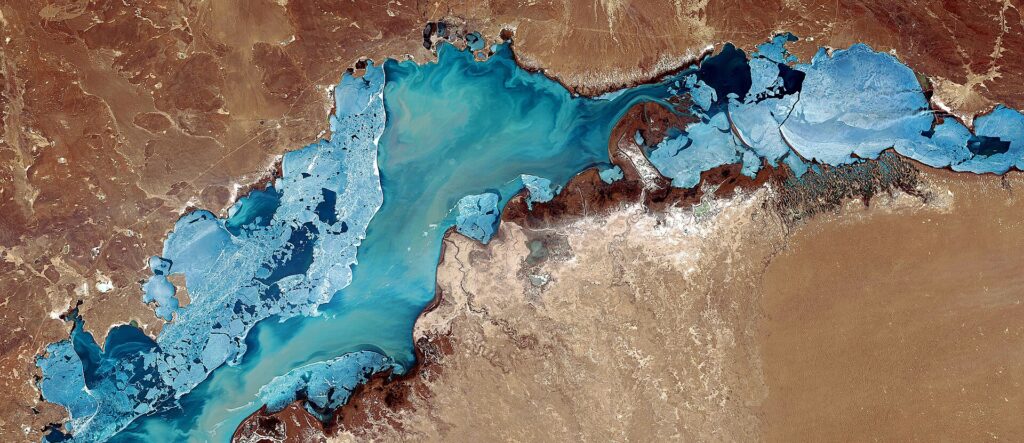
Kazakhstan and France are developing a long-term strategy to preserve Lake Balkhash, one of Eurasia’s largest inland water bodies, as concerns grow over the impact of climate change and shifting water resources in the region. An open meeting of the working group tasked with preparing a master plan for the conservation of the lake’s ecosystem was held in Astana. The project is being implemented through cooperation between Kazakhstan’s Ministry of Water Resources and Irrigation, the French Development Agency, and France’s Bureau of Geological and Mining Research. Lake Balkhash, located in southeastern Kazakhstan, is the world’s second-largest non-drying saline lake after the Caspian Sea and ranks among the largest lakes globally. The lake is unique in that its western section contains almost fresh water, while the eastern part is brackish. The Ili River provides up to 80% of Balkhash’s inflow, while the Karatal, Aksu, Ayagoz, and Lepsy rivers, along with groundwater resources, also contribute to the lake’s water balance. Although Kazakhstan’s Ecology Ministry has previously said Lake Balkhash is not at risk of catastrophic shallowing, the government has moved forward with plans to develop a comprehensive strategy for protecting the ecosystem of one of the country’s most important water resources. At the meeting, French experts presented preliminary findings from research covering key components of the project. Participants reviewed studies on agriculture, hydrology, glacier runoff contributions, hydrogeology, water use, and water-resource modeling. Particular attention was paid to the sustainable management of water resources in the Lake Balkhash basin under changing climate conditions. Experts outlined approaches to forecasting river flows, assessing future changes in glacier-fed water supplies, studying interactions between surface and groundwater resources, and applying advanced modeling tools to support water-management decisions. The meeting also examined the potential use of digital technologies to analyze different water-allocation scenarios and assist in the preparation of basin management plans. Researchers have already integrated findings from various studies into a unified assessment system covering the entire Lake Balkhash watershed. Participants identified several priority issues requiring additional analysis as work on the master plan continues. “Following the visit by the French experts, the next stages in developing the master plan will be clarified, including the preparation of forecast scenarios for the water-management situation through 2040, the selection of climate models, and additional research in specific areas,” said Kairatgali Khairulla, Chairman of the Information and Analytical Center for Water Resources under Kazakhstan’s Ministry of Water Resources and Irrigation. “Joint work by Kazakh and French experts will continue through the end of 2026 to integrate research findings, improve modeling calculations, and prepare the final document. The master plan will provide a scientific foundation for long-term decisions on preserving the Lake Balkhash ecosystem and ensuring sustainable management of water resources throughout the basin,” he added. The final version of the master plan is expected to be completed by the end of this year. The future of Lake Balkhash has gained additional significance amid major infrastructure projects planned for the region. As previously reported by The Times of Central Asia, Kazakhstan has...