• KGS/USD = 0.01144 0%
  • KZT/USD = 0.00212 0%
  • TJS/USD = 0.10803 0%
  • UZS/USD = 0.00008 0%
  • TMT/USD = 0.28571 0%
  • KGS/USD = 0.01144 0%
  • KZT/USD = 0.00212 0%
  • TJS/USD = 0.10803 0%
  • UZS/USD = 0.00008 0%
  • TMT/USD = 0.28571 0%
  • KGS/USD = 0.01144 0%
  • KZT/USD = 0.00212 0%
  • TJS/USD = 0.10803 0%
  • UZS/USD = 0.00008 0%
  • TMT/USD = 0.28571 0%
  • KGS/USD = 0.01144 0%
  • KZT/USD = 0.00212 0%
  • TJS/USD = 0.10803 0%
  • UZS/USD = 0.00008 0%
  • TMT/USD = 0.28571 0%
  • KGS/USD = 0.01144 0%
  • KZT/USD = 0.00212 0%
  • TJS/USD = 0.10803 0%
  • UZS/USD = 0.00008 0%
  • TMT/USD = 0.28571 0%
  • KGS/USD = 0.01144 0%
  • KZT/USD = 0.00212 0%
  • TJS/USD = 0.10803 0%
  • UZS/USD = 0.00008 0%
  • TMT/USD = 0.28571 0%
  • KGS/USD = 0.01144 0%
  • KZT/USD = 0.00212 0%
  • TJS/USD = 0.10803 0%
  • UZS/USD = 0.00008 0%
  • TMT/USD = 0.28571 0%
  • KGS/USD = 0.01144 0%
  • KZT/USD = 0.00212 0%
  • TJS/USD = 0.10803 0%
  • UZS/USD = 0.00008 0%
  • TMT/USD = 0.28571 0%

Viewing results 7 - 12 of 5531

Opinion: Hormuz Crisis Pushes Afghanistan Aid Routes Toward Central Asia

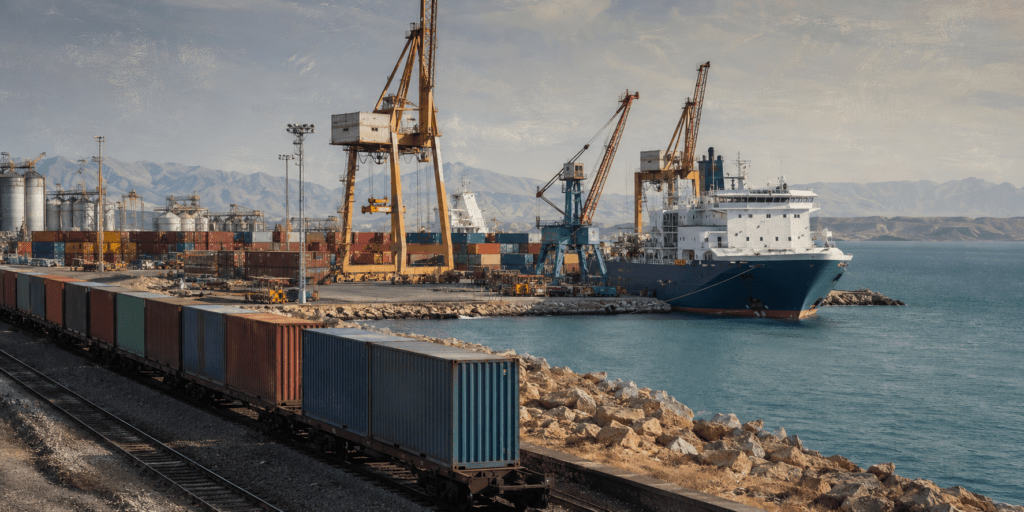
The crisis surrounding the Strait of Hormuz is usually viewed through the lens of energy security or military escalation. But it also has another, less visible, humanitarian dimension. A recent article in The Guardian, “Calls for humanitarian corridor through Strait of Hormuz as Iran war hits vital aid,” points to a critical shift: because of the conflict involving the United States, Israel, and Iran, along with instability around Hormuz, traditional humanitarian supply routes are beginning to break down. For Afghanistan, this is no longer a theoretical concern but an operational reality. According to the World Food Programme (WFP), cited by The Guardian, the cost of delivering food to Afghanistan has tripled. Cargo that previously moved by sea through Hormuz and onward to Pakistani ports must now travel overland across multiple countries, adding weeks to delivery times. The consequences are felt most acutely by vulnerable populations, particularly children. Predictability is one of the core requirements of any humanitarian system, and that predictability is now disappearing. Some shipments are stranded in regional hubs. Routes are constantly changing. Fuel costs continue to rise. Even modest increases in oil prices significantly raise operational expenses for humanitarian agencies. For Afghanistan, the implications are severe. The country has been in a prolonged food crisis for several years, with millions dependent on external aid. Delays of even one or two weeks can directly affect malnutrition and mortality rates. According to United Nations estimates, around 3.7 million Afghan children are currently suffering from wasting, nearly one million of them from severe wasting, a condition associated with sharply elevated mortality risks. UNICEF estimates that in 2026 alone, 1.304 million children aged 6-59 months will require treatment for acute malnutrition, including severe cases and other high-risk groups. Another 1.2 million pregnant and breastfeeding women are also suffering from acute malnutrition. Under these conditions, even temporary disruptions in aid deliveries become a direct threat to human life. The situation is being compounded by several overlapping factors. First, instability around the Strait of Hormuz has made maritime routes both more expensive and riskier. Second, the Pakistani corridor, previously the main overland route, has become unreliable, as repeated border closures and restrictions have tied humanitarian deliveries to the fluctuating political and security relationship between Kabul and Islamabad. Third, Iran has imposed restrictions on food exports and has itself become part of the conflict zone, undermining its role as both a supplier and transit route for Afghanistan. Together, these developments are creating what can be described as a “triple crisis” for humanitarian logistics into Afghanistan. The previous aid delivery system is effectively ceasing to function. In response, the WFP is restructuring its logistics network. One solution has been increased use of the Lapis Lazuli Corridor: Turkey-Georgia-Azerbaijan via the Caspian Sea-Turkmenistan and Afghanistan. Although this route is longer and more expensive, it offers predictability and an alternative to disrupted maritime pathways. The key issue is no longer which route is cheapest, but which is reliable. This shift places Central Asia increasingly at the center of...

Opinion: The Regional Ecological Summit and the Making of a Central Asian Voice

On 22–24 April, Astana hosted the Regional Ecological Summit—a gathering of governments, international organizations, financial institutions, and civil society that marked a new level of ambition in Central Asia’s environmental diplomacy. Fifty-eight sessions were held across three days at a moment when Central Asia’s ecological agenda is becoming inseparable from its political and economic future. The opening ceremony was attended by the presidents of all five Central Asian states. The summit adopted the Astana Declaration on Ecological Solidarity in Central Asia and brought renewed attention to the need to reform the International Fund for Saving the Aral Sea (IFAS). Taken together, these developments signal more than procedural diplomacy. They point to growing political momentum. The region has never lacked shared history or channels of communication. Russian remains a practical language of intergovernmental exchange, and borders, economies, rivers, energy systems, and labor markets have tied these countries together long before contemporary climate diplomacy gave this interdependence a new vocabulary. For decades, much external analysis of Central Asia expected this interdependence to produce confrontation, particularly around water and energy. Those risks remain real. Yet the Astana summit showed a more complex trajectory. Climate change, biodiversity loss, water insecurity, land degradation, and food security are not separate national problems neatly contained within borders. Addressing them is becoming one of the fields through which regional coherence is being built. The significance of the Summit lies less in ceremonial language than in the consolidation of multiple ecological agendas into a visible diplomatic architecture. Through its panels and high-level discussions, the Summit placed Central Asia’s natural heritage not at the margins of development but at its center. Ecosystems, rivers, glaciers, mountains, and landscapes are not only environmental assets. They are conditions for prosperity, stability, and resilience. Kazakhstan’s chairmanship of IFAS reopened the question of whether the Fund, long criticized for its limitations, can be reworked rather than left as a symbol of failed regional environmental governance. Kazakhstan’s proposal for an International Water Organization should be read in the same frame: it is not merely a technical proposal about water governance but an attempt to move a Central Asian concern into the language of global institutional reform. Kyrgyzstan’s mountain agenda and Tajikistan’s glacier diplomacy also belong to this broader pattern. They are not just isolated national branding exercises. Together with Uzbekistan’s increasingly active regional posture, they form a wider mosaic: each country brings a distinct ecological priority, but these priorities are becoming legible as parts of one regional perspective, and its voice carries more weight when presented as such. This is particularly important in the current geopolitical moment. As larger powers turn inward, compete over corridors, or speak about Central Asia through the old grammar of influence, the region is attempting to define itself not as terrain for another “Great Game" but as a pole of its own. This does not mean distance from external partners. On the contrary, the United Nations was a strategic partner of the Summit, and many formats involved major international organizations, European...

Opinion: Kazakhstan’s Critical Minerals Promise Is Running Out of Time

Kazakhstan has long been defined by what lies beneath its soil. Oil, uranium, copper, zinc, lead, chromium, gold, and other minerals have shaped the country’s post-Soviet economy and supplied the budget, export revenues, and industrial base that supported three decades of state-building. That model is now entering a more complex phase. In the first quarter of 2026, Kazakhstan’s industrial output slipped as mining and quarrying fell by 11.4%, with crude oil production down 19.8%, natural gas output down 20%, and other mineral extraction down 15.1%, according to figures reported from the Bureau of National Statistics. The oil decline also reflected specific disruptions. Kazakhstan’s energy minister said oil and gas condensate production fell 20% year-on-year in the first quarter, while production at Tengiz had only recently resumed after an outage linked to a fire at a power unit. Reuters reported that the field’s restart was gradual. Those short-term shocks should not be confused with the whole story. They expose a deeper vulnerability: Kazakhstan has been highly successful at extracting known deposits, but far less successful at replacing them. The World Bank’s mining sector diagnostic put the problem plainly. Kazakhstan is underexplored, greenfield exploration has been almost non-existent for about 30 years, and much of the geological data inherited from the Soviet period is incomplete or outdated. This is not a story of geology alone. It is a story of institutions, incentives, and time. Deposits deplete whether governments plan for it or not. The difference between a mature resource economy and a vulnerable one is whether exploration, processing, regulation, and regional diversification keep pace with extraction. The Arithmetic of Depletion Kazakhstan still has one of the strongest mineral endowments in Eurasia. President Kassym-Jomart Tokayev has described rare and rare-earth metals as having “essentially become new oil,” and told the government to expand geological and geophysical exploration from 1.5 million square kilometers to at least 2.2 million by 2026, according to Akorda. OECD analysis published in 2026 underlines why the stakes are high. Kazakhstan’s metals mining sector accounted for 12.1% of GDP in 2024. The country is the world’s largest uranium producer, can currently export 21 of the 34 critical raw materials on the European Union’s official list, and has some of the world’s largest reserves of chromium, zinc, and lead. Yet reserve strength on paper does not remove the operational pressure at existing mines. In 2022, Kazakhstan’s prime minister warned that reserve growth for many minerals had not been compensated and that major metal deposits in eastern Kazakhstan, including Orlovskoye, Maleyevskoye, Tishinskoye, and Ridder-Sokolnoye, could be mined out within the next decade, according to the government’s own account of its 2023-2027 geology concept. Gold shows a similar tension between headline potential and mine-level pressure. Industry reporting has linked a fall in Kazakhstan’s 2025 mining output targets partly to changes at Vasilkovskoye, one of the country’s largest gold deposits, where operations are shifting from open-pit to underground mining as easily accessible ore becomes harder to extract. MINEX Forum reported that the transition reduced...

Opinion: Kazakhstan’s Human Capital Problem – How State Scholarships Are Building a Talent Pipeline for the West

Kazakhstan spends millions of dollars every year sending its brightest students to the world's best universities through two flagship programs: the Nazarbayev Intellectual Schools (NIS) and Bolashak. For NIS, the state invests millions with no public record of what becomes of its graduates once they enter foreign educational institutions. For Bolashak, the return figures look reassuring on paper, but only until one asks what happens the moment the obligation expires. For Kazakhstan’s economy, heavily reliant on oil and gas exports, human capital is what can bring the country to its goal of economic diversification through the ideas and skills that no natural resource can replicate. Students from Kazakhstan studying abroad, with access to the world’s best professors and cutting-edge technologies, are exactly the human capital the country cannot afford to lose. However, they are also the ones the government has been paying to send away without a sustainable retention strategy in place. Nazarbayev Intellectual Schools Founded in 2008, the Nazarbayev Intellectual Schools network offers an internationally recognized 12-year curriculum, directly compatible with many foreign university admissions systems. It also provides some of its students with grants covering the full cost of attendance. The state funds NIS generously: in 2023 alone, more than $37 million was invested into the network. The results are extraordinary: from 2010 to 2024, 654 students received offers from the top 100 universities in the world, with 32 of them from the Ivy League. However, which country these graduates end up in is a different question, and the available statistics offer no public answer to. One former NIS student, who received a full scholarship to study abroad, says, "I'm extremely grateful for all the resources that the NIS provided me with. However, after my graduation from the university, I will be moving to San Francisco to work as an AI engineer. It would take me at least seven years to make the same salary I'll be earning here in a year." Another says, "It is not only about the higher wages in the U.S. It’s about the opportunities and autonomy one gets. The research lab I've joined since graduation has far more funding and resources for the work I'm actually passionate about." Bolashak Program Unlike NIS, the Bolashak program, established in 1993 and widely regarded as one of the most generous scholarship programs in the world, does require its recipients to return. Graduates must work in Kazakhstan for up to four years or face financial penalties. On paper, this looks like a solution to the human capital problem. In practice, it is only a delay. While the state at least partially recovers its investment, it is developed markets that eventually inherit the talent. "After completing my requirement back home, I was able to get an American company to sponsor my visa," says one Bolashak recipient. "I moved to the U.S. shortly after." "I was offered a transfer to the European branch of my company," says another, one year after fulfilling their obligation. The Solution to the Brain...

Opinion: Expect China to take its 2+2 diplomacy to Central Asia

China does not do military alliances. Its declared posture is one of non-interference in other nations’ internal affairs. Yet Beijing has long understood that commercial ties alone cannot anchor strategic relationships; only security partnerships can. China’s recent experiments with 2+2 security dialogues – bringing together foreign and defense ministers – signal that it is seeking to move beyond an economics-first approach. The most likely next candidates for this format are Kazakhstan, Kyrgyzstan and Tajikistan, all of which share borders with China. For Central Asian governments, a 2+2 with China may hold appeal, particularly as they seek to manage instability spilling over from Afghanistan at a time when Russia’s security role is being strained by its war in Ukraine. After years of hoping that engagement could stabilize Afghanistan, Central Asian states have largely shifted to a policy of containment – seeking to insulate themselves from cross-border militant threats, narcotics flows and refugee movements rather than attempting to reshape Afghanistan’s internal trajectory. For Beijing, the objective would be to consolidate partnerships across the Eurasian heartland – an outcome Washington would prefer to counter. China shares Central Asia’s risk-management approach toward Afghanistan. Like its neighbors, Beijing has little appetite for deep involvement inside the country itself, focusing instead on preventing instability from spilling northward toward Xinjiang or disrupting Belt and Road corridors that run through the region. A 2+2 format offers China a way to institutionalize security coordination without violating its long-standing aversion to formal alliances. Last week, Chinese Foreign Minister Wang Yi and Defense Minister Dong Jun traveled to Phnom Penh to hold China’s first-ever 2+2 dialogue with Cambodia. Wang told reporters that China is willing to develop the mechanism into a “strategic platform” for enhancing political and defense security cooperation. He described it as a key instrument for cementing mutual assistance and solidarity, and for advancing the construction of a China-Cambodia “community with a shared future.” Wang also said China was prepared to work with Cambodia to build an “Asian security model” based on shared security and on seeking common ground while reserving differences. China’s deepening security engagement with Cambodia comes as the Southeast Asian nation remains locked in a border dispute with Thailand. Although Wang’s itinerary took him next to Bangkok, Beijing chose to hold a 2+2 only with Cambodia – notably the non-U.S. ally in this pairing. China is new to the 2+2 format. Last April, Beijing hosted its first ever 2+2 with a foreign country – with Indonesia. The trajectory suggests further 2+2 engagements ahead, including Kazakhstan, Kyrgyzstan and Tajikistan – the three Central Asian states that border China. In several aspects, Central Asia may be a more conducive environment for this diplomacy than Southeast Asia: there are no maritime disputes, and the countries are not embedded in U.S. alliance structures. Instead, there is a convergence around defensive security priorities – particularly border control and crisis management linked to Afghanistan – making the 2+2 format a natural fit. China under President Xi Jinping has always had an eye...

Opinion – Kazakhstan’s New Constitution Sends a Key Signal for Global Partners

In a nationwide referendum on March 15, over 87% of voters approved a new constitution for Kazakhstan. It was a significant victory for President Tokayev and his administration, all the more so because voter turnout exceeded 73%. Kazakhstan’s new constitution is a key signal for global partners. It replaces the old bicameral system with a unicameral legislature, establishes the Halyk Kenesi (People’s Council), an advisory body intended to promote national dialogue, and creates a vice presidency to provide for clearer succession at the top of the state. The new constitution is the outcome of a strategy that has been building for some time. Now, backed by a clear majority, Kazakhstan’s leadership is seeking to strengthen governance by redistributing power, lessening political ambiguity, and grounding politics in shared values—however difficult that may be to accomplish. All of this is being pursued despite—and perhaps because of—the nation’s history of corruption and nepotism. Kazakhstan’s constitutional reforms were deliberate, structural measures designed to reorient the country’s governmental machinery toward what supporters describe as the common good. That, at least, is the stated intention, reflected in a slogan often used by backers of the new constitution: “A strong president, an influential parliament, and an accountable government.” Some outside observers have viewed the new constitution favorably, framing it as an effort to streamline governance and clarify institutional roles, while others have warned that the changes could impede sociopolitical progress and human rights by prioritizing stronger governance. Some also see the reforms as signaling a move toward more restrictive political practices. These alarmist interpretations are overstated. Astana’s constitutional reforms fit into an ongoing political effort, using the law to strengthen civic involvement and the well-being of the community as a whole, not just individual interests. The new constitution did not emerge ex nihilo for the purpose of freezing elite advantages at the expense of the people, as others in Kazakhstan and the broader region have done in the past. That interpretation of constitutional change in Central Asia overlooks the government’s broader reform agenda, whatever its perceived shortcomings. In his March 31 article, A New Constitution for a Just, Strong, and Prosperous Kazakhstan, President Tokayev framed Kazakhstan as a rules-oriented state, emphasizing rights, judicial independence, and impartial institutions—an approach that stands out regionally despite open questions about follow-through. Tokayev emphasized that “The new constitution is about people, not just better government.” The constitution’s largest section is dedicated to protecting freedoms and rights based on common sense and traditional values, including privacy, personal data, private property, and home inviolability. Judicial independence is reinforced to ensure that all citizens receive qualified, impartial defense – at least that’s the intent. Amendments require a public referendum, ensuring that fundamental choices remain popular. Religious liberty is guaranteed in a secular society. The constitution also presents Kazakhstan as a more attractive and predictable place to do business, for both domestic and foreign investors. The constitution, according to Tokayev, “sets clear rules for economic activity.” As such, the reforms create a political culture that aims...