In 1977, The Economist coined a new term for the (potential) negative consequences of a short-term boom in natural resources: “Dutch disease.” The phenomenon got its name from an analysis of the decline of the manufacturing sector in the Netherlands following the 1960s natural gas discoveries at Groningen, in the northeastern Netherlands. The theory was that a surge in the price of a natural resource like oil or gas would likely cause currency appreciation, making imports cheaper and other sectors, like manufacturing, less competitive.
Whether the recent spike in oil prices will contribute to Dutch disease in oil-rich Kazakhstan will likely depend on the length of the Iran war’s effect on oil prices (which could last well beyond the end of the conflict itself) and the government’s stewardship of Kazakhstan’s economy.
President Kassym-Jomart Tokayev deserves credit for the government’s efforts to diversify the national economy. Investing in the nation’s manufacturing base, especially SMEs, educating the Kazakh workforce, and improving healthcare are all helping broaden the Kazakh economy and reduce the country’s dependence on oil.
But oil is the main driver of Kazakhstan’s wealth, and while other sectors are increasing their share of Kazakhstan’s economy, oil and the wider extractive sector remain central to public finances, accounting for over 40% of government revenues.
So, let’s do a deep dive on Kazakhstan’s oil.
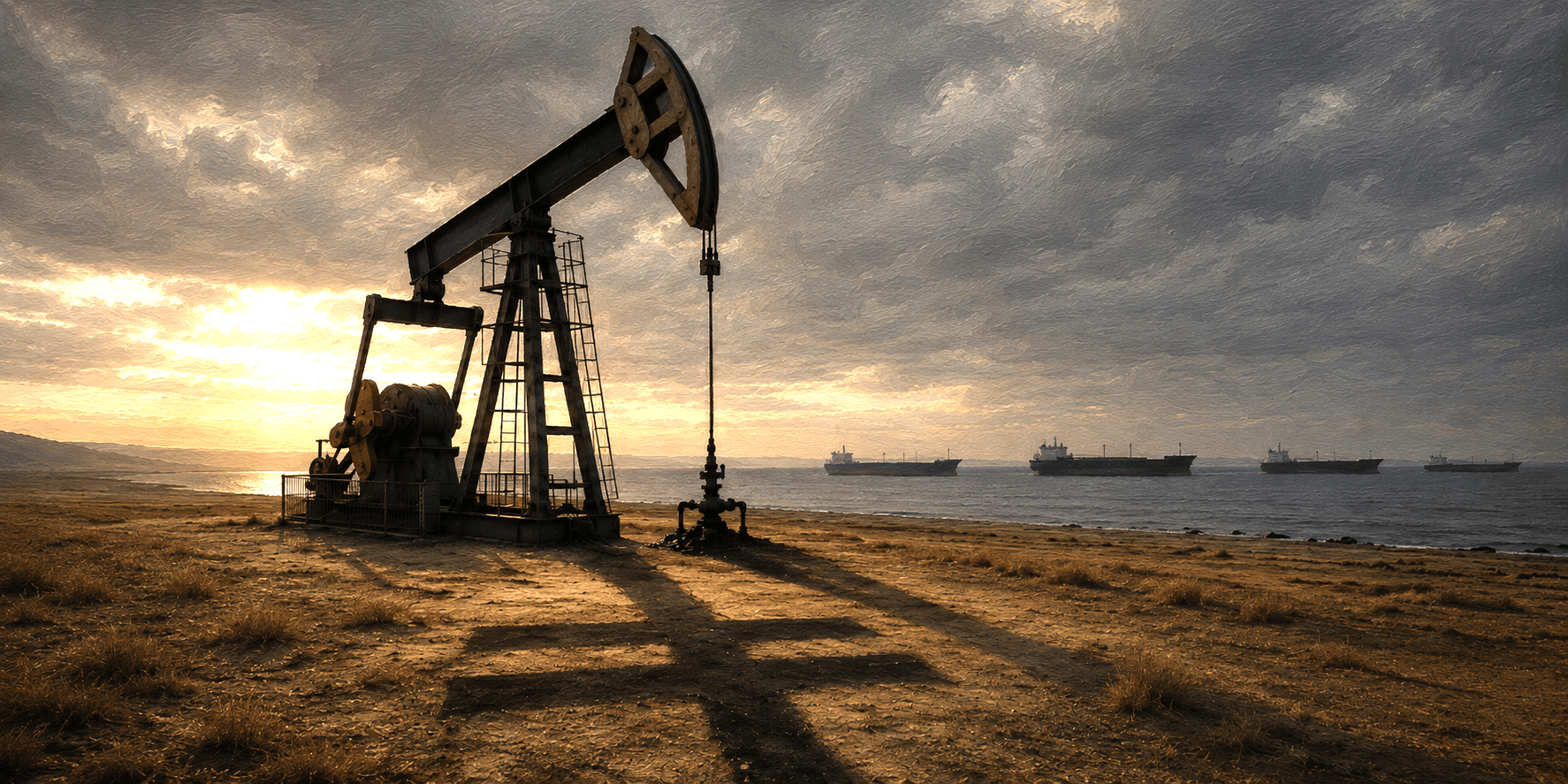
Most of Kazakhstan’s oil comes from the west of the country, including the Tengiz field near the Caspian Sea and the offshore Kashagan field in the northern Caspian. The Tengiz oil field is one of the deepest and largest oil fields in the world, while Kashagan, an offshore deposit, ranks as one of the largest global oil discoveries since the 1960s. Kazakhstan’s main export blend, CPC Blend, is a light, sweet crude, a desirable oil type that’s easy to refine into gasoline and diesel.
Because the Iran war and restrictions around the Strait of Hormuz have disrupted tanker traffic and raised fears of supply shortages, global oil prices have climbed. And while high oil prices are generally a net positive for Kazakhstan, the current price – Brent crude was trading above $100 per barrel in mid-May 2026 – could present problems.
In the short term, high oil prices tend to boost government revenues and budget surpluses. They can increase inflows to Kazakhstan’s National Fund, depending on production, tax receipts, transfers, and government withdrawal policy, and provide resources for government spending on infrastructure and social programs. They can also stimulate demand in related sectors, boosting Kazakhstan’s oil-related industries. And since oil exports typically make up more than half of the nation’s export revenues, high oil prices generally lead to a rise in Kazakhstan’s GDP.
So far, so good.
But high oil prices also carry risks. For one thing, they can strengthen the tenge and add to domestic demand, especially if higher revenues feed into faster government spending. Which is where Dutch disease comes in.
As the stronger currency makes non-oil exports less competitive, capital and labor shift toward the energy sector. Kazakhstan’s manufactured goods become more expensive and less competitive, and the nation’s economic diversification initiatives get moved to the back burner. Politically, high oil prices can also lead to rising expectations for wealth redistribution, fuel subsidies, and wage increases that could be hard to sustain if, or when, oil prices fall.
That’s why some economists and policymakers tend to view moderate oil prices as easier for Kazakhstan to manage than a sharp boom-and-bust cycle. At that price, the Kazakh economy can continue to grow. Inflation – though already too high – can remain manageable, political expectations from an “oil bonanza” can be mitigated, and the government can continue its efforts to diversify Kazakhstan’s oil-dominated economy.
But Kazakhstan does not set global oil prices or control the Strait of Hormuz. So what can the government do to benefit from $100+ per barrel prices in the short term, while avoiding Dutch disease and other negative consequences if oil prices remain high for the remainder of 2026 and beyond?
It turns out that the government of Kazakhstan has been aware of this problem for a long time, but the current spike in prices has sparked new attention to the dangers of Dutch disease. In light of the surge in energy prices, the government’s response can be understood through five broad policy initiatives.
The first pillar of the government’s strategy amounts to the use of the National Fund to “sterilize” oil revenues. Instead of spending all of the oil bonanza on domestic programs, the government is investing a large proportion in foreign assets, with the idea that this will reduce pressure on the tenge and help prevent the Kazakh economy from overheating. But the government has been pursuing this strategy – unevenly, it must be said – for decades. It will need to follow a disciplined approach if oil prices remain high for a sustained period.
The second pillar addresses the currency problem directly. Because the tenge isn’t pegged to the dollar, it “floats,” which can lead to excessive currency appreciation when oil prices are high. The government and the National Bank have sought to manage exchange-rate volatility and maintain reserves, but non-oil exporters remain exposed to appreciation, cost pressures, and weak competitiveness.
The third pillar is an obvious one: economic diversification. Since the early 2000s, Kazakhstan’s government has launched repeated industrial diversification programs designed specifically to reduce the nation’s dependence on oil. In the current crisis, the government is adding programs focused on manufacturing, logistics, digital technology, and transport corridors, targeting sectors like machine-building, chemicals, food processing, mining equipment, renewable energy, uranium processing, IT, fintech, and – significantly – artificial intelligence (AI). The government has also pushed to position Kazakhstan as a Eurasian transit hub between China, Turkey, Europe and the Caspian region, which is important because transport and trade services are less vulnerable to oil price cycles.
In light of the above, pillar four might seem counterintuitive since it involves investments in the oil industry. But the government has come to appreciate the fact that by simply exporting crude oil, Kazakhstan is missing profitable opportunities to capitalize on its primary natural resource. As a result, Kazakhstan is seeking more “local content” and downstream industry, and encouraging investments in petrochemicals, refining, pipelines, oilfield services and equipment manufacturing. So instead of oil wealth crowding out industry (the Dutch disease problem), oil wealth will be used to create industry.
Pillar five is key to the entire economic diversification project: invest in the development of human capital and higher education. The government’s goal is to transition Kazakhstan from a resource-export economy into a knowledge-based, Middle Power economy by framing economic diversification as a human capital issue rather than just an industrial one. As President Tokayev often states, the nation’s priorities are innovation, education, digitization, and non-resource growth.
In this, the president is aided by his longest-serving cabinet officer, the Minister of Science and Higher Education, Sayasat Nurbek. Minister Nurbek has implemented strategic investments in technical universities, foreign university partnerships, digital education and STEM training, and is now following the president’s directive by making substantial government investments in AI. All of this is aimed at educating the nation’s workforce of the future, and represents a significant competitive advantage for Kazakhstan among its Central Asian neighbors.
If we were to grade Kazakhstan’s efforts to exploit high oil prices while mitigating the negative effects of Dutch disease, we might give a solid B+. Kazakhstan has preserved stronger macroeconomic buffers than many resource exporters, but recent IMF and World Bank assessments also point to overheating, expansionary fiscal policy, and continued dependence on oil-linked growth. The government has also preserved – and increased – the nation’s sovereign wealth savings and developed a more sophisticated financial system than its Central Asian neighbors, and has taken the lead among them in human capital development.
But oil still represents a large share of government revenue and much of Kazakhstan’s foreign investment. The country’s manufacturing sector remains relatively small compared to the size of the hydrocarbon economy, indicating that Dutch disease is still a problem for the economy.
The International Maritime Organization has said around 1,500 ships and 20,000 crew members were trapped in the Persian Gulf because of the Strait of Hormuz crisis. Politicians and economists seem certain that this crisis will end someday, but no one can predict when. All seem to agree, however, that the effects of this energy disruption will last well beyond the end of the current conflict.
Managing the “good news” of high oil prices while mitigating the negative pull of Dutch disease will remain a central challenge for Kazakhstan’s leaders. Like negotiating an end to the war itself, managing Kazakhstan’s economy in the midst of this crisis is an ongoing work in progress. But on balance, the Tokayev administration deserves high marks for its understanding of the problem and its far-sighted and disciplined approach to steering Kazakhstan’s economy to a prosperous and sustainable future.
The views expressed in this article are those of the author and do not necessarily reflect the official policy or position of the publication, its affiliates, or any other organizations mentioned.