• KZT/USD = 0.00218
  • TJS/USD = 0.10820
  • UZS/USD = 0.00009
  • TMT/USD = 0.29760
  • KZT/USD = 0.00218
  • TJS/USD = 0.10820
  • UZS/USD = 0.00009
  • TMT/USD = 0.29760
  • KZT/USD = 0.00218
  • TJS/USD = 0.10820
  • UZS/USD = 0.00009
  • TMT/USD = 0.29760
  • KZT/USD = 0.00218
  • TJS/USD = 0.10820
  • UZS/USD = 0.00009
  • TMT/USD = 0.29760
  • KZT/USD = 0.00218
  • TJS/USD = 0.10820
  • UZS/USD = 0.00009
  • TMT/USD = 0.29760
  • KZT/USD = 0.00218
  • TJS/USD = 0.10820
  • UZS/USD = 0.00009
  • TMT/USD = 0.29760
  • KZT/USD = 0.00218
  • TJS/USD = 0.10820
  • UZS/USD = 0.00009
  • TMT/USD = 0.29760
  • KZT/USD = 0.00218
  • TJS/USD = 0.10820
  • UZS/USD = 0.00009
  • TMT/USD = 0.29760
24 August 2026

Viewing results 19 - 24 of 1154

Tajikistan’s Somon Air Adds Routes, Receives First Boeing 737 MAX

Somon Air, Tajikistan’s national carrier, says it will start direct flights once a week between Dushanbe and Minsk, Belarus, on August 29. “Flights will operate every Saturday,” said the airline, which received its first Boeing 737 MAX aircraft in Dushanbe on August 3 as part of a fleet expansion. The airline, which is adding international routes and working to strengthen its role in the Central Asian aviation market, committed to ordering up to four 787 Dreamliners and up to 10 737 MAX aircraft in an announcement with Boeing in late 2025. At the time of the agreement’s announcement, Somon Air was operating six Next-Generation 737 airplanes to destinations across Europe, Asia and the Middle East, according to Boeing. The expansion of Somon Air’s international flights will “contribute to the development of tourism, cultural exchange, the expansion of economic relations, and the enhancement of Tajikistan's reputation as a country leading the ‘open door´ policy,” the state Khovar news agency reported on Monday. In 2025, Tajikistan introduced an Open Skies policy that lifted many market restrictions as a way to encourage competition, with the aim of generating better prices for passengers, more efficient service, and route diversification. On August 9, Somon Air began direct flights every Sunday between Dushanbe and Jeddah, Saudi Arabia. In June, it also started a weekly direct route between the Tajik capital and Tbilisi, Georgia. In April, the airline introduced a new weekly route between Dushanbe and Ufa in western Russia. Operating since 2009, privately owned Somon Air says it is Tajikistan’s “national air carrier.”

Central Asian States Plan Automated Water Monitoring on the Syr Darya

Central Asian countries have agreed to prepare a plan for automated water monitoring on the Syr Darya, one of the region’s main transboundary rivers. The system is intended to provide the countries with more accurate data on water volumes and distribution across the basin, where irrigated agriculture in several countries depends on river flows. The cost of weak coordination across Central Asia is already measured in billions: the World Bank estimates the region’s annual economic losses at more than $4.5 billion. The agreement was reached on August 7 in Turkistan, Kazakhstan. A working group to prepare the plan is expected to be established by the end of September. The decision was made at a meeting of the Interstate Commission for Water Coordination, a regional mechanism for coordinating the use of shared water resources. The Syr Darya is formed in the Ferghana Valley by the confluence of the Naryn and Kara Darya rivers, flows through Uzbekistan, Tajikistan, and Kazakhstan, and ends in the North Aral Sea. The Naryn originates in Kyrgyzstan, meaning that management of the basin involves four countries. The Syr Darya supplies major agricultural areas, while a cascade of reservoirs and hydropower plants links the distribution of river flows with electricity generation. The countries’ interests have not always coincided. In the upper reaches of the basin, water is used for hydropower generation, while farther downstream demand peaks during the summer irrigation season. Accurate monitoring and timely data exchange help countries plan water withdrawals and reservoir operations during months with the highest demand. Kazakhstan and Uzbekistan are already developing part of the future system. The two countries are automating ten hydrological monitoring stations on the Syr Darya, five on each side of the border. Sensors are expected to record water flow and transmit the data online. At the meeting in Turkistan, the two sides agreed to accelerate efforts to secure grant financing and consider expanding the system to other parts of the basin. Kazakhstan already has experience with automated monitoring. On parts of its irrigation network, sensors remotely transmit data on water levels and pressure. Over the past decade, more than 800 kilometers of lined canals have also been rehabilitated in four regions, while irrigation system upgrades have covered more than 100,000 hectares of farmland. Uzbekistan is also seeking to reduce irrigation losses. Agriculture accounts for about 90% of the country’s water consumption. One project provides for the reconstruction of 259 kilometers of major canals and the installation of automated water-flow monitoring systems. The World Bank estimates the expected water savings at around 540 million cubic meters a year. The current season on the Kazakh section of the Syr Darya has so far been favorable. Since April 1, around three billion cubic meters of water have flowed into the Shardara Reservoir in southern Kazakhstan. This volume is higher than both last year’s figure and the long-term average. The region received additional funding for water projects in July. The World Bank allocated a $20 million grant to improve the management of...

The Tradition of Power – Why Political Succession in Central Asia Follows Its Own Rules

In January 2027, Kyrgyzstan will hold a presidential election, an event that is anything but routine for the Central Asian republic. Over the past three decades, political crises, often surrounding disputed elections, have repeatedly ended in the removal of presidents. Kyrgyzstan remains an outlier in the region, although it, too, has gradually been moving towards a political model that has long become the norm across the rest of Central Asia. This year marks 35 years since the Soviet republics embarked on independent political lives following the collapse of the USSR. Yet many of the mechanisms governing the transfer of supreme power, shaped during the Soviet era, continue to define politics across the independent states. In Central Asia, three decades of independence have produced a distinctive model of political succession. The final years of the Soviet Union became known as the era of the so-called "gun-carriage race." As one ageing General Secretary after another passed away, an unwritten rule appeared to emerge: the official who chaired the state funeral commission for the deceased leader often became his successor. A remarkably similar pattern later emerged in Central Asia – first in Turkmenistan, then in Uzbekistan. Turkmenistan's first president, Saparmurat Niyazov, died in December 2006. The state funeral commission was chaired by Deputy Prime Minister and Health Minister Gurbanguly Berdimuhamedov, who simultaneously became acting president. It was during those funeral ceremonies that the wider public was introduced for the first time to the family of Turkmenbashi. Under the constitution, parliamentary speaker Ovezgeldy Atayev should have assumed the presidency. Instead, he was stripped of immunity and arrested, clearing the way for Berdimuhamedov to take the acting presidency. After assuming the presidency in 2007, Berdimuhamedov gradually abandoned the more eccentric elements of his predecessor's personality cult while building a political system centered on his own leadership. If Niyazov styled himself Turkmenbashi – Leader of All Turkmens – his successor adopted the title Arkadag, or Protector of the Nation. In February 2022, Berdimuhamedov unexpectedly announced that he would step down following an early presidential election scheduled for March 12. He explained the decision by saying it was time to "give the younger generation an opportunity to govern the country." Few doubted that he was referring to his son Serdar Berdimuhamedov, who by then had already occupied most of the key positions within the state hierarchy. That is precisely what happened. Serdar Berdimuhamedov became president, while his father moved to the chairmanship of the Halk Maslahaty, retaining the title of National Leader of the Turkmen People. Uzbekistan followed a similar pattern, although under different circumstances. Islam Karimov built a highly centralized presidential system that left virtually no room for political competition. This applied not only to political opponents, but also to those closest to the president. His eldest daughter, Gulnara Karimova, was placed under house arrest while her father was still alive. Following his death, she was convicted and remains imprisoned in Uzbekistan. When Karimov died in September 2016, reports of his death circulated for several days...

Russia Migration Rules Tighten as Central Asian Work Entries Fall

Entries to Russia for work by citizens of Uzbekistan, Tajikistan, and Kyrgyzstan fell by 15% in the first half of 2026 amid tighter migration rules and higher costs for workers. The Border Service of Russia’s Federal Security Service recorded about 1.9 million work-related entries by citizens of the three countries between January and June, down from more than 2.3 million in the same period of 2025, according to data published through Russia’s Unified Interdepartmental Information and Statistical System. The restrictions are also separating some migrant workers from their children. Since April 1, 2025, foreign children applying to Russian state schools have been required to prove that they are legally resident in the country and pass a Russian-language test. Those who fail cannot enroll and must wait at least three months before taking the test again. Rakhmat, a Tajik migrant worker preparing to bring his children, aged seven and nine, to Russia, told Radio Free Europe/Radio Liberty that he might have to send them back to live with their grandparents if they fail. Tajikistan’s education minister has said that about 9,000 children have already returned from Russia after being denied school places. Russian Education Ministry figures cited by Asia-Plus show that the number of foreign children attending Russian schools fell by about 44,000 during the 2025–26 academic year. Enrollment among children from Uzbekistan, Tajikistan, and Kyrgyzstan dropped by 27%, from 122,000 to 89,000. For adult migrants, tighter oversight increasingly comes through their phones. Since September 1, 2025, visa-free foreign nationals working in Moscow and the surrounding region have been required to register through the Amina mobile application. Its central function is to report a migrant’s place of residence while automatically transmitting the phone’s geolocation to the Russian Interior Ministry. Russian authorities present the system as a way to enforce migration rules and reduce corruption. Critics argue that continuous location tracking subjects foreign nationals to intrusive surveillance. Migrants who stop transmitting location data may be placed on Russia’s register of controlled persons, restricting their access to banking and other services and potentially leading to deportation. On September 1, 2026, the Amina requirement will be extended to adults from visa-free countries who remain in Moscow or the Moscow region for more than 90 days for purposes other than work, including foreign students. The experimental system remains limited to the capital region and does not yet apply across Russia. Kyrgyzstan’s Center for Employment of Citizens Abroad has published guidance explaining who must install Amina, what information it transmits, and how migrants can avoid breaching the new registration rules. The Times of Central Asia previously reported that Russia's tightening migration policy is prompting Central Asian countries to seek alternative labor markets while expanding employment opportunities at home.

Dombra Dispute and Niqab Bans Fuel Religious Debate in Central Asia

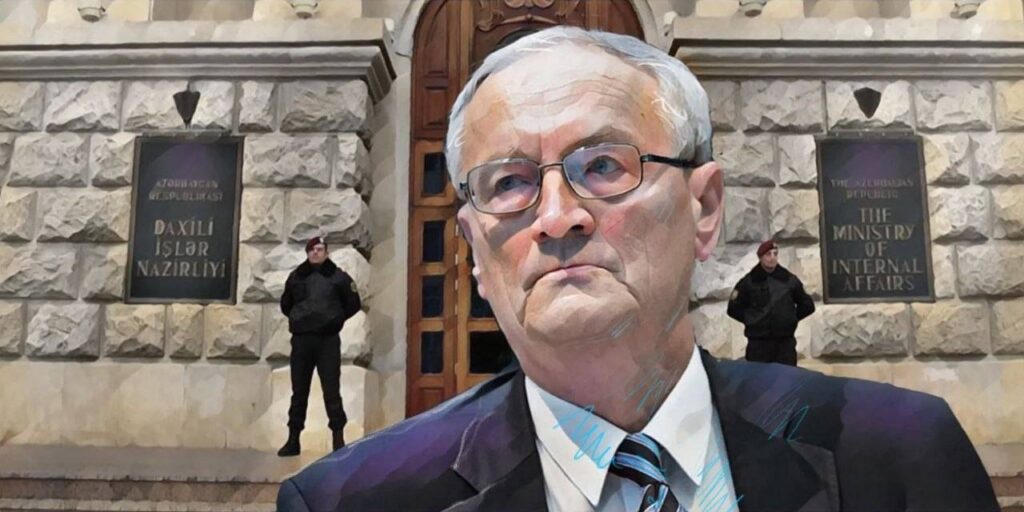
Standing before a court in Aktobe in June, 35-year-old Azat Konys apologized to “the entire Kazakh people” for insulting one of the country’s most cherished cultural symbols. Two months earlier, during a TikTok livestream, he had declared the dombra forbidden under Islam, compared the two-stringed instrument to part of the devil’s anatomy and called clerics from Kazakhstan’s official Islamic authority “dogs of hell.” Konys asked the court not to imprison him. The judge instead sentenced him to three years and six months for inciting religious and national hatred. The controversy began when Konys cited the Hanafi school of Sunni Islamic jurisprudence, the dominant legal tradition among Muslims in Kazakhstan, to argue that the dombra and other stringed instruments, including the guitar and balalaika, were haram, meaning forbidden under Islamic law. The remarks caused particular anger because the dombra is more than a musical instrument in Kazakhstan: it has accompanied oral poetry and storytelling for generations and is officially celebrated as a symbol of cultural heritage and national  identity. Police identified Konys after clips from the livestream circulated on social media and detained him in April. The case is an unusually stark example of how online religious disputes are spilling into legal and political life across Central Asia. Arguments that might once have remained within mosques or religious communities are now spreading through social media, forcing governments and official Islamic authorities alike to decide where religious expression ends and attacks on national culture begin. A more recent controversy arose in Kazakhstan’s Turkestan Region, where a 66-year-old guest at a toi, a traditional wedding feast, called for stricter adherence to Islamic law. He urged the organizers to separate men and women and remove music and alcohol from the celebration, while describing musicians as “heralds of Satan.” The video spread rapidly on social media, prompting nationwide debate. The man was detained and placed in a temporary detention facility for incitement of religious and social hatred. In a statement, the Ministry of Internal Affairs said that freedom of expression does not extend to statements that degrade the dignity of others or could provoke religious or social hostility. The Spiritual Administration of Muslims of Kazakhstan (SAMK), the country’s main official Muslim body, later issued its own response. It stated that Islam does not prohibit music in itself and stressed that publicly insulting artists or women is inconsistent with Islamic ethics. Another controversy centered on Nauryz, the spring equinox holiday celebrated throughout Central Asia and across much of the Turkic and Iranian cultural world. In March, a blogger in the Almaty Region described the holiday as “non-Muslim” and argued that it should not be celebrated. Police opened a criminal case against him on suspicion of inciting religious hatred. Kazakhstan’s Prosecutor General’s Office subsequently warned of legal liability for statements attacking Nauryz and other national traditions. The SAMK, meanwhile, publicly celebrated Nauryz as a national holiday promoting social harmony and charitable acts. The debate soon spread beyond social media into politics and the entertainment industry. Producer and television presenter Bayan Alaguzova said...

Bride Kidnapping in Central Asia: Why the Practice Persists Despite Tougher Laws

Bride kidnapping for the purpose of forcing women into marriage remains one of the least visible forms of gender-based violence in Central Asia. Although abduction and coercion into marriage are punishable under criminal law across the region, the offenses are defined differently from country to country. Their true scale is difficult to measure. Many victims never report the crime, while some cases are still viewed as a continuation of tradition rather than a violation of criminal law. Over the past decade, governments across Central Asia have begun revising their approaches to the problem. Kyrgyzstan strengthened criminal penalties following several high-profile cases. Kazakhstan did not close a legal loophole that allowed many perpetrators to avoid prosecution until 2025. Uzbekistan has a specific criminal provision covering the abduction of women for marriage, while Tajikistan does not appear to define bride kidnapping as a separate offense. In Tajikistan and Turkmenistan, however, assessing the prevalence of the practice remains particularly difficult because of limited research and incomplete official data. The term “bride kidnapping” has not always referred to the same practice. Anthropologists note that historically it covered a range of marriage customs, from mutually agreed elopements and staged abductions to the violent kidnapping of women. Contemporary researchers stress that the presence or absence of a woman’s free consent is the key distinction between these practices. Comparable customs once existed among a number of Central Asian peoples. One documented motive has been the desire to avoid kalym, the traditional bride price paid by the groom’s family to the bride’s relatives. Economic motives, however, did not alter the nature of the crime when a woman did not consent to the marriage. The issue has been studied most extensively in Kyrgyzstan. A nationally representative survey conducted in 2015–2016 by the National Statistical Committee with support from UN Women, UNFPA, and the International Organization for Migration found that 22.1% of marriages involved some form of bride abduction. Of these, 16.3% were reported as taking place with the woman’s consent, while 5.8% occurred without it. The frequently cited claim that more than one in five Kyrgyz marriages begins with bride kidnapping therefore combines consensual and non-consensual practices. It should not be presented as an estimate of forced abduction. The figures were based on respondents’ accounts and may not capture every form of family or social pressure surrounding consent. Known locally as ala kachuu, or “grab and run,” the non-consensual abduction of a woman for marriage is a criminal offense in Kyrgyzstan. In 2013, the penalty for abducting an adult woman for marriage against her will was increased to between five and seven years in prison. The corresponding sentence when the victim was under 17 was increased to between five and ten years. Tougher penalties, however, have not prevented further tragedies. One of the best-known cases was the 2018 murder of Burulai Turdaaly Kyzy, a 20-year-old medical student. After she was abducted, her family contacted the police. Officers brought both Burulai and her abductor to a police station but left...