• KGS/USD = 0.01144 0%
  • KZT/USD = 0.00207 0%
  • TJS/USD = 0.10463 0%
  • UZS/USD = 0.00008 0%
  • TMT/USD = 0.28490 0%
  • KGS/USD = 0.01144 0%
  • KZT/USD = 0.00207 0%
  • TJS/USD = 0.10463 0%
  • UZS/USD = 0.00008 0%
  • TMT/USD = 0.28490 0%
  • KGS/USD = 0.01144 0%
  • KZT/USD = 0.00207 0%
  • TJS/USD = 0.10463 0%
  • UZS/USD = 0.00008 0%
  • TMT/USD = 0.28490 0%
  • KGS/USD = 0.01144 0%
  • KZT/USD = 0.00207 0%
  • TJS/USD = 0.10463 0%
  • UZS/USD = 0.00008 0%
  • TMT/USD = 0.28490 0%
  • KGS/USD = 0.01144 0%
  • KZT/USD = 0.00207 0%
  • TJS/USD = 0.10463 0%
  • UZS/USD = 0.00008 0%
  • TMT/USD = 0.28490 0%
  • KGS/USD = 0.01144 0%
  • KZT/USD = 0.00207 0%
  • TJS/USD = 0.10463 0%
  • UZS/USD = 0.00008 0%
  • TMT/USD = 0.28490 0%
  • KGS/USD = 0.01144 0%
  • KZT/USD = 0.00207 0%
  • TJS/USD = 0.10463 0%
  • UZS/USD = 0.00008 0%
  • TMT/USD = 0.28490 0%
  • KGS/USD = 0.01144 0%
  • KZT/USD = 0.00207 0%
  • TJS/USD = 0.10463 0%
  • UZS/USD = 0.00008 0%
  • TMT/USD = 0.28490 0%

Viewing results 19 - 24 of 674

From Security Threat to Economic Partner: Central Asia’s New ‘View’ of Afghanistan

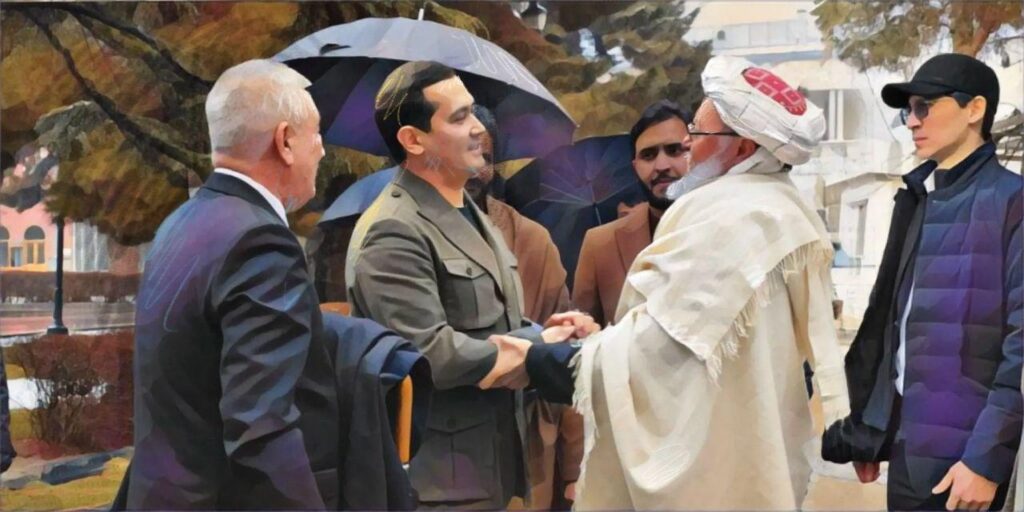
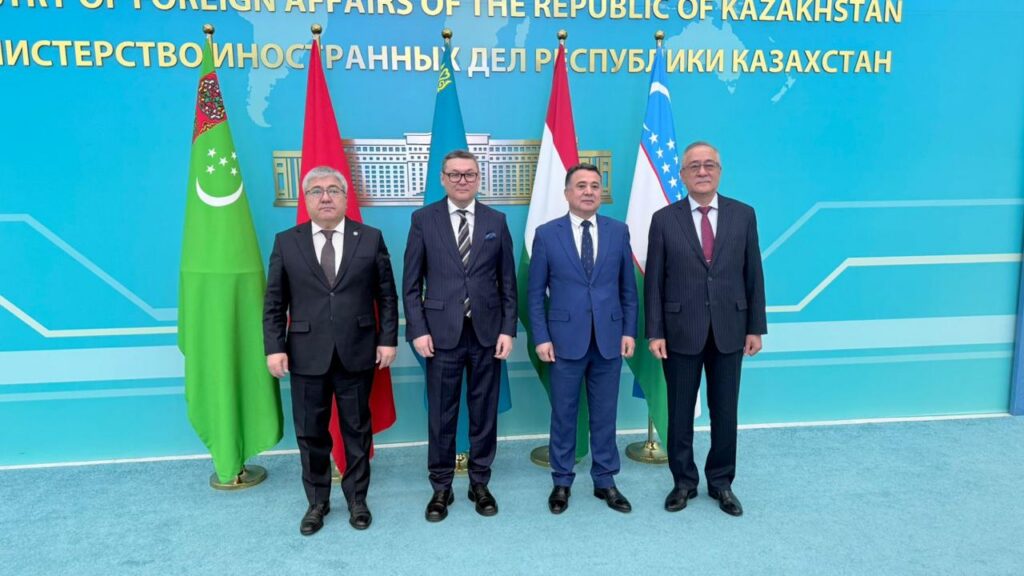
Afghanistan is quickly becoming more important to Central Asia, and the third week of February was filled with meetings that underscored the changing relationship. There was an “extraordinary” meeting of the Regional Contact Group of Special Representatives of Central Asian countries on Afghanistan in the Kazakh capital Astana. Also, a delegation from Uzbekistan’s Syrdarya Province visited Kabul, and separately, Uzbekistan’s Chamber of Commerce organized a business forum in the northern Afghan city of Mazar-i-Sharif. A Peaceful and Stable Future for Afghanistan The meeting in Astana brought together the special representatives of Kazakhstan, Kyrgyzstan, Tajikistan, and Uzbekistan for Afghanistan. The group was formed in August 2025. There was no explanation for why the fifth Central Asian country, Turkmenistan, chose not to participate. The purpose of the Astana meeting was to coordinate a regional approach to Afghanistan. Comments made by the representatives showed Central Asia’s changing assessment of its southern neighbor. Kazakhstan’s special representative, Yerkin Tokumov, said, “In the past [Kazakhstan] viewed Afghanistan solely through the lens of security threats… Today,” Tokumov added, “we also see economic opportunities.” Business is the basis of Central Asia’s relationship with the Taliban authorities. Representatives noted several times that none of the Central Asian states officially recognizes the Taliban government (only Russia officially recognizes that government). But that has not stopped Kazakhstan and Uzbekistan, in particular, from finding a new market for their exports in Afghanistan. Uzbekistan’s special representative, Ismatulla Ergashev, pointed out that his country’s trade with Afghanistan in 2025 amounted to nearly $1.7 billion. Figures for Kazakh-Afghan trade for all of 2025 have not been released, but during the first eight months of that year, trade totaled some $335.9 million, and in 2024, amounted to $545.2 million. In 2022, Kazakh-Afghan trade reached nearly $1 billion ($987.9 million). About 90% of trade with Afghanistan is exports from Kazakhstan and Uzbekistan. For example, Kazakhstan is the major supplier of wheat and other grains to Afghanistan, and Uzbekistan is the biggest exporter of electricity to Afghanistan. Kyrgyzstan’s trade with Afghanistan is significantly less, but from March 2024 to March 2025, it came to some $66 million. To put that into perspective, as a bloc, the Central Asian states are now Afghanistan’s leading trade partner, with more volume than Pakistan, India, or China. Kazakhstan’s representative, Tokumov, highlighted Afghanistan’s strategic value as a transit corridor that could open trade routes between Central Asia and the Indian Ocean. Kyrgyzstan’s representative, Turdakun Sydykov, said the trade, economic, and transport projects the Central Asian countries are implementing or planning are a “key condition for a peaceful and stable future for Afghanistan and the region as a whole.” The group also discussed humanitarian aid for Afghanistan. All four of these Central Asian states have provided humanitarian aid to their neighbor since the Taliban returned to power in August 2021. Regional security was also included on the agenda in Astana, but reports offered little information about these discussions. A few days before the opening of the meeting in Astana, Russian Ambassador to Kyrgyzstan Sergei...

Opinion: Tajikistan Narrows Online Extremism Liability — Debate Intensifies in Uzbekistan

Tajikistan’s Prosecutor General has reported a decrease in terrorist and extremist crimes. Officials attributed the decrease to the easing of penalties for “likes” and shares on the internet, which came into force in early May 2025, when the authorities stated that “liking” certain types of online materials and sharing them on social networks would no longer, in themselves, constitute a criminal offense. From 2018 onward, criminal liability was applied to the distribution, storage, or public endorsement of materials deemed extremist or prohibited. According to human rights groups, more than 1,500 Tajiks were imprisoned under the policy. Following recent changes, however, Prosecutor General Habibullo Vohidov said the number of terrorist and extremist crimes had decreased by more than 23%, by 314, compared to 2024. According to Reuters, the clarification applies to online materials deemed extremist or terrorist in nature; “likes” or shares of such content would no longer automatically trigger criminal liability. The recent changes implemented in Tajikistan have led to heated discussions among the public in Uzbekistan, where liability for online “likes”, posts, and comments continues. International organizations have for years characterized Uzbekistan’s enforcement of online speech provisions as a form of pressure on freedom of expression. In Uzbekistan, enforcement previously focused primarily on materials related to extremism and terrorism, but legal changes in 2021 introduced criminal liability for online “discrediting” of the president and state authorities. Local activist Rasul Kusherbayev wrote the following on his Telegram channel: “This issue is urgent for us, too. Law enforcement agencies, which lack the ‘nerve’ to punish officials who are illegally destroying the property of citizens, are not ashamed to hold citizens liable for a ‘like’”. Some observers argue that Uzbekistan’s legislation is more regulated compared to that in Tajikistan. While liability for prohibited content had been established in Tajikistan, the exact list of prohibited materials was not consistently disclosed. In Uzbekistan, however, this list has been regularly updated and publicly announced in recent years. Article 244.1 and the Prohibited List Draft decisions related to prohibited information have appeared in Uzbek legislation since the 1990s. Documents regarding information policy signed in March 1999 on the Lex.uz website speak about banned information. However, what was included in this list was not announced in open sources in Uzbekistan for years. The draft law on disclosing the list to the public was signed in 2014. Publicly available information about the evidentiary basis for earlier cases remains limited. The list of social network accounts and sites prohibited in Uzbekistan was last updated in January 2026. Around 1,600 channels, pages, and materials were included in the list. Specifically, it includes 249 pages and channels on Facebook, 790 on Telegram, 265 on Instagram, 167 on YouTube, 36 on the Odnoklassniki social network, and 53 on TikTok. Materials in audio, video, and text formats on websites and social networks were included. Although the list is publicly available, questions have arisen regarding its comprehensibility and clarity. Observers argue that the breadth of the list risks encompassing ordinary religious and political expression. Activists emphasize...

Coordination Instead of Declarations: Astana Hosts Meeting of Regional Contact Group on Afghanistan

On Monday, Astana hosted an extraordinary meeting of the Regional Contact Group of Special Representatives of Central Asian Countries on Afghanistan, with delegations from Kazakhstan, Kyrgyzstan, Tajikistan, and Uzbekistan in attendance. The agenda focused on trade and economic cooperation with Afghanistan, including joint projects, investment protection, transit tariff policy, and the development of transport corridors through Afghan territory. The establishment of the group represents the practical implementation of agreements reached at the Sixth Consultative Meeting of the Heads of State of Central Asia, held in Astana in August 2024, and reflected in the Roadmap for Regional Cooperation for 2025-2027. The first meeting of the Contact Group took place on August 26 last year in Tashkent. As noted by Erkin Tukumov, Special Representative of the President of Kazakhstan for Afghanistan, Astana is interested in a constructive exchange of views and in identifying practical solutions to pressing issues of cooperation with Afghanistan. In recent years, Kazakhstan has consistently kept Afghanistan among its foreign policy priorities, avoiding rhetorical declarations in favor of a measured and systematic approach. President Kassym-Jomart Tokayev has paid particular attention to Afghanistan since the change of power in Kabul in 2021. In the first weeks after the Taliban assumed control, Astana began articulating its position on international platforms. One of the key statements was Tokayev’s address at the Shanghai Cooperation Organisation summit in Dushanbe on September 17, 2021. He advanced a thesis that has since been reiterated in various formats: Afghanistan should be viewed not only as a source of risk but also as a potential driver of regional development, provided that stability and economic recovery are achieved. This position was further elaborated days later at the United Nations General Assembly. At that time, Kazakhstan was among the first to emphasize the need for inclusiveness in Afghanistan’s future political system, not as an abstract requirement, but as a practical condition for stability. Another significant step was the creation last year of the post of Special Representative of the President for Afghanistan, to which Tukumov was appointed. This role goes beyond that of an interdepartmental coordinator: as a direct representative of the head of state, it elevates the Afghan portfolio to the level of strategic priority. The establishment of such a position signals a transition from a situational response to a more systematic policy. The Astana meeting confirmed the intention of regional countries to deepen cooperation through a regular platform capable of coordinating actions and presenting them externally in a consolidated manner. Some external observers suggest that Central Asian countries are only now beginning to develop a common position on Afghanistan. However, that position has largely taken shape in recent years. The current task is not to formulate it, but to coordinate it more precisely. The meeting in Astana demonstrated that, for Central Asian countries, the primary concern is not the nature of the regime in Kabul, but Afghanistan’s capacity to function as a predictable economic partner and responsible participant in international relations. For the region, it is essential that...

After Absence, Tajikistan’s Rahmon Highlights a Daily Schedule

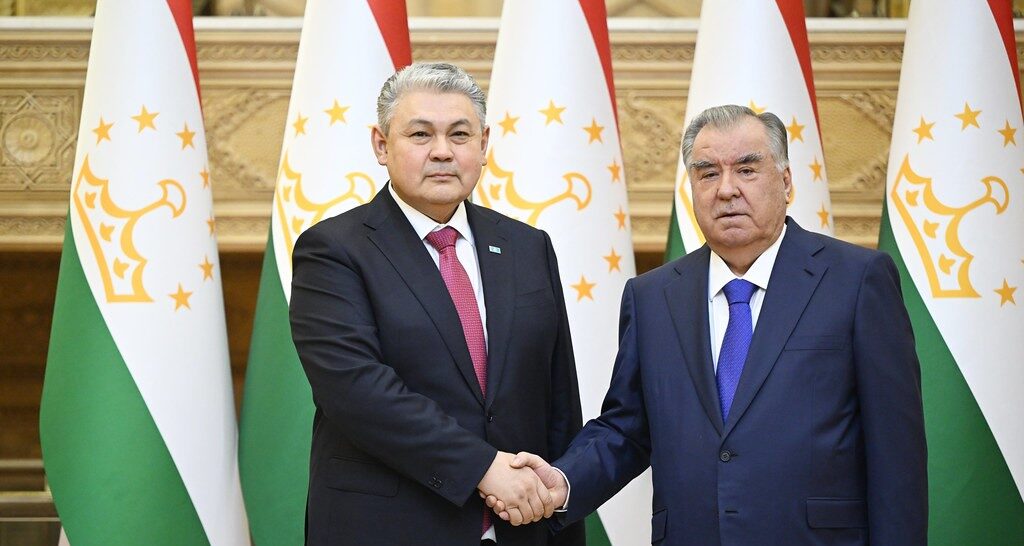
He’s back. President Emomali Rahmon of Tajikistan met Kazakhstan’s foreign minister on Monday, two days after welcoming the head of the Asian Infrastructure Investment Bank to Dushanbe. It might seem like routine business for the leader of a country. But the meetings, during which Rahmon was photographed and shown in video, followed more than two weeks during which Tajikistan’s president hadn’t been seen in public. The absence prompted some media and other online questions about his whereabouts and health, possibly prompting the presidency to issue a statement last week that said Rahmon had upcoming meetings. The 73-year-old president, who has held the post since 1994, posed for a photographed handshake with Kazakh Foreign Minister Yermek Kosherbayev that was posted on the website of Tajikistan’s presidential office. Rahmon’s account on X also showed a video of a meeting between him and Zou Jiayi of the Asian Infrastructure Investment Bank on Saturday. In addition, on Sunday, the presidential office posted a video of Rahmon congratulating Chinese President Xi Jinping on the beginning of the Chinese New Year. Speaking in a deep voice, Rahmon sat in front of an image of tree blossoms that are associated with the Spring Festival, which runs into early March. Rahmon´s son, Rustam Emomali, is chairman of the National Assembly and would take over as interim president if his father is unable to serve.

Shooting in Tajikistan’s Detention Center: Prosecutor General’s Office Reveals Details of January Incident for the First Time

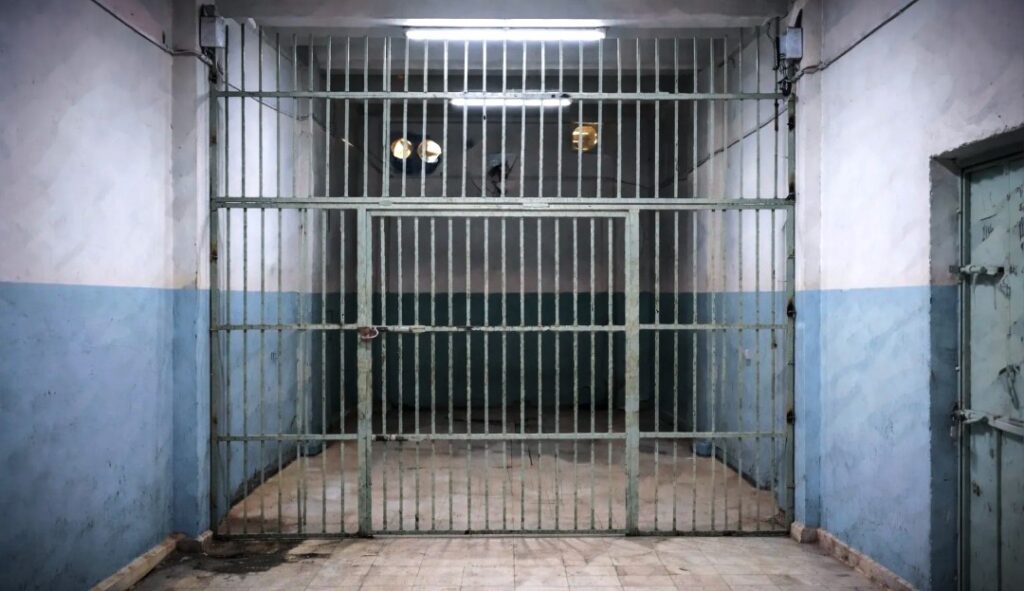
Tajik authorities have for the first time officially commented on the incident on January 31 at a detention facility in the city of Khujand. Tajikistan’s Prosecutor General, Khabibullo Vokhidzoda, disclosed details during a press conference in Dushanbe that was reported by Asia-Plus. Vokhidzoda confirmed that an armed confrontation took place at the Khujand pre-trial detention center. According to him, three prisoners attacked facility staff while in the exercise yard. The prosecutor general stated that the inmates used “various objects” to inflict bodily harm on staff members and assaulted another prisoner who was present. He said they ignored repeated demands to cease their actions and resisted, posing what he described as a serious threat to employees’ lives. As a result, the three prisoners were “neutralized” by security personnel. “While in the Khujand pre-trial detention center, in the exercise yard, they attacked the facility’s staff using various objects, causing them bodily harm and even beating another prisoner who was there. They ignored the staff’s demands to stop their actions and resisted, posing a serious threat to the lives of the facility’s employees. In this situation, they were neutralized by staff members responsible for the security of the correctional facility,” Vokhidzoda said. He emphasized that no staff members were killed, although they sustained injuries. He did not specify the number of injured employees. According to the prosecutor general, the three inmates had previously been sentenced to 12 to 14 years’ imprisonment for terrorist and extremist offenses. He added that they had repeatedly violated prison regulations, leading a court to impose stricter detention conditions. At the time of the incident, the prisoners were being temporarily held in the Khujand facility pending transfer. A criminal case has been opened under Articles 332 and 365 of Tajikistan’s Criminal Code. “How it happened, why it happened, who did it, all these questions will be clarified during the investigation,” Vokhidzoda said. This marks the first official confirmation of the incident. Earlier, Radio Ozodi reported on the events, citing sources who claimed casualties among both guards and inmates. At the time, journalists’ attempts to obtain official comment were unsuccessful. The Minister of Justice, whose ministry oversees correctional institutions, declined to comment. The January 31 incident is not the first serious episode of violence in Tajikistan’s penitentiary system, including in Khujand. In November 2018, a large-scale riot erupted at maximum-security prison 3/3 in Khujand. According to official data, 21 prisoners were killed during efforts to restore order. Two prison staff members were also killed and five guards were seriously injured. On February 3, 2025, unrest broke out at correctional facility No. 3/2 in the town of Vahdat, commonly known as “Kirpichny.” Official reports stated that three prisoners and three employees, including the prison director, were killed. On May 19, 2019, another riot occurred at the same Vahdat facility. According to official information, 30 inmates armed with knives and other sharp objects seized three employees and killed them. Five prisoners were also killed. During the subsequent suppression of the riot, 29...

Kyrgyzstan Ready to Act as a ‘Gateway’ for Tajik Goods to EAEU and EU Markets

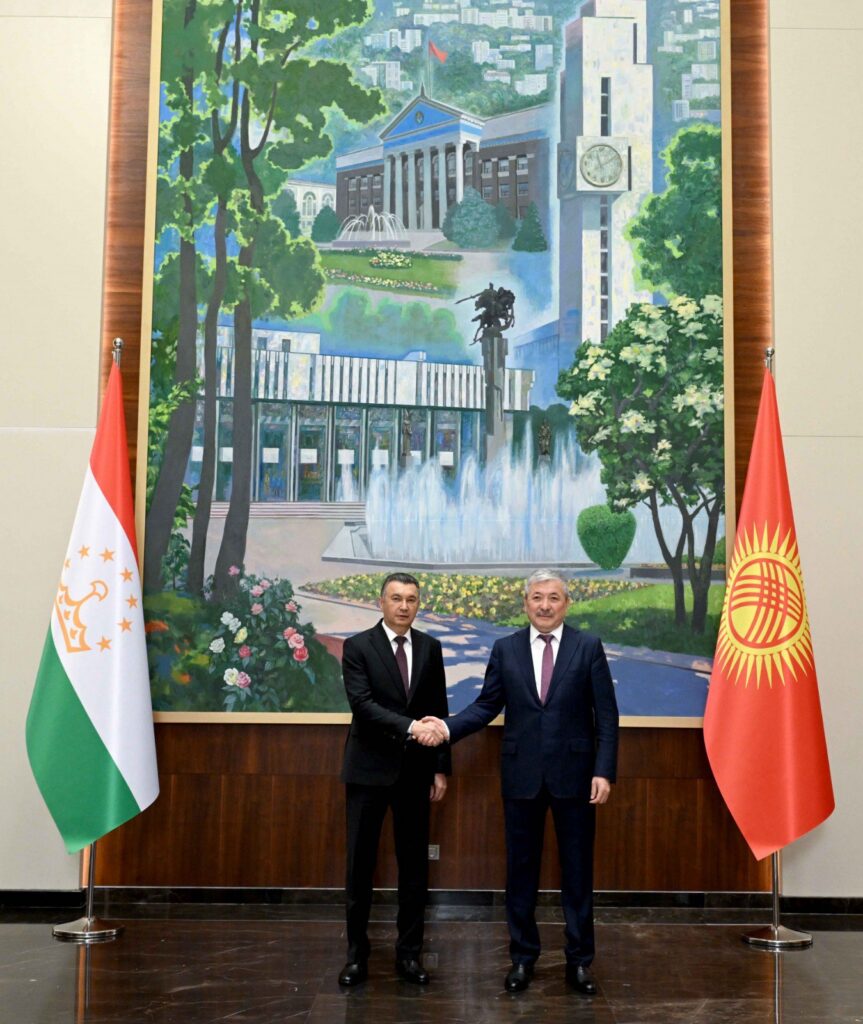
On February 13 in Bishkek, Chairman of the Cabinet of Ministers of Kyrgyzstan Adylbek Kasymaliev and Prime Minister of Tajikistan Kokhir Rasulzoda held the first meeting of the Kyrgyz-Tajik Intergovernmental Council. Opening the session, Kasymaliev said that 2025 marked a historic milestone in bilateral relations, citing the completion of the delimitation process of the Kyrgyz-Tajik border. He described the agreement as “a decisive factor in strengthening security and stability not only in our countries but also in the entire region.” Addressing trade and economic cooperation, Kasymaliev stated that Kyrgyzstan is ready to expand supplies of meat and dairy products, clothing and textiles, coal, glass, and sugar to Tajikistan. According to official figures, bilateral trade turnover reached $36 million in 2025, representing a nearly 24-fold increase compared to 2024. Both sides have set a target of increasing annual trade to $500 million. In the field of transport and logistics, Kasymaliev emphasized the need to improve border infrastructure and enhance the efficiency of checkpoints. Proposed measures include modernizing existing border crossings, expanding capacity, developing logistics and cargo terminals, and introducing digital solutions in customs and border administration. “Kyrgyzstan is ready to act as a trade gateway for Tajik goods to the markets of the Eurasian Economic Union (EAEU), as well as the European Union through the Generalised Scheme of Preferences Plus (GSP+),” Kasymaliev said. He also highlighted the strategic China-Kyrgyzstan-Uzbekistan railway project, which he said would significantly increase Kyrgyzstan’s transit potential and strengthen its role as a logistics hub in Eurasia. According to the Kyrgyz prime minister, the new transport corridor will create additional opportunities for Tajikistan. Kasymaliev further noted positive dynamics in tourism cooperation. In 2025, 86,000 tourists from Tajikistan visited Kyrgyzstan, a 12-fold increase compared to 2024. Kyrgyzstan reaffirmed its interest in developing joint tourism initiatives, including the possible introduction of a unified visa for third-country nationals traveling across Central Asia. Rasulzoda stated that Tajikistan places particular importance on good-neighborly relations and mutually beneficial cooperation with Kyrgyzstan, confirming readiness to further strengthen the partnership. As part of his visit to Bishkek, Rasulzoda toured a recently opened waste-to-energy plant constructed by a Chinese company. He described the facility as a promising example of modern waste recycling and expressed Tajikistan’s interest in implementing similar projects.