• KGS/USD = 0.01143 0%
  • KZT/USD = 0.00205 0%
  • TJS/USD = 0.10787 0%
  • UZS/USD = 0.00008 0%
  • TMT/USD = 0.28571 0%
  • KGS/USD = 0.01143 0%
  • KZT/USD = 0.00205 0%
  • TJS/USD = 0.10787 0%
  • UZS/USD = 0.00008 0%
  • TMT/USD = 0.28571 0%
  • KGS/USD = 0.01143 0%
  • KZT/USD = 0.00205 0%
  • TJS/USD = 0.10787 0%
  • UZS/USD = 0.00008 0%
  • TMT/USD = 0.28571 0%
  • KGS/USD = 0.01143 0%
  • KZT/USD = 0.00205 0%
  • TJS/USD = 0.10787 0%
  • UZS/USD = 0.00008 0%
  • TMT/USD = 0.28571 0%
  • KGS/USD = 0.01143 0%
  • KZT/USD = 0.00205 0%
  • TJS/USD = 0.10787 0%
  • UZS/USD = 0.00008 0%
  • TMT/USD = 0.28571 0%
  • KGS/USD = 0.01143 0%
  • KZT/USD = 0.00205 0%
  • TJS/USD = 0.10787 0%
  • UZS/USD = 0.00008 0%
  • TMT/USD = 0.28571 0%
  • KGS/USD = 0.01143 0%
  • KZT/USD = 0.00205 0%
  • TJS/USD = 0.10787 0%
  • UZS/USD = 0.00008 0%
  • TMT/USD = 0.28571 0%
  • KGS/USD = 0.01143 0%
  • KZT/USD = 0.00205 0%
  • TJS/USD = 0.10787 0%
  • UZS/USD = 0.00008 0%
  • TMT/USD = 0.28571 0%

Viewing results 25 - 30 of 467

Heavy Rain and Mudflows Kill Four in Tajikistan

Heavy rain and landslides have swept parts of Tajikistan in recent days, killing at least four people and damaging dozens of homes, as well as roads and farmland. In one incident, a boat carrying students capsized in a river but all the passengers were rescued. Three people were killed and three others were hospitalized in the southern city of Kulob after an overnight deluge, the press office of Tajikistan’s presidency said on Saturday. President Emomali Rahmon expressed condolences and instructed top officials to go to the scene of the disaster and help affected families. Intense rainfall continued over the weekend. One person died and two others were seriously injured in a lightning strike in Kaduchi village on Sunday afternoon, according to Tajikistan’s Committee for Emergency Situations and Civil Defense. The victims were taken to a hospital in the western city of Tursunzoda. Mudflows damaged homes, roads, and other infrastructure in several villages and settlements. Some canals filled with mud, stones, and gravel before overflowing into nearby streets. Emergency workers brought in heavy machinery and pumps to clear debris and water. The boat that capsized on Sunday afternoon was carrying seven secondary school students and their class teacher on the Syr Darya River, which runs through the northern city of Khujand. The group had arrived at a cultural and entertainment park for the excursion. Boatmen and other people rescued the students, according to an official account.

Tajikistan Hosts Grand Slam Judo, Wins Three Golds

Tajikistan showcased its world-class judo skills during the Dushanbe Grand Slam over the weekend, picking up three gold medals in a competition that featured 240 judoka, or practitioners of the martial art, from about three-dozen countries. While Russia topped the standings with three golds, three silvers and six bronze medals, Tajikistan’s second-place finish (three golds and one bronze) reflected the high priority of the sport in a country that is also promoting gushtingiri, a traditional form of Tajik wrestling that has some similarities to judo. Mongolia came third with two golds, two silvers and one bronze. Tajikistan’s capital has become a fixture on the international judo circuit in the last few years. The city hosted the 2024 World Junior Championships, and the Dushanbe Grand Slam was upgraded from Grand Prix status, making it a more prestigious tournament that awards a greater number of ranking points. Dushanbe will also host the World Judo Masters tournament on December 18-20, an event that Ismoil Mahmadzoir, president of the Tajikistan Judo Federation, has said will help Tajikistan’s judoka prepare for the Olympic Games in Los Angeles in 2028. Tajikistan’s emergence as a world judo power reflects years of investment and youth training in the sport, setting an example for the development of other sports in a country with relatively limited resources. Rasul Boqiev won Olympic bronze, the country’s first judo medal at the games, in Beijing in 2008. At the Paris Olympics in 2024, judokas Somon Makhmadbekov (in the -81kg weight category) and Temur Rakhimov (+100kg) also won bronze medals in their weight classes. The focus on judo in Tajikistan is sometimes associated with the legacy of gushtingiri, a traditional form of Tajik wrestling that has some similarities. In gushtingiri, a contestant tries to grab the belt of an opponent and execute a throw to the ground. While the sport goes back thousands of years in the wider region and has different names, the International Gushtingiri Federation was registered in 2022 in Switzerland, an international hub of sports associations, to standardize the rules and broaden its appeal. President Emomali Rahmon of Tajikistan is the honorary president of the federation, a sign of support for gushtingiri at the highest political level. At the May 1-3 Grand Slam in Dushanbe, Makhmadbekov – seventh in the world in his weight category - defeated Bernd Fasching of Austria for the gold, saying he was delighted to win in front of a home crowd. Makhmadbekov secured the world junior title in 2019. Tajikistan’s other gold medal winners in Dushanbe were Muhiddin Asadulloev, who is fourth in the world in his -73kg weight category, and Nurali Emomali (-66kg). Emomali is ranked second in the world in his category, and another Tajik athlete, Obid Zhebov, is just behind him in third place. Enthusiastic crowds at the Qasri Tennis area in Dushanbe delighted some of the athletes. Among them was Italian veteran Odette Giuffrida, who won gold in her -52kg category, according to tournament reports. “I wanted to compete in Dushanbe before I retire because...

Victory, Memory, and Moscow: Central Asia’s Changing May Calendar

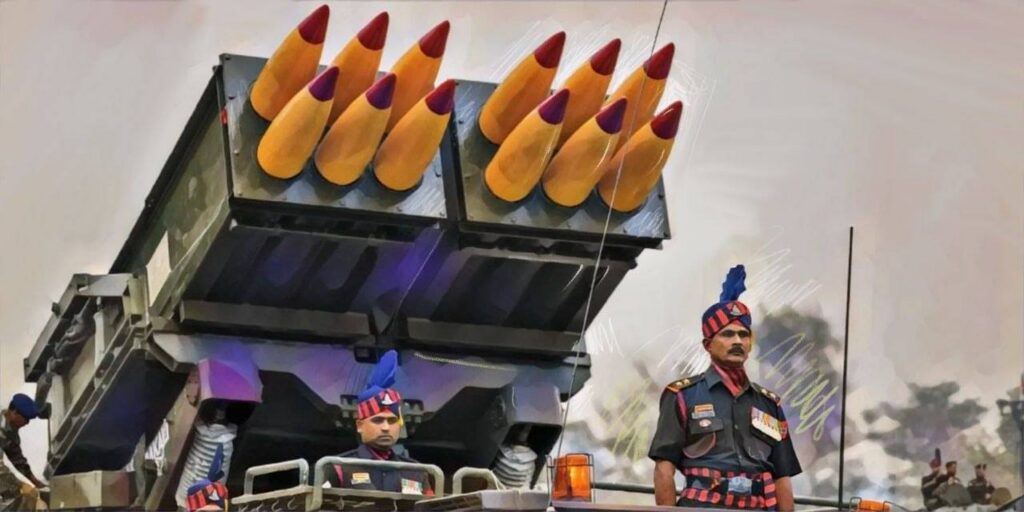
May is when Central Asia’s past crowds into the public square. Workers, soldiers, veterans, constitutions, unity campaigns, and the legacy of World War II all compete for space on the calendar. The dates are familiar across the region, but their meanings are no longer the same. Kazakhstan marks People’s Unity Day on May 1, Defenders’ Day on May 7, and Victory Day on May 9. Kyrgyzstan has a May calendar built around Labor Day, Constitution Day, and Victory Day. Uzbekistan has recast May 9 as the Day of Remembrance and Honor. Turkmenistan lists May 9 as Victory Day of the 1941-1945 Great Patriotic War, but it no longer carries the same public weight as the country’s main state holidays. Those choices show how each state is handling its Soviet past. May 1 can mean labor, unity, or almost nothing. May 9 can mean victory, mourning, family memory, or careful diplomacy. In Central Asia, the politics of memory rarely move through open rejection. It works through renaming, recalibrating, and changing the optics. Russia still treats May 9 as a central ritual of state power. Victory Day marks the Soviet defeat of Nazi Germany in what Russia calls the Great Patriotic War. Under Vladimir Putin, it has become a display of military strength, national sacrifice, and confrontation with the West. Since Russia’s full-scale invasion of Ukraine in 2022, that message has become more direct. This year, the image projected from Moscow will be weaker. Russia is preparing to hold its May 9 parade on Red Square without the usual display of military hardware. Tanks and missile systems, long central to the spectacle, are being kept away. Russia’s Defense Ministry cited the “current operational situation,” while the Kremlin linked the change to Ukrainian attacks. For Central Asian governments, that image will be hard to separate from their own handling of Victory Day. Moscow has long used May 9 to gather friendly leaders and place the post-Soviet region inside a shared wartime story. Attendance in Moscow has become a diplomatic signal. Absence has become one too. In recent years, Victory Day diplomacy has shown how Central Asian governments try to respect wartime memory while avoiding full alignment with Russia’s narrative. This year, at least some Central Asian leaders are again expected in Moscow. Kazakhstan’s Kassym-Jomart Tokayev and Kyrgyzstan’s Sadyr Japarov have been reported among those planning to attend, though the Kremlin has not yet published a full list of foreign guests. Central Asian states cannot simply discard May 9. Millions of people from the region served in the Red Army or worked behind the front during World War II; from Kazakhstan alone, around one million people contributed to the war effort, with nearly 271,000 soldiers still listed as missing. Families still carry those memories. Monuments, veterans’ payments, school events, and wreath-laying ceremonies remain important. For many people, Victory Day is personal before it is geopolitical. Yet governments have changed the tone. Kazakhstan still marks Victory Day as a public holiday, but large military parades...

Belousov’s Bishkek Warning: Russia Uses SCO Meeting to Target Outside Influence in Central Asia

The April 28 meeting of defense ministers from the member states of the Shanghai Cooperation Organization (SCO), held in Kyrgyzstan’s capital, Bishkek, received relatively modest coverage in Central Asia and China. Russia’s Ministry of Defense, however, used the routine gathering to send a sharper message: Moscow remains opposed to any non-regional military presence in Central Asia. According to the SCO Secretariat, the meeting was attended by defense ministers from member states, the organization’s Secretary-General, and the director of the Executive Committee of the SCO’s Regional Anti-Terrorist Structure. “During the meeting, the parties held a substantive exchange of views on pressing regional and international security issues, noting persistent challenges and threats, including international terrorism, extremism, transnational crime, as well as emerging risks in information and cybersecurity,” the SCO said in a general statement. The statement also emphasized the need to strengthen trust between the armed forces of member states, expand practical cooperation, conduct joint exercises, exchange experience, and develop mechanisms for military cooperation within the SCO. China’s Defense Minister Dong Jun used similar institutional language. According to Xinhua, Dong said the SCO should uphold the international order, improve security governance, and “eliminate the sources of turmoil and conflict through shared development.” He also called for deeper defense and security cooperation among member states. Kazakhstan’s Defense Minister Dauren Kosanov presented a report on the country’s approach to strengthening regional security, developing cooperation within the SCO, and improving joint responses to contemporary challenges, according to Kazakhstan’s Ministry of Defense. The ministry said participants also discussed the expansion of practical cooperation between defense agencies and approved a cooperation plan for SCO defense ministries for 2027. Defense ministers from Uzbekistan and Kyrgyzstan also held bilateral talks on the sidelines of the meeting, discussing military-technical cooperation, joint training, experience-sharing among officers, and initiatives aimed at strengthening regional security. Uzbek media described the talks as being held in a constructive and friendly atmosphere. Russian Defense Minister Andrei Belousov adopted a markedly different tone. His remarks were not limited to general SCO language about counterterrorism or cyber threats. They directly targeted the possible presence of outside powers in Central Asia. “We are closely monitoring attempts by non-regional states to establish a military presence and address logistical tasks in Central Asia. We consider this unacceptable,” Belousov said, according to RIA Novosti. Belousov also expressed concern about Syria, Lebanon, Afghanistan, and the humanitarian crisis in Gaza, warning that militants from crisis zones could infiltrate neighboring countries, including the SCO space. Belousov further argued that U.S. activity in the Asia-Pacific region was having a destabilizing effect. “Their efforts to reshape the regional security system into a U.S.-centric model by strengthening military-political structures under Washington’s control provoke tensions, undermine regional stability, and increase the risks of armed conflict,” he said. The contrast was striking. The SCO Secretariat spoke in broad terms about common threats and institutional cooperation. China emphasized development, governance, and multilateral stability. Russia used the same setting to issue a direct warning over Central Asia. Iran added another layer to...

U.S. Envoy Gor Meets Rahmon in Tajikistan for Trade, Security Talks

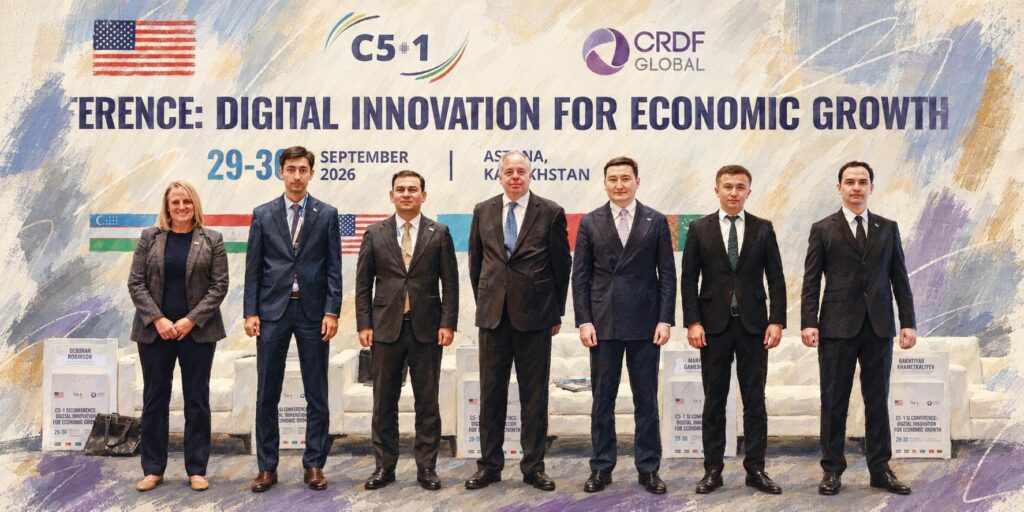
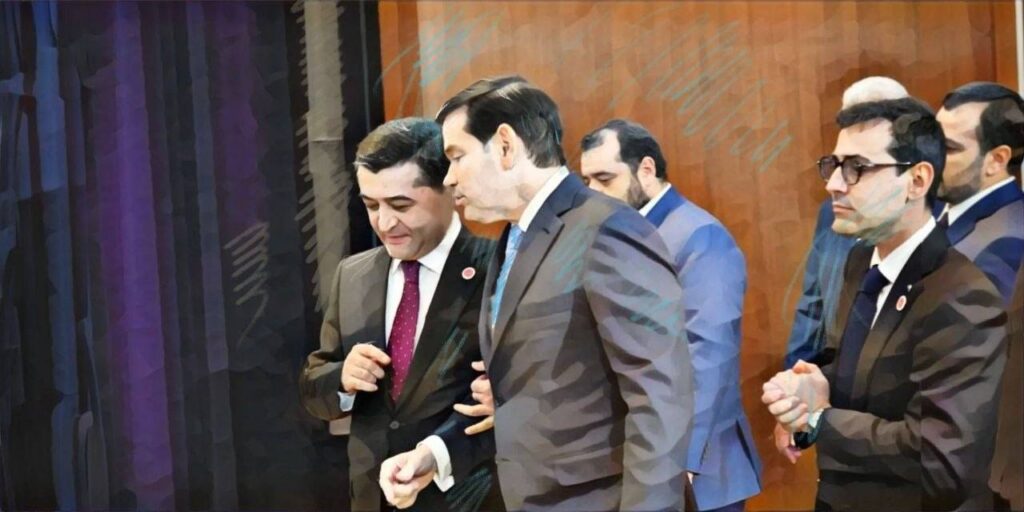
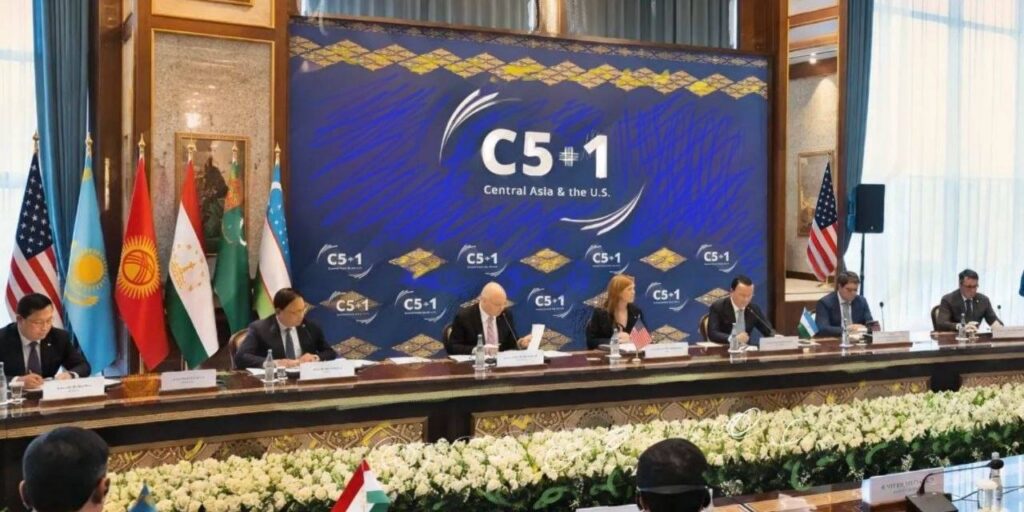
Tajik President Emomali Rahmon met Special Envoy of the President of the United States for South and Central Asia Sergio Gor in Dushanbe on April 28 for talks focused on trade, investment, security, and the next stage of cooperation under the C5+1 framework. Gor also met Tajik Foreign Minister Sirojiddin Muhriddin during the visit. “Just landed in Tajikistan!” Gor wrote on X. “Excellent meeting with Foreign Minister Sirojiddin Muhriddin in Dushanbe on deepening U.S.-Tajikistan ties. Excited to build a stronger partnership that delivers greater security and prosperity for both our countries.” The U.S. Embassy in Dushanbe said Gor’s meetings would continue over the next few days. According to the Tajik president’s press service, the meeting with President Rahmon covered the current state of bilateral relations and prospects for expanding cooperation. Particular attention was given to agreements reached through the C5+1 dialogue, which brings together the United States and the five Central Asian states. Rahmon said Tajikistan is interested in expanding ties with Washington in areas of mutual interest, noting that the United States is among Tajikistan’s top five investment partners. The sides discussed the use of the Trade and Investment Framework Agreement, known as TIFA, as a tool for developing practical cooperation. The talks pointed to several sectors where Dushanbe hopes to attract greater U.S. involvement. These include hydropower, mining, mineral processing, light industry, food production, chemicals, and pharmaceuticals. Tajikistan has long promoted its hydropower potential as a basis for regional energy trade and industrial development, while mining and processing are increasingly tied to wider U.S. interest in critical minerals and supply-chain diversification. Digital cooperation also featured, with the two sides identifying artificial intelligence, digital infrastructure, and the wider digitalization of the economy as promising areas for cooperation. They also discussed the creation of joint ventures to process agricultural products for export and attract investment. The Tajik Foreign Ministry said Muhriddin and Gor discussed political, economic, investment, humanitarian, and security cooperation. It said they also exchanged views on the regional situation, emphasizing stability and the prevention of humanitarian risks. “Particular attention was paid to the need for coordinated efforts in addressing modern challenges and threats, including terrorism, extremism, and drug trafficking,” the ministry said. Security remains a central part of Tajikistan’s relationship with Washington. Tajikistan shares a long border with Afghanistan, where narcotics trafficking, militant activity, and cross-border violence have repeatedly tested Dushanbe’s security forces. Earlier this month, Tajikistan said its security forces killed two alleged drug smugglers from Afghanistan who crossed into the Farkhor district of the Khatlon region. The State Committee for National Security said the group was trying to smuggle 25 kilograms of hashish. The Afghan border has also become a concern for foreign investors. In late 2025, several Chinese workers were killed in attacks launched from Afghan territory, prompting China to urge Tajikistan to strengthen protection for Chinese citizens and businesses. The attacks sharpened attention on Tajikistan’s ability to secure border areas where foreign-backed infrastructure and mining projects are expanding. Cooperation has also extended into health....

Iran Proposes Defense Cooperation to SCO Partners at Bishkek Meeting

Iran used a Shanghai Cooperation Organization defense meeting in Bishkek to signal that it is ready to share military experience and defense capabilities with other SCO members, giving a sharper geopolitical edge to the gathering hosted by Kyrgyzstan under its current chairmanship of the bloc. The meeting of SCO defense ministers opened on April 28 at the Ala-Archa state residence in Bishkek. Defense officials from the organization’s member states attended, along with SCO Secretary General Nurlan Yermekbayev. Kyrgyzstan’s Defense Minister Ruslan Mukambetov chaired the session. Iran was represented by Deputy Defense Minister Reza Talaei-Nik. In a statement carried by Mehr News Agency, Talaei-Nik said Iran was ready to share its defense weapons capabilities and experience with “independent countries,” especially SCO member states. He also described the SCO as part of a wider shift away from what Tehran called a “unipolar” international order. The remarks came after weeks of fighting between Iran, the United States, and Israel, including Iranian drone and missile strikes on U.S. bases in the region and Israeli sites. A ceasefire announced earlier this month reduced hostilities, but efforts to reach a wider settlement have stalled. Talaei-Nik also used the meeting to frame the recent conflict as a lesson for other states, declaring, “We are ready to share our experiences in defeating America with other members of the organization.” The SCO meeting gave Tehran a platform inside a bloc that now includes China, Russia, India, Pakistan, Iran, Belarus, Kazakhstan, Kyrgyzstan, Tajikistan, and Uzbekistan. Iran became a full member in 2023. The SCO also has a wider circle of observer states and dialogue partners, including 15 dialogue partners listed by the organization’s secretariat. Kyrgyz President Sadyr Japarov received the SCO defense delegations before the ministerial session. He said Kyrgyzstan, as the SCO chair, attaches special importance to practical defense cooperation, including joint exercises, experience-sharing, and stronger coordination. He said agreements reached in Bishkek should strengthen defense cooperation and security across the SCO region. Kyrgyzstan’s SCO chairmanship is being held under the slogan “25 Years of the SCO: Together Towards Sustainable Peace, Development, and Prosperity.” Kyrgyzstan’s Defense Minister Mukambetov said the organization needed solidarity, mutual trust, and collective responsibility to respond to current security challenges. Kyrgyz state agency Kabar said the participants discussed military cooperation, regional security, and joint responses to current threats. The SCO began as a border-security framework. Its roots go back to agreements signed in 1996 and 1997 by Kazakhstan, China, Kyrgyzstan, Russia, and Tajikistan on military trust and troop reductions along border areas. Uzbekistan later joined, and the Shanghai Cooperation Organization was formally founded in 2001. Since then, the bloc has grown into a wider Eurasian platform covering security, defense contacts, counterterrorism, transport, energy, and economic cooperation. Talaei-Nik also held talks with Russian and Belarusian defense officials on the fringes of the Bishkek meeting, with both sides discussing continued cooperation with Tehran. For Central Asian governments, including non-SCO member Turkmenistan, the Bishkek meeting highlighted the pressures facing multi-vector diplomacy. All five have spent years balancing security...