• KGS/USD = 0.01144 0%
  • KZT/USD = 0.00204 0%
  • TJS/USD = 0.10731 0%
  • UZS/USD = 0.00008 0%
  • TMT/USD = 0.28490 0%
  • KGS/USD = 0.01144 0%
  • KZT/USD = 0.00204 0%
  • TJS/USD = 0.10731 0%
  • UZS/USD = 0.00008 0%
  • TMT/USD = 0.28490 0%
  • KGS/USD = 0.01144 0%
  • KZT/USD = 0.00204 0%
  • TJS/USD = 0.10731 0%
  • UZS/USD = 0.00008 0%
  • TMT/USD = 0.28490 0%
  • KGS/USD = 0.01144 0%
  • KZT/USD = 0.00204 0%
  • TJS/USD = 0.10731 0%
  • UZS/USD = 0.00008 0%
  • TMT/USD = 0.28490 0%
  • KGS/USD = 0.01144 0%
  • KZT/USD = 0.00204 0%
  • TJS/USD = 0.10731 0%
  • UZS/USD = 0.00008 0%
  • TMT/USD = 0.28490 0%
  • KGS/USD = 0.01144 0%
  • KZT/USD = 0.00204 0%
  • TJS/USD = 0.10731 0%
  • UZS/USD = 0.00008 0%
  • TMT/USD = 0.28490 0%
  • KGS/USD = 0.01144 0%
  • KZT/USD = 0.00204 0%
  • TJS/USD = 0.10731 0%
  • UZS/USD = 0.00008 0%
  • TMT/USD = 0.28490 0%
  • KGS/USD = 0.01144 0%
  • KZT/USD = 0.00204 0%
  • TJS/USD = 0.10731 0%
  • UZS/USD = 0.00008 0%
  • TMT/USD = 0.28490 0%

Viewing results 43 - 48 of 387

Iran Warns of Military Action Over Iran International Broadcasts via Turkmenistan Satellite

Iran has warned of potential military consequences for countries and organizations cooperating with the independent television channel Iran International, raising concerns about infrastructure linked to satellite broadcasting, including resources connected to Turkmenistan. Iranian officials said that “certain institutions and countries” that continue to support the broadcaster could face serious repercussions. According to a statement released by Iran International, facilities and infrastructure involved in transmitting its signal “may be included on the list of targets for the Iranian military.” The channel cited reports in Iranian state media quoting a representative of the Iranian Armed Forces’ Khatam al-Anbia Air Defense Base. In remarks reported by the semi-official Tasnim news agency, the military representative accused Iran International of seeking to “create tension, spread false information and rumors, and conduct psychological warfare against the Iranian people in pursuit of the goals of the U.S. and Israel.” The statement also included a warning that continued support for the broadcaster could result in those cooperating with it being placed on a list of potential targets. Iran International broadcasts from the United Kingdom using the TürkmenÄlem 52E / MonacoSAT satellite. The same satellite platform carries a range of international media services, including the BBC’s Persian-language programming, Radio Farda, a project of Radio Free Europe/Radio Liberty, as well as numerous other television and radio channels. According to the broadcaster, direct warnings had previously been sent to Turkmenistan and Monaco, which host infrastructure enabling signal transmission.

Gurbanguly Berdymuhamedov’s U.S. and Germany Trip Draws Attention to Diplomatic Reshuffle

In mid-February, Gurbanguly Berdymuhamedov, former president of Turkmenistan and current chairman of the Halk Maslahaty (the People's Council of Turkmenistan), visited the United States. State media reported extensively on the trip, although some details of the visit and its outcomes were not publicly clarified. Shortly after Berdymuhamedov’s return, President Serdar Berdymuhamedov, his son, dismissed Turkmenistan’s ambassador to the United States and the country’s permanent representative to the United Nations. No official explanation for the change was provided. According to official reports, Berdymuhamedov held meetings with executives of Nicklaus Companies, including its leadership, as well as representatives of the Turkmenistan-U.S. Business Council. The company was founded by American golfer Jack Nicklaus. During the visit, Berdymuhamedov also toured several golf facilities and visited an equestrian complex, where he was briefed on horse care and training practices. He additionally met with a number of U.S. business figures, including entrepreneurs Steve Wynn and Isaac Perlmutter, as well as William Koch, chairman of Oxbow Group. Discussions were also held with representatives of agricultural equipment manufacturer John Deere regarding potential cooperation in Central Asia. Golf and equestrian projects Interest in golf has been growing in Turkmenistan in recent years. The Ashgabat Golf Club, opened in 2017, is promoted by officials as a flagship recreational facility in the capital. Plans have also been announced to expand golf infrastructure in the Avaza National Tourist Zone, where Berdymuhamedov has previously instructed authorities to consider the construction of additional courses. On his return journey from the United States, Berdymuhamedov made a stop in Germany, where he reportedly discussed preparations for the 2026 FEI World Equestrian Championships in Aachen and an Akhal-Teke horse beauty contest scheduled to take place in the Netherlands. Unconfirmed reports and diplomatic changes Some media outlets reported that Berdymuhamedov’s visit coincided with a weekend stay by U.S. President Donald Trump at his Mar-a-Lago residence. Reports also suggested that a planned meeting did not take place, although no official confirmation has been provided. Separate reports by independent Turkmen media claimed that Berdymuhamedov’s aircraft sustained technical damage during the trip and that another government aircraft was dispatched from Ashgabat. These claims have not been officially confirmed. Personnel changes in Turkmenistan’s diplomatic service followed the visit. Veteran diplomat Aksoltan Atayeva was relieved of her post as the country’s representative to the United Nations, while Esen Aidogdyev was reassigned to the embassy in Washington. Independent media have also previously reported allegations regarding property holdings by former ambassador Meret Orazov in the United States. These claims have not been publicly addressed by Turkmen authorities.

From Electricity to Fuel, Central Asia is Doing More Business with Afghanistan

Central Asia is becoming even more important to Afghanistan. After the Taliban returned to power in August 2021, most of the countries of Central Asia established a dialogue with its leadership that focused on business potential, backed up by security promises. This understanding is more important than ever to the Taliban government, as events along Afghanistan’s eastern and western borders have left Central Asia as the only reliable import-export route for Afghanistan at the moment. Booming Trade At the start of March, Afghanistan’s Ministry of Industry and Commerce released figures for 2025 that showed trade with Central Asia increased from $1.79 billion in 2024 to $2.4 billion in 2025. While most of the trade is exports from Central Asia to Afghanistan, reports mentioned that Afghan exports to Central Asia -- mostly to Kazakhstan and Uzbekistan -- increased by 77 percent, from $122 million in 2024 to $216 million in 2025. A closer look shows that Uzbekistan-Afghanistan trade in 2025 totaled some $1.6 billion.  A full figure for Kazakh-Afghan trade in 2025 is not yet available. However, trade between Kazakhstan and Afghanistan amounted to some $525.2 million in 2024.  Kazakhstan's Deputy Prime Minister Serik Zhamangarin said at a Kazakh-Afghan business forum in Kazakhstan’s southern city of Shymkent in October 2025 that bilateral trade in the first eight months of 2025 had reached some $335.9 million. These figures are certain to have grown.  Fresh agreements worth more than $360 million were signed on the sidelines of the Kazakh-Afghan business forum. On March 6, Uzbekistan’s President Shavkat Mirziyoyev signed a decree ratifying the Preferential Trade Agreement between Uzbekistan and Afghanistan. Trade totals for Kyrgyzstan, Turkmenistan, and Tajikistan with Afghanistan are more modest, but, as in the cases of Kazakhstan and Uzbekistan, are set to grow.  Kyrgyz-Afghan trade for the 12 months to March 2025 came to some $66 million, but, during a Kyrgyz-Afghan business conference in Kabul commercial contracts worth some $157 million were signed.  There are no figures for Turkmen-Afghan trade in 2025, but Turkmen electricity exports to Afghanistan are increasing. Turkmenistan is also preparing to export natural gas to Afghanistan. A natural gas pipeline is slowly being constructed from the Turkmen border to the western Afghan city of Herat, which could start operation as soon as 2027. Tajikistan was the lone Central Asian country to shun contact with the Taliban after they returned to power. Representatives of the previous government of Ashraf Ghani continue to occupy the Afghan embassy in Dushanbe.  Tajik and Taliban authorities finally established contacts only in late 2024 but even to this day the two sides rarely meet face-to-face. However, Tajik-Afghan trade in 2025 still totaled some $120 million. Afghanistan’s Ministry of Industry and Commerce noted that most of Central Asia’s exports to Afghanistan are electricity, fuel products, and natural gas. Uzbekistan, Tajikistan, and Turkmenistan export electricity to Afghanistan via transmission lines that were built during the 20 years the Taliban were out of power. Some 80 percent of Afghanistan’s electricity is imported, and most of that (75-80 percent) comes...

Informal OTS Foreign Ministers’ Meeting Tests Limits of Turkic Coordination

Escalating tensions linked to the widening conflict in the Middle East have tested the political cohesion of the Organization of Turkic States (OTS), according to Kazakh political commentator Dzhanibek Suleyev. Recent incidents affecting both Azerbaijan and Turkey — including drone strikes in Azerbaijan’s Nakhchivan Autonomous Republic and a missile intercepted by Turkish air defenses — have raised security concerns across the wider region. Suleyev argues that developments of this scale might normally prompt an urgent summit of heads of state. Instead, Turkey convened an informal meeting of foreign ministers and senior diplomatic representatives from OTS member states. The gathering took place on March 7, when officials convened at the invitation of Turkish Foreign Minister Hakan Fidan. According to Turkish media, ministers later met with President Recep Tayyip Erdoğan during their visit. Speaking to The Times of Central Asia, Suleyev drew attention to how the meeting was covered in the media of Central Asian member states. “In the Uzbek press, coverage was limited, and even on the website of their Ministry of Foreign Affairs, there is not a single word about the informal summit of OTS foreign ministers. Kazakhstan, moreover, was represented not by Foreign Minister Yermek Kosherbayev but by his deputy Alibek Bakayev. Kyrgyzstan’s Foreign Ministry issued four notes about the trip of its minister Jeenbek Kulubaev to Istanbul, three of which were devoted to the summit, but without any particular details,” Suleyev said. Kazakhstan’s Foreign Ministry published a short summary of the meeting, noting in broad terms that representatives discussed cooperation among Turkic states and regional developments. According to Suleyev, the joint statement adopted after the meeting was difficult to find outside of Azerbaijani media. One of the few outlets to publish the text in full was Azerbaijan’s APA news agency. Much of the statement focused on the incidents affecting Azerbaijan and Turkey, stressing that “any threat to the security of OTS member states causes concern for the entire Organization… The ministers strongly condemned the attacks carried out from the territory of the Islamic Republic of Iran against the Nakhchivan Autonomous Republic of the Republic of Azerbaijan, including strikes against civilian facilities and the territory of the Republic of Turkey,” the statement continued. “The rest of the statement boils down to destabilization in the Middle East could lead to a global economic crisis, the Palestinian conflict must be resolved taking into account UN resolutions, and so on,” Suleyev told TCA. One notable event during the meeting was the foreign ministers’ reception by President Erdoğan. Official summaries released by participating governments described the discussion in diplomatic terms. “Kazakh sources wrote that ‘prospects for the development of cooperation within the framework of Turkic cooperation were discussed,’” Suleyev said. Kyrgyz statements used similar language, stating that the “President of Turkey… noted the importance of regular dialogue on current regional and international issues and expressed interest in further developing multilateral cooperation within the framework of the Organization.” “In short, these are streamlined diplomatic formulations without specific details,” Suleyev said. According to a press...

Central Asia Faces an Arc of Instability to the South

Until a few weeks ago, looking south from Central Asia, observers of the region saw nothing but opportunities for connectivity. Admittedly, Iran on one side and the area between Afghanistan and Pakistan on the other have never been known for their stability. However, the current situation sees two serious conflicts on the southern border of Central Asia, which risk representing an arc of instability that will be difficult to overcome. While the global energy implications of the ongoing war in the Middle East, which began following the joint attack by the United States and Israel on Iran, are likely to be felt for months to come, the greatest risk for the Central Asian region is related to connectivity. This could also compromise significant efforts made in this regard by regional governments. Consider, for example, the recent trip to Pakistan by Kazakh President Kassym-Jomart Tokayev, which focused on the possibility of building a railway from Pakistani ports to Kazakh territory via Afghanistan and Turkmenistan. For much of the past decade, Central Asian governments have invested heavily in opening southern trade routes to global markets. Railways through Afghanistan, port access through Iran, and new logistics corridors to Pakistan were meant to reduce dependence on northern routes and expand the region’s economic options. The sudden emergence of conflicts along the southern frontier now raises questions about how secure those connections will be. The Times of Central Asia spoke with Peter Frankopan, author and Professor of Global History at Oxford University, about the potential implications of the two wars on Central Asia’s southern border. According to him, the main risk is not related to connectivity, but to contagion: “The key issue is about the safety of civilians and the protection of infrastructure in Central Asia,” he told TCA. “In times like these, nothing can be ruled out. With Iran lashing out at neighbors and realizing that attacks on oil, gas and more give it leverage, it is not hard to see what might come next. Second, of course, are threats to national economies. Wars create winners and losers. One can see a boom for some people in Central Asian states, but plenty of pressures, especially on inflation.” Indeed, the economic repercussions of the Middle East conflict are already being felt in the region, particularly in Turkmenistan, which maintains some of the closest trade ties with Iran and shares a long border with the country. Frankopan does not see any particular differences in terms of the danger to Central Asia posed by what is happening in Iran and between Pakistan and Afghanistan: “Clearly, instability in Afghanistan is an immediate concern, but it is not related to Iran and will have its own velocity and rhythms. But the risks of expanding violence and terrorism, of refugees, of narcotics and other illicit trafficking are real - and may well get worse.” Regarding connectivity, one of the topics that Central Asian governments pay the most attention to, according to Frankopan, the current situation should not be considered an...

How an Incident on the Azerbaijan-Iran Border Became a Test for Diplomacy in the Region

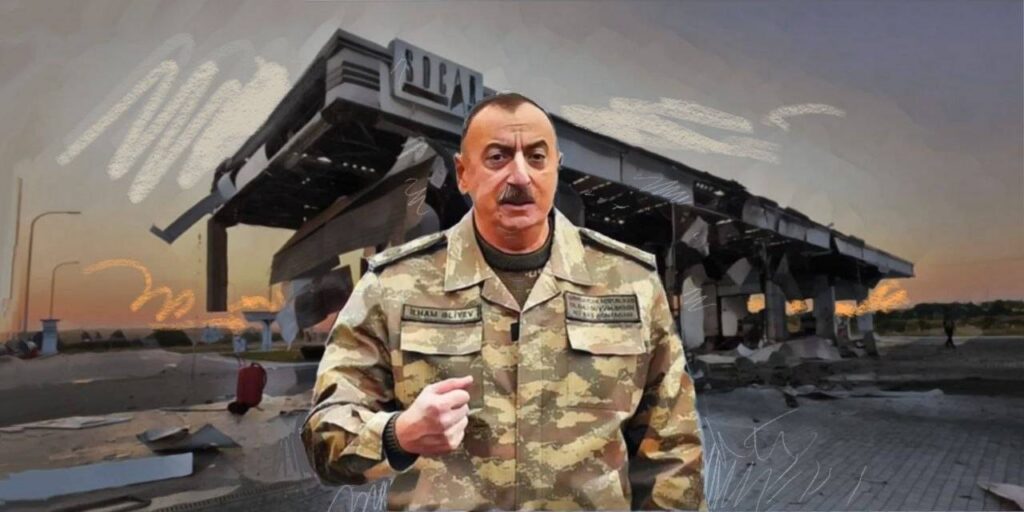
The drone strike on Azerbaijan's Nakhchivan Autonomous Republic on March 5 has become one of the most serious incidents in relations between Baku and Tehran in recent years. Azerbaijani authorities described the incident as a terrorist act and demanded explanations and an apology from Iran. Tehran, in turn, rejected the accusations, suggesting the possibility of a provocation by “third forces.” Following the drone incident, Kazakh President Kassym-Jomart Tokayev held a phone call with Azerbaijani President Ilham Aliyev to discuss regional security. According to the Azerbaijani presidency, Aliyev thanked Tokayev for condemning the attack on Nakhchivan and for voicing support for Azerbaijan. What began as a local security incident has raised concerns about regional stability in the South Caucasus. Terrorist Act Against the State Azerbaijani President Ilham Aliyev issued a statement strongly condemning "this despicable terrorist act. Those who committed it must be brought to justice immediately,” Aliyev said. According to Azerbaijan’s Ministry of Foreign Affairs, one drone hit the terminal building of Nakhchivan International Airport, while another crashed near a school in the village of Shekerabad. Two civilians were reportedly injured. Baku stressed that the attack, allegedly launched from Iranian territory, violated international law and could lead to a dangerous escalation of tensions in the region. Diplomatic Escalation Despite the harsh rhetoric in the first hours after the incident, Baku opted to rely primarily on diplomatic tools. The Iranian ambassador was summoned to the Azerbaijani Foreign Ministry and handed a formal note of protest requesting official explanations. Azerbaijan said on Friday that it was evacuating staff from its embassy in Tehran as well as its consulate in the city of Tabriz. At the same time, Azerbaijani security forces were placed on high alert. According to Aliyev, the country’s armed forces were instructed to prepare possible countermeasures. Turkish President Recep Tayyip Erdogan spoke by phone with Aliyev, condemning the attack and expressing support for Azerbaijan, according to official statements. Reports of alleged Iranian-linked sabotage plots also surfaced, with the Azerbaijani authorities stating that several terrorist attacks had been prevented on the country’s territory. According to the State Security Service, the Iranian Islamic Revolutionary Guard Corps was behind the plots. Among the alleged targets was the Baku-Tbilisi-Ceyhan oil pipeline, a strategic energy corridor linking the Caspian region with Turkey and one of the main routes for exporting Azerbaijani oil. According to Azerbaijani sources, other potential targets included the Israeli embassy, a synagogue in the capital, and a leader of the local Mountain Jewish community. The security service reported that three explosive devices had been brought into the country but were discovered and defused before they could be delivered. The development of the crisis has prompted increased diplomatic contact between world leaders. Russian President Vladimir Putin held a telephone conversation with Iranian President Masoud Pezeshkian amid the growing regional tensions. Shortly thereafter, Russia’s Foreign Ministry called on both sides to exercise restraint and emphasized the need for a thorough investigation into the drone strike. On March 7, the foreign ministers of all the Central...