The recent diplomatic escalation between Azerbaijan and Russia appeared to have run its course in April, after Moscow agreed to pay compensation over the Azerbaijan Airlines crash in Kazakhstan. Instead, the dispute has entered a new phase, and its implications now reach beyond the South Caucasus.
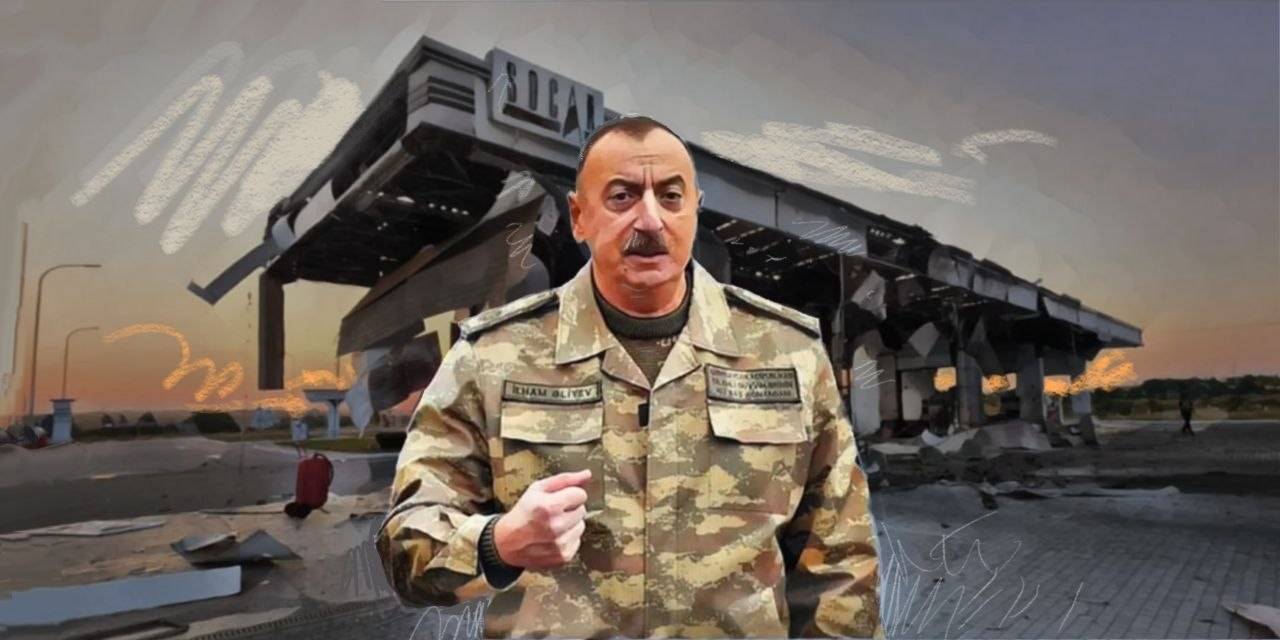
On July 6, Azerbaijan’s Ministry of Foreign Affairs summoned Russian Ambassador Mikhail Yevdokimov and handed him a formal note of protest over what Baku described as a Russian drone strike on a fuel station owned by Azerbaijan’s state energy company SOCAR in Ukraine’s Mykolaiv region on the evening of July 5.
The Azerbaijani Foreign Ministry said the attack on SOCAR facilities in Ukraine was not an isolated incident. It cited previous strikes on the company’s gas distribution compressor station and oil depot in Odesa, which caused material damage and injured employees. Baku also pointed to earlier damage to the Azerbaijani embassy building in Kyiv and the honorary consulate in Kharkiv, calling on Moscow to investigate and comply with its obligations to protect civilian infrastructure and diplomatic missions.
At the same time, Shusha — known to Armenians as Shushi, retaken by Azerbaijan during the 2020 Karabakh war, and still regarded by many Armenians as occupied — hosted an international conference devoted to what participants described as Russia’s “colonial policy,” the “Circassian genocide,” and the situation of non-Russian peoples within the Russian Federation.
The conference declaration called on Moscow to “recognize its historical crimes, abandon its chauvinistic policies, and end the forced recruitment of ethnic minorities into the war against Ukraine.” Experts from Azerbaijan, the United States, France, Lithuania, Poland, the Czech Republic, Germany, Israel, Türkiye, and Georgia attended the conference. None of the Central Asian republics was represented.
That absence was telling. Central Asian governments may be distancing themselves from Moscow in certain areas, but they remain reluctant to participate in openly anti-Russian political initiatives. For Astana, Tashkent, Bishkek, Dushanbe, and Ashgabat, the question is not whether Russia’s position has weakened, but how far they can move without provoking pressure from Moscow.
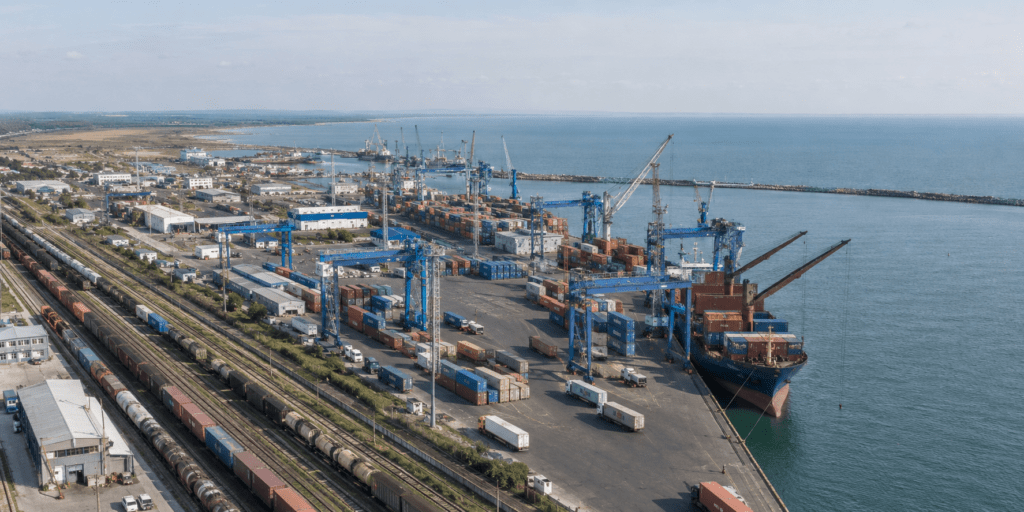
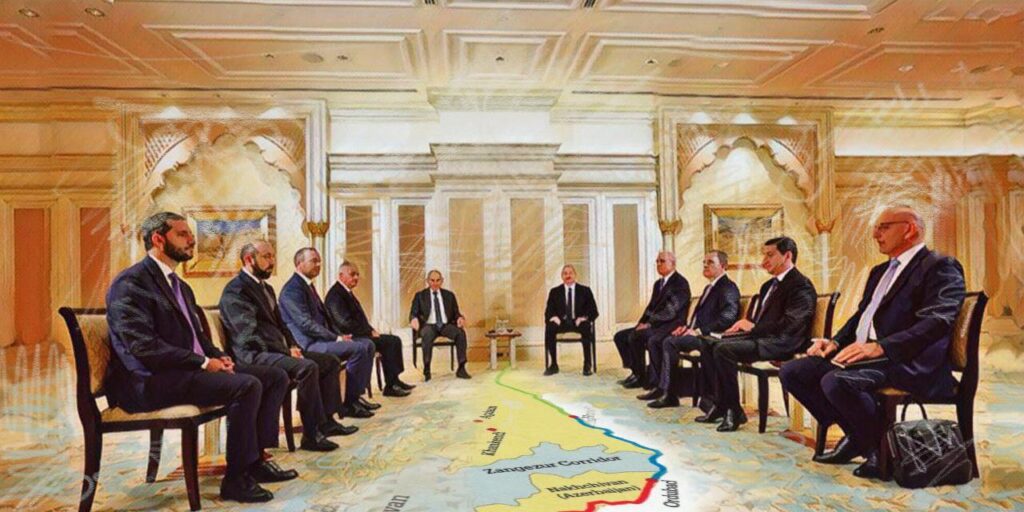
For Central Asia, the dispute is not a distant quarrel in the South Caucasus. Azerbaijan is now a central link in the westward routes that Kazakhstan, Uzbekistan, Turkmenistan, and Kyrgyzstan are trying to strengthen as alternatives to Russian territory. The Middle Corridor runs from China through Central Asia, across the Caspian Sea, and onward through Azerbaijan, Georgia, and Türkiye to Europe. Any deterioration in Azerbaijan-Russia relations therefore has practical implications for Central Asian transit, energy, and diplomatic room for maneuver.
The first major rupture in relations between Baku and Moscow came after Azerbaijan Airlines Flight J2-8243, traveling from Baku to Grozny, was damaged by Russian air-defense fire over Russian territory on December 25, 2024. The aircraft later crashed while attempting an emergency landing near Aktau, Kazakhstan, killing 38 people. Azerbaijan blamed Russia and demanded an apology, accountability, and compensation.
Relations deteriorated further in June 2025 following the detention of ethnic Azerbaijanis in Yekaterinburg and reports of torture. The most prominent victims were the Safarov brothers, Huseyn and Ziyaddin, whose brother Sayfaddin Huseynli publicly alleged they had been tortured. In response, Azerbaijani authorities raided the offices of Sputnik Azerbaijan and detained several Russian citizens.
In October 2025, during a meeting with President Ilham Aliyev in Dushanbe, Russian President Vladimir Putin acknowledged that Russian air defenses were responsible for striking the Azerbaijan Airlines plane. In April 2026, Moscow and Baku announced an official settlement that included compensation. The agreement appeared to close one of the most damaging episodes between Baku and Moscow since Azerbaijan’s independence.
But Baku evidently sees matters differently. Azerbaijani officials view the strikes on SOCAR facilities in Ukraine and the damage to Azerbaijani diplomatic buildings as evidence that tensions with Moscow continue, even after the AZAL settlement.
Member of Parliament Rasim Musabayov told journalists that several SOCAR facilities in Ukraine had already come under Russian attack.
“We summoned the ambassador and delivered a protest note. I doubt Moscow will change its behavior because of this, but Azerbaijan has done everything required under diplomatic procedure. I do not believe this happened because it was an Azerbaijani facility; had it been a Kazakh one, the same thing would likely have happened. Given Russia’s broader attacks on civilian infrastructure, where people, including women and children, are dying, making a major issue solely over material damage may not be appropriate. Nevertheless, what needed to be said has been said,” Musabayov noted.
The diplomatic protest should not have come as a surprise to Moscow. Two weeks earlier, Azerbaijan had already taken a step that further strained relations. An Azerbaijani court sentenced eight Russian citizens to prison terms ranging from three to four years on charges of large-scale drug trafficking.
All eight had been detained in the summer of 2025 amid the sharp deterioration in bilateral relations. At that time, the Azerbaijani authorities arrested a group of Russian citizens that included IT specialists, entrepreneurs, and tourists. Their case became another symbol of the widening political dispute, with Russian and independent outlets reporting that some of the defendants denied any connection to drug trafficking.
So far, Moscow has not publicly responded to Baku’s latest diplomatic démarche. Escalating the confrontation, however, would not be in Russia’s interests. Azerbaijan serves as a key rail transit route for Russian exports to Armenia, including grain, fertilizers, aluminum, buckwheat, and anthracite coal. On July 6, the first train carrying 30 railcars loaded with 1,026 tons of propane departed from the Bilajari station near Baku en route to Armenia.
This transport angle is where the South Caucasus and Central Asia meet. A disruption in Russian-Azerbaijani transit would not automatically threaten the Middle Corridor, but it would remind Central Asian governments that every westward route passes through contested geopolitics. Kazakhstan has made container growth along the Trans-Caspian route a priority, Uzbekistan is looking more closely toward the Caucasus and the Black Sea, and Turkmenistan’s Caspian position gives Ashgabat a direct stake in the corridor’s future. None of these countries wants a confrontation with Moscow, but each wants alternatives.
The attack on SOCAR facilities may therefore have served merely as a catalyst for a new round of diplomatic escalation. The deeper driver appears to be growing engagement by the European Union and the United States.
European Commission President Ursula von der Leyen visited Baku on July 1 and announced up to €200 million in grant funding for transport, energy, and digital projects across the South Caucasus, along with a separate €20 million program for local communities in Armenia and Azerbaijan. The initiative links peace-building with infrastructure, a formula that matters to Central Asia as much as it does to the Caucasus.
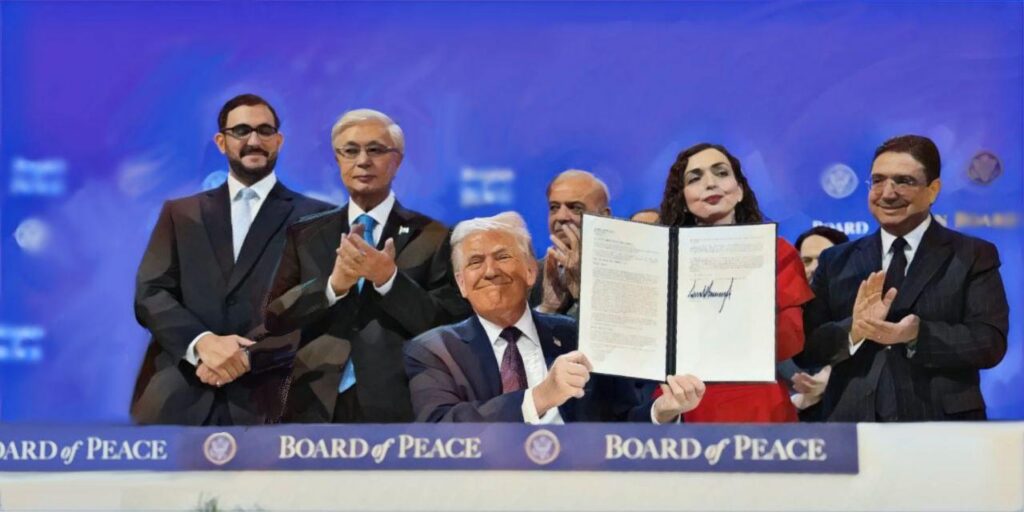
For Central Asia, this follows the EU’s launch of a connectivity platform intended to mobilize up to €2 billion for links between Europe and Central Asia through the Black Sea and the South Caucasus. Washington has added its own signal: U.S. President Donald Trump has invited Azerbaijan, Kazakhstan and Uzbekistan to the G20 Summit in Miami on December 14-15, 2026.
Central Asian governments are unlikely to follow Baku into open confrontation with Moscow. Labor migration, security cooperation, energy infrastructure, and trade still impose real constraints. Their absence from the Shusha conference underlined that caution. But caution should not be mistaken for immobility. Like Azerbaijan, the Central Asian states are expanding their options through the EU, the United States, Türkiye, China, and intra-regional cooperation.
External engagement with the South Caucasus has clearly intensified. Russia, increasingly preoccupied with military operations in eastern Ukraine and pressure from sanctions, risks losing ground in a region it has long regarded as part of its sphere of influence. Central Asia may not be next in the same dramatic fashion, but it is already part of the same process. Azerbaijan is moving faster and louder; Central Asia is moving more carefully. The direction, however, is increasingly visible.