• KZT/USD = 0.00215
  • TJS/USD = 0.10810
  • UZS/USD = 0.00009
  • TMT/USD = 0.29760
  • KZT/USD = 0.00215
  • TJS/USD = 0.10810
  • UZS/USD = 0.00009
  • TMT/USD = 0.29760
  • KZT/USD = 0.00215
  • TJS/USD = 0.10810
  • UZS/USD = 0.00009
  • TMT/USD = 0.29760
  • KZT/USD = 0.00215
  • TJS/USD = 0.10810
  • UZS/USD = 0.00009
  • TMT/USD = 0.29760
  • KZT/USD = 0.00215
  • TJS/USD = 0.10810
  • UZS/USD = 0.00009
  • TMT/USD = 0.29760
  • KZT/USD = 0.00215
  • TJS/USD = 0.10810
  • UZS/USD = 0.00009
  • TMT/USD = 0.29760
  • KZT/USD = 0.00215
  • TJS/USD = 0.10810
  • UZS/USD = 0.00009
  • TMT/USD = 0.29760
  • KZT/USD = 0.00215
  • TJS/USD = 0.10810
  • UZS/USD = 0.00009
  • TMT/USD = 0.29760
29 August 2026

Viewing results 31 - 36 of 842

Foreign Investors Remain Interested in Central Asia Despite Volatility, Survey Finds

International investors continue to view Central Asia and the Caucasus as attractive destinations despite heightened geopolitical tensions and market volatility, according to the third annual Investor Perception Report released by Montfort Eurasia. The survey, conducted among institutional investors in the United Kingdom and the United States, found that interest in the region remains high. Overall, 66.3% of respondents reported either strong or moderate interest in investing in Central Asia and the Caucasus, suggesting that the region is increasingly being considered as part of broader emerging-market strategies rather than as a niche destination. Among UK investors, 67.1% expressed strong or moderate interest, while the figure stood at 65.5% in the U.S. Around one-third of respondents in both countries reported very strong interest in the region, with 32.8% in the UK and 34.6% in the U.S. Recent U.S. commercial engagement in Central Asia has also moved from dialogue toward specific deals. The Montfort Eurasia report suggests that investor attitudes have shifted over the past three years. While early interest was driven largely by curiosity, investors are now approaching the region with more detailed financial analysis and due diligence. “Two years ago, the challenge for Central Asia and the Caucasus was getting noticed. Today it is being understood,” said Eleanor Kramers, managing director of Montfort Eurasia. “Investors have arrived and they have arrived as analysts, reaching for financial data and due diligence ahead of headlines. The region has answered their early interest with proof rather than promise, from international listings to sovereign-rating upgrades. The opportunity now is to meet a more serious, more demanding audience with the depth and consistency of information it expects.” One of the clearest signs of that shift is where investors obtain information. Financial analysis has overtaken international news media as the leading source of intelligence about the region, cited by 68.6% of UK respondents and 56.6% of U.S. respondents. According to the report, investors are increasingly evaluating the region through company performance, financial statements, and sector data rather than through media coverage alone. Although interest remains high, the report found that investors’ knowledge of the region has stopped improving. Respondents rated their understanding at 6.63 out of 10 in the UK and 6.79 out of 10 in the U.S., slightly below last year’s peak. Factual awareness also weakened. Only 29% of UK investors correctly estimated trade volumes between the UK and the region, compared with 39% a year earlier, while roughly one-quarter of respondents in both countries could not identify the region’s most business-friendly country. Political and economic risks also remain key considerations. Investment security ranked as investors’ biggest concern, cited by 72.3% of UK respondents and 64.7% of U.S. respondents. Political stability followed closely behind, with 56.2% of UK investors and 52.9% of U.S. investors identifying it as a major factor. Among British respondents, improved political stability was the most frequently cited condition for increasing investment in the region.

Opinion: Russia’s Migration Crackdown Tests Central Asia’s Labor Alternatives

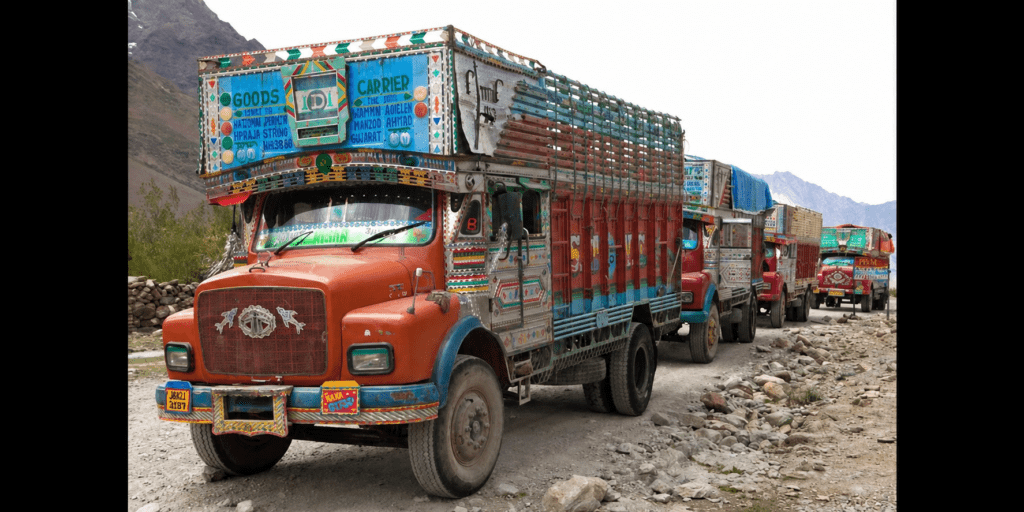
Russia is no longer the unquestioned labor destination it once was for Central Asian workers. That shift is real, but it is easy to overstate. The Times of Central Asia recently reported that labor migration from the region is becoming more diverse. Workers are looking not only to Russia, but also to South Korea, the Gulf states, the United Kingdom, Poland, Belarus, and other destinations. The old Russia-centered model is weakening, even if it has not collapsed. The question is scale. It now intersects with two other filters: legal status and banking access. Alternative labor markets can absorb some Central Asian workers, but they cannot yet replace the Russian labor outlet. Russia did not function as an ordinary destination. For years, it acted as the region's largest external labor valve: geographically close, linguistically familiar, legally accessible for some, and large enough to absorb millions of workers across construction, services, logistics, agriculture, and municipal labor. South Korea, the UK, Poland, and the Gulf can offer higher wages and more formal recruitment channels. They can also reduce overdependence on Moscow. But they are more selective, more bureaucratic, and much smaller in immediate absorption capacity. That leaves a more important question: can new destinations expand fast enough to offset a narrowing Russian market? For now, the answer is probably no. Diversification Is Real, but Not Replacement The difference between diversification and replacement is crucial. A worker from Kyrgyzstan leaving for seasonal work in the UK, or a worker from Uzbekistan entering an organized recruitment program in South Korea, represents a genuine shift. These routes can be safer, better paid, and less exposed to the social hostility now facing many Central Asian migrants in Russia. But they cannot absorb workers on the same scale. Russia's labor market absorbed Central Asian workers in very large numbers because it had a combination few other destinations can match: proximity, low entry costs, dense migrant networks, Russian-language familiarity, and long-standing informal labor channels. Even as those channels become more restrictive, they remain embedded in household economies across the region. This is why diversification should be read as a partial adaptation, not a full exit. For governments in Tashkent, Bishkek, and Dushanbe, the search for new labor markets is necessary. It reduces exposure to Russian policy shocks. It gives workers more choices. It also helps governments negotiate better legal recruitment schemes. Yet the structural problem remains. If Russia closes the door faster than alternatives can open, pressure does not disappear. It returns home through unemployment, lower remittances, and frustrated expectations. The EAEU Line Russia's migration crackdown does not affect Central Asia evenly. The most important dividing line is not geography. It is legal status. Kyrgyzstan and Kazakhstan are members of the Eurasian Economic Union (EAEU), which allows the free movement of labor among member states. In practical terms, citizens of Kyrgyzstan and Kazakhstan have a different legal status in Russia than citizens of Uzbekistan and Tajikistan. They do not face the same work-permit and labor-patent system. That does not...

Uzbekistan’s Logistics Push Aims to Turn Transit Growth into Revenue

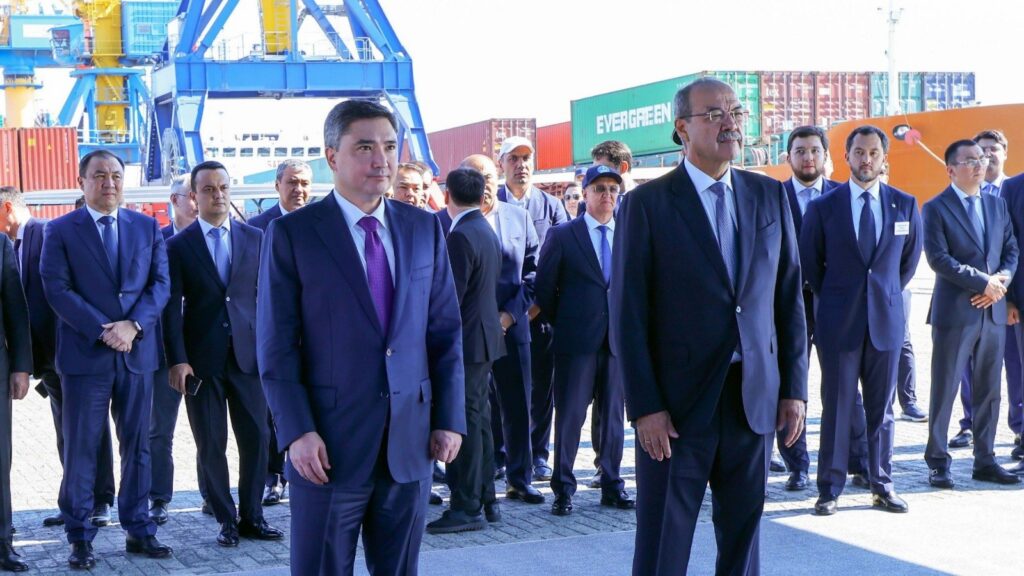
Tashkent is trying to turn a fast rise in transit cargo into a larger role in Eurasian trade. President Shavkat Mirziyoyev reviewed proposals on July 1 to expand logistics centers, modernize border infrastructure, digitalize warehouse and customs systems, and attract private investment into transport hubs. Transit cargo through Uzbekistan reached 15.3 million tons in 2025, up 54% from 2021. Yet Uzbekistan's share of China-Europe transit freight remains only 1-2%. Annual China-Europe trade is estimated at $800 billion, while freight traffic reaches 120-150 million tons. Officials estimate that an extra 15-20 million tons of international transit cargo could bring $400-600 million in added revenue, attract $3 billion of investment into logistics centers and terminals, and create 50,000 permanent jobs. The logistics push comes as Uzbekistan’s trade base becomes larger and more exposed to transport costs. Uzbekistan's foreign trade turnover reached $81.2 billion in 2025, up 20.7% from 2024, with exports at $33.8 billion and imports at $47.4 billion. The 2026 figures are more uneven. In January-May, turnover rose 3.7% year on year to $32.8 billion, but imports climbed 20.8% while exports fell 15.5%. Gold sales drove much of the export decline. Excluding gold, goods exports grew 29.4%, which gives Tashkent a clear reason to cut freight costs, speed up customs clearance, and expand container capacity. Uzbekistan already has about 4,000 kilometers of international transit corridors and a 4,700-kilometer railway network, but officials say the system remains too thin for the cargo volumes Tashkent wants to attract. Modern transport and logistics centers and dry ports are being developed in Tashkent, Navoi, and Namangan, while Navoi Airport serves Eurasian cargo routes. The July 1 proposals show how much still needs to change. Uzbekistan has 27 logistics centers that meet international standards, with total capacity of 27.2 million tons, but only one is in the highest category. Class A automated warehouses meet only 10-15% of demand. Officials also cited weak capacity at many border checkpoints, refrigerated and customs warehouse shortages, low containerization, and poor digital links. The new plan would specialize six areas as logistics zones. Khanabad would handle China-linked routes toward the Caspian, Europe, Afghanistan, Pakistan, and Iran. Angren, Yangiyul, and Akhangaran would distribute transit and foreign trade cargo. Alat would support Middle Corridor routes, and Termez would focus on Pakistan via Afghanistan. Entrepreneurs who build logistics centers in these locations would be offered 50 hectares of land in each area. The government plans to allocate $200 million a year in concessional and low-interest credit lines, with the budget covering external infrastructure. Projects also include customs terminals and parking in Qibray and Termez, a rail border checkpoint in Khanabad, Yangiyul station expansion, and a Class A center in Akhangaran. Digital systems form another part of the package. The proposals call for terminal and warehouse management systems linked to the E-logistika platform. They also include online monitoring, license plate recognition, electronic vehicle registration, and one-stop border clearance. Customs duties and certification rules may be eased for imported warehouse equipment, cargo-handling machinery, spare parts, and...

Uzbekistan Expands President Tech Award to $5 Million, Launches $1 Million AI Startup Competition

IT Park Uzbekistan has opened a new season of the President Tech Award, the country’s largest technology competition, and launched a separate national contest focused on artificial intelligence, the President AI Award. The official presentation of both programs took place on July 1 during the Powering the Startup Ecosystem event at the Congress Hall of Uzbekistan’s Ministry of Digital Technologies. Organizers said the competitions will support technology startups through grants, venture investment, mentoring, and access to international markets. Azamat Karamatov, CEO of IT Park Uzbekistan, said the decision to increase the President Tech Award prize pool to $5 million and create the President AI Award reflected investment in a new generation of technology companies. “Our task is to create conditions under which talented developers and entrepreneurs can turn ideas into global products and contribute to the development of Uzbekistan’s digital economy,” he said. Launched on a presidential initiative, the President Tech Award has become one of Uzbekistan’s main platforms for technology projects. Organizers said more than 6,000 people took part in the most recent cycle and 862 startup teams competed, nearly double the previous season’s figures. Since the competition began in 2023, more than 13,000 people have applied and around 1,800 teams have been formed. Of the 45 projects that previously received awards, winners have created more than 400 jobs and attracted more than $10 million in post-competition investment. For 2026, the President Tech Award prize fund has been increased from $1 million to $5 million. The total includes $1 million in non-repayable grants and $4 million in venture investment for selected startups. The program will include three tracks. Early-stage teams will enter an incubation track focused on product-market fit and international mentoring, with 25 winners sharing $1 million in grants. Startups in the growth stage will compete for $1.5 million in investment through the acceleration track. A third track, Best Startup Project, will offer $2.5 million in investment from IT Park Ventures across 10 sectors, with winners selected by an international jury. The President AI Award is Uzbekistan’s first state competition dedicated fully to AI startups. It is designed to identify and develop AI projects that offer practical solutions for economic and social needs. The competition will focus on public administration, industry and entrepreneurship, healthcare, education, and the green economy and agritech. After selection, 25 startups, five from each field, will enter an acceleration program. They will work with mentors and experts to refine their products, prepare investor pitches, and raise their profile in Uzbekistan. The total investment pool for the President AI Award is $1 million, with 15 winners to receive financing across the five fields. Awards will be distributed as investments in two tranches tied to agreed performance indicators. Each field will have three winners, with $100,000 for first place, $60,000 for second, and $40,000 for third. Sherzod Shermatov, Minister of Digital Technologies, traced the awards to a shift in national policy. Uzbekistan initially promoted an outsourcing-focused IT sector, he said, but soon saw a rapid rise...

World Bank Approves $100 Million to Improve Primary Education in Uzbekistan

The World Bank has approved $100 million in concessional financing to help Uzbekistan improve the quality of primary education, strengthen foundational learning skills, and expand school capacity in some of the country’s most underserved regions, the bank announced. The funding, provided by the International Development Association, will support the Transforming Public Education for Economic Growth (BILIM) Program. The initiative will also receive a $5 million grant from the International Finance Facility for Education (IFFEd), marking the first partnership between IFFEd and the World Bank. Together with $273 million from Uzbekistan's government, the program has a total budget of $378 million. According to the World Bank, Uzbekistan’s public education system is under increasing pressure from rapid population growth and internal migration. School enrollment is expected to exceed 7.6 million students in 2026, requiring the construction of around 300 new schools every year to meet demand. Although more than 99% of primary school-age children are enrolled in school, learning outcomes in reading and mathematics remain below international standards. The bank also noted that teaching methods and teacher professional development require significant improvement. “Strengthening foundational skills in primary school, including reading, mathematics, and socio-emotional skills, is central to further building Uzbekistan’s human capital base and advancing its development,” said Najy Benhassine, the World Bank’s Division Director for Central Asia. “These skills will help children develop more advanced competencies and prepare them for the rapidly evolving jobs market. They are also critical to the country’s economic growth, which depends on a workforce capable of driving innovation.” The BILIM Program will be implemented by Uzbekistan’s Ministry of Preschool and School Education and the Ministry of Economy and Finance in Karakalpakstan and the Khorezm, Kashkadarya, Surkhandarya, Bukhara, and Navoiy regions. These areas account for about 45% of the country’s schools and face some of the greatest shortages of education infrastructure and learning resources. By 2030, the program aims to train 50,000 teachers, school leaders, and education administrators and create 27,000 student places through school construction and expansion. It will also improve education planning through better data collection and management. Around 2 million primary school students, half of them girls, are expected to benefit from the reforms. The financing adds to the World Bank’s existing education work in Uzbekistan. As previously reported by The Times of Central Asia, the bank approved a $250 million loan last December for the Edulmkon Program, a three-year initiative designed to expand access to higher and vocational education. Scheduled for implementation between 2026 and 2028, that program is expected to benefit around 600,000 young people. About 80% of the financing will go toward tuition loans for students from low-income families and women, who continue to face significant barriers to higher education.

AI-92 Gasoline Price in Uzbekistan Hits Record High Amid Regional Fuel Pressures

The price of AI-92 gasoline on Uzbekistan’s Republican Commodity and Raw Materials Exchange has reached a record high, according to exchange data reviewed by Uzbek business outlet Spot. On June 29, the exchange price for one metric ton of AI-92 gasoline climbed to 13.919 million UZS, approximately $1,160, up 1.1% from the previous trading session and the highest level ever recorded. Since the beginning of June, the fuel price has risen by 11.8%, or nearly 1.5 million UZS, approximately $125 per ton. Spot reported that the sharpest increase came during the first week of the month. Between June 4 and June 8, the price jumped from 12.476 million UZS, approximately $1,040, to 13.788 million UZS, approximately $1,149, an increase of 10.5% in just four days. Prices then remained relatively stable at around 13.7 million UZS to 13.8 million UZS, approximately $1,141-$1,150, before climbing to a new record at the end of the month. The rise in prices coincided with a sharp drop in supply on the exchange. Available volumes fell from 3,791 tons on June 1 to 1,898 tons by June 23, nearly halving over three weeks. Although supply had recovered to 3,123.2 tons by June 29, prices remained at record levels. The increase comes as Russia experiences fuel shortages linked to unplanned refinery maintenance following Ukrainian drone strikes. Several Russian oil refineries have undergone emergency repairs after the attacks, reducing fuel production and tightening supplies across the region. Russia also introduced a full ban on gasoline exports on April 1. However, the restriction does not apply to deliveries made under intergovernmental agreements, meaning fuel exports to Uzbekistan are not directly affected. As previously reported by The Times of Central Asia, Russia has discussed importing about 50,000 metric tons of AI-92 gasoline from Kazakhstan after refinery outages cut gasoline production by roughly 25% year-on-year by late June. The talks marked an unusual step for Russia, traditionally one of the region’s main fuel exporters.