• KZT/USD = 0.00223
  • TJS/USD = 0.10800
  • UZS/USD = 0.00009
  • TMT/USD = 0.29760
  • KZT/USD = 0.00223
  • TJS/USD = 0.10800
  • UZS/USD = 0.00009
  • TMT/USD = 0.29760
  • KZT/USD = 0.00223
  • TJS/USD = 0.10800
  • UZS/USD = 0.00009
  • TMT/USD = 0.29760
  • KZT/USD = 0.00223
  • TJS/USD = 0.10800
  • UZS/USD = 0.00009
  • TMT/USD = 0.29760
  • KZT/USD = 0.00223
  • TJS/USD = 0.10800
  • UZS/USD = 0.00009
  • TMT/USD = 0.29760
  • KZT/USD = 0.00223
  • TJS/USD = 0.10800
  • UZS/USD = 0.00009
  • TMT/USD = 0.29760
  • KZT/USD = 0.00223
  • TJS/USD = 0.10800
  • UZS/USD = 0.00009
  • TMT/USD = 0.29760
  • KZT/USD = 0.00223
  • TJS/USD = 0.10800
  • UZS/USD = 0.00009
  • TMT/USD = 0.29760
20 September 2026

Viewing results 37 - 42 of 861

Central Asia’s C6 Takes Shape in Washington as Ambassadors Push for Practical Integration

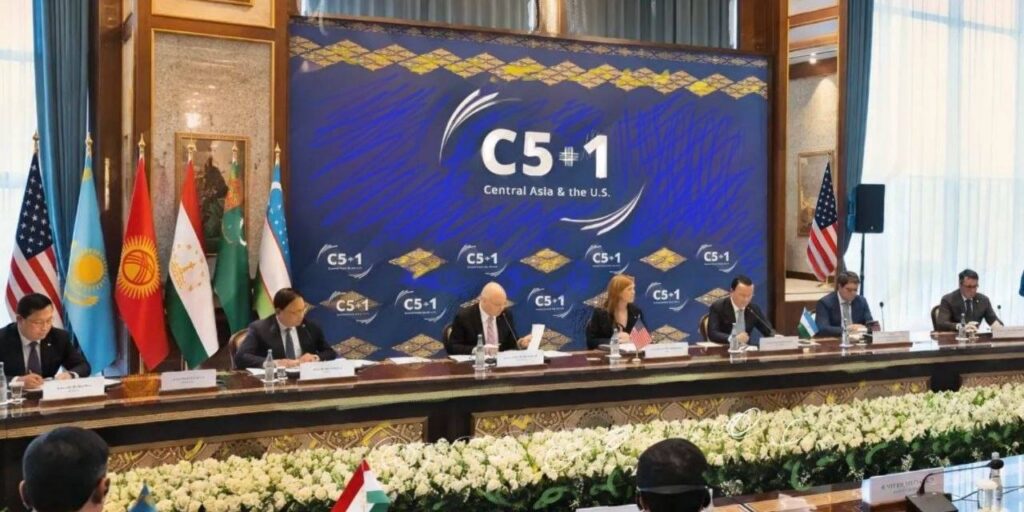
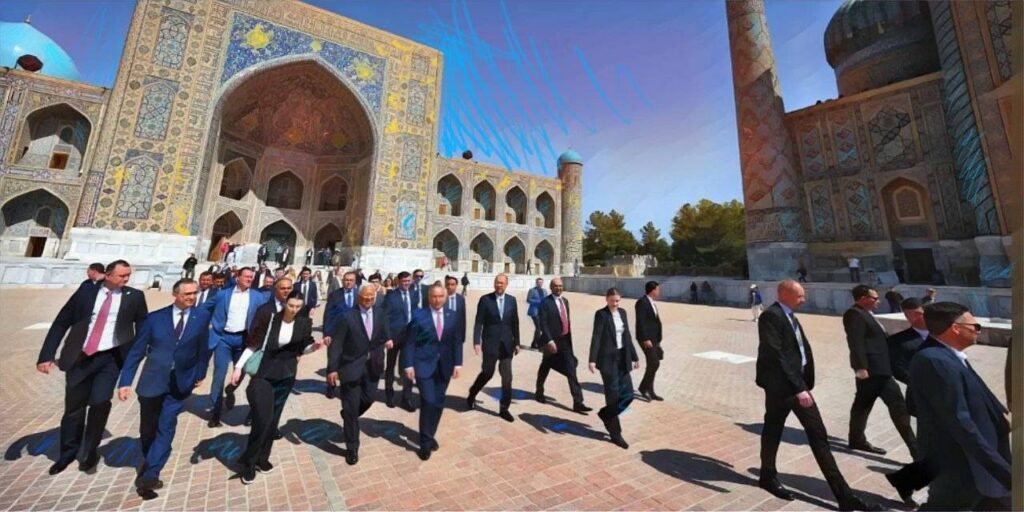
Less than two weeks after regional leaders gathered in Cholpon Ata, diplomats from the emerging C6 grouping used a discussion in Washington to shift the focus from declarations of unity to the mechanics of integration: customs, railways, digitalized trade, access to European markets, and stronger links across the Caspian. The sharpest political message came from Kyrgyzstan’s ambassador to the United States, Edil Baisalov, who said that Central Asian states were increasingly recognizing that they were “enough for each other,” and that resolving differences within the region had become a pragmatic national interest. His comments gave unusually direct language to a trend that has accelerated since the region’s consultative meetings began in 2018. The August 12 event at the Caspian Policy Center brought together the U.S.-based ambassadors of Azerbaijan, Kazakhstan, Kyrgyzstan, Turkmenistan, and Uzbekistan. Tajikistan, the sixth country in the emerging C6 framework, was not listed among the participants. The event followed a late-July meeting in Cholpon Ata, where leaders concentrated on transport, energy security, investment, and foreign-policy coordination. The C6 label remains shorthand rather than the name of a formal organization. Its political basis, however, has become more concrete since Azerbaijan was admitted as a full participant in the Consultative Meeting of the Heads of State of Central Asia in November 2025. The shift extended a format once focused on relations among the five Central Asian republics across the Caspian Sea. From Regional Dialogue to Regional Agency Azerbaijan’s ambassador, Khazar Ibrahim, presented Cholpon Ata as evidence that the six states increasingly see themselves as part of one political and economic space. “We are finally holistic. We are all together,” he said. He argued that Azerbaijan’s presence changes the geography of the grouping by turning the Caspian from a dividing line into a connecting space between Central Asia and the South Caucasus. That idea has been developing for some time. TCA has previously examined how Azerbaijan’s entry could turn the C6 framework into a platform for common rules on transport, tariffs, customs systems, and digital data, rather than another layer of summit diplomacy. Kazakhstan’s ambassador, Magzhan Ilyassov, put the emphasis on building an “economically active neighborhood.” He pointed to the frequency of regional meetings and said the value of the current process lies partly in maintaining an inclusive conversation among the Central Asian states. Kazakhstan has also pushed for stronger coordination on transport planning as the consultative format develops. For Uzbekistan, the discussion was more explicitly about market access. Ambassador Furqat Sidiqov said cooperation with Azerbaijan could give Uzbekistan wider access to European and other export markets. He also called for further digitalization of the Middle Corridor. Sidiqov said Uzbekistan had close to 300 joint ventures with Central Asian countries in 2017, and now has about 1,500 with neighboring states. Corridors Become the Practical Core Digitalizing the Trans-Caspian route is not a new proposal. The countries of the UN Special Programme for the Economies of Central Asia, which already brings together the five Central Asian states and Azerbaijan, endorsed a digitalization...

Why Central Asia Growth Forecasts Differ So Sharply

How fast can Central Asia continue to grow? The Eurasian Development Bank (EDB) and the International Monetary Fund (IMF) give markedly different answers. The contrast is sharpest in Kyrgyzstan, where the EDB expects another year of double-digit growth, while the IMF sees a much more pronounced slowdown. Both institutions are looking at the same countries and have access to broadly the same set of macroeconomic data. Their forecasts, however, reflect different assessments of how much of Central Asia’s recent momentum can be sustained. The EDB expects strong investment to keep growth high, while the IMF is more cautious about how long the recent pace of expansion can continue. The EDB is itself a regional development institution. It was established by Russia and Kazakhstan in 2006, with Armenia, Belarus, Kyrgyzstan, and Tajikistan later becoming shareholders. Uzbekistan joined the bank in 2025. The EDB is headquartered in Almaty. The comparison covers the four Central Asian states that are EDB members; Turkmenistan is not included. Its latest forecast for Central Asia is optimistic. In 2026, the EDB expects growth of 10.2% in Kyrgyzstan, 8.3% in Tajikistan, 7.9% in Uzbekistan, and 5.5% in Kazakhstan. The region’s economy as a whole is expected to grow by more than 6.5%, with its combined GDP exceeding $600 billion for the first time. The IMF gives lower figures. Its latest available country projections put 2026 growth at 4.6% for Kazakhstan, 6.8% for Uzbekistan, 6.1% for Kyrgyzstan, and 6.0% for Tajikistan. These projections were published at different times rather than as a single set of four country forecasts. The largest gap is in Kyrgyzstan, where the forecasts differ by 4.1 percentage points, but there are nevertheless modest percentage point gaps between the forecasts for Tajikistan (2.3), Uzbekistan (1.1), and Kazakhstan (0.9). These differences are large enough to raise the question: why the difference in expectations? Part of the answer lies in how the institutions assess the effect of a more uncertain global economy. The IMF expects the world economy to grow by 3% in 2026 and 3.4% in 2027. Its July update said the conflict in the Middle East was weighing particularly heavily on energy importers and warned that renewed conflict or financial-market disruption could weaken the outlook. For the four countries, this means different things. Kazakhstan exports oil and benefits from high prices, although it also depends on the condition of export routes and external demand. Kyrgyzstan and Tajikistan import a significant share of their fuel, while their economies are closely linked to migrant remittances. Uzbekistan has a larger domestic market and its own resource base. Kazakhstan illustrates the logic of the IMF forecast particularly well. Its GDP grew by 6.5% in 2025, one of its strongest performances in recent years. The Fund does not expect that surge to be repeated. Oil production is expected to stabilize after last year’s increase, with growth slowing to 4.6% in 2026, according to the IMF forecast. This does not mean that the Fund attributes everything to oil. Domestic demand remains strong,...

Central Asia and Azerbaijan Extend Cooperation Across the Caspian

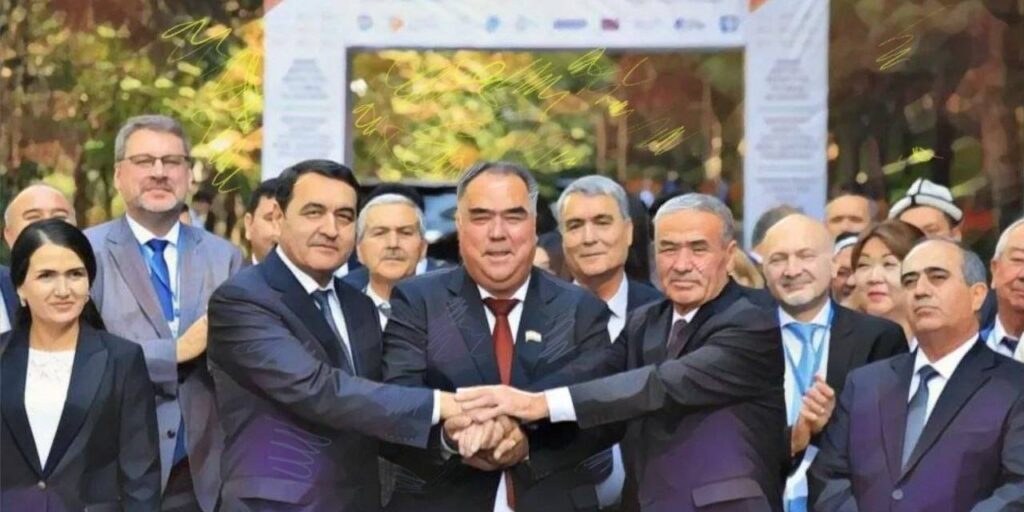
Central Asia’s presidential forum now spans both shores of the Caspian. Kazakhstan and Azerbaijan anchor the principal Caspian crossing at the center of the Middle Corridor, the rail-and-sea network linking Central Asia to European markets through Azerbaijan, Georgia, and Türkiye. Azerbaijan’s full participation brings the corridor’s eastern and western Caspian gateways into the same regular political setting. The six governments can use it to coordinate the transport, energy, digital, and investment links already developing across the Caspian, even though Georgia and Türkiye remain essential to the route’s westward operation. On July 31, 2026, the presidents of Kazakhstan, Kyrgyzstan, Tajikistan, Turkmenistan, Uzbekistan, and Azerbaijan signed the Cholpon-Ata Declaration at an informal Consultative Meeting of the Heads of State of Central Asia and Azerbaijan in Kyrgyzstan. The Declaration gave formal political expression to cooperation that had already been developing. Official accounts said the leaders emphasized expanded regional cooperation, including trade, transport and logistics, and energy. The full text has not been released, so those priorities come from official accounts rather than the declaration itself. Proposed by Uzbekistani President Shavkat Mirziyoyev in 2017 and first convened in Astana in March 2018, the Consultative Meetings brought together the five Central Asian states in an informal presidential format. They expanded in November 2025 with Azerbaijan’s admission as a full-fledged participant, while retaining their consultative character. Azerbaijan attended in 2023 and 2024 as a guest; Cholpon-Ata was its first informal meeting in the new capacity. Official documents continue to call the format “Central Asia and Azerbaijan.” C6 is analytical shorthand for the enlargement, not the name of a new bloc or formal organization. Azerbaijan’s admission follows several years of practical cooperation. At a ministerial meeting in Aktau on November 25, 2022, Kazakhstan, Azerbaijan, Georgia, and Türkiye signed a 2022–2027 roadmap for the simultaneous elimination of bottlenecks and development of the Middle Corridor. At its 2023 Baku summit, the UN Special Programme for the Economies of Central Asia (SPECA) adopted a digitalization roadmap and established a multi-partner trust fund, followed by work on digital data exchange and port-to-port cooperation. The transport roadmap includes Georgia and Türkiye, while SPECA also includes Afghanistan; neither is institutionally identical to C6. The enlarged format gives the six governments a regular political setting in which to coordinate existing transport, digital, and investment mechanisms. The Trans-Caspian International Transport Route Association reports that freight through the seaports of Kazakhstan and Azerbaijan reached 3.3 million tons in 2024, 20% above the 2023 level, while container traffic within the same scope rose 176% to 56,500 twenty-foot equivalent units (TEU). Freight remains the principal basis of integration. Oil transit, prospective electricity links, and joint investment instruments are extending cooperation into adjacent sectors. Kazakhstan's use of the route for oil exports is also rising: according to KazMunayGas reports, Kazakhstani oil shipments from Aktau through the Baku–Tbilisi–Ceyhan route increased by 34% to 1.4 million tons in 2024. At COP29 in Baku on November 13, 2024, Azerbaijan, Kazakhstan, and Uzbekistan signed a strategic-partnership agreement on producing and transmitting green energy,...

Uzbekistan’s $5 Billion Sea Breeze Resort Awaits Environmental Review

Uzbekistan’s environmental authorities have still not received the full set of documents for Sea Breeze Uzbekistan, a controversial $5 billion resort planned on the shore of the Charvak Reservoir. Azerbaijani businessman Emin Agalarov presented the project to Uzbek authorities in late 2024, and Agalarov Development is participating in the venture. Although the government approved the investment project in August 2025 and public hearings were held in January, key technical documents required for the second stage of the state environmental review remain outstanding. Sea Breeze is planned to cover 577 hectares on the eastern shore of Charvak, around 80 kilometers from Tashkent. The year-round resort is expected to include hotels and residential developments, along with dining and entertainment facilities. Gayrat Mukhamedov, director of the State Center for Environmental Expertise, told Gazeta.uz that “only the first stage of the procedure,” involving the selection and allocation of land, has been completed. The center has not yet received the documents needed to assess the environmental impact of the complex itself. The location has been one of the main sources of controversy surrounding the project. Charvak lies in the foothills of the Western Tien Shan and remains one of Uzbekistan’s most popular recreational areas. After the Sea Breeze plans were published, environmentalists and civic activists called for more information about the potential impact of development on the reservoir. In the summer of 2025, the #SaveChorvoq campaign emerged on social media. On August 1, 2025, the Cabinet of Ministers approved the investment project. It is being implemented by Sea Breeze Uzbekistan LLC, a joint venture established with the participation of Agalarov Development. One of the conditions is protecting Charvak from pollution. Wastewater must be taken outside the coastal zone and sent to a centralized treatment system, with no discharge into the reservoir. The requirement applies both during construction and during the subsequent operation of the resort. Mukhamedov said the environmental review center is still waiting for final technical data on the treatment system, including its capacity, as well as definitive figures for the resort’s accommodation capacity and the number of cottages, homes, and other facilities. Public hearings on the environmental impact assessment for Sea Breeze were held in Bostanlyk District on January 23, 2026. The issues scheduled for discussion included the project’s impact on water, air, and soil, waste management, preservation of green areas, and environmental monitoring. At the hearings, project representatives discussed the future sewage system, wastewater treatment, and measures to preserve biodiversity. The plan envisaged wastewater being collected through a centralized sewage system for treatment away from the reservoir. The public hearings, however, do not replace the second stage of the state environmental review. More than six months later, the technical documents for that stage have still not been submitted. Mukhamedov said the next phase will depend in part on seasonal studies by Uzbekistan’s Institute of Botany and Institute of Zoology into the possible effects on local flora and fauna. The work is expected to span autumn, winter, and spring, while the environmental review...

The Tradition of Power – Why Political Succession in Central Asia Follows Its Own Rules

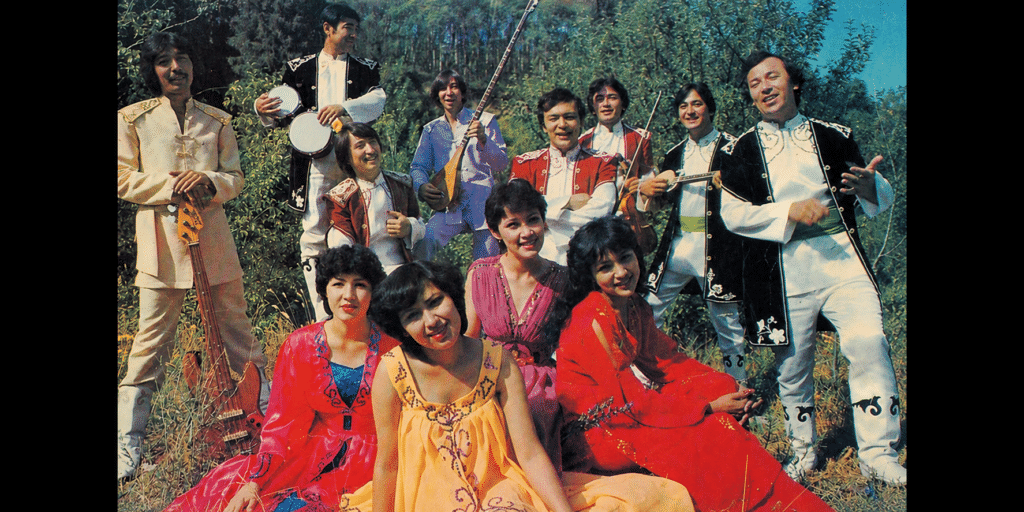
In January 2027, Kyrgyzstan will hold a presidential election, an event that is anything but routine for the Central Asian republic. Over the past three decades, political crises, often surrounding disputed elections, have repeatedly ended in the removal of presidents. Kyrgyzstan remains an outlier in the region, although it, too, has gradually been moving towards a political model that has long become the norm across the rest of Central Asia. This year marks 35 years since the Soviet republics embarked on independent political lives following the collapse of the USSR. Yet many of the mechanisms governing the transfer of supreme power, shaped during the Soviet era, continue to define politics across the independent states. In Central Asia, three decades of independence have produced a distinctive model of political succession. The final years of the Soviet Union became known as the era of the so-called "gun-carriage race." As one ageing General Secretary after another passed away, an unwritten rule appeared to emerge: the official who chaired the state funeral commission for the deceased leader often became his successor. A remarkably similar pattern later emerged in Central Asia – first in Turkmenistan, then in Uzbekistan. Turkmenistan's first president, Saparmurat Niyazov, died in December 2006. The state funeral commission was chaired by Deputy Prime Minister and Health Minister Gurbanguly Berdimuhamedov, who simultaneously became acting president. It was during those funeral ceremonies that the wider public was introduced for the first time to the family of Turkmenbashi. Under the constitution, parliamentary speaker Ovezgeldy Atayev should have assumed the presidency. Instead, he was stripped of immunity and arrested, clearing the way for Berdimuhamedov to take the acting presidency. After assuming the presidency in 2007, Berdimuhamedov gradually abandoned the more eccentric elements of his predecessor's personality cult while building a political system centered on his own leadership. If Niyazov styled himself Turkmenbashi – Leader of All Turkmens – his successor adopted the title Arkadag, or Protector of the Nation. In February 2022, Berdimuhamedov unexpectedly announced that he would step down following an early presidential election scheduled for March 12. He explained the decision by saying it was time to "give the younger generation an opportunity to govern the country." Few doubted that he was referring to his son Serdar Berdimuhamedov, who by then had already occupied most of the key positions within the state hierarchy. That is precisely what happened. Serdar Berdimuhamedov became president, while his father moved to the chairmanship of the Halk Maslahaty, retaining the title of National Leader of the Turkmen People. Uzbekistan followed a similar pattern, although under different circumstances. Islam Karimov built a highly centralized presidential system that left virtually no room for political competition. This applied not only to political opponents, but also to those closest to the president. His eldest daughter, Gulnara Karimova, was placed under house arrest while her father was still alive. Following his death, she was convicted and remains imprisoned in Uzbekistan. When Karimov died in September 2016, reports of his death circulated for several days...

How the Russia–Ukraine War Is Reshaping Central Asia’s Geopolitical Balance

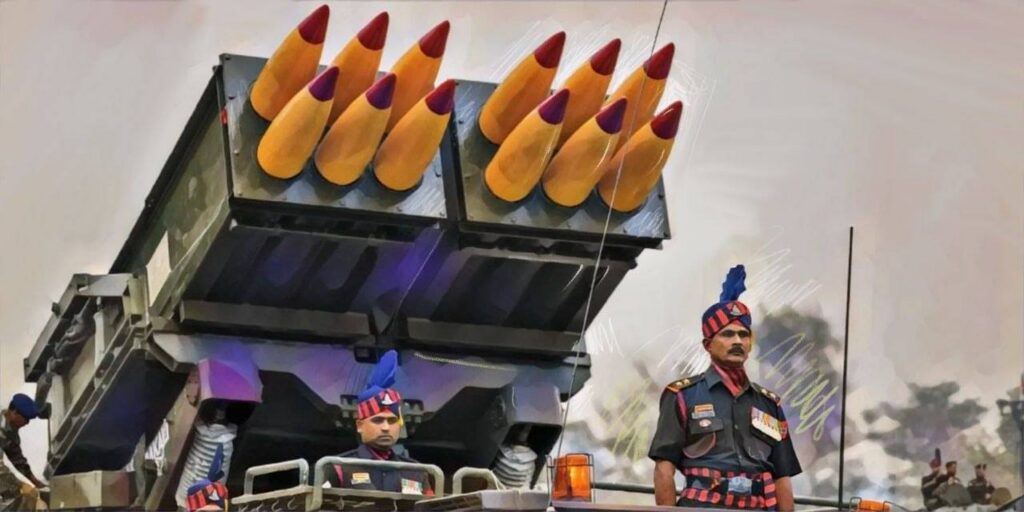
More than four years after Russia launched its full-scale invasion of Ukraine, the conflict continues to alter political and economic relations across the former Soviet space. In an interview with The Times of Central Asia, Uzbek political scientist Mukhtor Nazirov examined Moscow’s evolving regional role, Central Asia’s search for wider external partnerships, and the areas in which Russia remains difficult to replace. “The war changed Russia,” Nazirov said. “It became more closed, more militarized, and its political logic increasingly became military. Central Asian countries suddenly found themselves dealing with a Russia that was no longer the same as it had been before the war.” Before 2022, Russia’s relations with Central Asia rested on long-established political, economic, and security ties. Since the invasion, international isolation and wartime pressures have complicated that relationship. “The war consumed everything,” Nazirov explained. “It influenced not only politics and the economy, but also public thinking, the country’s openness, its ideology, and the overall direction of the state. As Russia changed during the war, its dialogue with Central Asian countries became increasingly difficult.” “Central Asian states gained a moral justification to look for other options,” he said. “Russia is no longer the Russia it used to be.” Russia nevertheless remains deeply embedded in the region’s economy. Infrastructure, logistics networks, export routes, and labor migration still bind Central Asian states to the Russian market. Kazakhstan exports most of its oil through Russia’s Novorossiysk port, while trade from Uzbekistan and other countries continues to rely heavily on northern corridors. Millions of Central Asian citizens also work in Russia. “The economic foundation still exists,” Nazirov told TCA. “Much of Central Asia remains part of an economic structure that was formed during the Soviet period. Infrastructure is shared, and many export routes still pass through Russia.” However, the durability of Moscow’s influence is under closer scrutiny as other powers expand their regional presence. “Political closeness alone is not enough,” Nazirov said. “Any partnership eventually comes down to economics. If Russia wants to remain influential, it must have a strong economic foundation. If it cannot provide that, then others will naturally begin filling the gap.” China and the European Union have expanded their economic engagement as sanctions and wartime demands have constrained Russia. Interest has also grown in the Middle Corridor, or Trans-Caspian International Transport Route, which offers an alternative to routes through Russia. “The rhetoric surrounding the Middle Corridor became much stronger during the war,” he said. “The project already existed, but the war created momentum.” The EU’s Global Gateway initiative and new connectivity financing have given Central Asian governments additional channels for trade, investment, and transport. “This space is being filled partly by China and partly by the European Union,” he said. “They are proposing alternatives, and naturally Central Asian countries are turning toward those opportunities.” Russia remains the main destination for Central Asian labor migrants, although governments are pursuing employment opportunities in South Korea, Europe, and the Gulf states. “I would not say diversification has already taken place,” Nazirov...