• KGS/USD = 0.01143 0%
  • KZT/USD = 0.00205 0%
  • TJS/USD = 0.10724 0.09%
  • UZS/USD = 0.00008 0%
  • TMT/USD = 0.28571 0%
  • KGS/USD = 0.01143 0%
  • KZT/USD = 0.00205 0%
  • TJS/USD = 0.10724 0.09%
  • UZS/USD = 0.00008 0%
  • TMT/USD = 0.28571 0%
  • KGS/USD = 0.01143 0%
  • KZT/USD = 0.00205 0%
  • TJS/USD = 0.10724 0.09%
  • UZS/USD = 0.00008 0%
  • TMT/USD = 0.28571 0%
  • KGS/USD = 0.01143 0%
  • KZT/USD = 0.00205 0%
  • TJS/USD = 0.10724 0.09%
  • UZS/USD = 0.00008 0%
  • TMT/USD = 0.28571 0%
  • KGS/USD = 0.01143 0%
  • KZT/USD = 0.00205 0%
  • TJS/USD = 0.10724 0.09%
  • UZS/USD = 0.00008 0%
  • TMT/USD = 0.28571 0%
  • KGS/USD = 0.01143 0%
  • KZT/USD = 0.00205 0%
  • TJS/USD = 0.10724 0.09%
  • UZS/USD = 0.00008 0%
  • TMT/USD = 0.28571 0%
  • KGS/USD = 0.01143 0%
  • KZT/USD = 0.00205 0%
  • TJS/USD = 0.10724 0.09%
  • UZS/USD = 0.00008 0%
  • TMT/USD = 0.28571 0%
  • KGS/USD = 0.01143 0%
  • KZT/USD = 0.00205 0%
  • TJS/USD = 0.10724 0.09%
  • UZS/USD = 0.00008 0%
  • TMT/USD = 0.28571 0%

Viewing results 19 - 24 of 813

Opinion: A New Southern Gate – How the EU-Armenia Summit Unlocks a Critical Branch for the Middle Corridor

For the first time in its history, the European Union held a full summit with Armenia. The meeting, which took place in Yerevan on 4–5 May 2026, was not merely a diplomatic milestone for Armenia. It also sent a signal to governments thousands of kilometers away in Central Asia that the trade route linking Asia to Europe through the South Caucasus is becoming more real, and more politically backed, than ever before. The centerpiece of the summit saw the signing of a “Connectivity Partnership” between Brussels and Yerevan. The European Commission President, Ursula von der Leyen, described Armenia as "uniquely positioned" to connect Europe with the South Caucasus and Central Asia. Under the EU's Global Gateway program, investments in Armenia are expected to reach €2.5 billion. A further €3 billion is earmarked specifically for the Middle Corridor – the trade route that runs from China across Central Asia, over the Caspian Sea, through the South Caucasus, and into Europe. “We will support your integration into key transport networks like the Trans-Caspian Corridor. It is a route that is also of strategic importance for Europe, given the growing flows of trade between our two regions,” von der Leyen stated. A Route That Is Already Moving Fast The Middle Corridor, formally known as the Trans-Caspian International Transport Route (TITR), has grown at a pace that few predicted. Cargo volumes rose 70 percent in the first nine months of 2024 alone, reaching 3.4 million tons. By the end of that year, the total had climbed to 4.1 million tons – up from just 350,000 tons in 2021. The World Bank projects that the route could handle up to 11 million tonnes a year by 2030. It's important to maintain some perspective. These numbers are small fry when compared to the billions of tons of trade that moves between Europe and Asia by sea. However, the Middle Corridor does offer important diversification, particularly given the spillover effects of wars in the Middle East and piracy in the Red Sea. [caption id="attachment_48602" align="aligncenter" width="1274"] Image: Trans Caspian International Transport Route and it’s southern part, China-Kyrgyzstan-Uzbekistan Railway project. Source: middlecorridor.com[/caption] Where Uzbekistan Stands For Uzbekistan, the Middle Corridor is both an opportunity and a work in progress. In January 2025, President Mirziyoyev signed a decree to upgrade road and rail connectivity, and in September 2024, Tashkent co-founded the Eurasian Transport Route Association alongside Austria, Azerbaijan, China, Kyrgyzstan, Tajikistan, and Turkey. In December 2024, Uzbekistan sent its first block train all the way to Brazil – through Turkmenistan, Azerbaijan, and the Georgian port of Poti – proving the route is operationally viable. But costs remain a challenge. Shipping a 40-foot container via the Middle Corridor currently costs between $3,500 and $4,500, compared to $2,800–$3,200 on the Northern Corridor through Russia. Europe, meanwhile, accounts for only around 3 percent of Uzbekistan's exports and 13 percent of its imports — a share that Tashkent wants to grow significantly. The China–Kyrgyzstan–Uzbekistan (CKU) railway — a $8 billion, 573-kilometre project whose...

No Tanks on Red Square as Moscow’s Victory Day Pull Fades in Central Asia

Russia’s Victory Day parade on May 9 is set to be more restrained this year, with tanks, armored vehicles, and missile systems absent from Red Square for the first time in nearly two decades. The Russian Defense Ministry cited the “current operational situation,” while the Kremlin blamed what it called Ukrainian “terrorist activity.” Russia also reported drone attacks aimed at Moscow in the days before the ceremony, and security around President Vladimir Putin has been tightened. The reduced scale of the parade carries a resonance beyond Russia. Victory Day remains one of the most emotionally charged dates in the post-Soviet calendar, including in Central Asia, where families still remember relatives who fought, died, or labored during World War II. But across the region, the holiday has increasingly been placed inside national calendars rather than left as part of Russia’s political script. The contrast with last year is sharp. In 2025, Moscow marked the 80th anniversary of Nazi Germany’s defeat with its largest Victory Day parade since the start of Russia’s full-scale invasion of Ukraine. Chinese troops marched on Red Square, Xi Jinping sat beside Putin, and foreign leaders attended from across Asia, Africa, Latin America, and the former Soviet space. Tanks, rocket launchers, missile systems, drones, and other military hardware rolled through the square. This year’s guest list is more limited. The Kremlin’s initial list of foreign delegations included leaders and senior figures from Belarus, Laos, Malaysia, Slovakia, the breakaway republics of Abkhazia and South Ossetia, and representatives from Bosnia and Herzegovina’s Republika Srpska. Attendance has also been hard to read. Earlier reports said Kazakhstan’s Kassym-Jomart Tokayev and Kyrgyzstan’s Sadyr Japarov were expected in Moscow, while the Kremlin’s initial published list of foreign guests did not include any Central Asian presidents. On May 8, however, Kazakh and Uzbek media reported that Tokayev and Uzbekistan’s Shavkat Mirziyoyev were traveling to Moscow for Victory Day events. The late confirmations complicate the picture, but they do not restore the full regional show of unity seen in the last two years, when all five Central Asian presidents were present at the Moscow parade. It does suggest, however, that Moscow’s political ownership of the date is less automatic than it once was. Victory Day, which commemorates the Soviet defeat of Nazi Germany in what Russia calls the Great Patriotic War, has long been one of the main rituals of modern Russian power. It draws large television audiences, fills public space with military symbolism, and presents the Kremlin as the guardian of a sacred national memory. The holiday speaks of sacrifice and family loss, but also of nationalism and state control over history. Putin has used that language repeatedly. On May 9, 2024, after appearing on Red Square in snowfall, he said Russia was going through a “difficult, milestone period,” and warned: “We will not allow anyone to threaten us. Our strategic forces are always in combat readiness.” In 2025, he used the 80th anniversary parade to link Soviet wartime memory to Russia’s current war, saying...

Trade and Economic Park Planned at Border of Kyrgyzstan, Tajikistan, and Uzbekistan

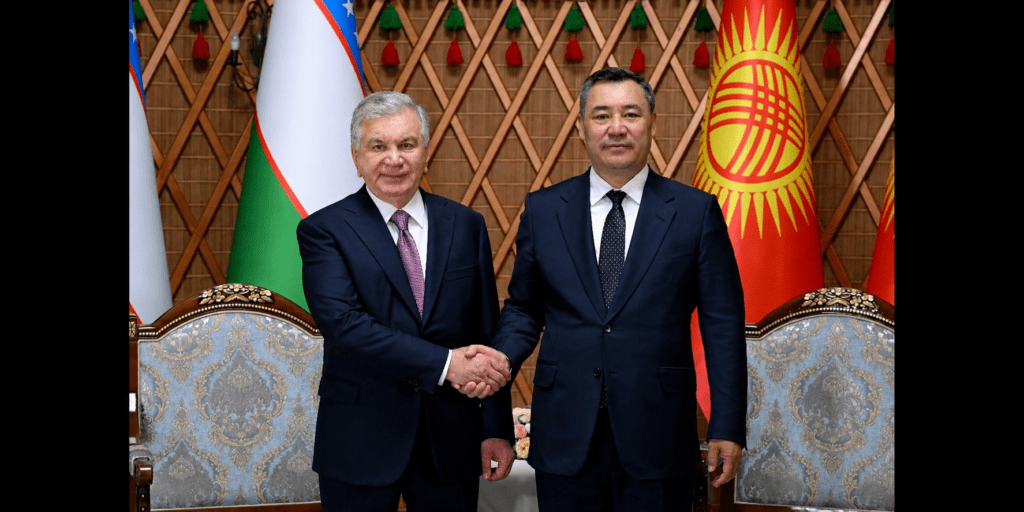
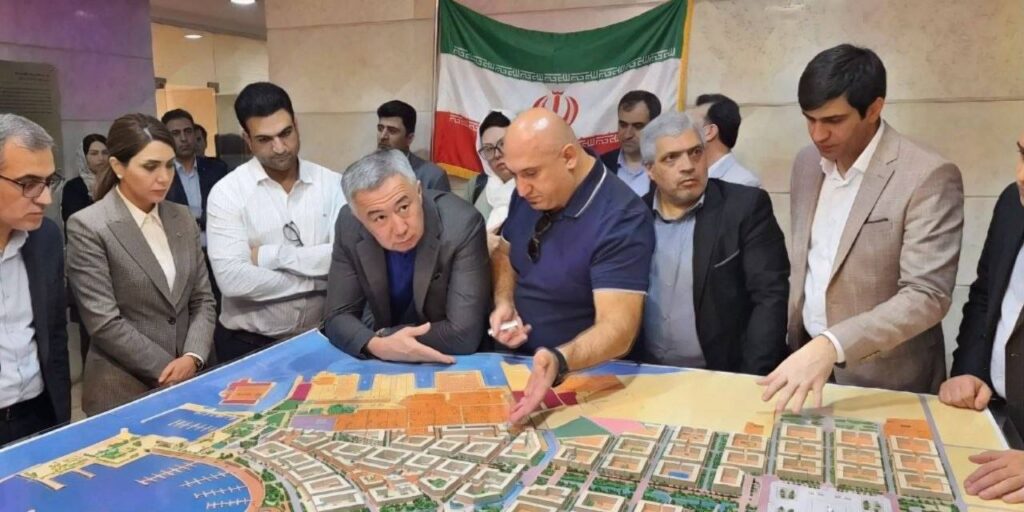
On May 6, Kyrgyz President Sadyr Japarov visited the Dostuk Stele (Friendship) in the country’s southwestern Batken region, erected at the junction point of the state borders of Kyrgyzstan, Tajikistan, and Uzbekistan, where he reviewed the concept and master plan for the proposed Dostuk International Trade and Economic Park. During a summit in the northern Tajik city of Khujand on March 31, 2025, Presidents Sadyr Japarov of Kyrgyzstan, Emomali Rahmon of Tajikistan, and Shavkat Mirziyoyev of Uzbekistan signed a historic agreement on the junction point of the three countries’ state borders. The leaders also took part in a remote inauguration ceremony for the Friendship Stele, which marks the exact location where the borders of the three countries meet and symbolizes friendship among the three nations, the resolution of long-standing border issues, and a new stage of regional cooperation. The planned Dostuk International Trade and Economic Park would span 100 hectares and include administrative, tourism, logistics, production, commercial, and recreational zones. The project aims to strengthen trade and logistics links, attract investment, and create new economic opportunities. If implemented, the project is expected to create more than 5,000 jobs and increase cross-border trade. The concept also includes the development of tourism infrastructure and the organization of international cultural events, ethnic festivals, and exhibitions, contributing to stronger cultural and humanitarian ties while promoting the historical heritage of the Silk Road. Japarov said good-neighborly relations among Kyrgyzstan, Tajikistan, and Uzbekistan remain important, citing the role of joint infrastructure and economic initiatives in regional stability and sustainable development. He also expressed confidence that, with mutual support from the three neighboring countries, the project could become a major platform for trade and investment, as well as a symbol of peace, trust, and unity among the peoples of Central Asia.

Opinion: Hormuz Crisis Pushes Afghanistan Aid Routes Toward Central Asia

The crisis surrounding the Strait of Hormuz is usually viewed through the lens of energy security or military escalation. But it also has another, less visible, humanitarian dimension. A recent article in The Guardian, “Calls for humanitarian corridor through Strait of Hormuz as Iran war hits vital aid,” points to a critical shift: because of the conflict involving the United States, Israel, and Iran, along with instability around Hormuz, traditional humanitarian supply routes are beginning to break down. For Afghanistan, this is no longer a theoretical concern but an operational reality. According to the World Food Programme (WFP), cited by The Guardian, the cost of delivering food to Afghanistan has tripled. Cargo that previously moved by sea through Hormuz and onward to Pakistani ports must now travel overland across multiple countries, adding weeks to delivery times. The consequences are felt most acutely by vulnerable populations, particularly children. Predictability is one of the core requirements of any humanitarian system, and that predictability is now disappearing. Some shipments are stranded in regional hubs. Routes are constantly changing. Fuel costs continue to rise. Even modest increases in oil prices significantly raise operational expenses for humanitarian agencies. For Afghanistan, the implications are severe. The country has been in a prolonged food crisis for several years, with millions dependent on external aid. Delays of even one or two weeks can directly affect malnutrition and mortality rates. According to United Nations estimates, around 3.7 million Afghan children are currently suffering from wasting, nearly one million of them from severe wasting, a condition associated with sharply elevated mortality risks. UNICEF estimates that in 2026 alone, 1.304 million children aged 6-59 months will require treatment for acute malnutrition, including severe cases and other high-risk groups. Another 1.2 million pregnant and breastfeeding women are also suffering from acute malnutrition. Under these conditions, even temporary disruptions in aid deliveries become a direct threat to human life. The situation is being compounded by several overlapping factors. First, instability around the Strait of Hormuz has made maritime routes both more expensive and riskier. Second, the Pakistani corridor, previously the main overland route, has become unreliable, as repeated border closures and restrictions have tied humanitarian deliveries to the fluctuating political and security relationship between Kabul and Islamabad. Third, Iran has imposed restrictions on food exports and has itself become part of the conflict zone, undermining its role as both a supplier and transit route for Afghanistan. Together, these developments are creating what can be described as a “triple crisis” for humanitarian logistics into Afghanistan. The previous aid delivery system is effectively ceasing to function. In response, the WFP is restructuring its logistics network. One solution has been increased use of the Lapis Lazuli Corridor: Turkey-Georgia-Azerbaijan via the Caspian Sea-Turkmenistan and Afghanistan. Although this route is longer and more expensive, it offers predictability and an alternative to disrupted maritime pathways. The key issue is no longer which route is cheapest, but which is reliable. This shift places Central Asia increasingly at the center of...

European Summit in Yerevan Sends a Signal to Central Asia

The 8th European Political Community summit in Yerevan highlighted deepening geopolitical fault lines while signaling that some post-Soviet countries, notably Azerbaijan and Armenia, are gradually shifting their geopolitical orientation away from Moscow. It is a realignment that Central Asian states are watching with increasing interest. On May 4, attention across post-Soviet space, from Russia and Belarus to Central Asia and the South Caucasus, turned toward Yerevan. Armenia, still a member of the Commonwealth of Independent States and the Eurasian Economic Union and formally tied to the Collective Security Treaty Organization despite freezing its participation, hosted Europe’s political leadership. Among those attending were French President Emmanuel Macron, NATO Secretary General Mark Rutte, European Commission President Ursula von der Leyen, European Council President António Costa, and prime ministers including Donald Tusk, Keir Starmer, and Petteri Orpo. Azerbaijani President Ilham Aliyev participated via video link. No Central Asian leaders attended the summit. Even so, the gathering carried a message for the region. Armenia hosted Europe’s political leadership while remaining tied to Moscow-led structures, including the CIS and the Eurasian Economic Union. For Central Asian governments pursuing their own multi-vector policies, the summit showed how a post-Soviet state can widen its diplomatic options without a clean break from Russia. The parallel is not exact, but it is visible. Kazakhstan and Kyrgyzstan remain in the Eurasian Economic Union, while Kazakhstan, Kyrgyzstan, and Tajikistan remain in the CSTO. All five Central Asian states maintain working ties with Moscow, while expanding contacts with the EU, Turkey, China, and the Gulf, part of a wider effort to diversify foreign policy options through closer engagement with Europe and other outside powers. Turkey was represented by Vice President Cevdet Yılmaz, the highest-level Turkish official to visit Armenia since then-President Abdullah Gül in 2008. Turkey and Azerbaijan largely positioned themselves as counterweights to the dominant European framing, marking one of the summit’s key geopolitical divides. Aliyev adopted a confrontational tone, announcing a suspension of relations with the Parliamentary Assembly of the Council of Europe and the European Parliament. “Instead of addressing fundamental problems of some member states, such as xenophobia, Islamophobia, antisemitism, migration, competitiveness, and homelessness, the European Parliament targets Azerbaijan, spreading slander and lies,” Aliyev said. “And the reason is that Azerbaijan restored its territorial integrity and sovereignty, put an end to separatism, and brought war criminals to justice.” In response, António Costa sought to soften tensions, emphasizing the summit’s historical significance as the first of its kind held in the South Caucasus and highlighting Aliyev’s participation as a symbol of peace efforts in the region. Cevdet Yilmaz focused on bilateral diplomacy, meeting Romanian President Nicușor Dan to discuss trade, regional issues, and global challenges. He also held talks with Armenian Prime Minister Nikol Pashinyan, the summit’s host. The two sides signed a memorandum of understanding on the joint restoration of the historic Ani Bridge, located on the border between the two countries and dating back to the 11th century. Yilmaz suggested that Armenia would benefit from closer alignment with Turkey...

Austria to Use Uzbekistan as Transit Route for Afghan Deportations Under New Agreement

Austria’s Foreign Minister Beate Meinl-Reisinger and Interior Minister Gerhard Karner are expected to visit Uzbekistan on May 7 to sign a mobility agreement aimed at strengthening cooperation on migration, according to Die Presse. The agreement is intended to improve coordination between the two countries, particularly on deportations and the return of migrants. Austrian officials say it will create a more structured framework for handling individuals required to leave the country. A key provision involves the use of Uzbekistan as a transit route for deportations to Afghanistan. Afghan nationals facing removal from Austria could be escorted through Uzbekistan to Kabul. Until now, deportations to Afghanistan have largely taken place via Istanbul, meaning the new arrangement would open what officials describe as a “second route.” Karner said the deal would establish “the conditions for the consistent implementation of deportations as part of a firm and fair asylum policy.” The agreement also covers the readmission of nationals, third-country citizens, and stateless individuals who entered the European Union through Uzbekistan. In return, the document includes provisions to support legal migration from Uzbekistan to Austria. Despite its growing economy, Uzbekistan is heavily reliant on remittances from abroad, with Uzbek migrants sending home $4.8 billion in Q2 of 2025. Over the past few years, Tashkent has been seeking out alternative destinations than traditional routes dominated by Russia. To that effect, both Uzbekistan and Austria have committed to promoting “safe, orderly, and regular mobility of qualified workers” in line with national legislation. Austrian authorities note that Uzbek professionals already have multiple pathways to access the country’s labor market. The agreement does not provide for the establishment of return centers for rejected asylum seekers, an idea Austria has been pursuing with several EU partners, including Germany, Greece, the Netherlands, and Denmark. The visit to Uzbekistan is part of a broader regional trip that will also include Kazakhstan, which Austrian officials consider an important partner, particularly in the energy sector. The planned agreement comes amid continued migration pressures linked to Afghanistan’s humanitarian situation. According to the United Nations Development Programme, in 2024 around 85% of Afghanistan’s population was living on less than $1 a day. In June 2025, the World Food Programme reported that approximately 15 million people in the country were facing severe hunger. At the same time, large-scale deportations from neighboring countries have added to the strain. In July last year, Tajikistan launched a campaign to detain and deport Afghan refugees, giving them 15 days to leave the country.