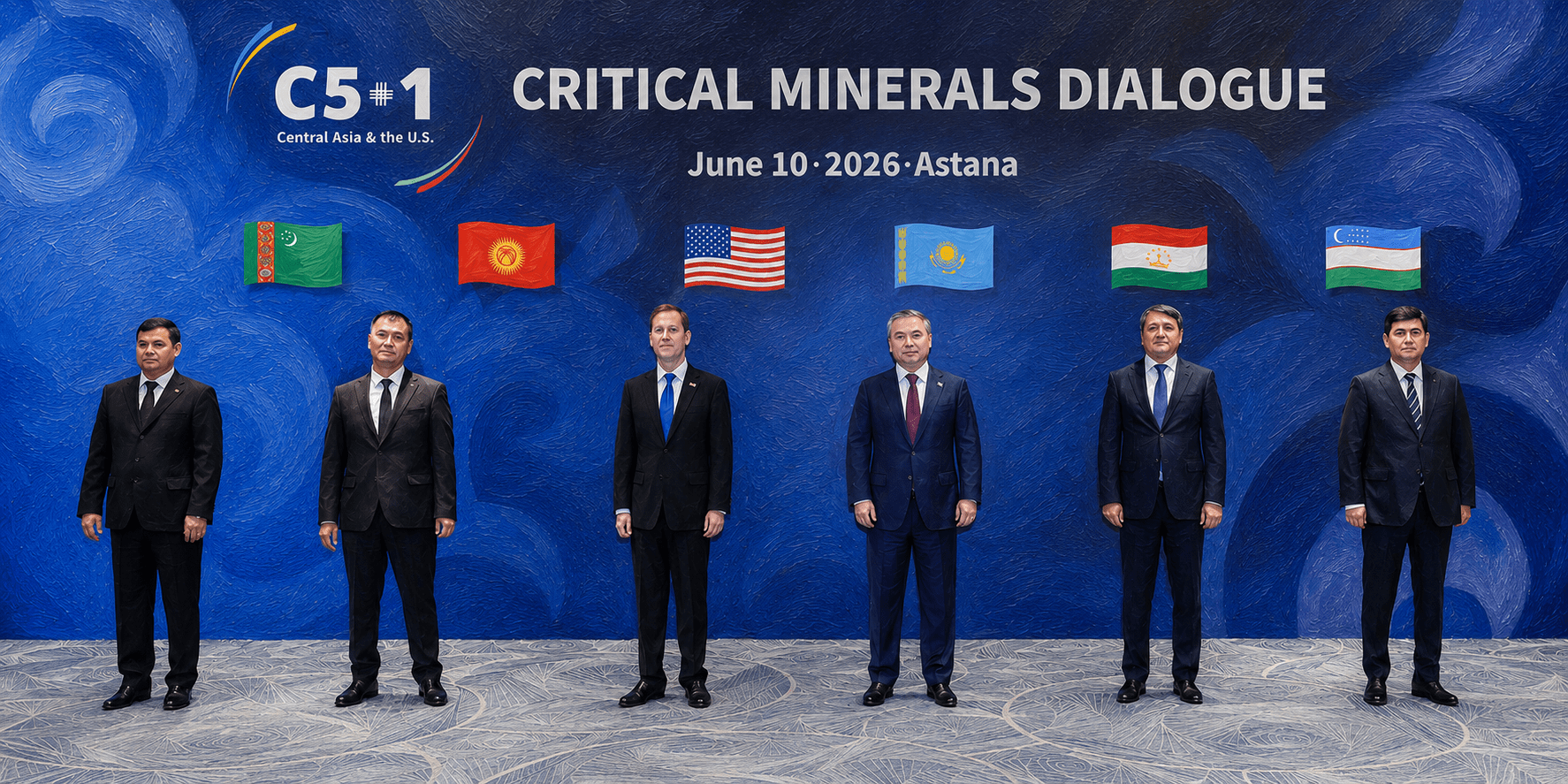
ASTANA — The United States opened a new round of high-level critical minerals talks with Central Asian governments in Astana on June 10, with U.S. Special Envoy for South and Central Asian Affairs Sergio Gor saying Washington is placing new emphasis on a region it sees as central to global commerce, connectivity, and secure supply chains.
Speaking at the C5+1 Critical Minerals Dialogue, Gor said Central Asia “has not gotten the attention it deserves from the United States,” and that the Trump administration had decided to change that.
“We care about this region, we want to be involved with this region, we want to identify win-win situations for the United States and your nations,” Gor said.
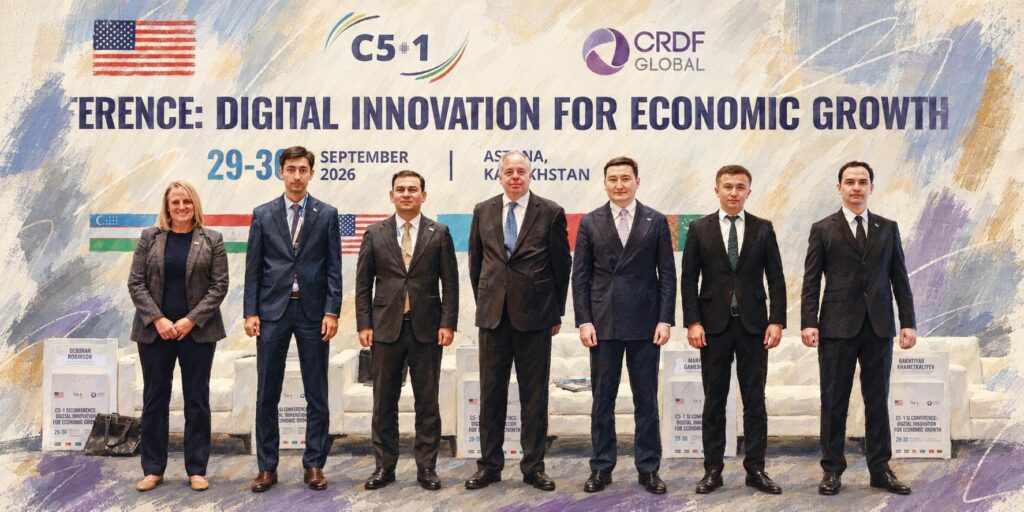
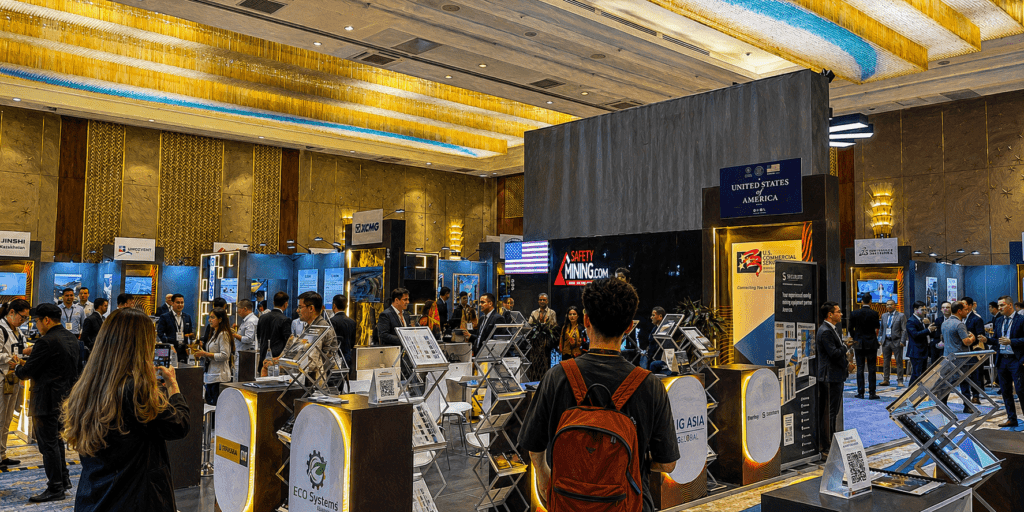
The meeting, held at The Ritz-Carlton in Astana, brought together officials from Kazakhstan, Kyrgyzstan, Tajikistan, Turkmenistan, Uzbekistan, and the United States. The program included sessions on geological exploration, surveying and mapping, mining and processing, and global value and supply chains, followed by a government-business networking reception.
Gor thanked Kazakhstan for hosting what he described as the first in-person C5+1 Critical Minerals Dialogue and said he had met with President Kassym-Jomart Tokayev shortly before the session.
Kazakhstan’s Foreign Ministry said that ahead of the dialogue, Gor and Kazakh Foreign Minister Yermek Kosherbayev had discussed economic and investment partnerships, innovation, artificial intelligence, education, transport, logistics, and critical minerals. The ministry also said the sides discussed the implementation of agreements reached between Tokayev and U.S. President Donald Trump at the White House in November 2025.
Gor framed the Astana meeting as part of a broader increase in U.S. engagement with Central Asia following the C5+1 leaders’ meeting in Washington last year. He said critical minerals are now a central part of that engagement because they are essential to infrastructure, advanced technologies, industry, and national defense.
“Our economic security depends on our ability to diversify our access to critical minerals,” Gor said. “Ensuring reliable access to these materials requires not only expanding production, but also building resilient, transparent, and market-driven supply chains in close partnership with trusted partners.”
He added that the Central Asian states represented at the table were exactly the partners Washington wants to work with.
“There’s a reason we’re sitting at this table and not at another table around the world,” Gor said. “It’s because this is where we want to work. This is where we have identified trusted partners.”
Gor highlighted the role of U.S. commercial and development-finance tools in supporting investment, saying Washington is prepared to back American companies working in the region.
“The United States government stands behind American companies,” Gor said. “There is no such thing as a deal too small.”
Gor also pointed to the U.S. International Development Finance Corporation, saying it was preparing to “invest and build” in the region and saw potential in critical minerals, telecommunications, and Trans-Caspian infrastructure. He said DFC saw “potential to transform the region’s rich deposits of critical minerals into the foundation of a new wave of industrialization.”
“President Trump understands the importance of Central Asia to global commerce, connectivity, and critical minerals,” Gor said.
Kazakhstan used the opening session to present itself as both a mineral-rich state and a future processing, technology, and transport hub for critical minerals supply chains.
Industry and Construction Minister Yersain Nagaspayev presented the Astana dialogue as a continuation of the U.S.-Kazakhstan critical minerals track opened during Tokayev’s November 2025 visit to Washington.
“One of the practical results of those negotiations was the signing of a memorandum of understanding with the U.S. government in the field of critical minerals,” Nagaspayev said.
That memorandum was signed in Tokayev’s presence on November 6 by Nagaspayev and U.S. Commerce Secretary Howard Lutnick.
Nagaspayev also cited cooperation with Cove Capital on tungsten projects in Kazakhstan as a practical follow-up to agreements reached between Kazakhstan and the United States. The Times of Central Asia has previously reported that Cove Kaz acquired a majority interest in Severniy Katpar LLP, which holds licenses for the Northern Katpar and Upper Kairakty tungsten projects in Kazakhstan’s Karaganda Region.
“These agreements clearly demonstrate the value of this dialogue platform and its role in strengthening our industrial, technological, and investment partnership,” he said.
The minister added that Kazakhstan views critical minerals as one of the key priorities of its industrial policy and long-term economic development.
“Kazakhstan has more than 9,500 mineral deposits, including more than 100 deposits containing rare and rare earth metals,” Nagaspayev said. “We invite American companies to actively participate in their exploration and development.”
He pointed to Kazakhstan’s 2018 Code on Subsoil and Subsoil Use, the launch of a unified online subsoil-use platform in 2023, and the implementation of CRIRSCO international reporting standards since 2024 as reforms intended to make the sector more transparent and attractive to investors.
“Since 2018, investment in geological exploration has tripled and exceeded $1 billion,” Nagaspayev said, adding that major international companies have entered Kazakhstan’s mining market.
Nagaspayev emphasized that Kazakhstan is seeking a larger role in critical minerals supply chains.
“Kazakhstan is interested not only in exporting raw materials, but also in developing joint production facilities, technology transfer, workforce training, and scientific cooperation,” he said.
He proposed cooperation with U.S. partners in joint critical minerals projects, processing and high-tech industries, industrial clusters, advanced materials, research and engineering centers, and training for engineers and technical specialists.
The minister also linked the critical minerals agenda to the Trans-Caspian International Transport Route and the broader Middle Corridor, which Kazakhstan has promoted as a route connecting Asia and Europe without relying only on traditional northern corridors.
“We believe that the Middle Corridor can play an important role in diversifying global transport routes, strengthening Eurasian connectivity, and supporting reliable supply chains for critical minerals,” Nagaspayev said.
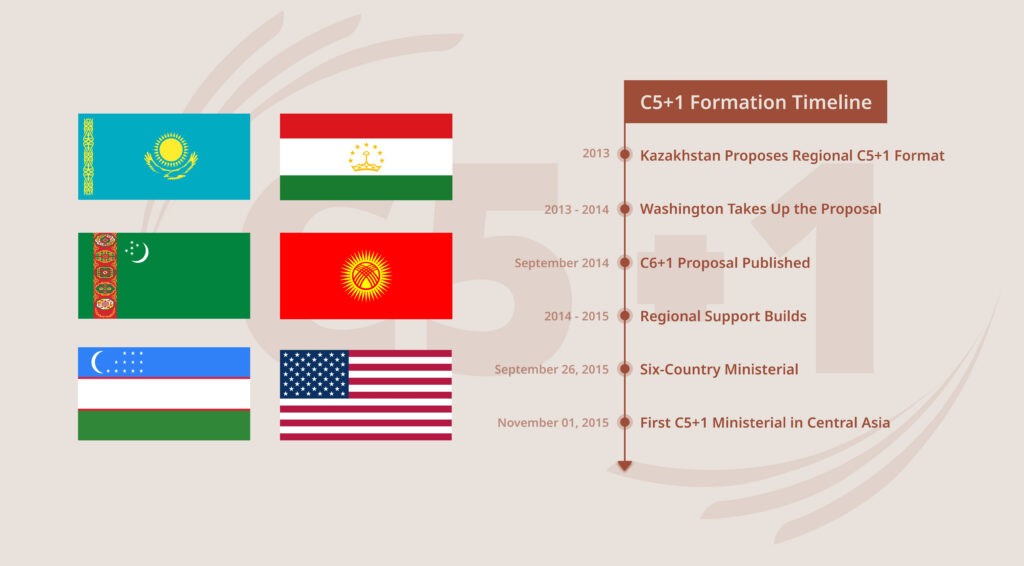
The dialogue comes as the C5+1 platform increasingly shifts from broad diplomatic engagement toward more concrete economic and investment cooperation. The C5+1 Critical Minerals Dialogue was launched in 2024 to strengthen cooperation on geological exploration, attract mining and processing investment, and connect Central Asia’s mineral resources to global supply chains.
For Kazakhstan, the Astana meeting offered another opportunity to present critical minerals as part of Tokayev’s wider economic agenda: attracting foreign investment, developing processing and advanced manufacturing, improving transport connectivity, and positioning the country as a reliable partner in strategic supply chains.
For the United States, Gor said the message was equally clear.
“We have a president in the White House who cares about this region, who is paying attention to this region, and who wants to identify opportunities that are beneficial to all of us,” he said.
For more on the Astana Mining & Metallurgy Congress and Exhibition 2026, see our special coverage.
Explore our critical minerals special coverage for a timeline of Central Asia’s growing place in U.S. supply-chain strategy.