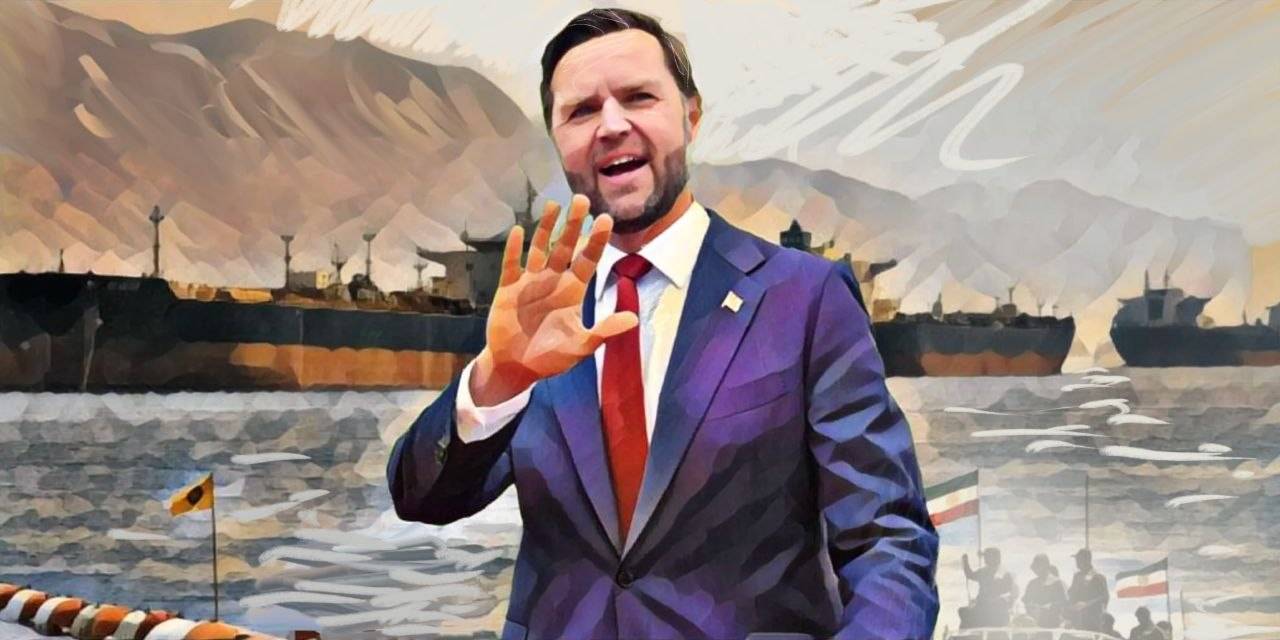
The United States and Iran said on June 15 that they had reached a framework to end their war, halt the U.S. naval blockade of Iranian ports, and reopen the Strait of Hormuz. The sides said a memorandum of understanding could be signed on June 19 in Switzerland. The exact terms were not immediately known, with Iran’s nuclear program and sanctions relief left for later talks.
Pakistani Prime Minister Shehbaz Sharif said the pact called for “the immediate and permanent termination of military operations on all fronts, including in Lebanon.”
Trump posted, on Truth Social, “Ships of the World, start your engines. Let the oil flow!” Brent crude fell by more than 4% in early trading, and Asian stock markets advanced. Reuters later said shippers remained cautious after one LNG tanker passed through Hormuz on June 15. A reopened strait would not restore normal traffic immediately, with freight flows depending on mine clearance, insurance rules, port inspections, and shipping guidance for vessels entering the area.
Kazakhstan was the first Central Asian state to publicly welcome the latest announcement. President Kassym-Jomart Tokayev praised the political will of the parties, saying they had helped “restore trust and mutually acceptable solutions.” Azerbaijan also issued a supporting statement praising Pakistan’s mediation and saying further talks could support “lasting peace and stability.”
Central Asian governments had previously welcomed the U.S.-Iran ceasefire in April, with Kazakhstan, Uzbekistan, Kyrgyzstan, and Tajikistan calling for de-escalation and diplomacy.
For Central Asia, oil prices are only part of the story. The larger question is whether de-escalation can reopen practical access to southern trade routes, ports, and markets beyond the Caspian. Since Russia’s full-scale invasion of Ukraine in 2022, the region has paid closer attention to alternatives to routes through Russia. Iran offers one of its shortest paths to the Gulf, the Indian Ocean, Türkiye, and India. But sanctions, banking risk, war insurance, and U.S. policy shifts have kept that path fragile.
Chabahar is the clearest example. In May 2024, India signed a 10-year contract with Iran to develop and operate the port on the Gulf of Oman. India’s shipping minister, Sarbananda Sonowal, called Chabahar “a vital trade artery connecting India with Afghanistan and Central Asian Countries.” The port allows Indian cargo to reach Afghanistan and Central Asia without crossing Pakistan, and gives Central Asian exporters another route toward India and the Indian Ocean.
The sanctions picture remains uncertain. On October 30, 2025, Washington granted India a six-month waiver that allowed operations at Chabahar to continue. No public replacement had been announced by June 15. The new framework could make another waiver easier to justify, but banks and insurers will wait for signed text, U.S. guidance, and proof that Hormuz and Iranian ports are safe.
Reuters cited a senior Iranian official who said the draft framework included no new U.S. sanctions before a final deal, a temporary oil sanctions waiver, and the release of $25 billion in frozen Iranian assets. The same source said Iran would refrain from further enrichment and negotiate uranium arrangements during a 60-day period. A U.S. official said the agreement would ultimately lead to dismantling Iran’s nuclear program, while the Iranian side said enriched uranium could be diluted inside Iran.
Kazakhstan illustrates why Central Asia will move carefully. The Times of Central Asia reported in April that Astana had frozen several projects with Iran because of the war, including grain and food-trade plans. Deputy Foreign Minister Arman Issetov said, “many of our projects with Iran have been frozen due to the country being in a state of war.” He added that Kazakhstan was not facing major losses because trade volumes were small.
Kazakh data shows exports to Iran standing at $239.3 million and imports at $191 million in 2025, equal to about 0.3% of Kazakhstan’s total foreign trade turnover. Around 90% of Kazakhstan’s exports to Iran consisted of wheat and barley.
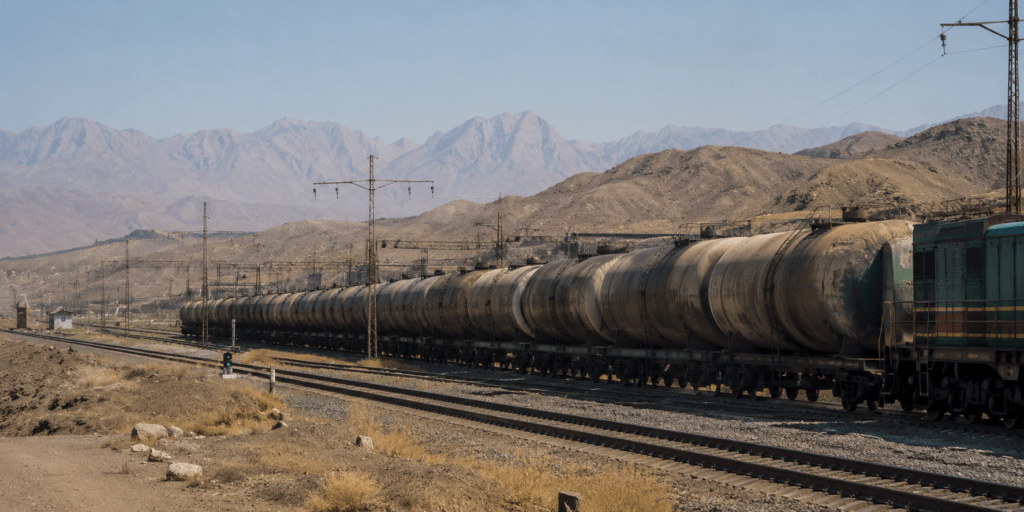
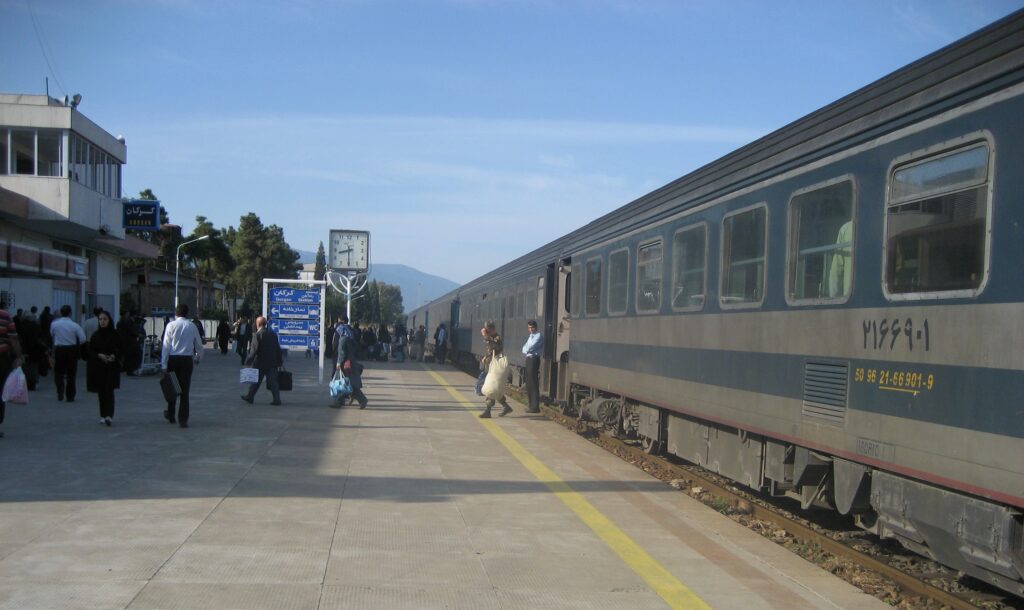
However, the logistics argument is stronger than the trade numbers. Kazakhstan, Turkmenistan, and Iran already have a rail link into northern Iran, which plays a central role in plans for multimodal corridors to the Persian Gulf. Kazakhstan’s President Kassym-Jomart Tokayev had also announced plans for a Kazakh transport and logistics terminal at Shahid Rajaee Port, part of the Bandar Abbas port complex.
The southern corridor reaches beyond Kazakhstan. The Sarakhs railway terminal on the Turkmenistan-Iran border is meant to speed container traffic along China-Central Asia-Iran-Türkiye-Europe and Gulf routes. Beijing and Tehran have agreed to electrify the 1,000-kilometer section from Sarakhs to Razi on the Turkish border, with the project expected to triple freight capacity to 15 million tons a year. In January 2025, Kazakhstan, Iran, Turkmenistan, and Russia signed a roadmap to raise capacity on the eastern route of the North-South corridor to 20 million tons by 2030, including up to 6 million tons by rail.
Turkmenistan adds an energy dimension to the corridor question. Ashgabat’s planned gas swaps through Iran exposed its export diversification plans to sanctions and conflict risk. A Turkmenistan-Iraq swap through Iran stalled after Washington declined to approve it, while Turkmen gas deliveries to Türkiye through Iran were reported to have paused. TCA had earlier warned that the swap deals could become collateral damage from any conflict involving Iran.
Uzbekistan has the strongest strategic reason to watch Chabahar and the southern route. In a TCA interview, ISRS Director Eldor Aripov said: “For a double-landlocked country, every new route is not merely an economic advantage but an element of national resilience.” Chabahar, the Middle Corridor, the Trans-Afghan route, and Gulf links all serve the same goal: more pathways for exporters and fewer chokepoints.
Tajikistan and Kyrgyzstan also have a stake. Both are developing access to Iranian maritime infrastructure through Uzbekistan and Turkmenistan. Tajik-Iranian trade reached $119.6 million in the first quarter of 2026. These volumes are modest, but they add weight to any route that cuts time or expands market choice.
Kazakhstan also has a separate nuclear-diplomacy role. TCA has previously examined whether Astana could support a future Iran arrangement through its cooperation with the International Atomic Energy Agency. The IAEA Low Enriched Uranium Bank at Ulba holds 90 metric tons of low-enriched uranium hexafluoride, though it is not designed to receive or downblend Iranian highly-enriched material.
As it stands, the limits are clear: the framework has not yet been signed, its nuclear clauses remain disputed, and sanctions relief still depends on U.S. decisions and compliance rules. Israel is not part of the talks and has said it will keep forces on land it currently holds in Lebanon, Syria, and Gaza. Chabahar still sits within an environment that can quickly change.
If the memorandum is signed and implemented, Central Asia would gain a more credible southern option. That would not reorder regional trade in one week. But it could lower risk premiums around Iran, revive suspended projects, strengthen the case for Chabahar, and give Central Asia more room in talks with India, the Gulf, China, Russia, and Europe. For a landlocked region, even a partial opening gives exporters one more route to the sea.
– For a complete chronology of the crisis and its implications for Central Asia, explore our continuously updated timeline and special coverage.