The Caspian Policy Center’s Trans-Caspian Forum 2026 convened U.S. and regional officials at the National Press Club in Washington on June 10 for a discussion of peace, economic security, and durable partnerships. The forum framed a short Armenia-based link as part of a wider effort to turn the Middle Corridor into a working route for cargo, energy, data, and capital.
The strategic dialogue was chaired by Dr. Eric Rudenshiold, CPC research director and senior fellow. Speakers included Aryeh Lightstone, Senior Advisor to the Board of Peace and to Ambassador Steve Witkoff; Hikmet Hajiyev, Assistant to Azerbaijan’s president and foreign-policy department head; Yerzhan Kazykhan, Kazakhstan’s presidential representative for U.S. negotiations; Javlon Vakhabov, deputy adviser to Uzbekistan’s president on foreign policy; and Edil Baisalov, Kyrgyzstan’s ambassador to the United States and presidential special envoy.
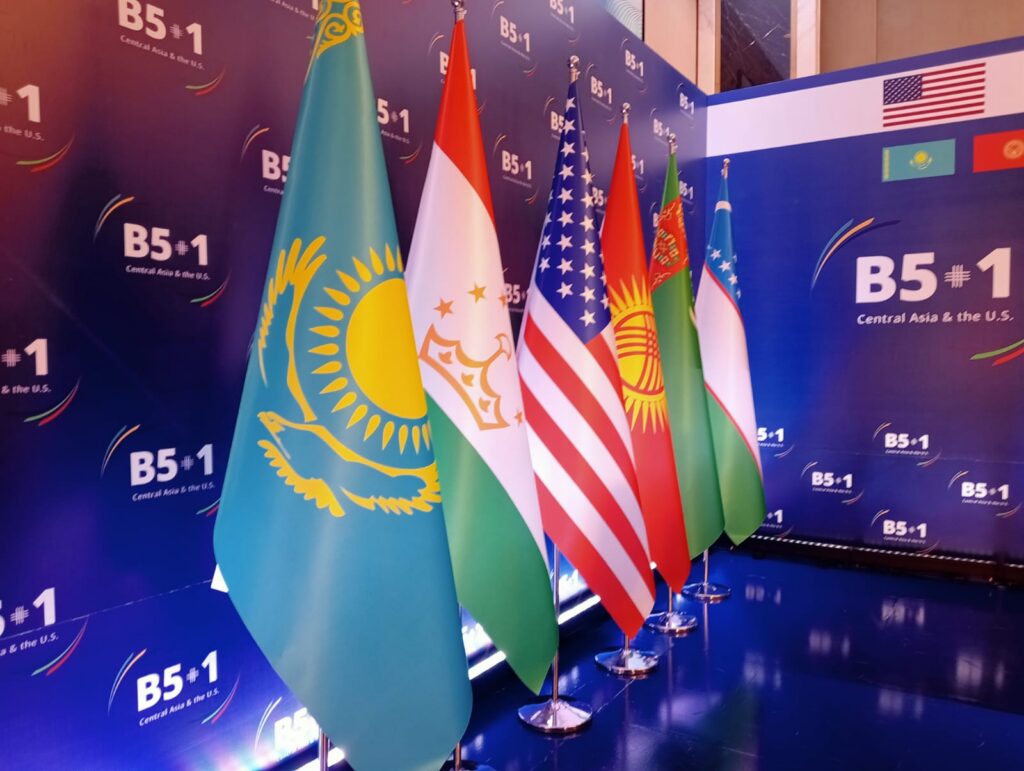
The meeting came as Washington tries to turn the Armenia-Azerbaijan thaw, the C5+1 critical minerals agenda, and private-sector interest into routes that can move cargo, energy, data, and capital across the Caspian. The discussion cast the Middle Corridor as the main strategic alternative linking Central Asian production to western markets. The Trump Route for International Peace and Prosperity (TRIPP) refers to a planned 43-kilometer link through southern Armenia’s Syunik province, near Meghri and the Arax River, that would connect Azerbaijan with its Nakhchivan exclave. With rail, road, energy, and digital infrastructure, TRIPP is intended to plug into the wider Trans-Caspian route from Central Asia through Azerbaijan and Türkiye to Europe.
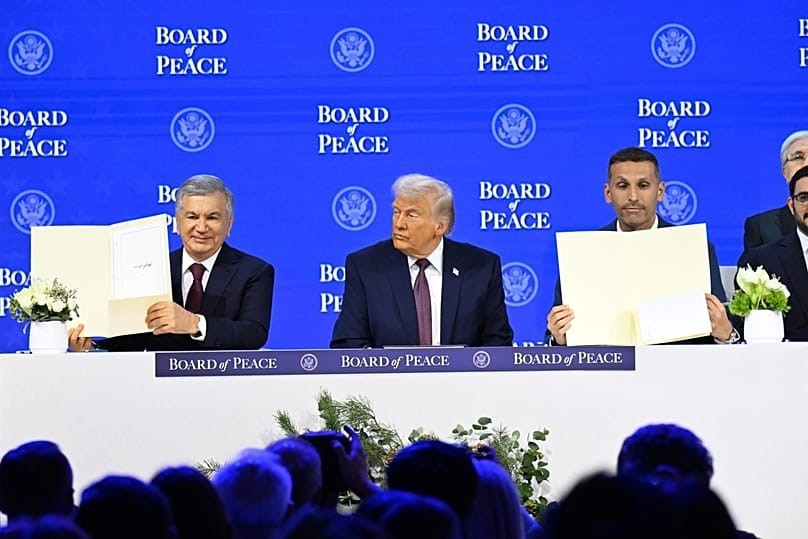
Aryeh Lightstone opened by placing connectivity inside the Trump administration’s peace and economic-security agenda. His remarks tied Armenia-Azerbaijan diplomacy, the Board of Peace, and the Abraham Accords to the claim that commerce can reinforce peace where standard diplomacy stalled.
Lightstone shifted the subject from maps to execution. Customs, regulatory harmonization, digital trade platforms, border procedures, and bankable investment vehicles will decide whether the Middle Corridor becomes a reliable system, he said. His reference to a TRIPP Plus Enterprise Fund pointed to U.S. structures that can move from declarations to projects.
Hikmet Hajiyev presented Azerbaijan as the hinge of that system. The Caspian, he argued, does not separate Azerbaijan from Central Asia, but unites them. His line that C5+1 was mathematics while the C6 was chemistry captured Baku’s framing.
Azerbaijan is positioning itself as a logistical and strategic extension of Central Asia, connected through Turkic institutions, energy routes, rail, ports, aviation, and digital links. Hajiyev described the Middle Corridor as moving from a supplementary transit route into a strategic geoeconomic system, linking Baku-Tbilisi-Kars rail capacity, Baku port, Nakhchivan, TRIPP, and the planned Trans-Caspian fiber-optic cable with Kazakhstan.
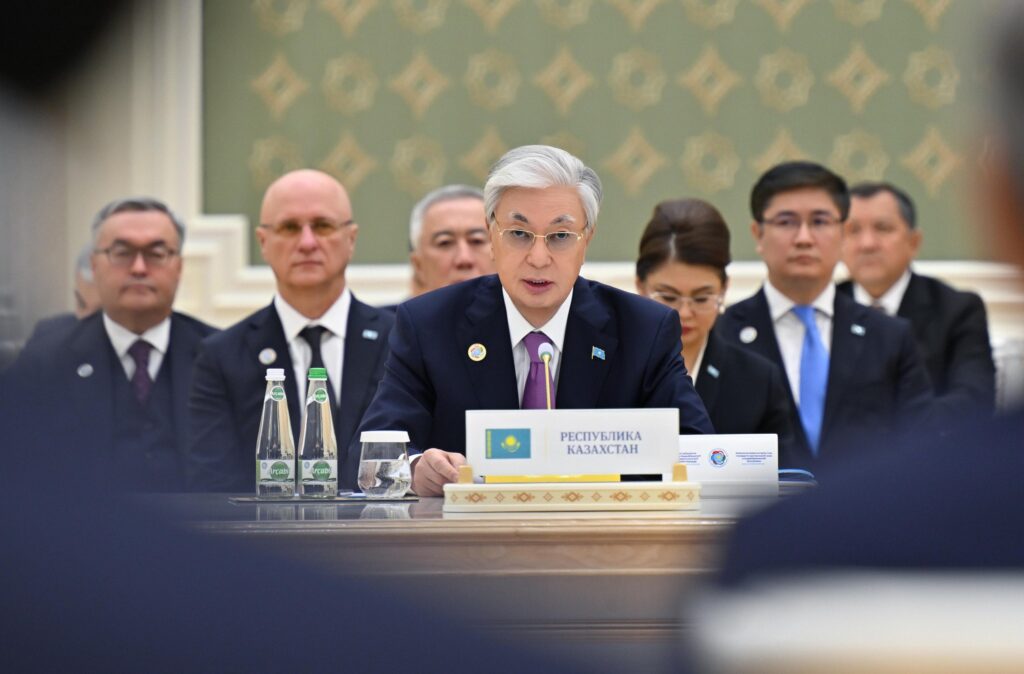
Ambassador Kazykhan presented Kazakhstan’s strategic value as something built over time and backed by material capacity, not diplomatic positioning alone. Kazakhstan is by far the region’s largest economy, with the IMF projecting 2026 GDP of about $360 billion. Kazykhan said more than 600 American companies operate in Kazakhstan and cumulative U.S. investment has surpassed $100 billion. Kazakhstan also supplies about 24% of U.S. uranium imports and has reserves or production capacity linked to roughly 25 critical minerals on the U.S. Geological Survey list, tying the country to nuclear fuel, defense production, clean energy, industrial competitiveness, and AI infrastructure.
He then turned from resources to routes. Kazakhstan has invested about $35 billion in transport infrastructure over 15 years, built more than 2,500 kilometers of new railway, plans another 5,000 kilometers, and is modernizing Aktau and Kuryk. The Trans-Caspian fiber-optic cable linking Kazakhstan and Azerbaijan, which Astana expects to complete by the end of 2026, would add a digital layer for secure data flows and AI-driven logistics. Kazykhan also connected President Kassym-Jomart Tokayev’s foreign policy to Middle East stabilization, citing Kazakhstan’s participation in the Abraham Accords and Tokayev’s signing of the Charter of the Board of Peace. Kazakhstan, he said, is offering minerals, corridors, and tangible contributions to education, healthcare, reconstruction, and development.
Javlon Vakhabov, deputy adviser to the president of Uzbekistan on foreign policy, brought the conversation back to logistics. For double-landlocked Uzbekistan, the Middle Corridor is a way to change the economics of geography. Vakhabov focused on electronic road permits, customs digitization, tariffs, port documentation, ferry schedules, insurance, cargo handling, vessel leasing, and ship financing.
His warning that cargo can wait 30 to 40 days for ferry movement captured the gap between a corridor that exists on paper and one exporters can price into contracts. For U.S. companies, the opening is practical. Uzbekistan combines a growing economy with Central Asia’s largest population, and the corridor creates demand for ferry leasing and financing, port management, insurance, digital logistics platforms, customs technology, warehouse management, and specialist training.
Ambassador Baisalov closed the regional sequence with Kyrgyzstan’s reform and infrastructure story. He cast Kyrgyzstan as a fast-growing state whose gains come from cleaner administration, higher tax and customs collection, and confidence under President Sadyr Japarov.
Kambarata-1 hydropower, being jointly developed by Kyrgyzstan, Uzbekistan, and Kazakhstan, was described as both a power-generation project and a mechanism for regional water management. The China-Kyrgyzstan-Uzbekistan railway, linking Kashgar to Andijan through Kyrgyzstan, could open mineral-rich mountain areas and connect Kyrgyzstan to the corridor economy. Education reform rounded out his argument that connectivity requires human capital as well as rails and dams.
The discussion showed regional governments and U.S. officials trying to move from diplomatic vocabulary to corridor management. The Middle Corridor will be judged by transit times, customs performance, ferry capacity, port efficiency, insurance costs, data security, and private returns. If those pieces move together, TRIPP and the wider Trans-Caspian system could become a rare point of convergence for U.S. peace diplomacy, Central Asian sovereignty, South Caucasus normalization, and Western supply-chain strategy.